Thoughts from a Paramount Chief
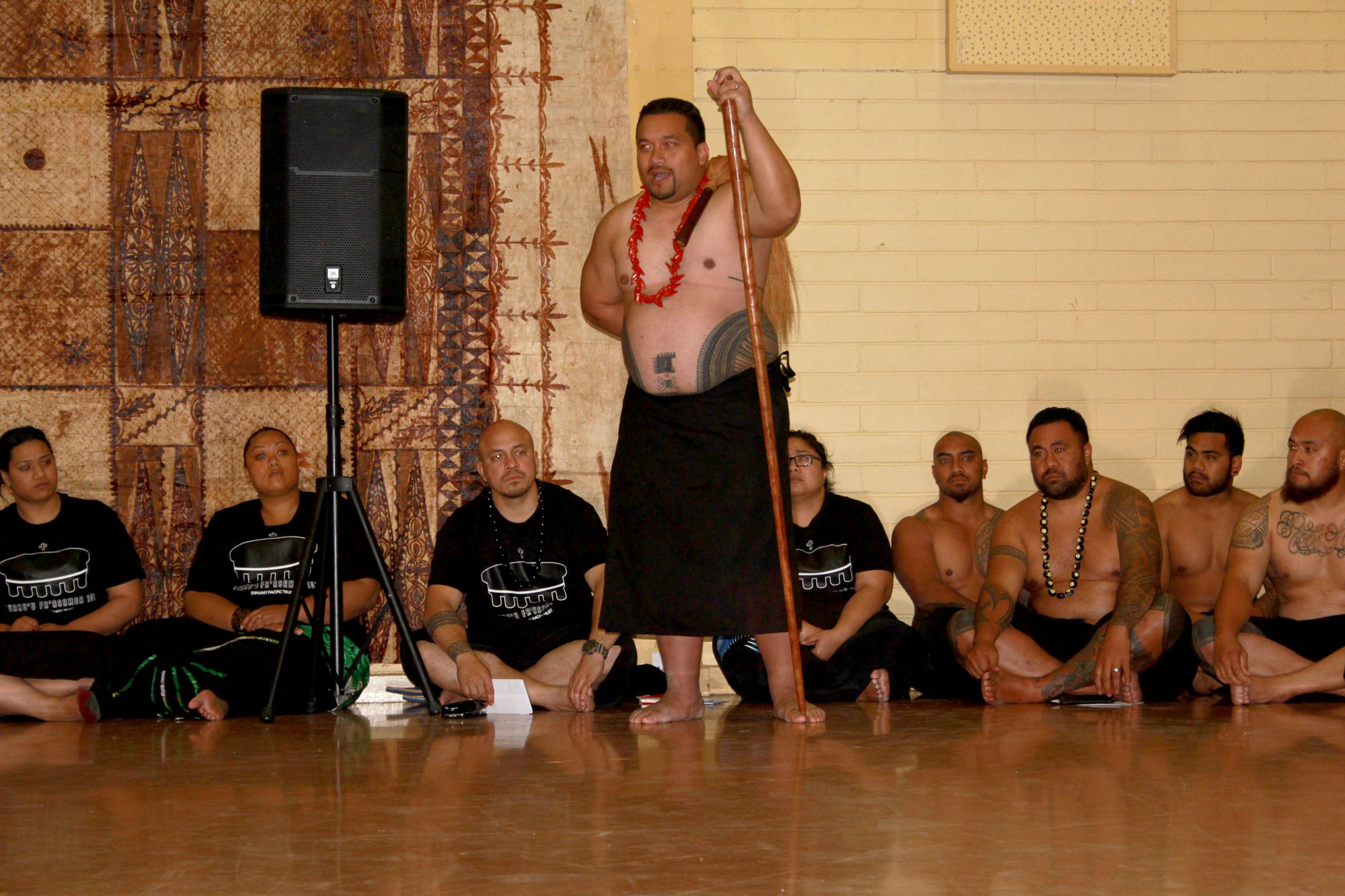
Te’o Anthony describes the relationship between the ali’i | paramount chief and the tulāfale | orator chief.
Te’o Anthony: You have high chiefs, or ali’is, and then you have your sa’os, which are the paramount chiefs, or the head of the family, a clan, and then you’ve got your tulafales, which are the talking chiefs, the orators.
My two chief titles that I hold dear to myself is Fuiali’i which is an ali’i title, as well as Te’o. It was given to me in 2016. The title Te’o is one of the highest titles in the village of Vaie’e.
No matter where you travel as a Samoan, you always take your culture with you. O lou tu, o lou savali, o lou tautala: the way you stand, the way you walk, the way you talk, the way you sit. Everything has a way. There are Samoan ways and there are western ways.
There is a Samoan proverb that says the birds of the air are fed by the fruits of the tree, but the children of men are fed by words, and it’s those words that give you the principles and values and the standards or what we call Fa’asāmoa, which is the Samoan way of doing life in general.
[The] tulāfale needs to be able to represent the family in a positive light, serve the family, have a good heart. A lot of people think that being a chief is someone that can speak well. To me a chief is someone that can walk the talk because a crafty chief is you know, is valuable within a family because he has a role to play and he’s a mouthpiece. You cannot face another family without a chief, a talking chief. That is the mouthpiece of every family. So that’s what I see in a good orator—someone who has good knowledge but knowledge with wisdom. So you need a chief that has the knowledge and wisdom and also have that heart. Part of that knowledge is someone that is a very practical person in their faith because your faith is part of that wisdom.
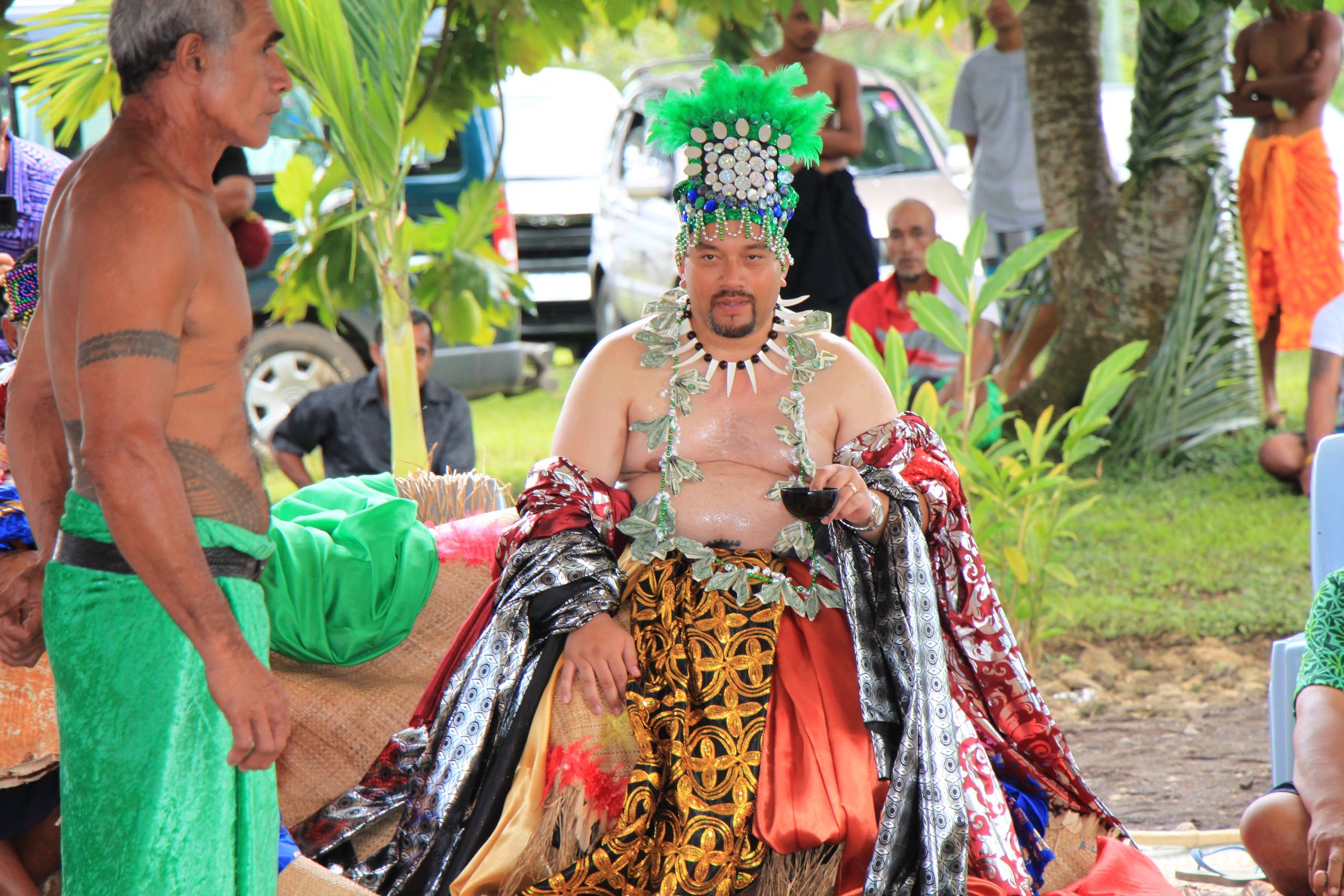
Leadership within the Victorian Samoan Community
Translation from Samoan
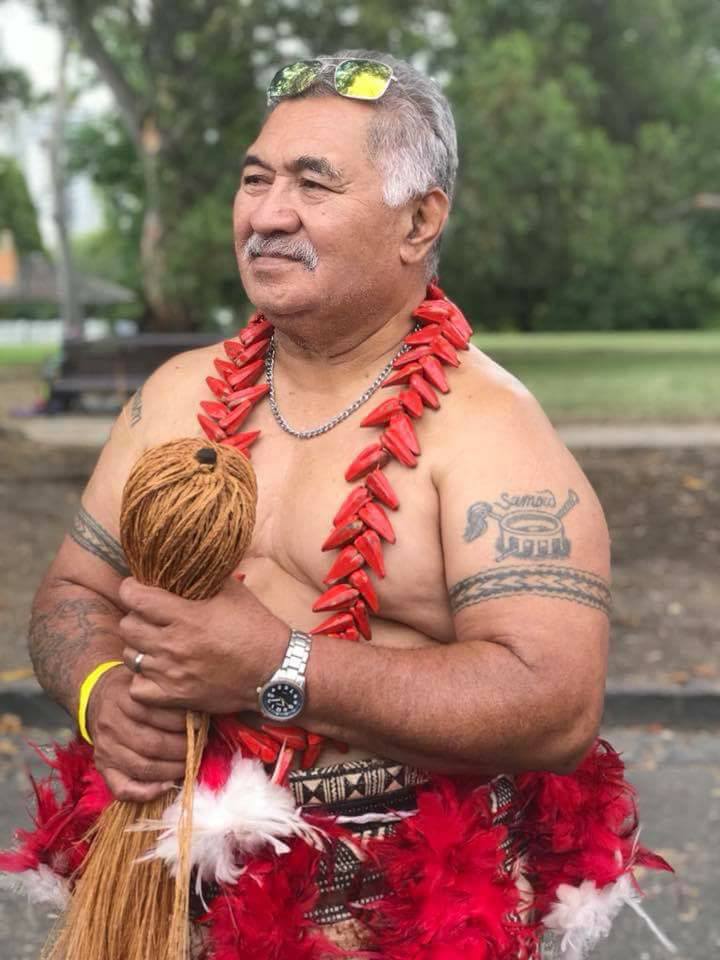
Muagututi’a Lemalu talks about the importance of the tulāfale | orator chief in the Victorian community.
Muagututi’a Lemalu: I have the following chief titles: Muagututi’a, Lemalu, Muliagatele, Sola, Vaofusi. I left Samoa in 1970, in the month of March. I was 19 years old at the time. I moved here in 1982. at that time there weren’t that many Samoans here in Melbourne.
To explain my story, in 1989 I was the president of the Samoan Victorian Rugby team. This was during my youthful days of rugby. We travelled to Samoa—there were many Samoans who went in 1989, and you could say that it was from this time that my service to my Victorian Samoan community began.
1990 saw the formation of the fono faufautua |advisory council, for the Samoan people of Victoria. This was presided by the Reverend Elder Urika Saifoloi. The advisory council was formed by church leaders and chiefs.
After three years was done, the church leaders moved aside and passed on the leadership role to us, the chiefs, where I was then elected as President of the council. There were many years where I took on the President role, and nowadays I still play an active role, especially in my supporting advisory role with community groups such as PICAA (Pacific Island Creative Arts Australia) and MSV (Miss Samoa Victoria), and that’s how it is today.
There is a difference between an orator chief and a high chief; the orator chief speaks on behalf of the high chief. An orator chief plays an important role in the community. The orator chief is not a dreamer, his mind is alert at all times. For whatever happens, he will always be prepared with a speech, his mind always ready.
Even though this body is old and weak, it’s important for me to continue to support the younger generation in whatever they need me to do.
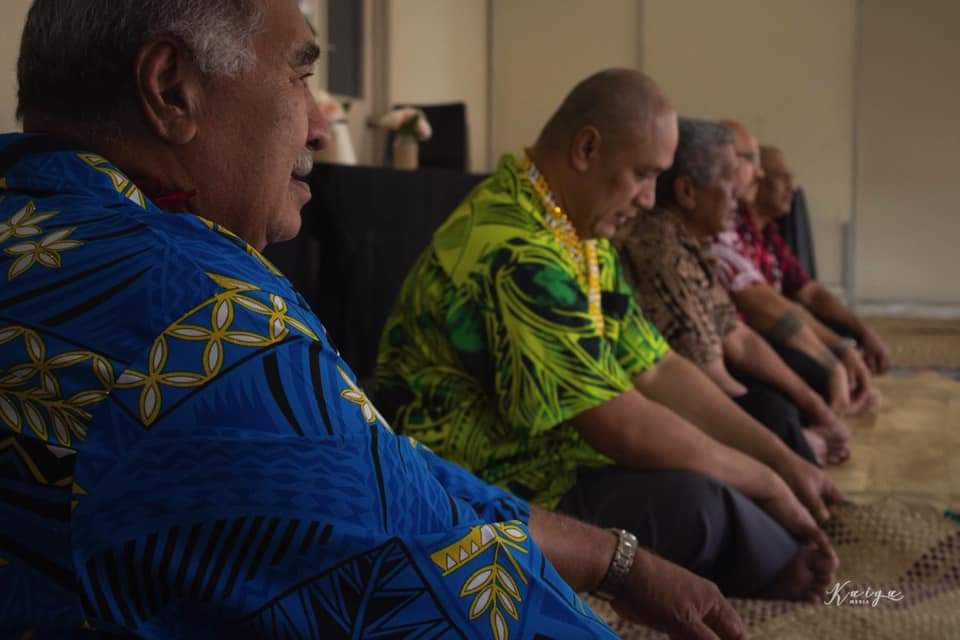
The makings of a tulāfale
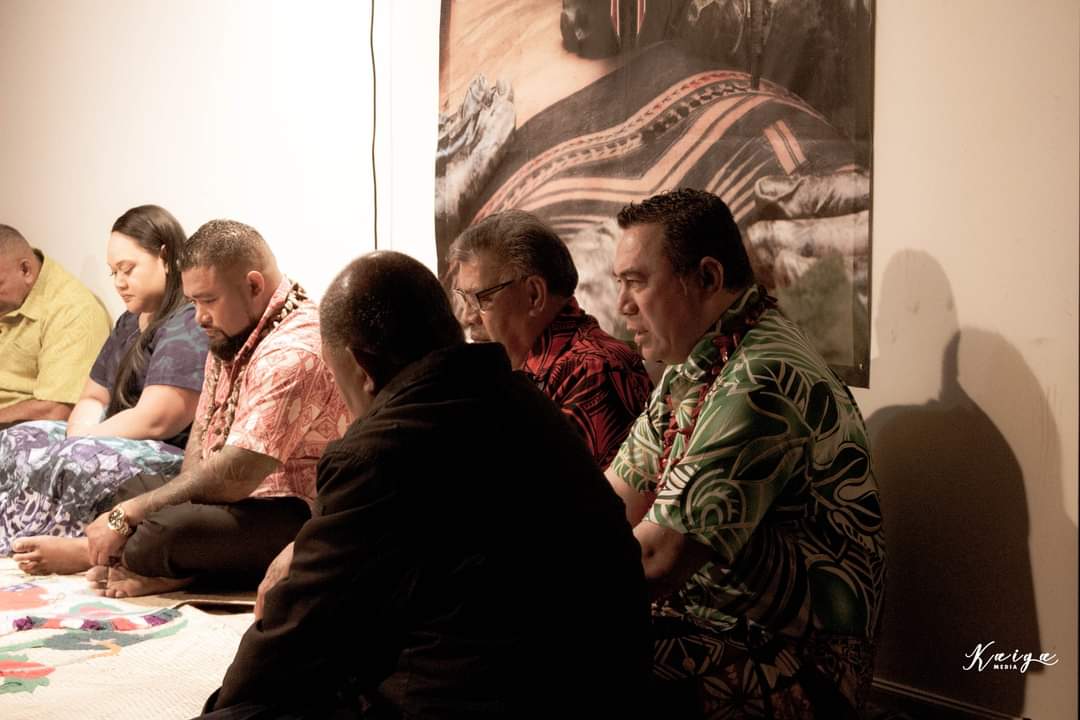
Fuga Lio speaks about the role of the tulāfale | orator chief with his community.
Fuga Lio: Being an orator or being a matai | chief, it comes with a lot of commitment, sacrifices, right, because actually you’ll be the mouthpiece and also be the voice of your family. One of the key responsibilities, or roles of being an orator: you will become a policymaker in the village. And that’s part of the roles and responsibilities of a really orator, and have a better understanding in terms of the platform because orators, they have their own language. They have their own platform, they have their own style.
It’s really good for an orator to have a basic understanding of the fundamentals of who you are as an orator. So you should know where you belong and where you sit in the village fono | meeting, or the village fale | house. Everybody, you know through mutual understanding and the respect, so everybody knows each other and their seatings when they have the village meeting.
I’m a very proud Samoan and I’m really really proud of who I am and I’m proud of my family, and that’s one of the things that I’ll never ever let down my family because they bestowed me with these titles, with the intention that I will carry that with pride. Because not only that, because you will, wherever you go, you’ll be representing your family, of who you are. So it’s about your mum, it’s about your dad, it’s about your ancestors, it’s about your village and that’s why people are chosen to be orators and chiefs, those days it took the whole family, the extended family, to come and decide who will be the chosen one.
You’ve got to have the patience as well, just making sure you’re a peacekeeper. You’ve got to have the courage to upfront and say what you feel and wanna make sure that everybody is the same and avoid any sort of corruption or things like that.
More stories
Explore more personal stories, sacred histories and treasures from Victorian Pacific communities.