The separation of earth and sky
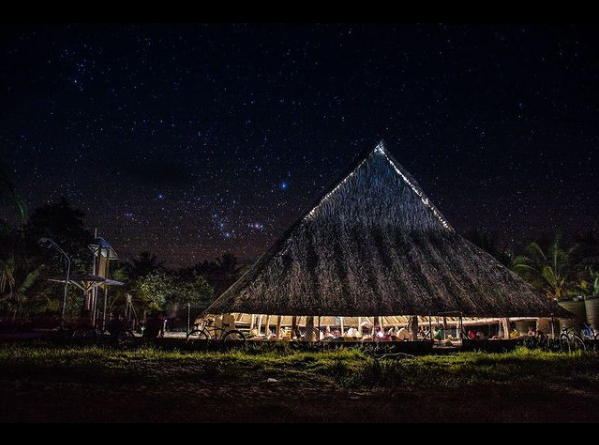
Teaote tells a story of Nareau the creator.
Teaote: And so it began while Nareau the creator spider, was a sleep when he heard his name been called three times. He opened his eyes, stretched his limbs and yawned. He looked for the caller and saw no one. He looked down and saw Te Bomatemaki, the earth and sky, sealed together floating down below.
He descended and stood on Te Bomatemaki, taking his tale to Te Bomatemaki and chanted, ‘I stamp, I stamp, over the skies to the North wood. There are neither spirits nor men but only I, the powerful Nareau. Dense, dense, rock, rock! Crack of what, crack of rock! Crack of what, crack of boulder is the powerful Nareau! Ooh let it crack.’ He repeated this three times.
He put both his hands and felt water and sand. Then he created the sun out of two spirits inside Te Bomatemaki. He named him Nareau the Wise.
Nareau the Wise said to Nareau the Creator, ‘we can’t do anything here. It’s too low for everyone to move.’ Nareau the Creator told him to lift the roof but found the roof too low. No one could lift it higher.
Na Kika, octopus, had 10 legs. Nareau the Wise took two of Na Kika’s legs and fed Riiki with them, the essence of procreation. As Riiki was eating, Nareau the Wise tapped on Riiki’s chest while chanting, to implant courage and to make him stand. ‘Firm be his hands, firm be his feet, firm be his body. We shall strengthen him. Lift the sky, lift the sky, lift higher and higher still, lift all, lift all together.’
Oh, as Riiki lifted the upper portion of Te Bomatemaki, Nareau the Wise ran below to the North and assisted him by chanting, ‘lift yourself Riiki, and lift! Let there be a tale, oh let there be a tallest! I shall run under the skies to the South, North, East and West.’
Riiki shouted, ‘how is it?’ Nareau replied, ‘raise it higher!’ and Riiki continued, while Nareau the Creator created light, winds, food, water, trees, ocean, sun, moon, stars and everything else.
Riiki shouted once again, ‘how is it?’ Nareau replied, ‘higher!’ and Riiki continued. Then Nareau stamped on Riiki’s tail which jerked Riiki right up, that he brought up the upper portion of the sky to its present height and Nareau told Riiki to stay up there in the sky. Riiki became Na Iabu, or the Milky Way.
In our story we see the Milky Way, and we remember what Riiki had done. That’s why we’re all up and walking about. So we can say even Nareau in the beginning made this world and the heavens our maneaba.
Knowing your place
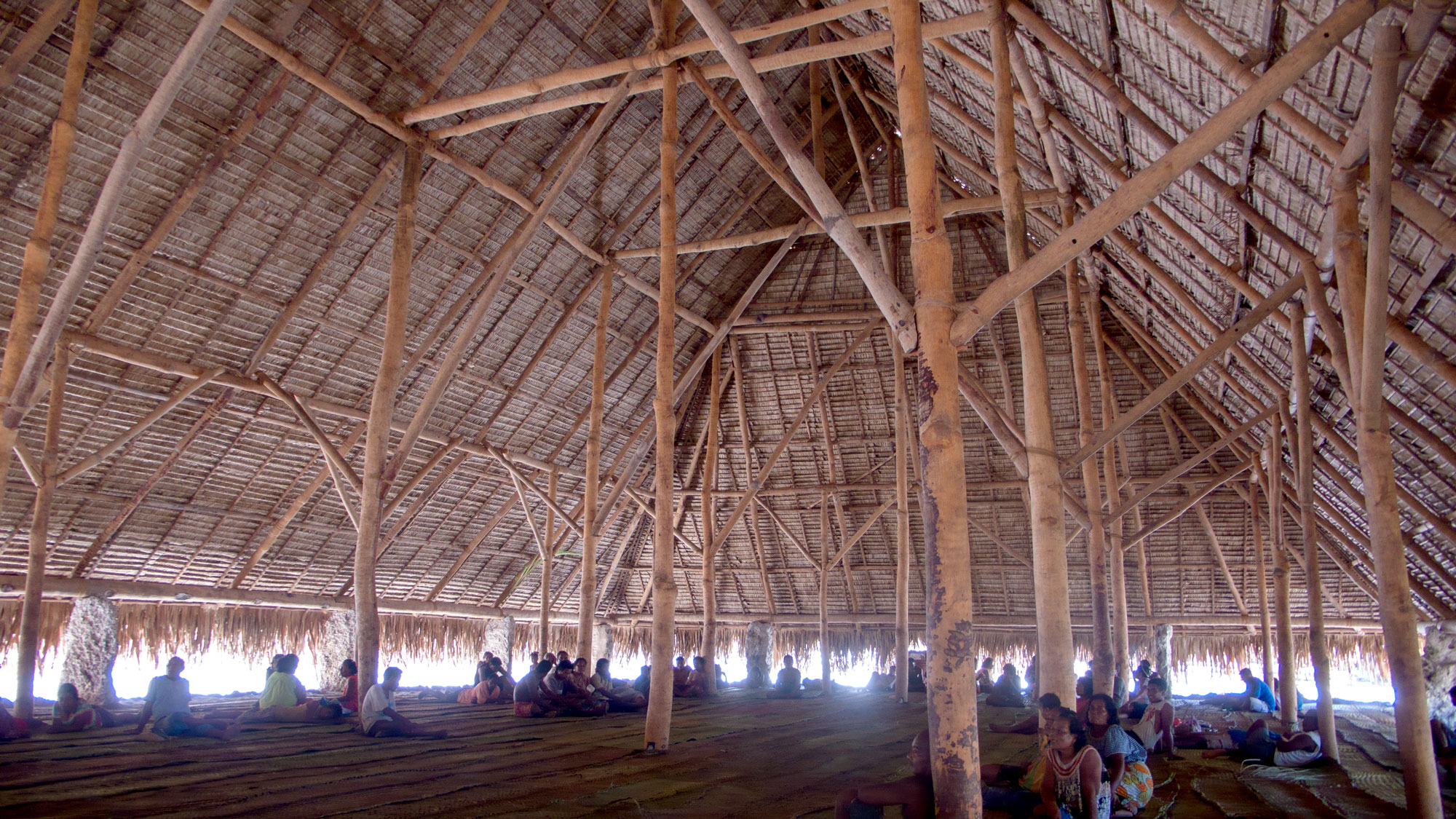
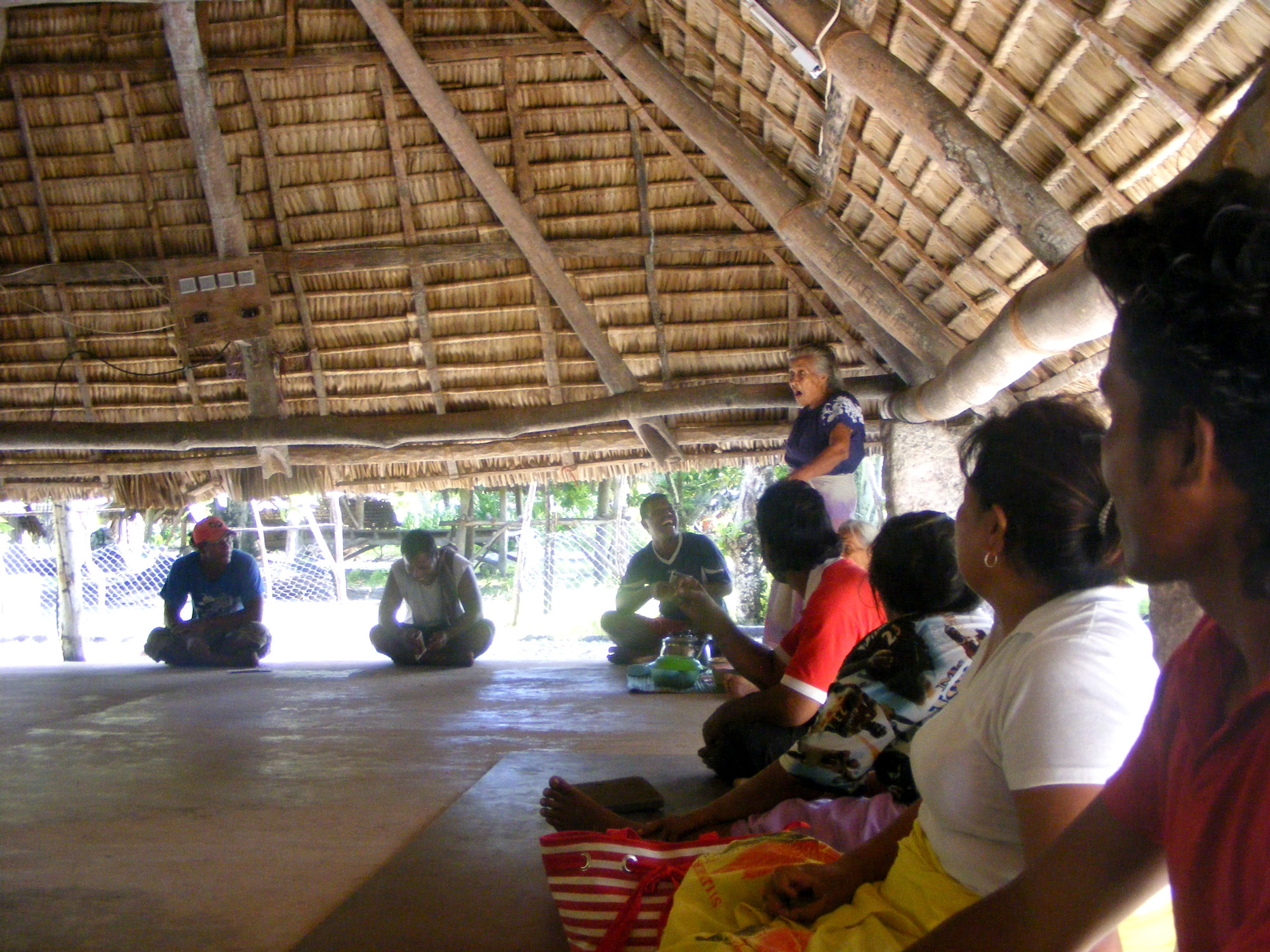
Teaote, Marita, Cassandra and Lucy speak about their place in the maneaba.
Teaote: There are positions right around the maneaba and these positions have meanings. When we live in the village, in your house, you're just about equal to everyone around you, right? Once you go into the maneaba you have a status.
Marita: It represents community and ancestral ties and elder respect, but it’s also where villages govern from. And so it’s where decisions are made for the community and democracy happens because everyone is at their posts and that’s where decisions are made in the maneaba.
Cassandra: When I said to mum, what did Grandma teach you, and she goes, ‘this is your allocated spot.’ So all the families come together under the maneaba for special events.
Lucy: Yeah, entertainment or something.
Cassandra: So every family has their own allocation inside the maneaba. And is that forever? Like always, it never changes? Lucy: It never changes, yeah.
Cassandra: So it’s passed down by each generation, so that’s where you stay. ‘Cause Mum said, ‘that’s my spot. That’s what Grandma taught us.’ And if we sit in another family’s allocation, they’ll say, ‘oh sorry, you're not supposed to sit here, you’re meant to, that’s your…‘ you know, obviously politely, but it’s all about coming together in that sense.
Matauninga
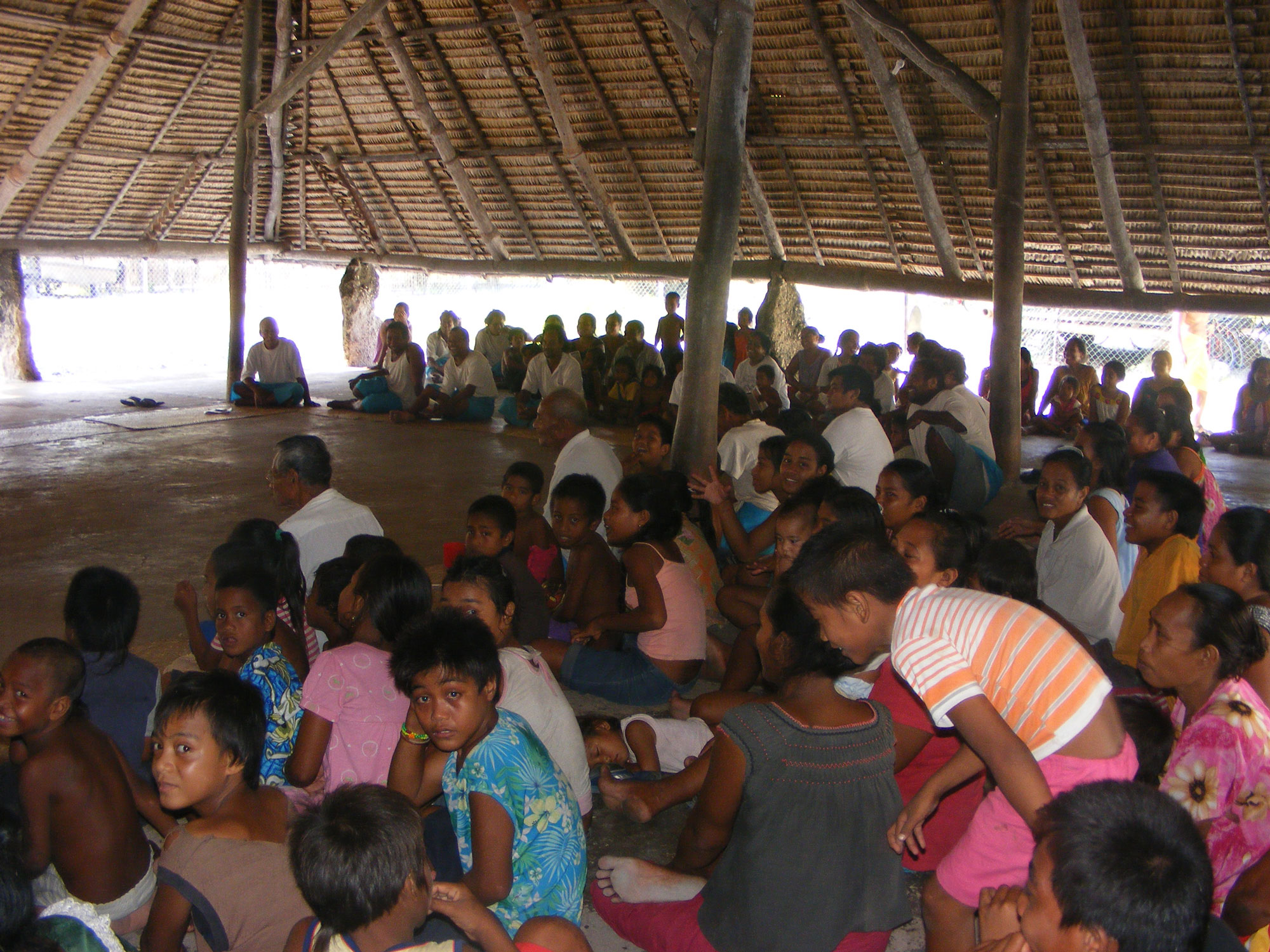
Photograph: Teaote Davies
Cassandra, Lucy and Marita describe I-Kiribati etiquette.
Lucy: What I know, what we’ve been taught by my mum, our grandmothers, grandparents ... to go in the maneaba, we call it ... very important for us, what do you call that, matauninga. You have to bend down to go inside. That’s number one in our Kiribati culture.
Cassandra: I think the maneaba etiquette starts to our everyday lives as I-kiribati people, I think how we bring that into our everyday lives is how we start to understand who we’re interacting with, the dynamics of the people around us, where conversations are happening across a table or across a room, we start to have that awareness of, even a whole building.
If people are speaking to each other or acknowledging each other, we look for a way to walk around that conversation and not interrupt. We start to understand who is the elder in the room and understand the dynamics of people around us. Even growing up and living in Australia, once that maneaba etiquette started to form a part of my identity and how I acted in the maneaba started to bleed into everywhere else in my life and it became into my body, how I started interacting with other people around me and that’s definitely derived from the way that you act in a maneaba and the people around you.
Lucy: Now you grow up in Australia, you’re born in Australia, but you still remember what your mum taught you, or you’ve been in Kiribati, you know what the word matauninga means. Not just in the maneaba but, like you said, walk around people, o rapproach people and things like that. No matter who we are, where we go, we always remember that word in us: matauninga.
Building the Maneaba
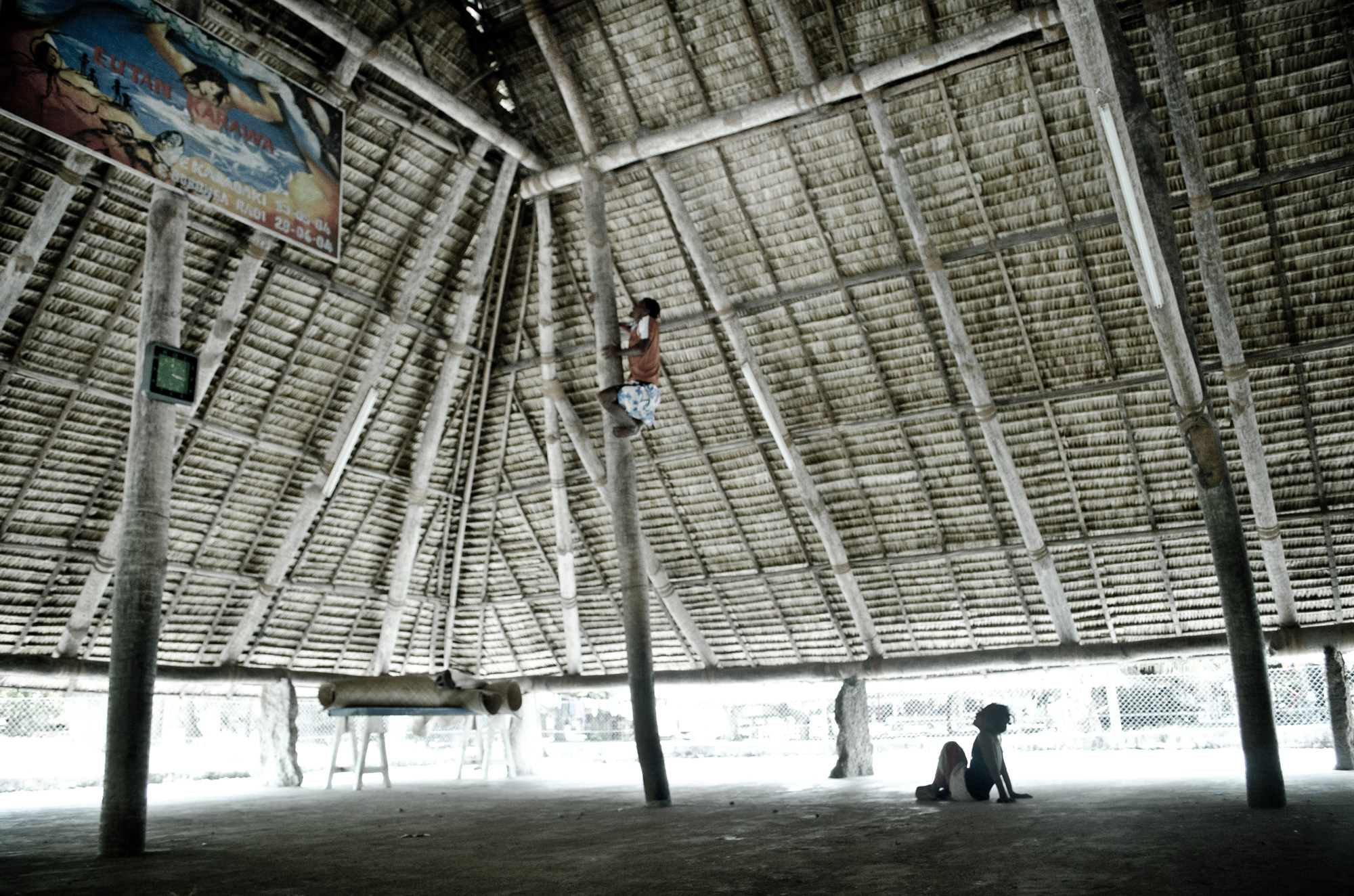
Cassandra, Lucy, Teaote and Marita share how the maneaba is built.
Cassandra and Lucy: So the first post, when you construct the maneaba, the first hole gets dug by the elder in the village and it's kind of blessing the maneaba construction with the first pothole being dug.
Teaote: There are maneaba builders—the people who build maneabas—and because the maneaba is, to the Kiribati mind, the maneaba is built with magic as well. And they believe that they have to do a ritual to bless them... so the building of the maneaba won’t kill them, it won’t interfere with their... it will bless them all the time. And so these people are well known all through the islands.
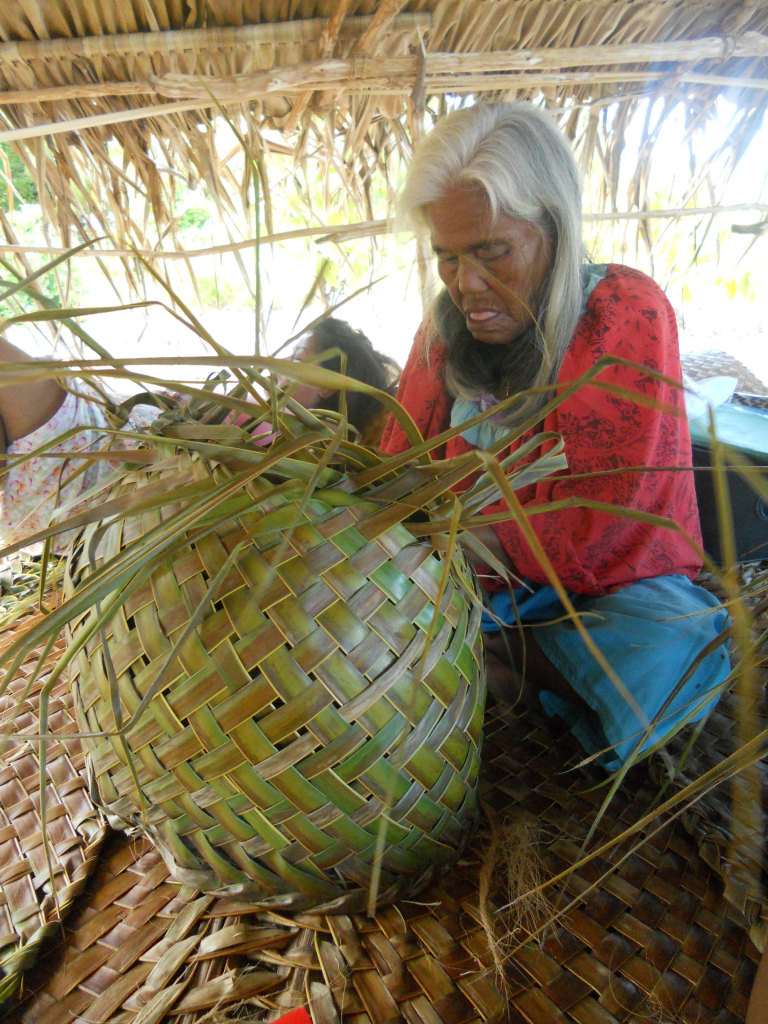
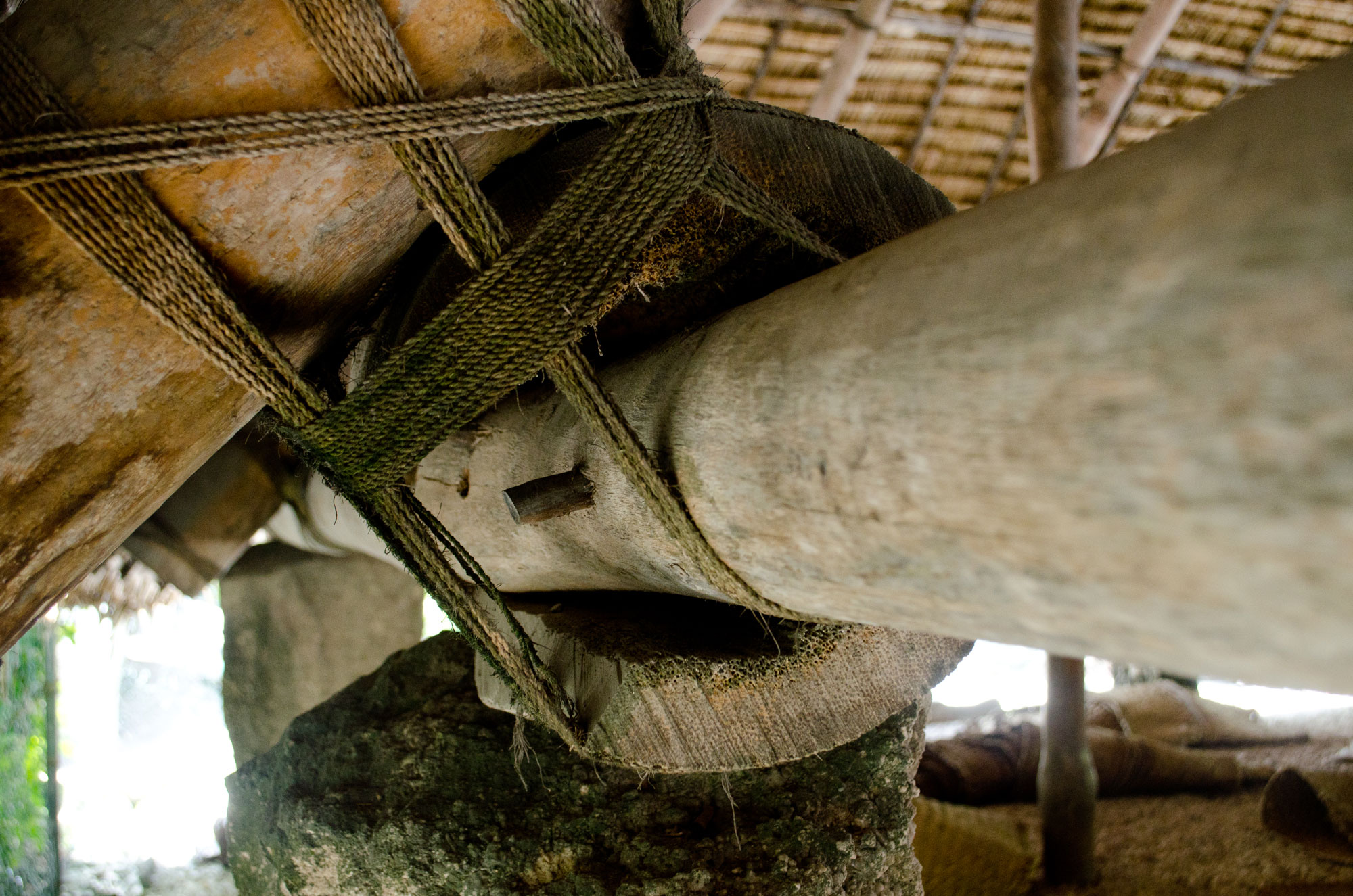
Marita: The thing that I really like about the construction of the maneaba, or te va, the canoe, is that even though it’s the men's role to build the structure, I really love the fact that it can’t be built without the women making the rope with the coconut husk. I use that as my own identity, thinking well, they can’t get anything done without the women … (laughter) literally holding together the community, that’s how I interpret it. Because they have built the rope that holds this huge structure, it's all dependent on how strong the rope is and how well made it is and so that’s dependent on the women's skill. So nothing, none of these structures can be built without rope and the coconut husk.
Celebrations
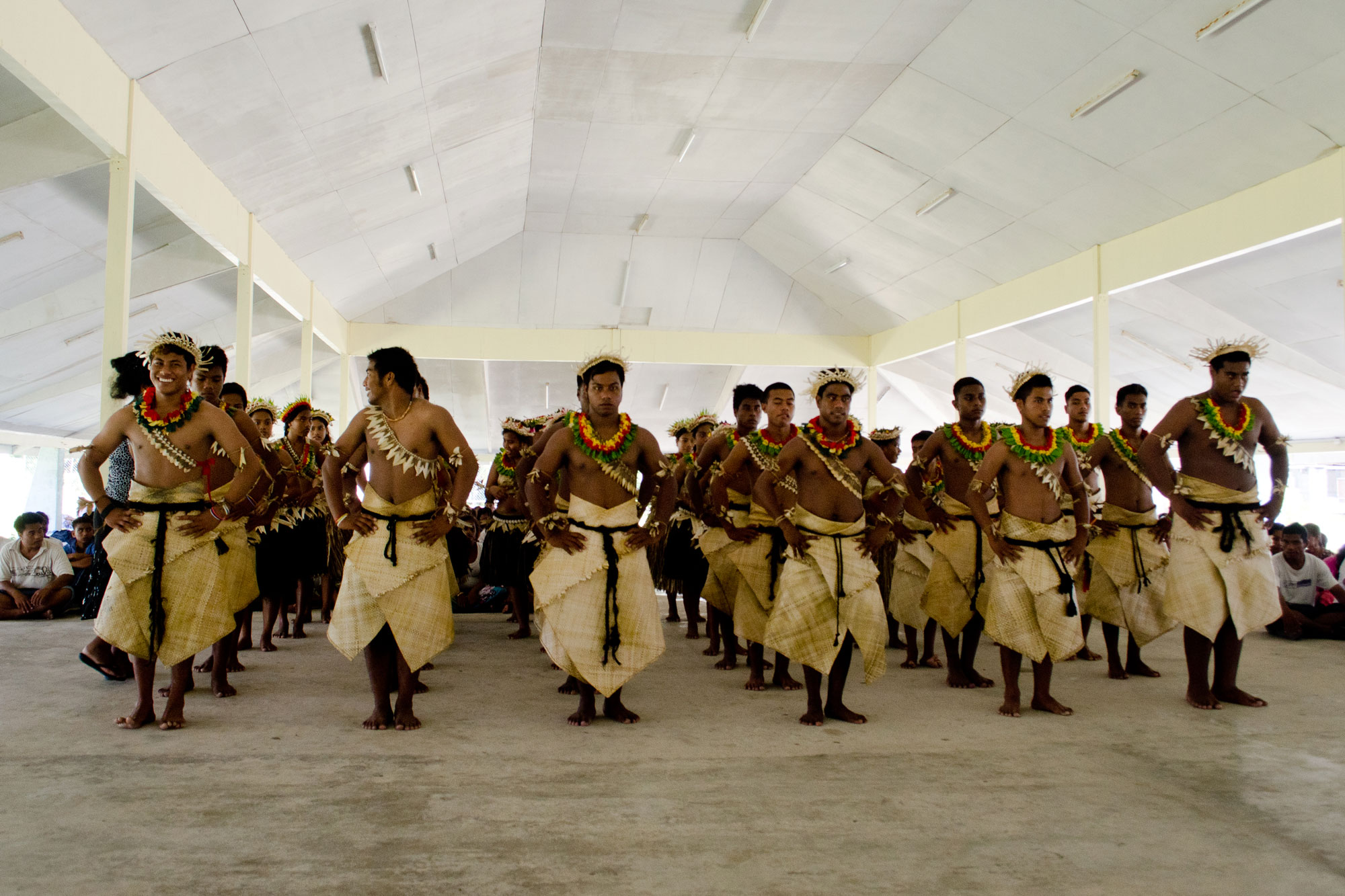
Cassandra and Lucy talk about important gatherings in the maneaba.
Cassandra: Dances and choir practices, all of this would be well rehearsed in the maneaba for the main event, and that’s what mum was saying, this is kind of all in the lead up for special events—the birthday of the maneaba and any other big events.
Lucy: Before we had a meeting in the maneaba or someone else coming to there, we just can’t turn up in the maneaba. We have the thing, it's like that kind of shell, you have to blow it. We call it te buu. You have to blow that and everyone knows something happened. Everyone just come to the maneaba and just sit there in their own position and wait, what's happening.
Teaote: Usually when there’s an important occasion, you know like coming to the maneaba, the criers will go around the island instead of like, you know like in Lucy’s case they blow the horns, well, when I grew up, the criers, they go around the village. Not around the village, but one goes to the end of the village, and the other goes to the other. And so, then they are the announcers. They announce the meeting. The meeting will be—and they will be yelling from the end of the village—the meeting will be at the maneaba at that time and everybody will hear that from one end to the other.
More stories
Explore more personal stories, sacred histories and treasures from Victorian Pacific communities.