Hifiulu and hukiteliga for Malaki and Ligipati Kamupala

Emma recounts her childrens’ experiences with their ceremonies.
Emma: It started off as just a hifiulu for the eldest son of the family. It’s a celebration for the mateniu and mateniu means eldest son for the family. So it’s like a family way of introducing their child, their son, to the village and saying that he is the one that will carry on the family. But then as time progresses it changes from just the eldest son, to all … if a family have more than more than one son, they’ll do it for all the sons instead rather than just the eldest one.
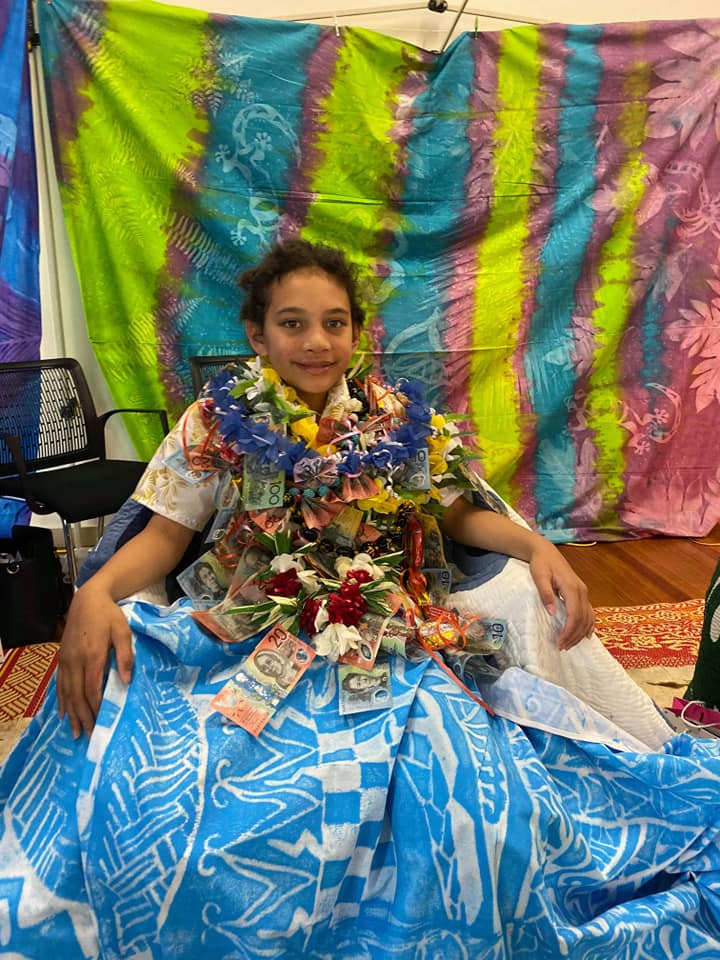
And then from there, the hukiteliga, which is the ear piercing is a more modern, introduced because some families who don’t have sons but still want to do the tradition celebrations so they use their daughters and have a hukiteliga instead. It’s a time for sharing with family and just to show our love and appreciation not just for our kids but how how blessed we are with our family togetherness. I always find this is the best time we have all of us together and just enjoy family time. It's more about spending family time together than the actual ceremony itself.
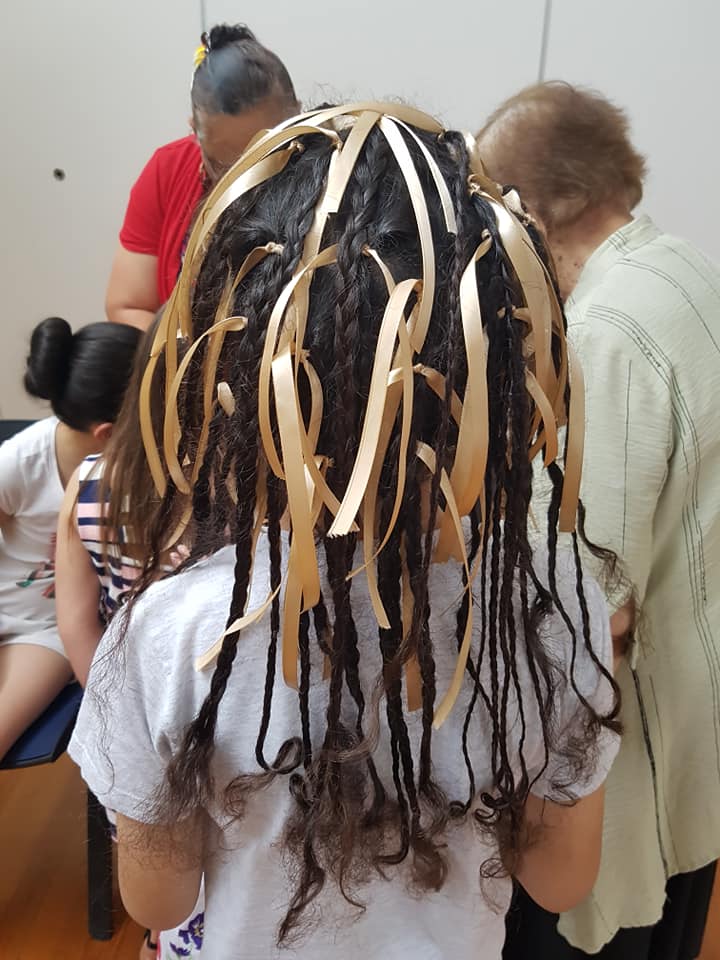
Both of them was very excited. Malaki was a bit sad though when they start cutting his hair, because the whole experience was foreign to him. We try to explain in a way that doesn’t confuse him on the culture. And then as he grew he kept asking, hassling us, when am I cutting my hair? When am I cutting my hair? And then we told him, it's part of our tradition that a boy will keep his hair long and then we’ll have a big hair cut for him.
Trying to tell him the story is not the same as him actually being a part of it. So when we try explaining to him why we have to keep his hair long, I don’t think he really understands the meaning of it until the day we had the function and it was a bit overwhelming for him! He realised that the people were actually taking his hair from him and he saw the gifts that people are giving him so he was happy, he was crying, he was feeling sad for his hair, that people are taking his hair.
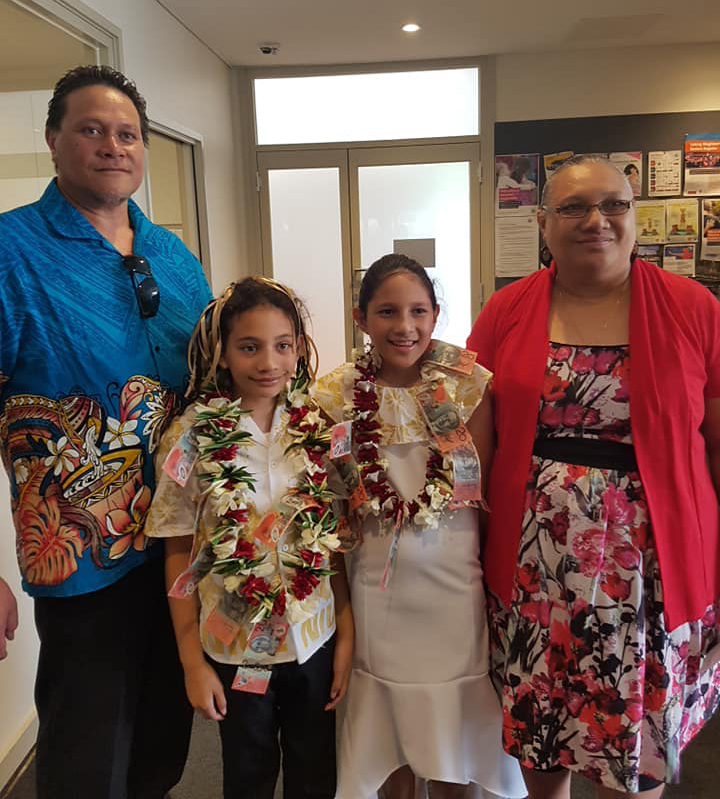
The sister on the other hand, she was just excited that she’s having her ears pierced, until they actually pierced her ears and goes ‘oh, that’s sore,’ and we said to her, at least we got you the ear piercing machine because in Niue, its different. They use the thorn from a lime tree and the little young green coconut. So that little green coconut will go behind your ear, and they get the lime thorn and they smack it through the ear.
Hifiulu and hukiteliga in Niue and Melbourne

Emma compares the ceremonies in Niue and Melbourne.
Emma: In Niue, it’s a little bit different because the family has to prepare two years in advance before the actual function because they have to decide where they gonna plant the taro for the function and then 10 months before the date, that’s when they clear their maala which is the plantation, they clear it and get the whole village or family to plant the taros.
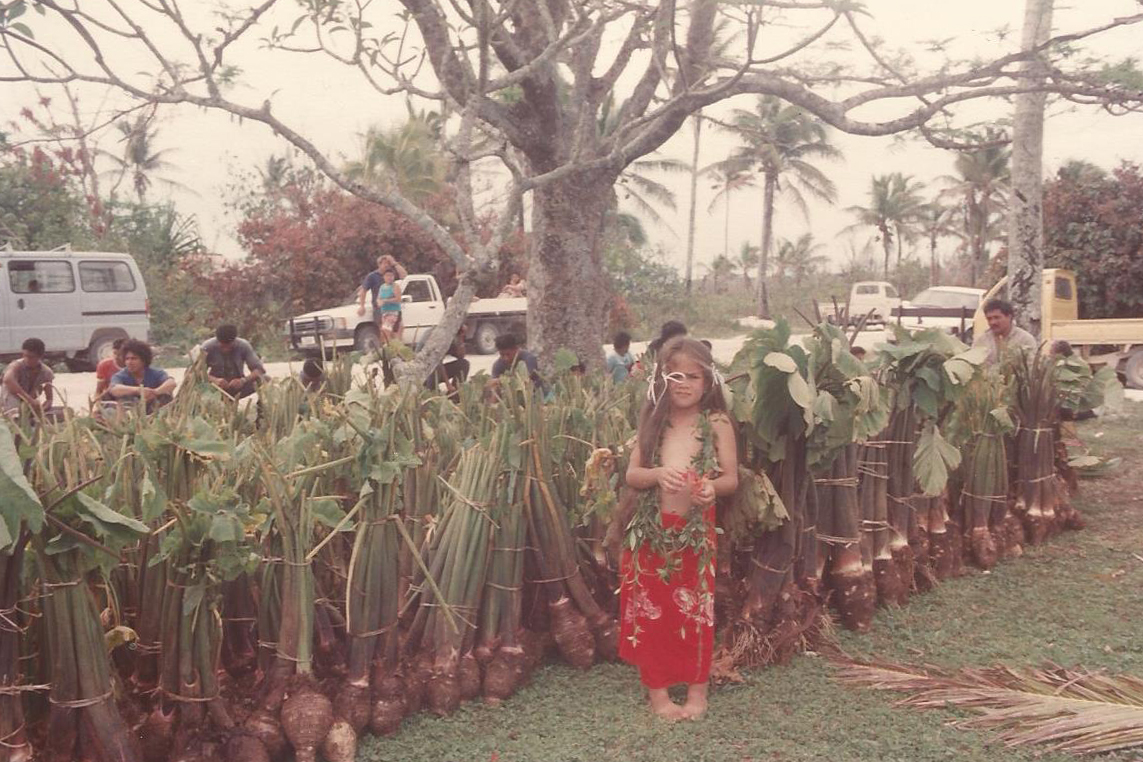
The week before the ceremony, that’s when it’s like a whole village kind of thing and it’s a whole week of preparation just before the function on a Saturday. On a Monday the family will probably... or the village women will come together to start weaving baskets and the baskets are used to harvest the taros two days before the function. And then on the day, people will come early and start prepping all the required for the galue | gifted food.
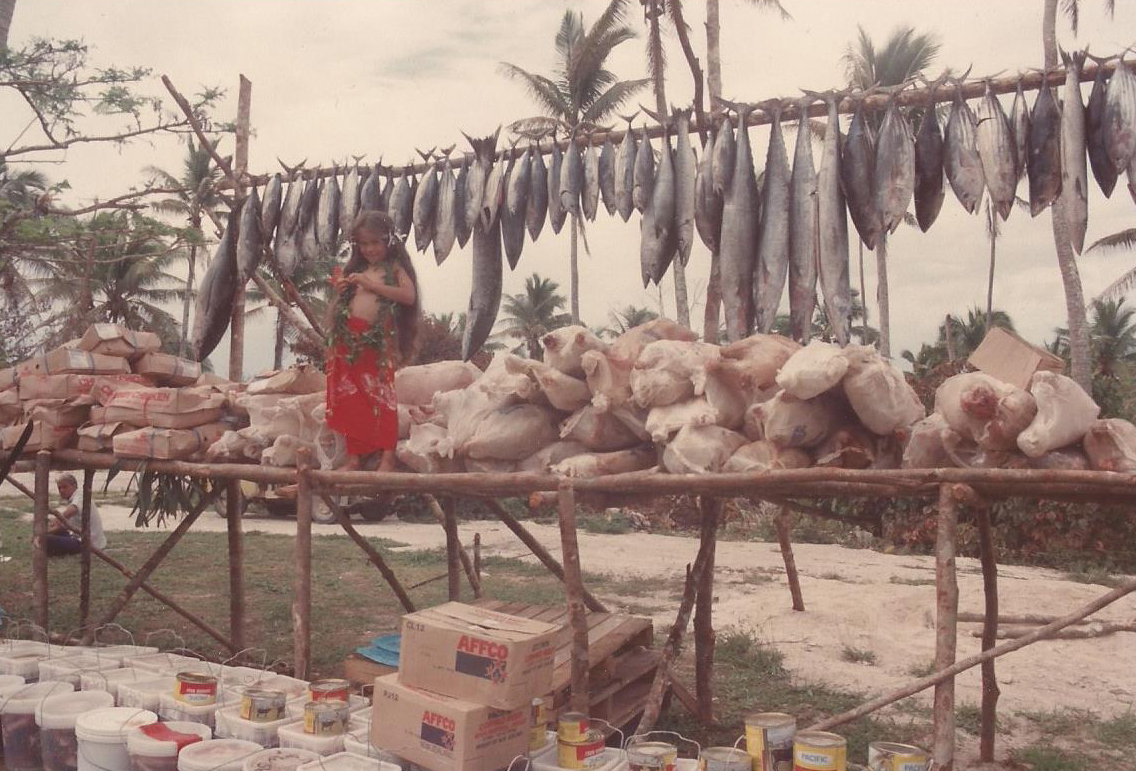
But now, things have changed, because there’s freezers and things they can use, they start preparing about a month earlier, so it doesn’t take up so much time on the actual day before the occasion. They have really incorporated the white man’s magic into it to now. Because back in the day they build a shelf. So what they do is they hang all the pigs and the fish from there and that shows how big your occasion is. How many pigs you have, how many fish, how many boxes of corned beef, how many buckets of that salt meat, the povi masima.
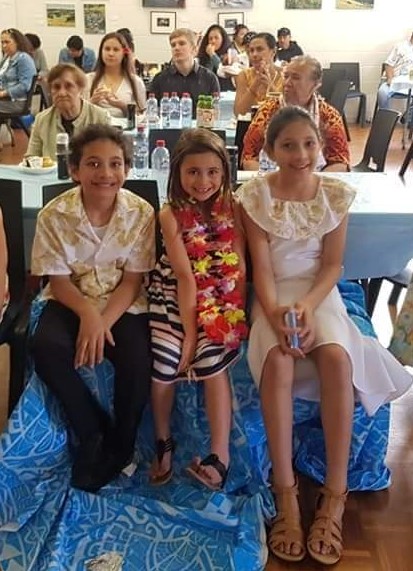
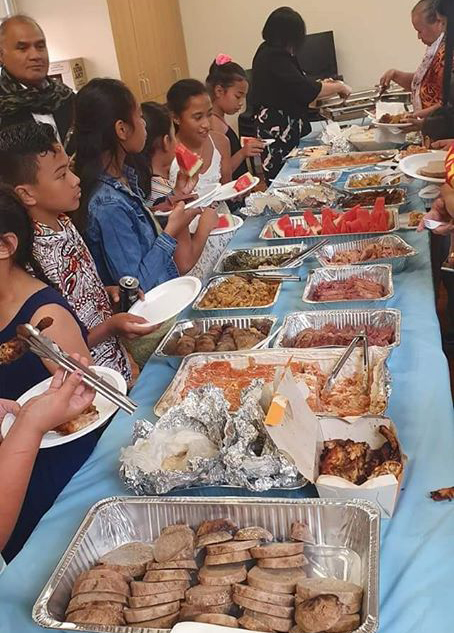
But here in Melbourne it's different. You invite your guests—it's just like a normal birthday party over here. The only difference is, how the food is distributed… we still pretty much run the function how we do it back home, it’s just that when it comes down to the food, we don’t distribute food so everyone doesn’t have their own little parcel to take home. We just put out the one big table and everyone can share. But back home the amount of food you take back home with you depends on the amount of money you give.

Some families prepare early so they make all their iepili | Niuean quilt early. But for people like me, I always wait last minute and then try squeeze everything in last minute and so it all depends on the family here.
So there wasn’t much preparations for us, because everything, we bought it all. We paid some to cater it on the day. So it was quite an easy process in terms ... but we still have an umu | earth oven though, we still have our Niue traditional umu and we tried to make the actual ceremony more like how we have it at home. We had all the iepili up, and tie-dyes and we have our hiapo | tapa cloth on the floor. Our occasion is not as stressful as the one back at home.
Reciprocity and gifting
Emma explains the meaning of the gifts that the children receive.
Emma: You see how much your family appreciates you on days like that when they come with things because you just invite them. You don’t expect anything from your family, but when they turn up and they bring you all these gifts you just feel warm inside to know that, it shows how much your family appreciate—even your friends—appreciate you.
For those occasions, iepili | Niuean quilt is the main highlight of the day where there are so many different kinds of iepili being put up on display. When people come up to cut the piece of hair, they’ll ask the child to get up, and then they’ll start putting iepili on the chair. It starts piling up to that point where it looks like a throne and it’s quite high.

People come with money and you have a choice, you either put your money in the envelope where no one can see how much money you give or you can put it as a lei and put it on the children. All that money still counts. Back in Niue that money all counts. Even here we still count it as your gift. And I know when our kids had theirs, the aunties that came up and cut Malaki’s hair, even the aunties that pierced Ligipati’s ears, it’s just something for them to show the child that that’s their love for them. So they put the gift on the child and cut a piece of hair or pierce their ears. Some come with money, some bring iepili or a mat.
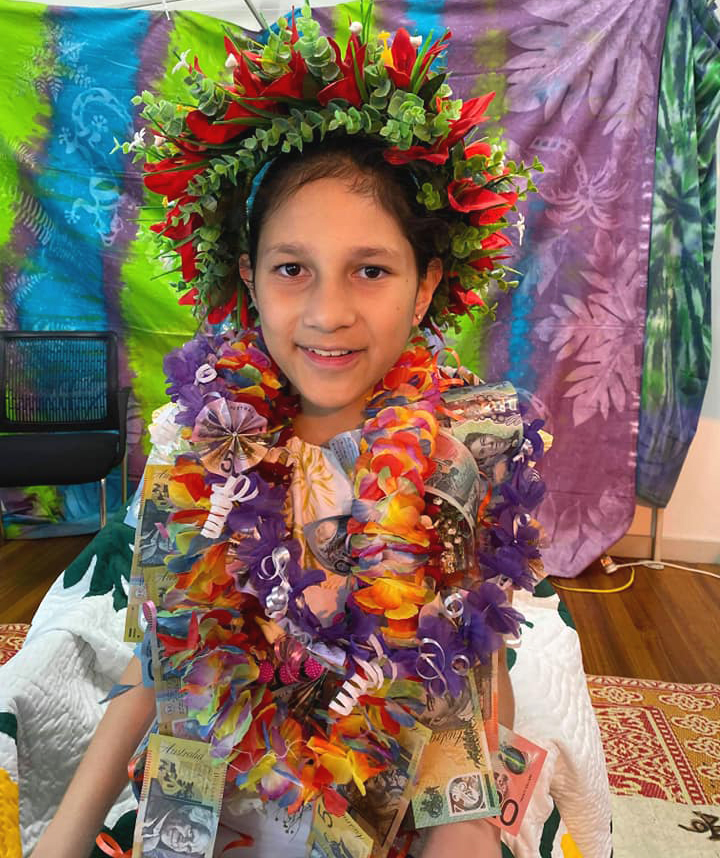
Photograph: Emma Kamupala / Source: Emma Kamupala
For our kids, we keep track of who gives them the kahoa | money necklace and which kahoa, so we note how much was on the lei. The ones in the envelopes is easy but it’s the lei that we have to a keep track of, who gives it to them, so we can count it later and make a note that this is how much money because over here not everyone does the hifiulu hukiteliga so we’re not going to give it back to that family through a hifiulu hukiteliga but we’ll probably give it back to them another way, probably a birthday down the road. How it works is what you get is what you have to give back some time in your life.
Umu
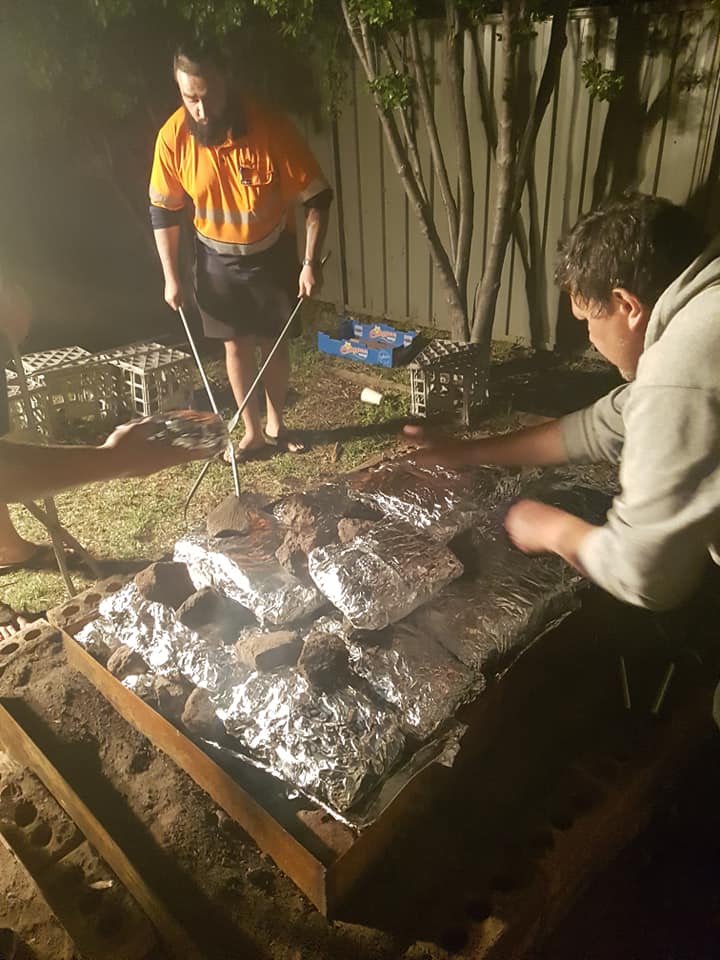
Emma tells how her family prepared the umu for the ceremony.
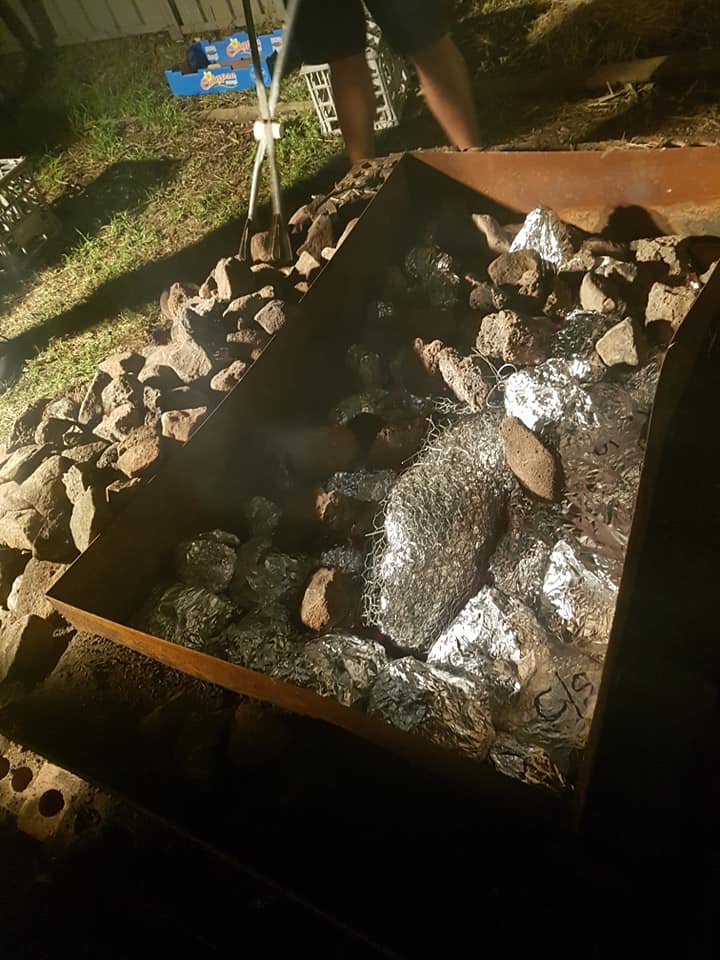
Emma: We had an umu here. The umu is an earth oven, so we didn’t really dig a hole, he just fixed this big drum and put it on the ground and went up the road and got some soil and put it around it and we got an umu. It still took us a week to prepare for the umu, so the weekend before he fixed the actual drum and everything on the ground. We already had the rocks from before and he got some more from his brothers. And then the food, it’s getting the food that’s really time consuming over here because everything is so far. We have to go to the taro shop about three kilometres away—oh no, more than that—taro shop is about 20 minutes away from home.
We try to cook as much Niue food as we can. The night before the function we had a few families that came and helped prepare the food and we had families who brought food to help us with our function so they came, one family brought a whole pig.
We stay up on Friday night, prepare the food for the umu. Because the umu takes a bit of time. We light it at around 8, 9 o’clock in the evening and prepare, wrap, all the food, have it ready. And we didn’t put it in the umu till 2 or 3 o’clock in the morning. So, put all the food, leave it for three hours and it's ready.

More stories
Explore more personal stories, sacred histories and treasures from Victorian Pacific communities.