Fanau o le moana, fade to grey
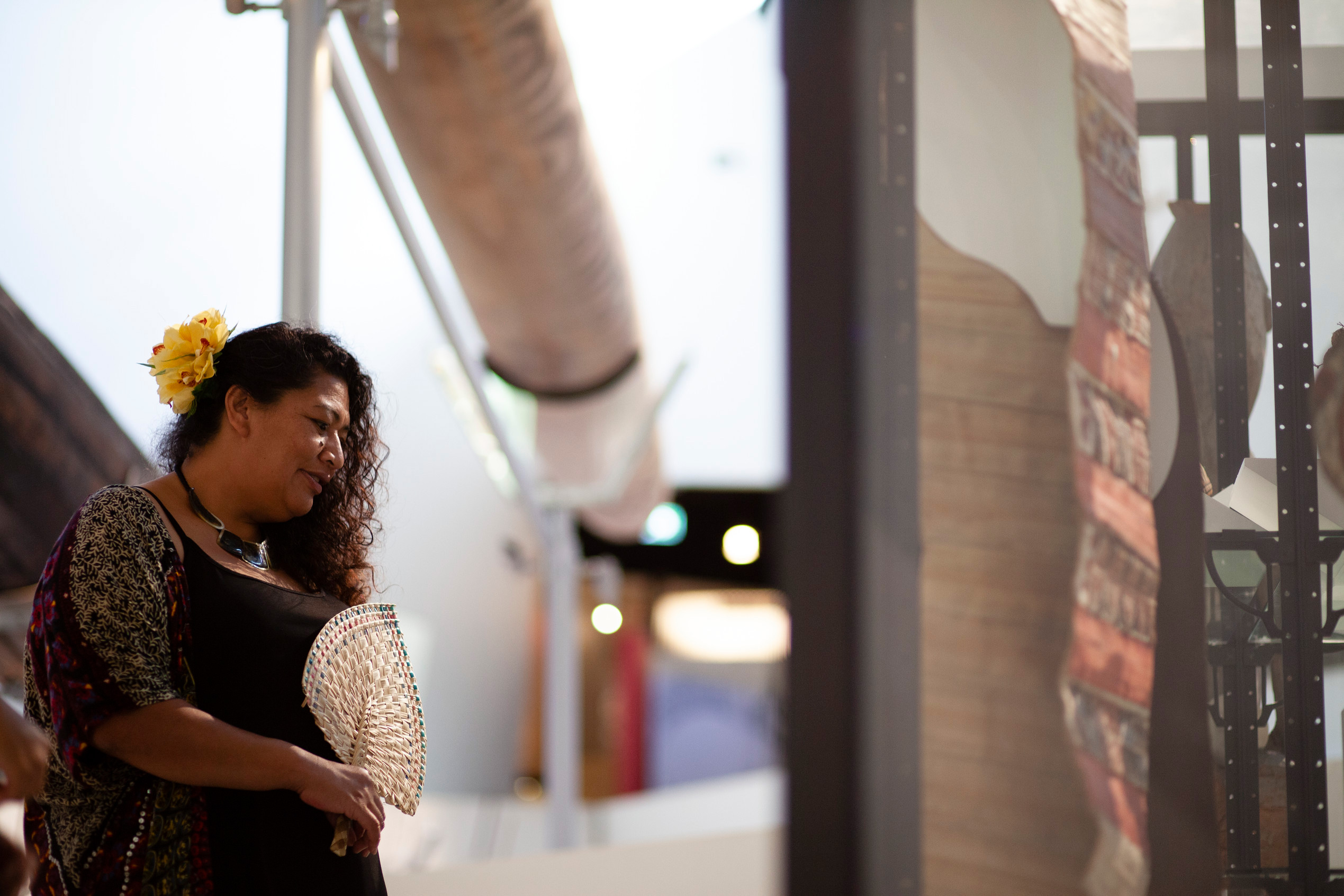
Listen to a performance piece by Grace Vanilau featuring Tribalincs.
Grace Vanilau:
I speak of a time
when the great waters
were our highways.
Fetū ma ‘aniva | stars and constellations
our maps.
We crossed
the great vast
with faith
The currents
and Tagaloa’s lights
would lead us,
towards a new existence
And with each great malaga | journey
we carried with us
our stories.
Tribalincs:
Verse one
Far beyond the reaches of the sea
A place I call my home country
Seeks my attention
A confirmation
Makes me who I am to be
Waves crash against the rocky shores
The sun sets itself
behind the palm trees
A voice calls to me
A memory
From the islands of my family
Chorus
Ooo ooo ooh
Don’t let your colours fade to grey
Grace Vanilau:
Adapting to heartbeats,
of our new environments.
Weaving moments
into narratives
You see our worlds
Are moving through spaces
Languages that extend
beyond mere words
Living, breathing
Oceanic cultures of orators
And story transference
through fluid movements
Genealogies and galaxies
inked ….across kalo | taro thighs.
Our worlds
are taming
savage thoughts,
of these thick skinned,
brown peoples’
western lived realities.
We don't do assimilation
You see, we
well we prefer
Adaptation
So if you can't absorb
what your eyes
can clearly see
Then just... FEEL
Gratitude in motion
as we pay homage
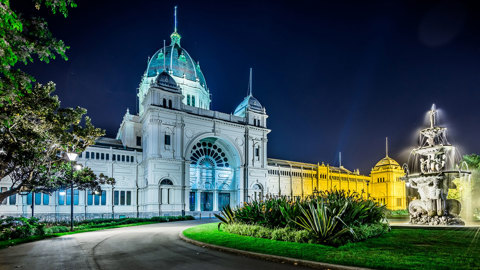
to this coastline
The ancestral lands
of the great Kulin Nations
where we now call home
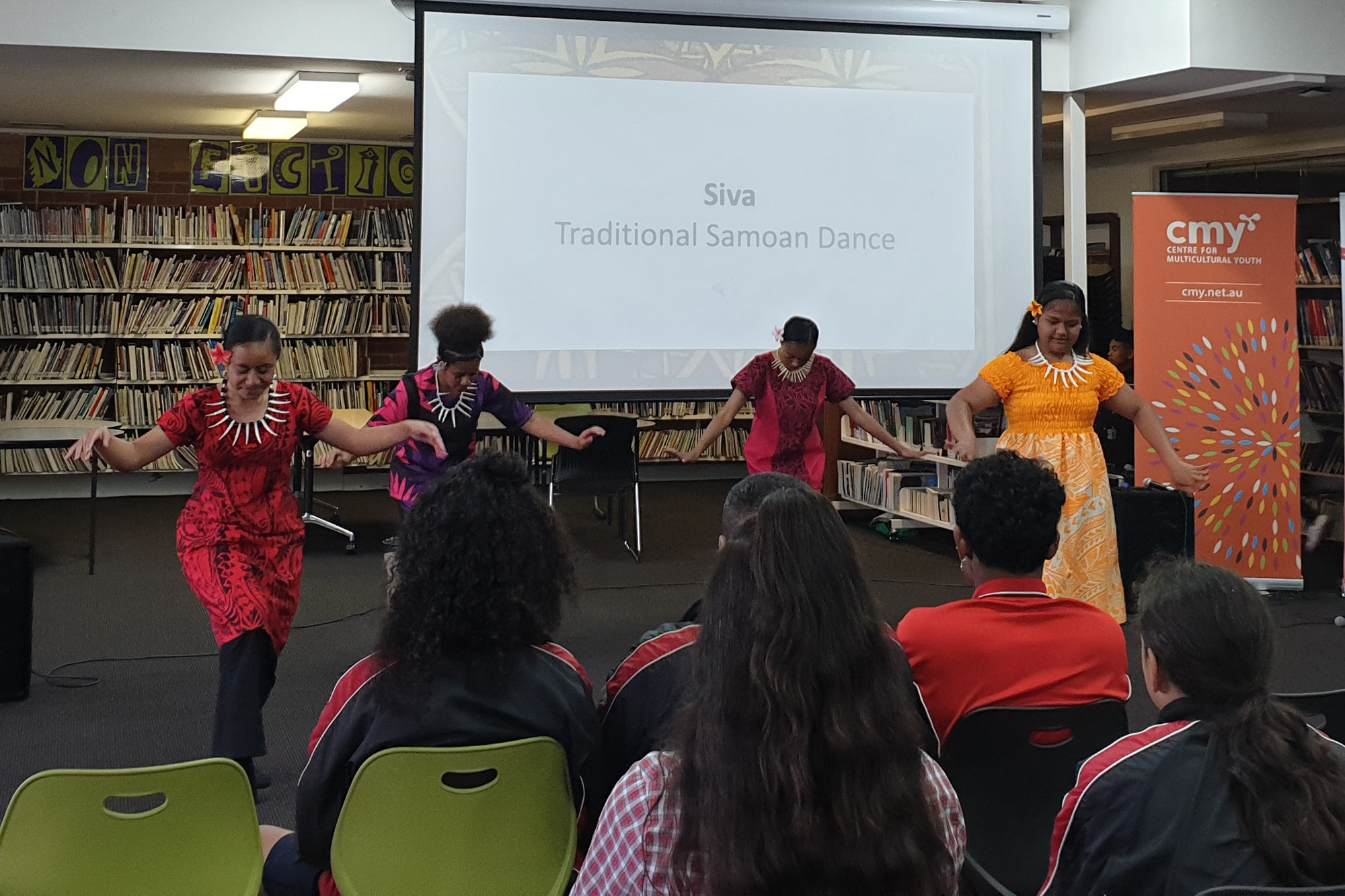
O mātou o Fanau ole Moana | it positions us strongly
we are Children of Oceania.
Elements and heartbeats
Trippin’ rhythms
Vibrations emanate from us
in sonic waves
This… is our imagery
Gathering energies
like Street Fighter power moves
HADOUKEN
Transmitting direct
from our hearts to yours
Awakening senses
Illuminating spaces.
NEXT ROUND
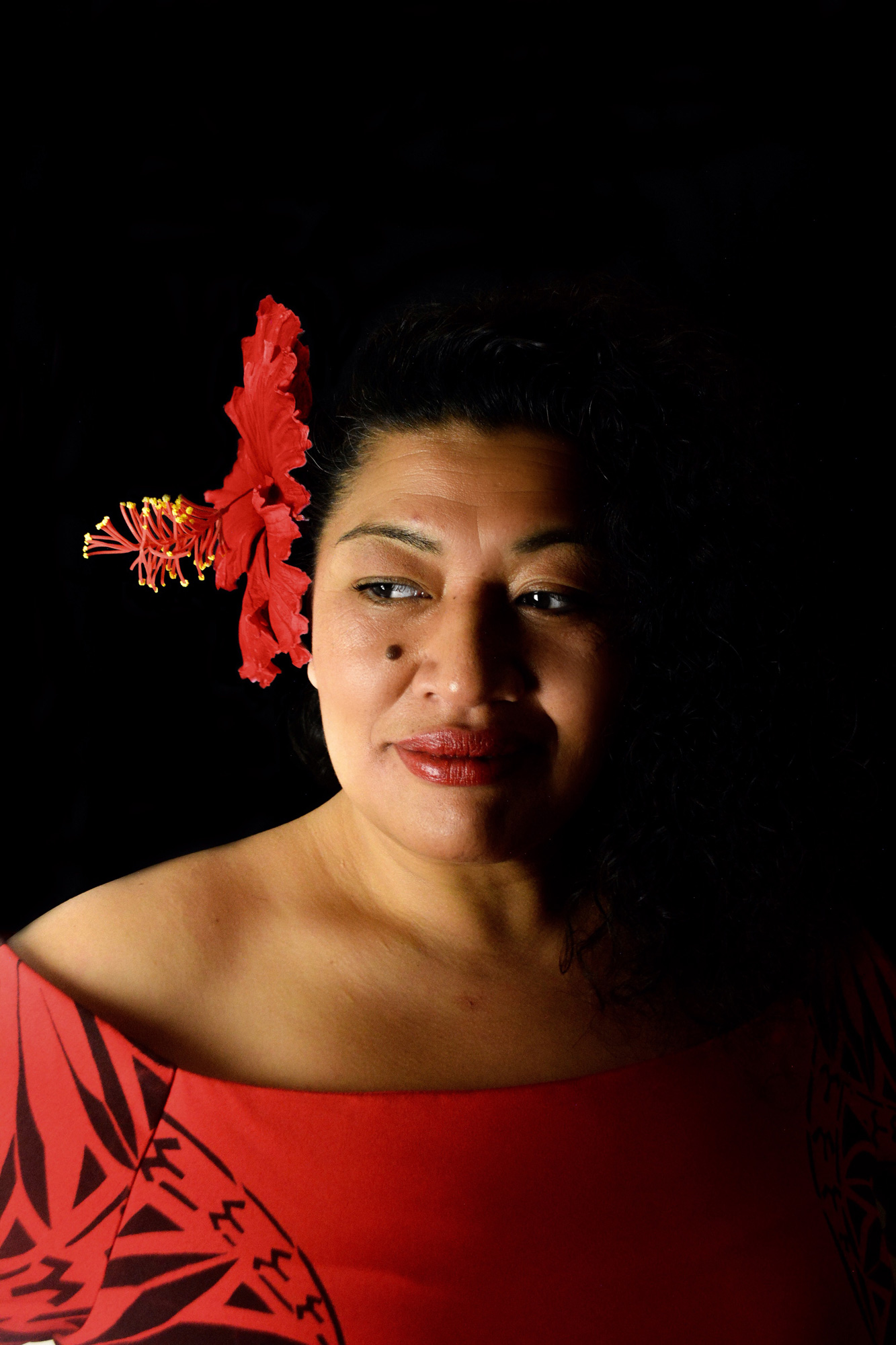
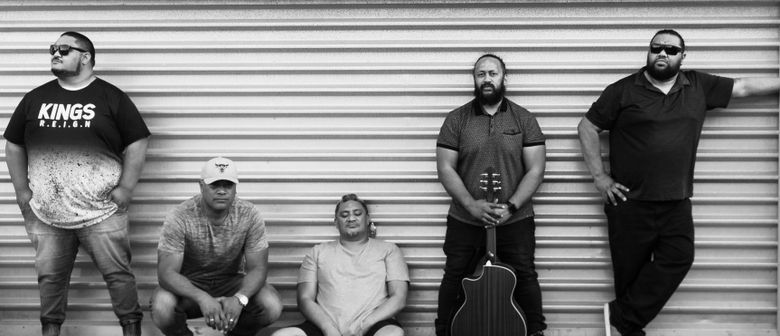
Le Mana — Empower
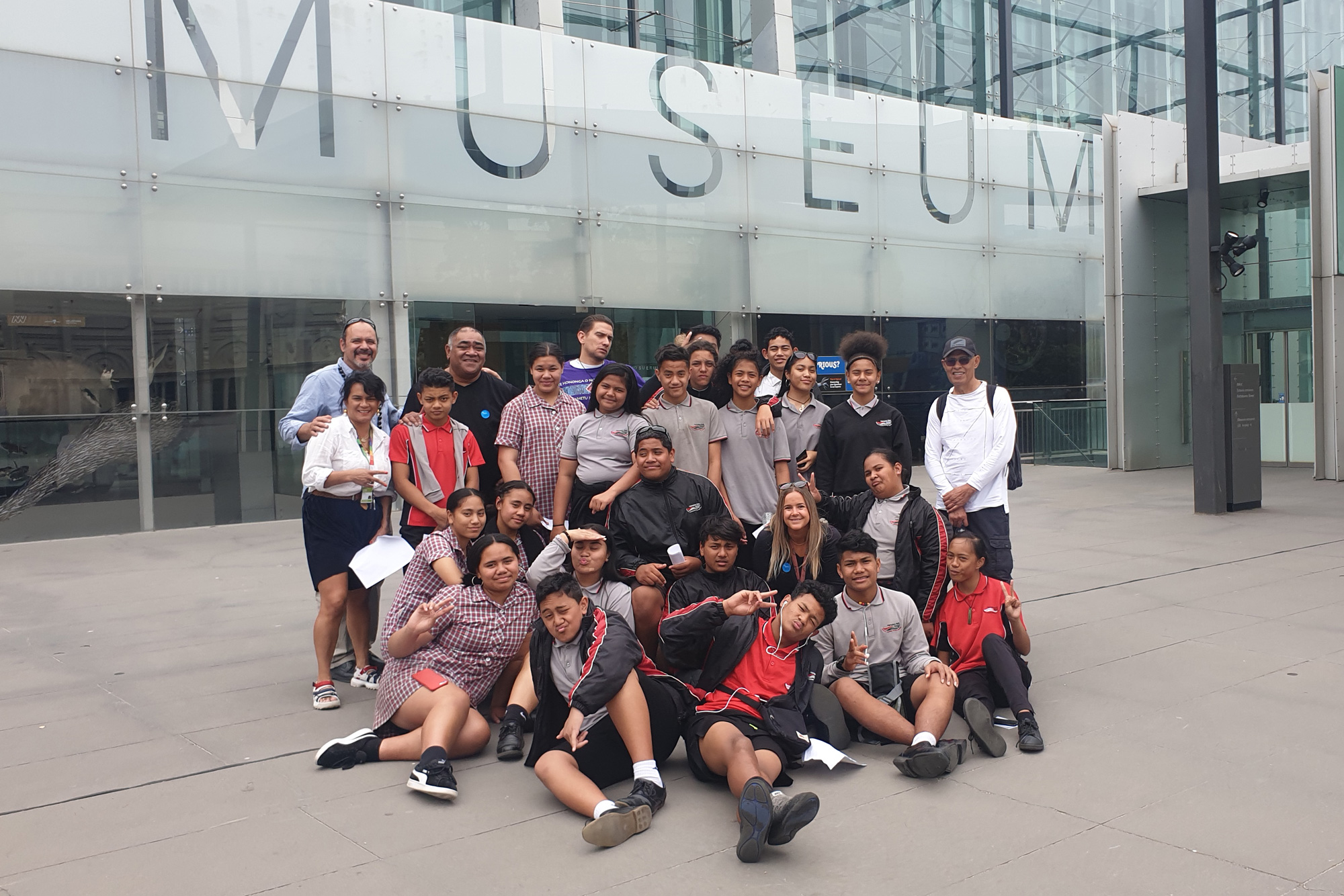
Paora and Temese speak about young people and the power of taonga | treasures.
Temese: One of the things that we really did when we delivered our activities was taking them back to their traditional identity. That was the platform we established right from the outset. You need to know who you are… you need to know—there’s a saying that you don’t know where you are heading into the future, if you don’t reflect on your past. Our young people don’t have an understanding of their past.
Part of that, when we did our activity, we realised when we got into contact with the museum, that they were opening an opportunity for us to come and see all our treasures, our measina and all that. So we thought, that’s a good opportunity for our young people. And man, we didn’t realise how much of an impact that would be on our young people until we actually took them out on the day. When they actually could literally just touch the treasures and hear the stories behind it from the staff there, how they acquired it, what the meaning of each of these items were.
And then we talked about the identity, the pride of your culture, the practice, the values. They were really impacted, ay. It was just all round a good day, you could just, felt the mana, and the pride in the young people. At the end, one of the young students got up and spoke on behalf of the group. It wasn’t planned, they just got up amongst themselves and talked about it and I think just, you know we talk about telling the story, we talk about the art of oratory and so these young people felt, you know, they felt, what’s the word, they felt blessed and privileged enough to get up and actually speak on behalf of the group and just thank the staff for everything they did. And just sitting back and watching it, you know just I think that was a really good learning, learning curve for the young people.
We went back and they were very very empowered. They couldn’t stop talking about what they had seen. It really sort of cemented and consolidated the programs that we did at the school.
Paora: For our young people just to be able to be in that space and build the relationship with our, the Pasifika team there, they explained their roles, ay, and our young people were blown away just to and hear, you know seeing our people in this space, that perhaps is predominantly western and our people are these experts in this space.
You know, yeah, it’s special and it’s hard for me to describe in words. It’s just these are the treasures of our ancestors, this is our connection to them. So I guess I was like, was thinking how did this get here? You know, what happened with our ancestors? It was beautiful to be there but our taonga were separated from our people through colonisation.
Temese: So we say in Sāmoa it’s a vā tapuia | space made sacred, ay. So, and because of the history of the story of how they were acquired, there could be an offence incurred there, ay. If there was, ah, angst towards this, forming this relationship, in the sense that these were taken away from our people without their consent, then that needs to be approached through the spiritual realm that we’re in as far as our identity as Pasifika, e iai le vā tapuia, we have to try and acknowledge that space. And if it means not repatriating a lot of the stuff back to where it belongs to but actually giving the blessings of the village, I mean of the people, to say ok we have now gone back and we've rebuilt this relationship. So when people come into the space, it’s a positive space, the relationship’s been restored in a sense.
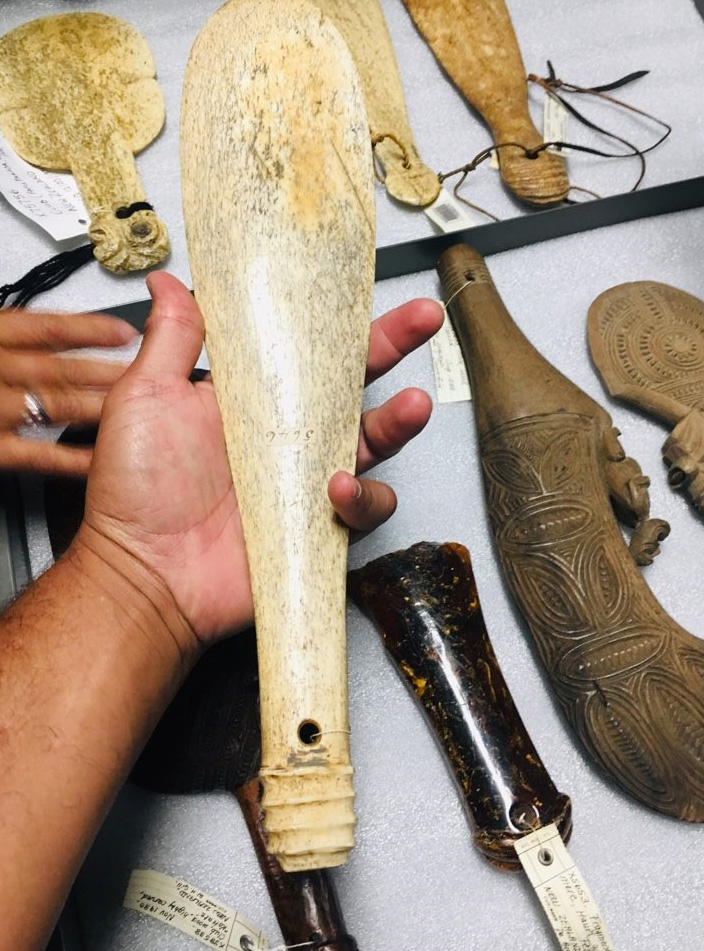
Aunty Elvie Rowe
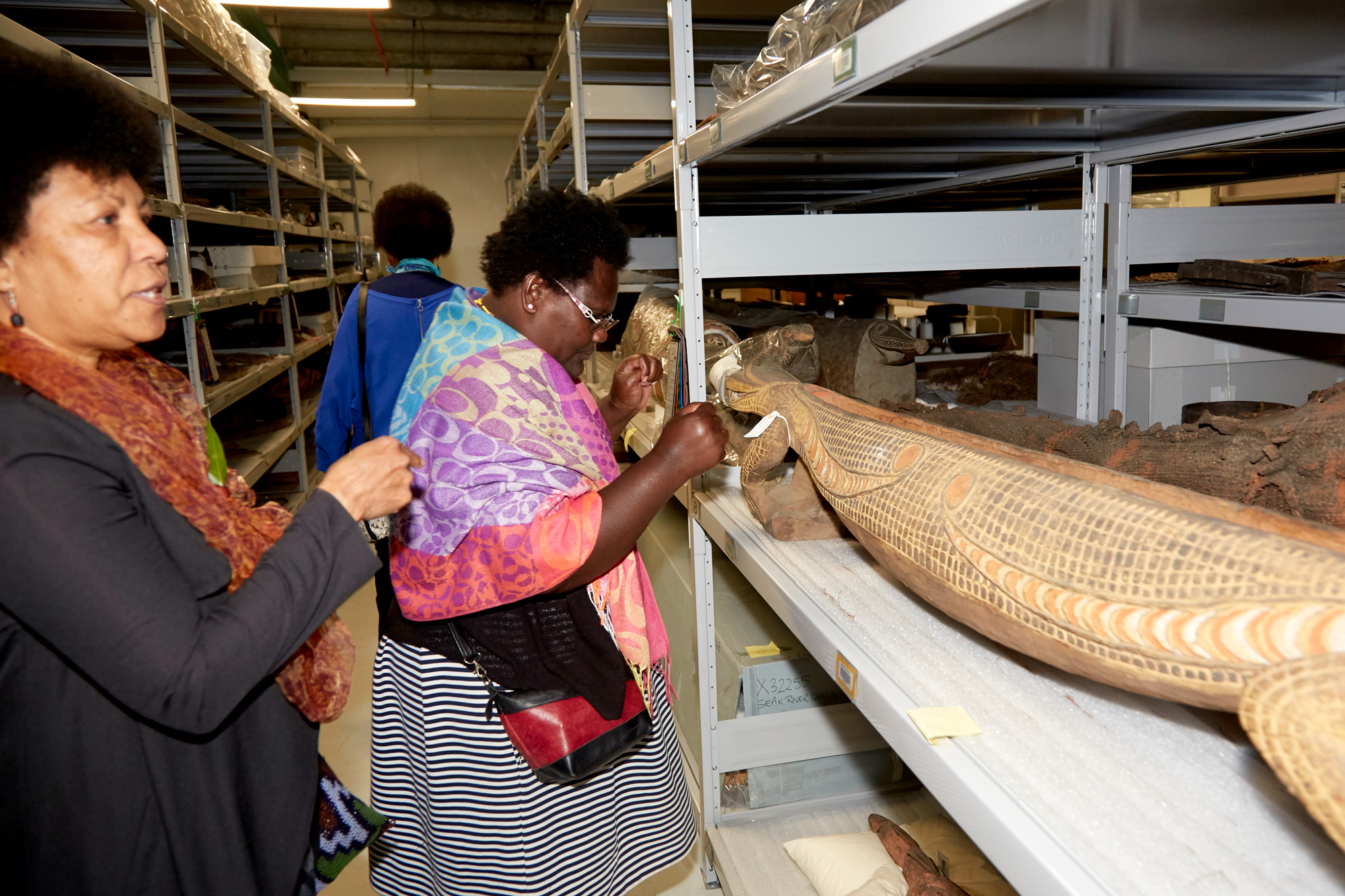
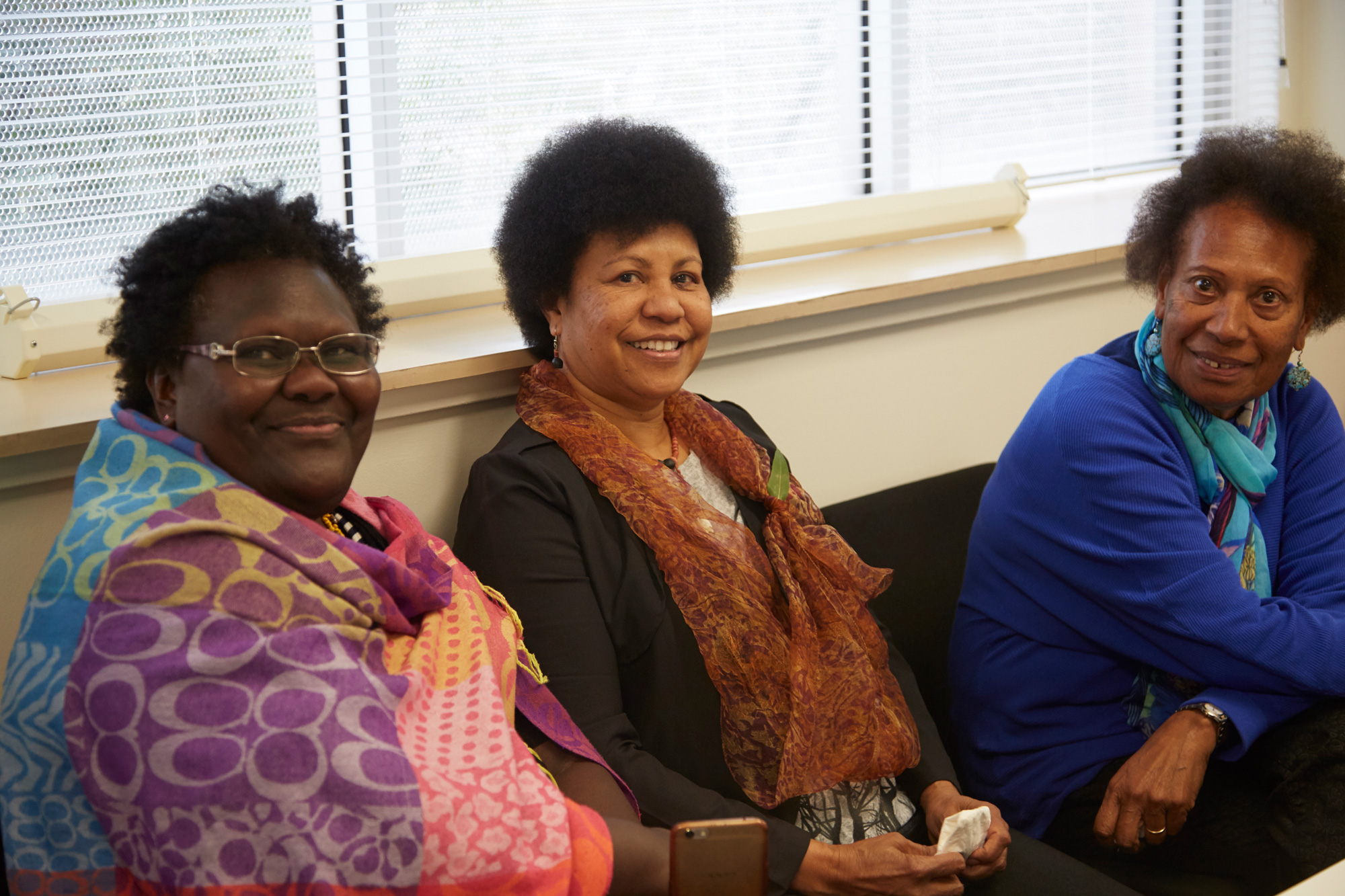
Aunty Elvie Rowe recalls seeing the collections for the first time.
Aunty Elvie: When I first walked into the room where the Melanesian collection and walking in I felt a sense of aura. I was so happy to be walking into this amazing feeling of oh, you know, this is my people. They’ve been waiting, they’ve been waiting for me to arrive. Before I went in to go down to all the you know collection where they were stored, my relatives, my ancestors, came and greeted me at the door. That’s exactly how I felt. It was a sense of belonging, sense of pull, saying ‘Come we are here, at long last you’ve come!’
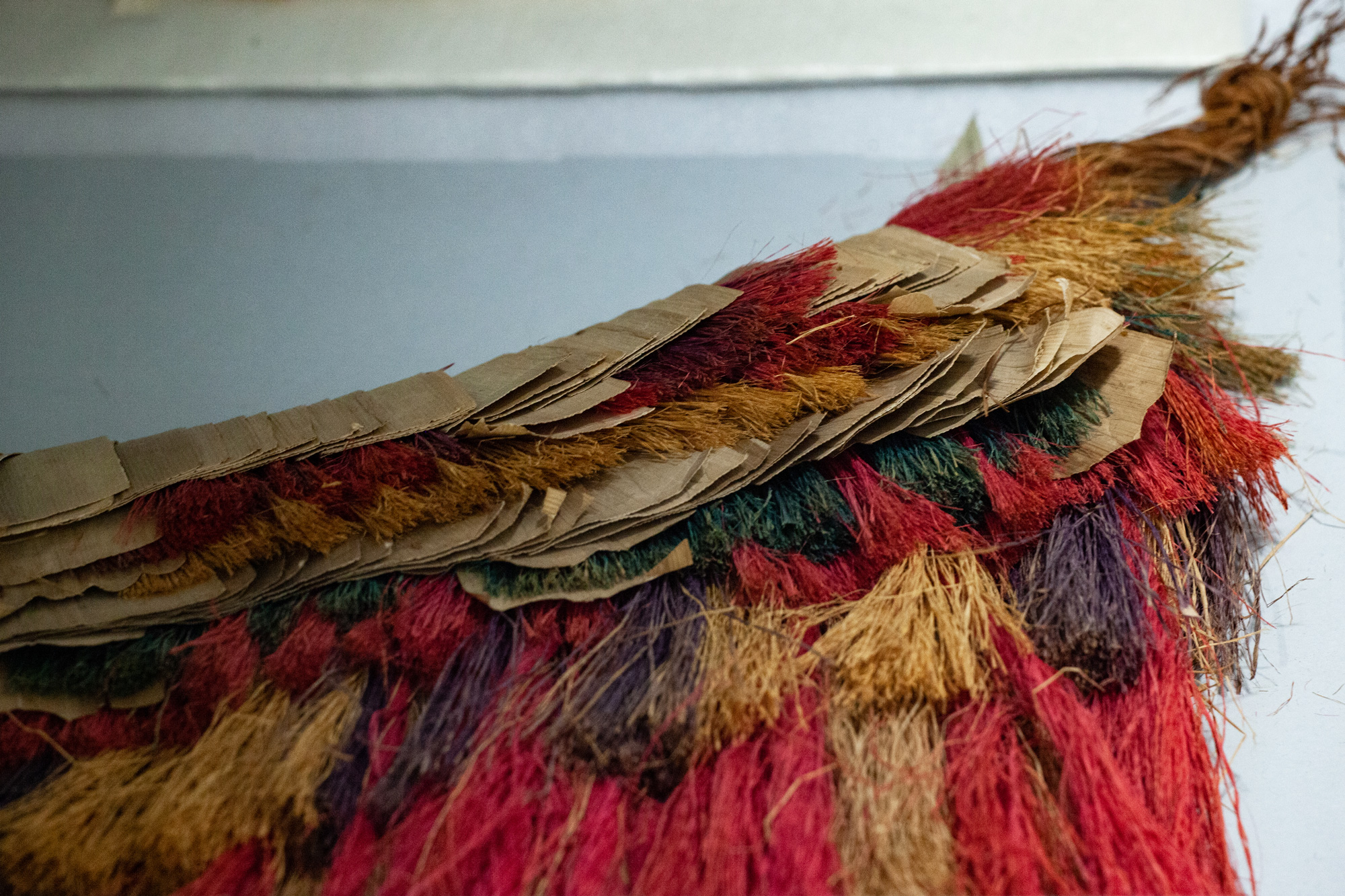
The Papua New Guinea, and especially the Milne Bay section, where I come from, my province, I had the hairs on the back of my neck and the back of my arms stand up. And I turned around, and I looked down and I noticed that there were these grass skirts that I recognised, that I know that came from my province. I was so overcome by emotion, and it was almost as if the people were there, the people who, the hands that made those artefacts were there. And those who wore those artefacts—grass skirts, spears, mats—the hands that made those, generations and generations ago. Just, it was just awesome, and I was in floods of tears as well as happy and sad at the same time… yeah. And as I speak about it now, I get very emotional, because it’s strong, those are our heritage.
There are certain grass skirts that are for dances, and certain grass skirts that are made for working or everyday living. And a lot of the artefacts that I’ve seen in there are things that are put away and they’re only brought out on very special occasions. So a lot of those things…. and we, we are not allowed to touch them, you know a lot of the, the…. especially to do with dancing, headdresses, and grass skirts and necklaces, and things like that, they belong to each and every person who is in the dance group. And a lot of those people are chosen; only certain people are allowed. And each and every one in that group, looks after their own gear, artefacts, and they hide them away and only bring them out at certain times. And there are also rituals that go in with those. I have to have respect and not touch it.
Ahhh, the sadness was from the fact that they were locked, they’d been taken away from their home provinces, from Papua New Guinea, Melanesians, the Pacific, a lot of the artefacts were taken away. And I felt sad about that. That they were taken away. But at the same time, I was also happy because they’d been preserved. Everything evolves, right, and a lot of those old artefacts are probably not there anymore in Papua New Guinea because a lot of the artefacts were made from wood, from grass, from palm trees, which over time can deteriorate. They become brittle and they break. But by the way they’ve kept them is also preserving them, which means that the custom and culture will continue on for a long long time because they’ve been looked after. But at the same time it will be good for them to be brought out in the open, so that people can see it. And the next generations will be able to look at them and learn from those artefacts.
The creators would be so happy to have their ancestors come and look at them. But it’s connecting. And for the young Pacific Islanders and Papua New Guineans living down here, for them to come in and see it, it’s a connection, so they say ‘Oh, those are ours, that’s where I’ve come from.’ That this is our custom and our culture, and we’re proud of it. So if you bring the community in, and it has to be ongoing, because the community has stories and it keeps it alive. It keeps the custom and the culture, and it keeps those artefacts alive so that they’re just objects placed aside and forgotten which is what happened in the past. For those artefacts to be put in vaults, and said ‘oh, they are not that important,’ of course they're important, we are important. Those artefacts are us. They're who we are!
Amethyst
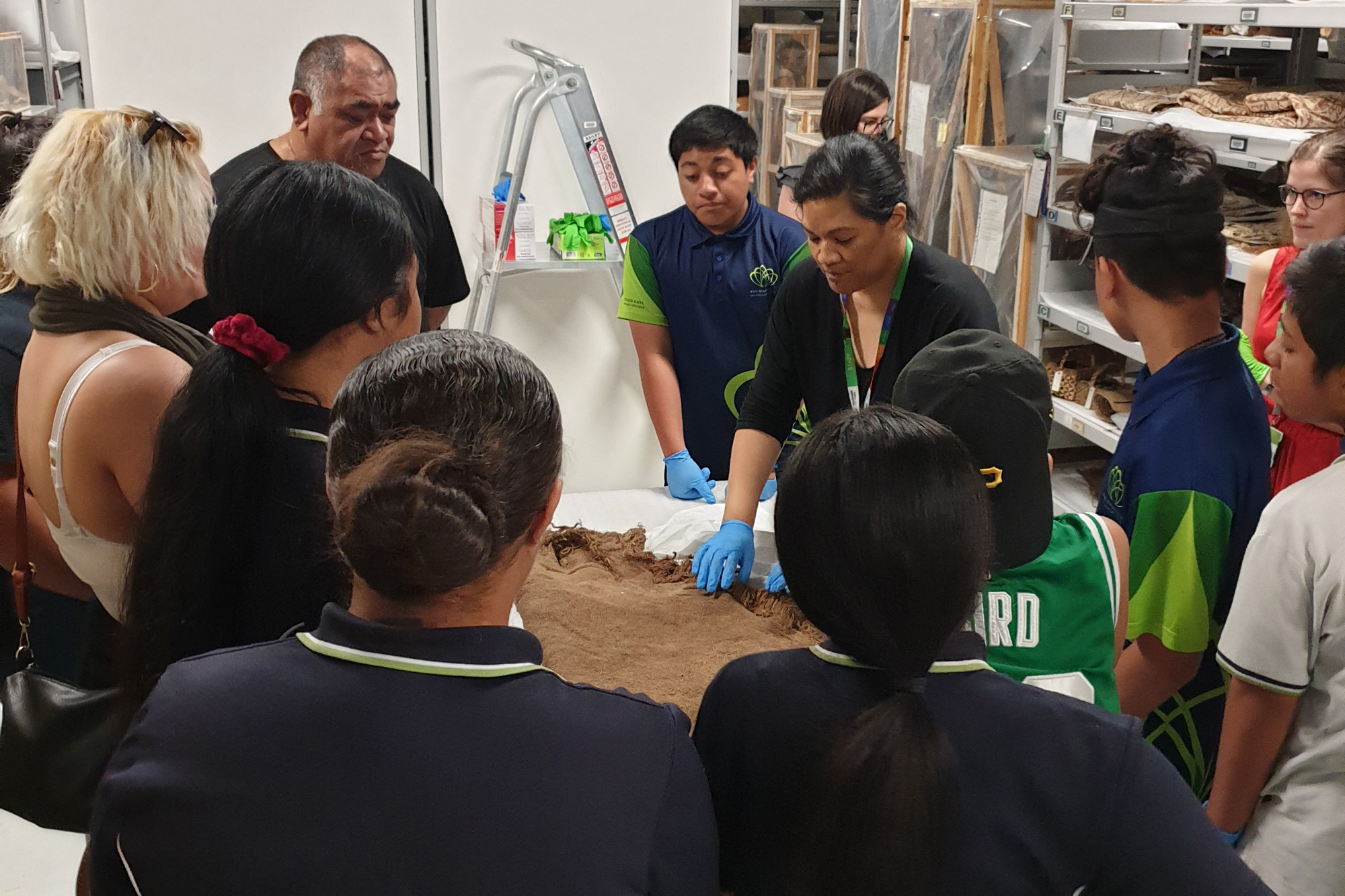
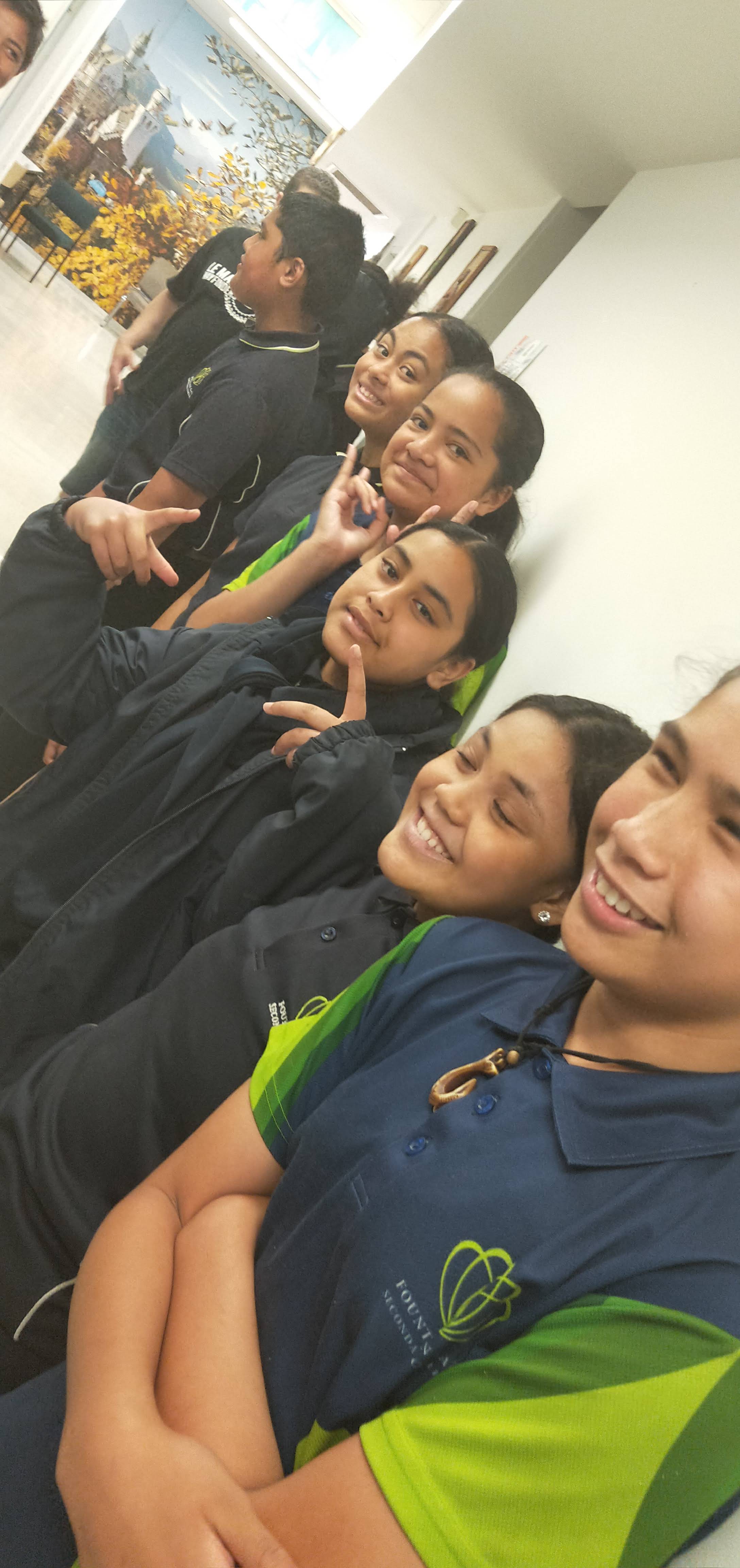
Kia ora | hello, I'm Amethyst and I'm 14 years old. I'm from Napier, New Zealand. I live in Melbourne now and I go to Fountain Gate Secondary College and I'm in Year 8. I'm half Māori and half Samoan.
When we went to the Pasifika collection store at the museum, it was really cool when I first walked into one of the rooms with just like different things and it was really cool to see them. I got to see new things that I haven't seen before in my life. The designs on them were so cool.
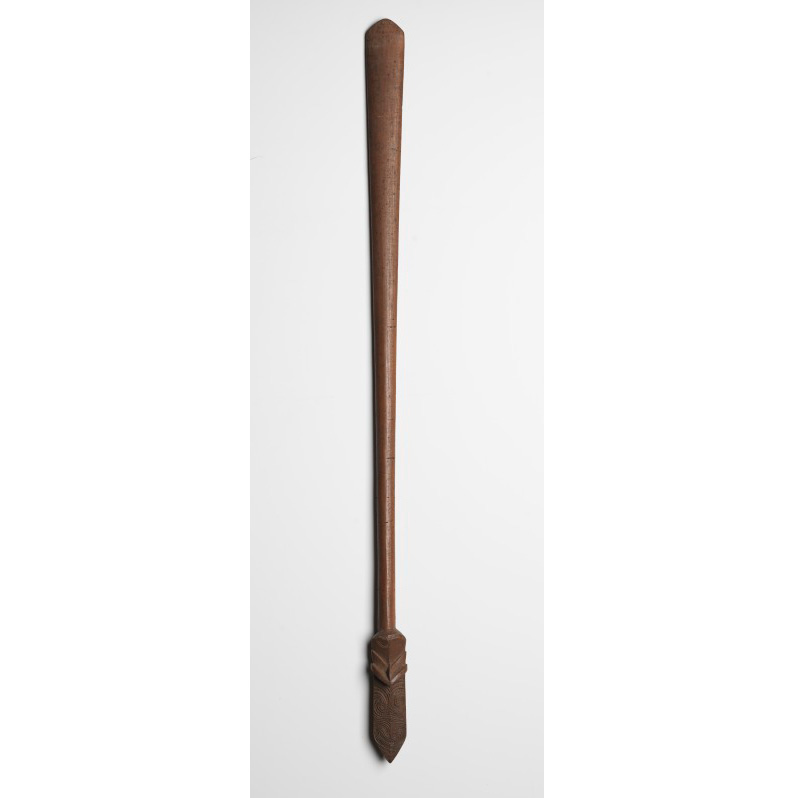
I remember seeing masks from other countries. I saw the patu | club and then I saw the taiaha | staff weapon. The weapons were really cool to see. I was surprised and like, shocked. It's just really cool to see them and like, how the staff explained them, what they were used for and where they came from. Yeah. It exploded in my brain. I still wonder, like, who made them and stuff. I would really love to go back to see it again, to see them all again.
I think it's important for people to visit the collection because so that they can experience new things in life and learn more about their culture, and where and how it all started and stuff. So that they can learn more about like, where we're from and just learn more about our Māori culture and our Samoan culture.
More stories
Explore more personal stories, sacred histories and treasures from Victorian Pacific communities.