Take a seat in our Lightning Theatre and be mesmerised by this visually stunning 30-minute live science show.

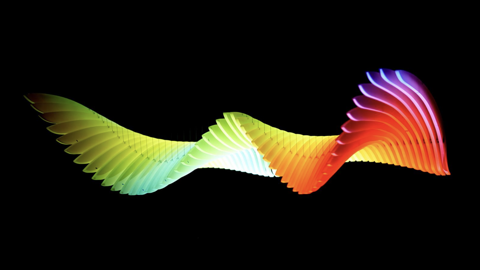
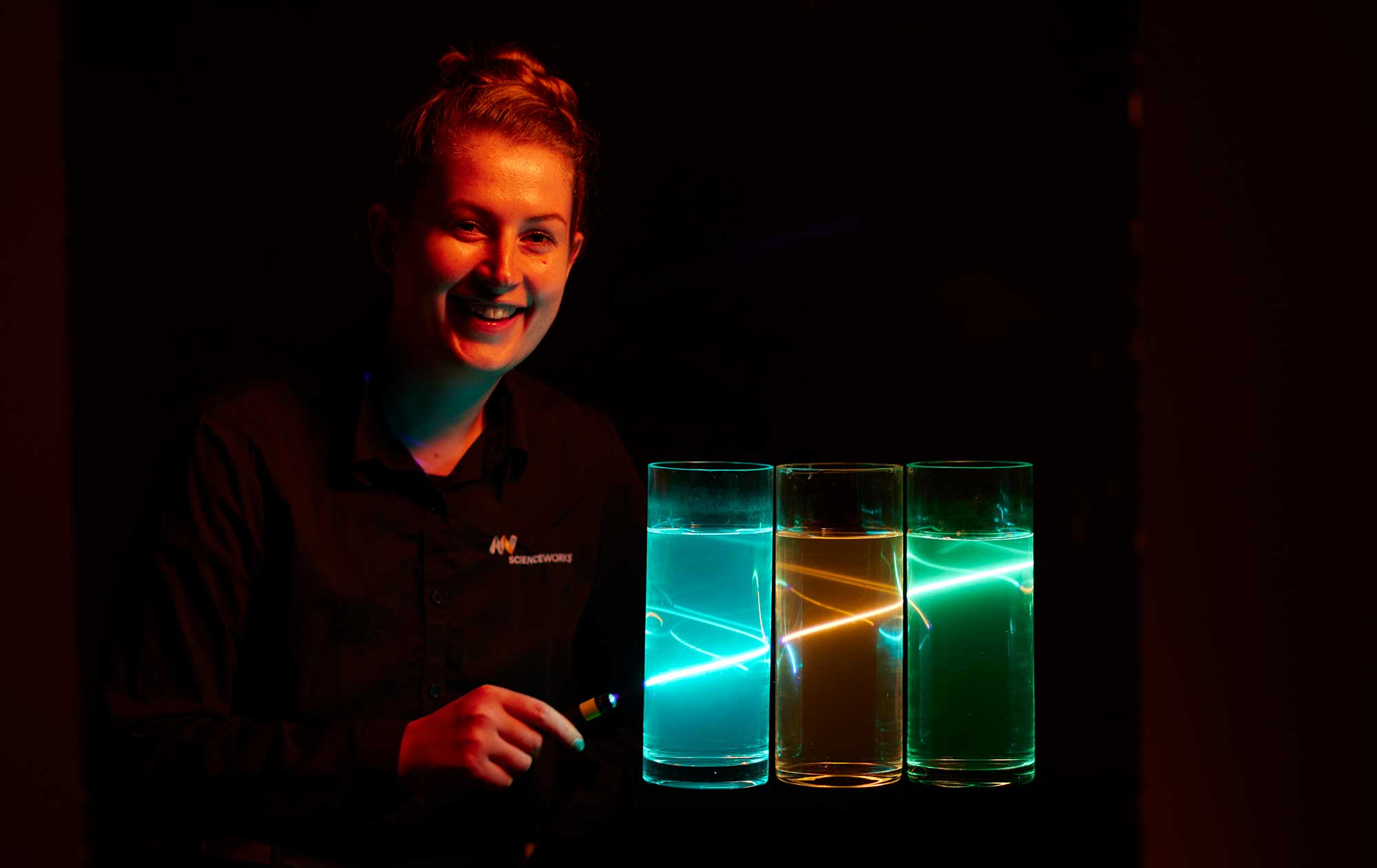
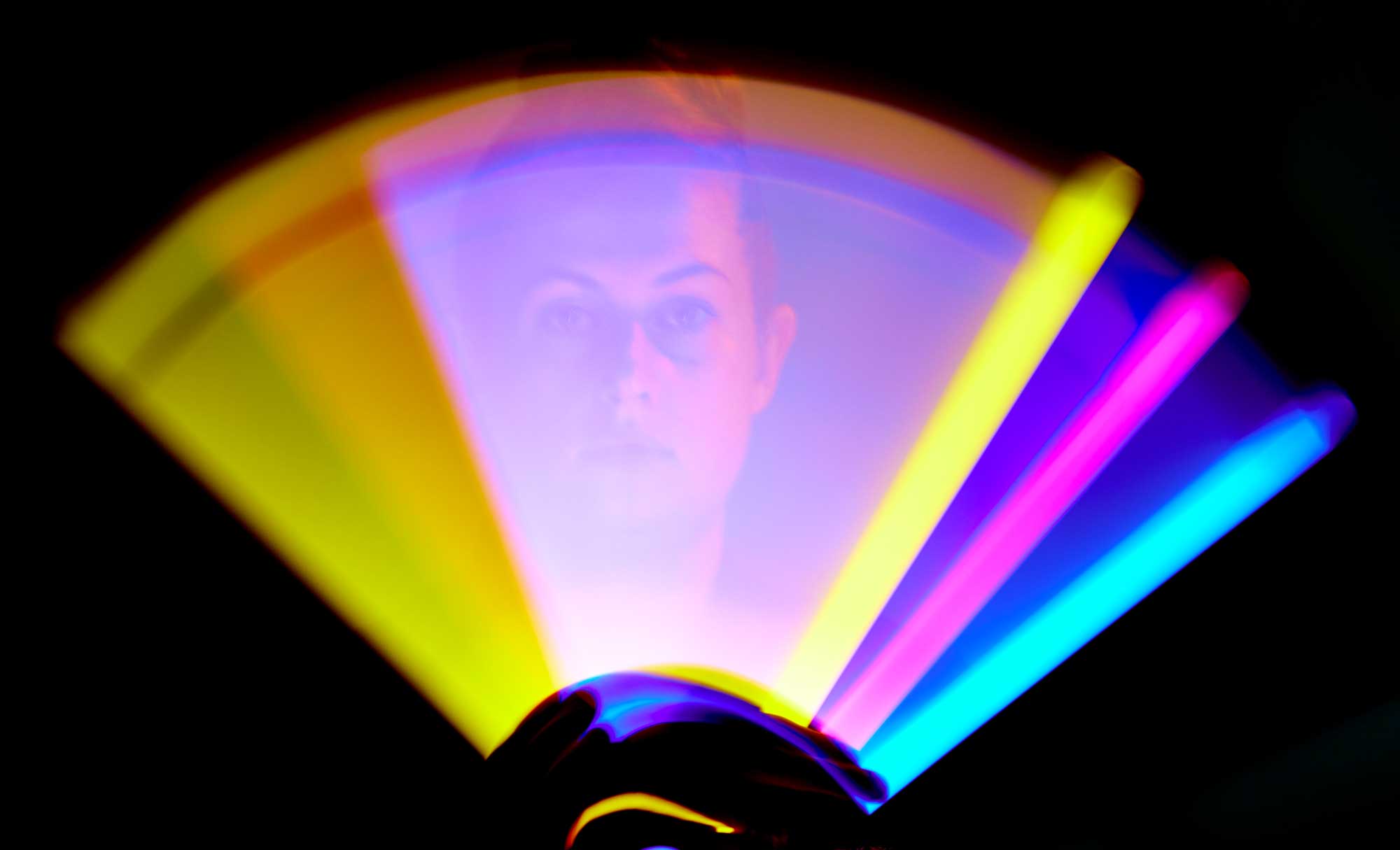
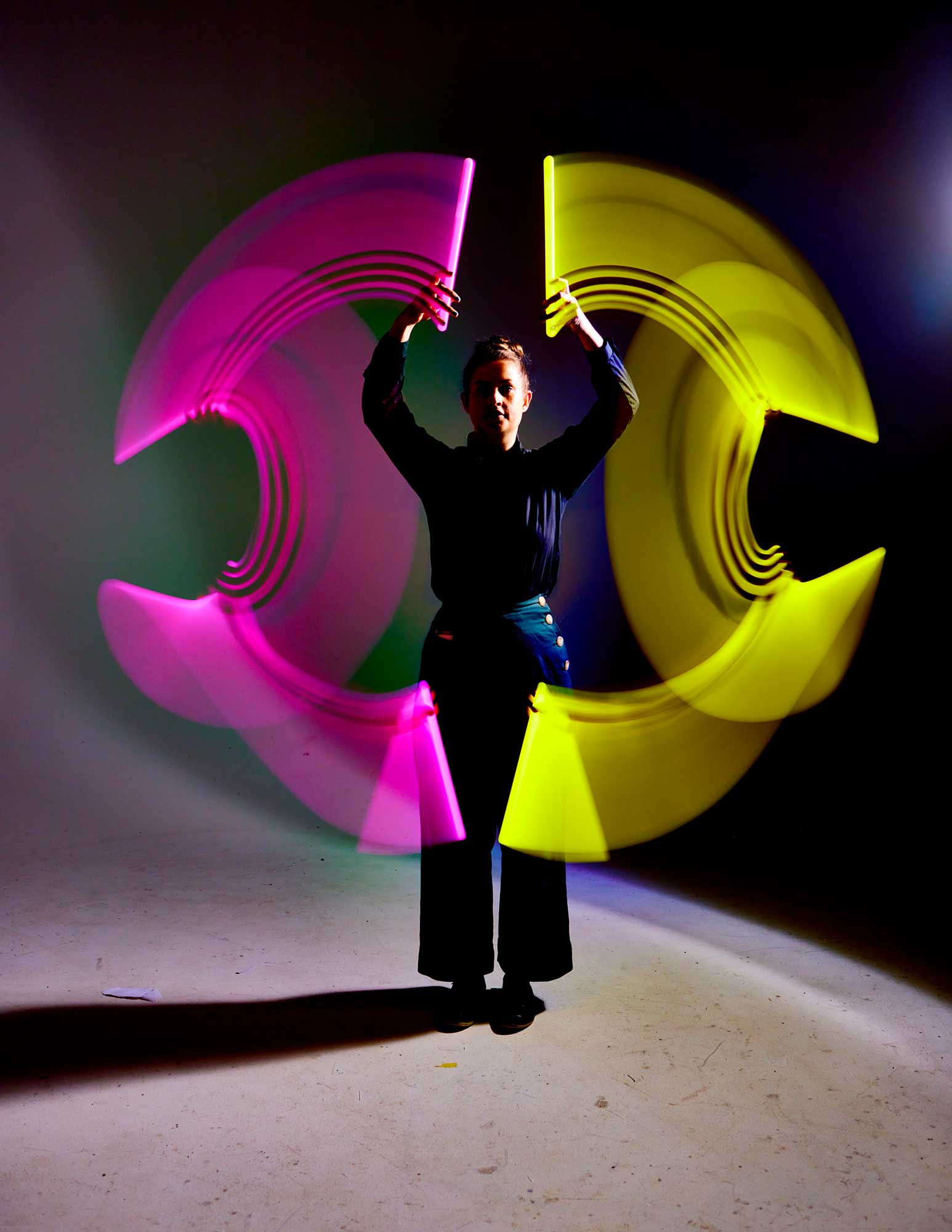
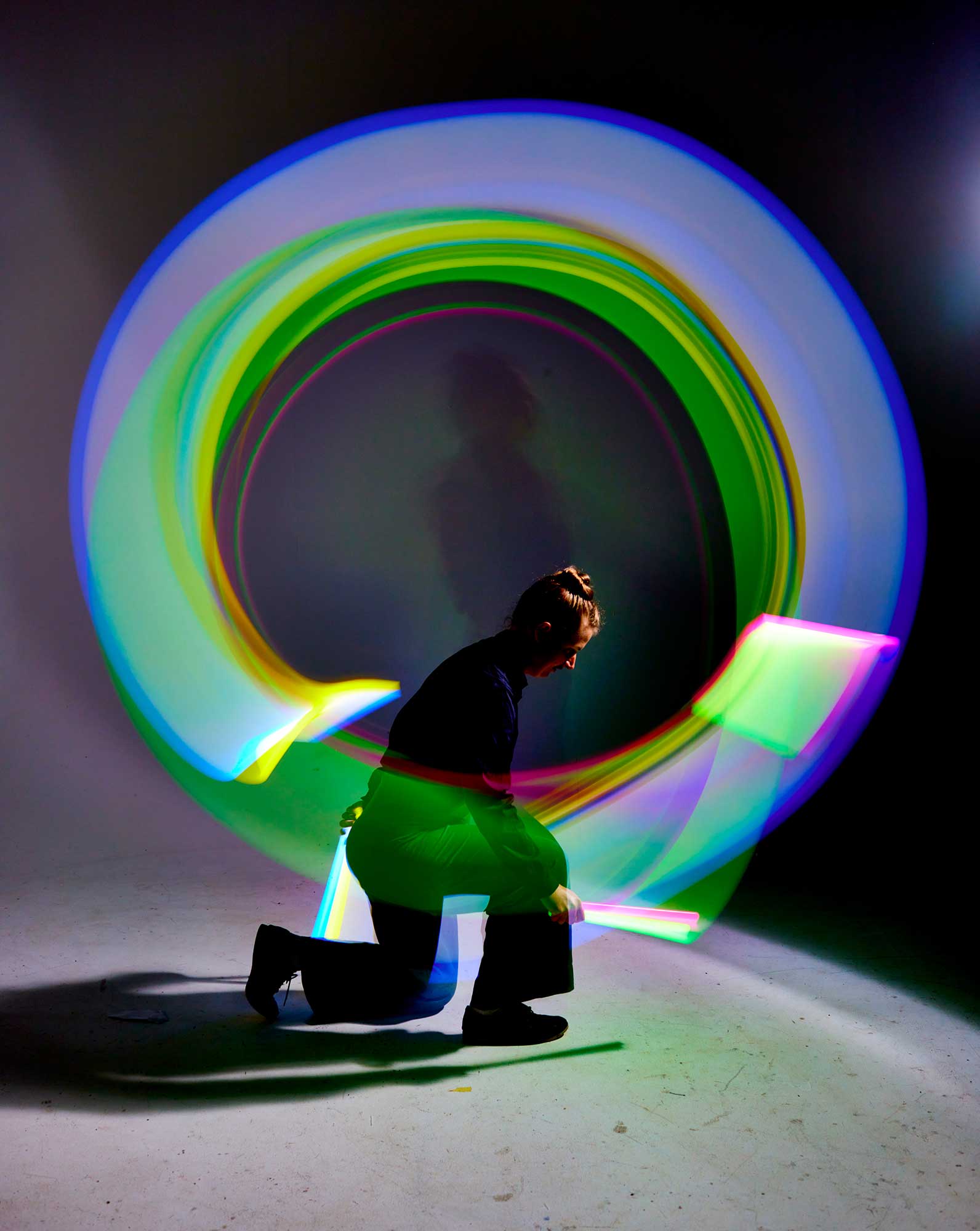
Be in awe of the science of glow and explore the fascinating processes behind luminosity, including the many ways a glow can be produced. Discover the science of fluorescence, how animals can appear bright at night and the brilliant, coloured effects of using different materials to make light.
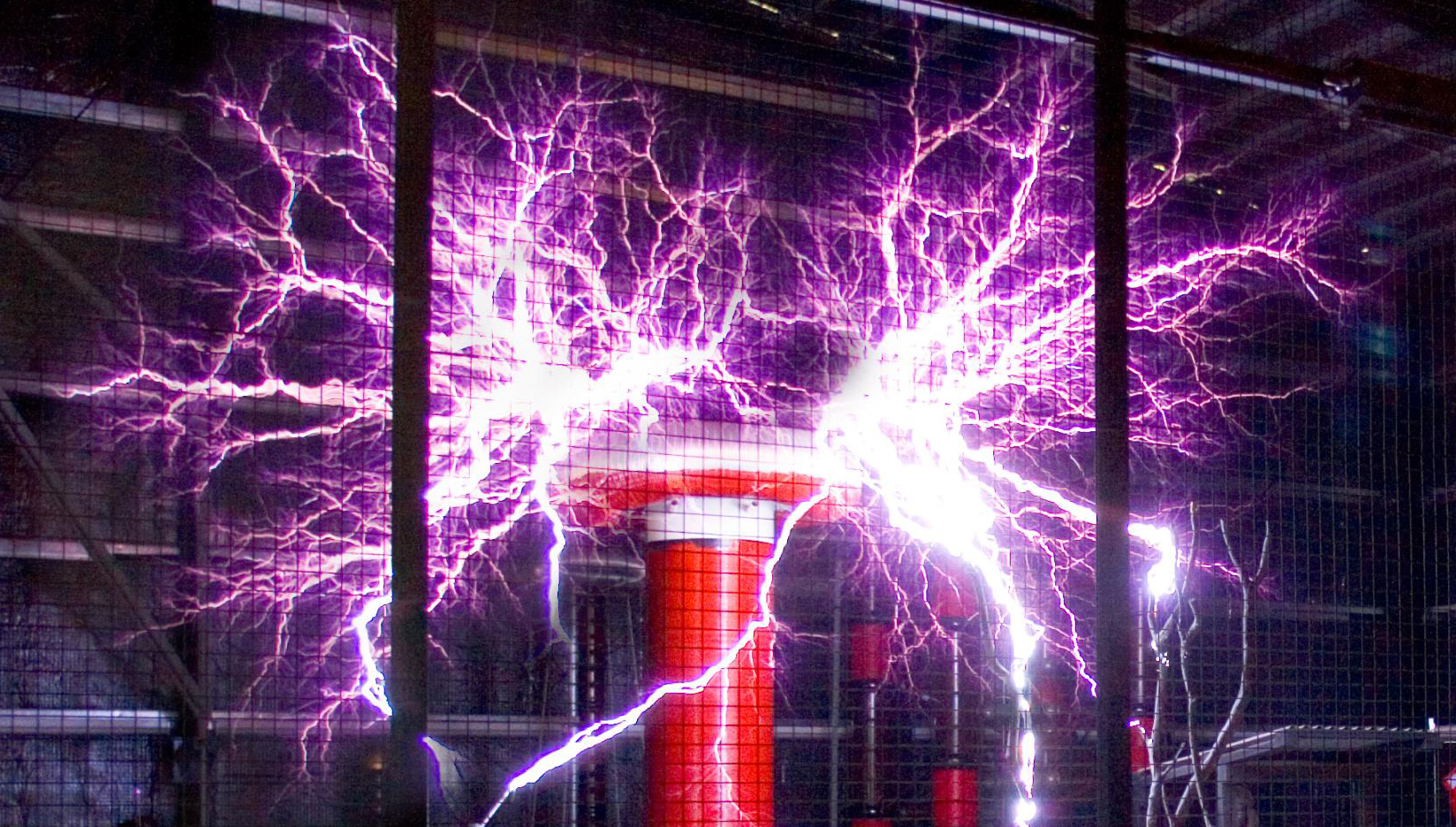
In the spectacular finale, witness our giant Tesla coil light up the theatre with lightning using more than 2 million volts of electricity.
Safety information
Due to the awesome sparks and loud noises that our high voltage demonstrations produce, the Lightning Theatre is not recommended for young children or infants. We recommend this experience for ages five years and up.
The Lightning Theatre is suitable for people who have medical devices including metal implants, pacemakers, cochlear implants and hearing aids. To ensure utmost safety is upheld please follow the instructions of our friendly Scienceworks staff at all times.
Includes museum entry
Adult $25
Senior $22
Child 16 Years & Under $10
Concession $10
Members $8
Date & Time
Daily
School term
Monday to Friday: 1:30pm
Weekends: 12 noon, 1pm & 2pm
School holidays
12 noon, 1pm, 2pm & 3pm
Key information
Ages 5+
30 minutes
FREQUENTLY ASKED QUESTIONS
Movement of tiny bits of ice and water droplets inside a thunderstorm causes electrical charge to build up in different parts of the cloud. The charge build-up can be negative in some parts and positive in other parts. These opposite charges are attracted to one another. When the attraction between the positive and negative charges grows strong enough, the charges travel through the air as lightning.
While most lightning happens within the clouds (cloud to cloud lightning), some of the time electric charge also builds up in the ground below the cloud and so the charges travel through the air between the cloud and the ground (cloud to ground lightning).
As the electricity of the lightning strike travels through the air, it makes the air heat up and expand very quickly. This generates a shockwave of moving air that we hear as thunder. Low rumbling thunder is the sound of the initial shockwave echoing through the clouds.
The Tesla coil is plugged in and gets its power from a power station (like the appliances in your house). It contains electrical transformers (which increase the voltage to between 2 and 2.8 million volts). This electricity runs around the flat coil at the bottom, which magnetically charges the tall upright coil. When the tall coil builds up enough electricity, it escapes from the top of the coil, down to the ground, taking the easiest path it can.
The Tesla coil uses current electricity and runs for a long time, but is much less powerful than naturally-occurring lightning. Natural lightning is generated by static electricity, is very powerful and does not last long. This difference means that Tesla coils can help determine which objects are more likely to be hit by lightning, but cannot be used to test how much damage would be done to objects by a lightning strike.
Everything around us – even your own body – is filled with electric charges. For electricity to easily pass through a material, the material must have lots of free electrical charges. We call the easy paths for electricity good conductors of electricity. Electricity always travels along the easiest path.
Metal has lots of electrical charges that can move freely, so electricity passes through it easily (it is a good conductor). Materials like rubber or glass have few free charges, so electricity has difficulty travelling through them. We call these materials insulators.
Rubber is an insulator, which means electricity has difficulty passing through it. Rubber is good at protecting against weak sources of electricity, but not powerful ones like lightning. A lightning bolt can contain millions of volts of electricity and has already travelled through several kilometres of air (which is also a good insulator), so a few centimetres of rubber will do almost nothing to stop it. The best way to stop lightning is to make sure it has an easier path somewhere else, like through a metal lightning rod.
The metal cage surrounding the high voltage equipment is called a 'Faraday cage'. It protects us from the electricity produced by the high voltage equipment inside. It also blocks radio waves or magnetic fields produced by the high voltage equipment, which can interfere with electronic devices like your mobile phone.
No. The cage is connected to the ground, which allows the electricity to quickly travel through the cage to the ground, where it is safely dispersed and can dissipate.
The human body is mostly made of water, with lots of salts and other chemicals dissolved in it. These dissolved salts and chemicals mean there are lots of free electrical charges that can move around. Dry wood has less dissolved salts and chemicals, so electricity cannot travel through it so easily.

School Excursions


ACCESSIBILITY
A social story for the Lightning Theatre is available.
Please view our accessibility page for general information. A sensory map of Melbourne Museum can be found on our Visual Stories page where step-by-step visual and written access guides are available. Contact our team on 13 11 02 or email us at [email protected] to discuss how we can support your visit.