The State election will be held on Saturday 28 November 2026. During the caretaker period (starting 6 pm on Tuesday 3 November) content will only be added to this website in line with the caretaker conventions.

Starlight
Uncover the mysteries of the stars in this Planetarium show.
For thousands of years, we have looked to the stars in awe and wonder. Their mysteries have inspired curiosity across all cultures and civilisations. This beautiful Planetarium show explores stars and what we can learn from their light.
Narrated by multi-award-winning Australian actress, Sigrid Thornton, this show is aligned to the physics and earth and space sciences curriculum for secondary school students.
Students will experience
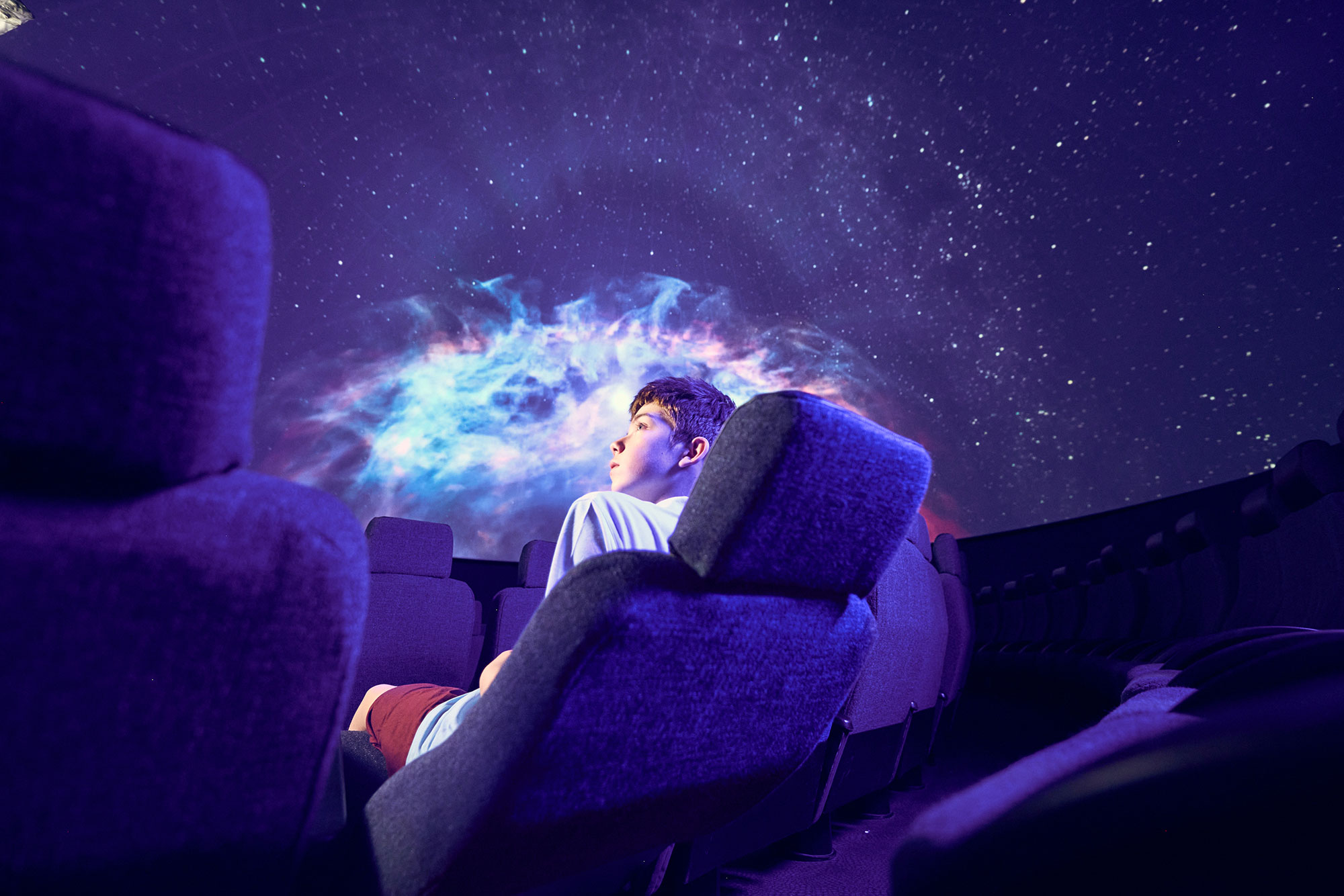
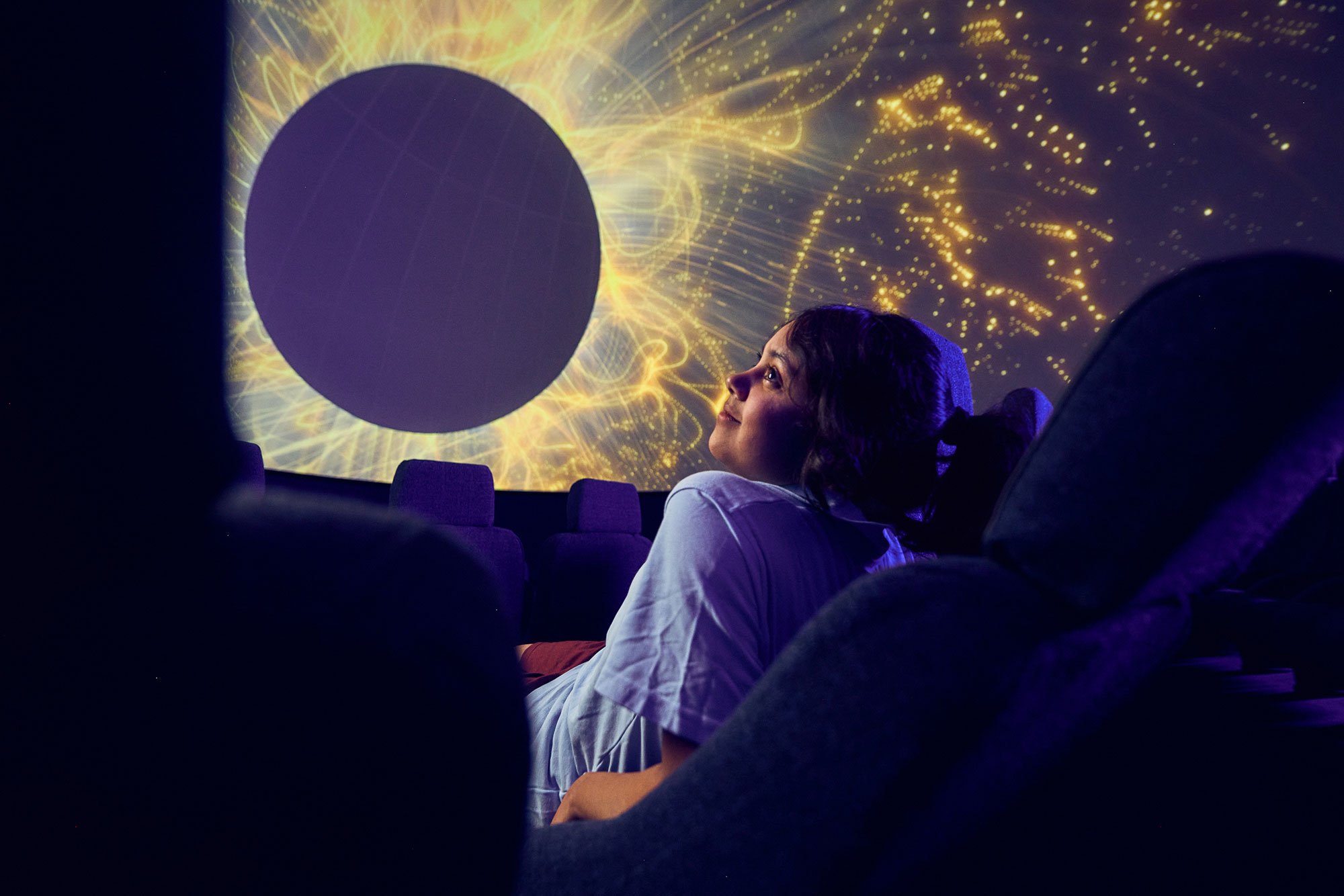
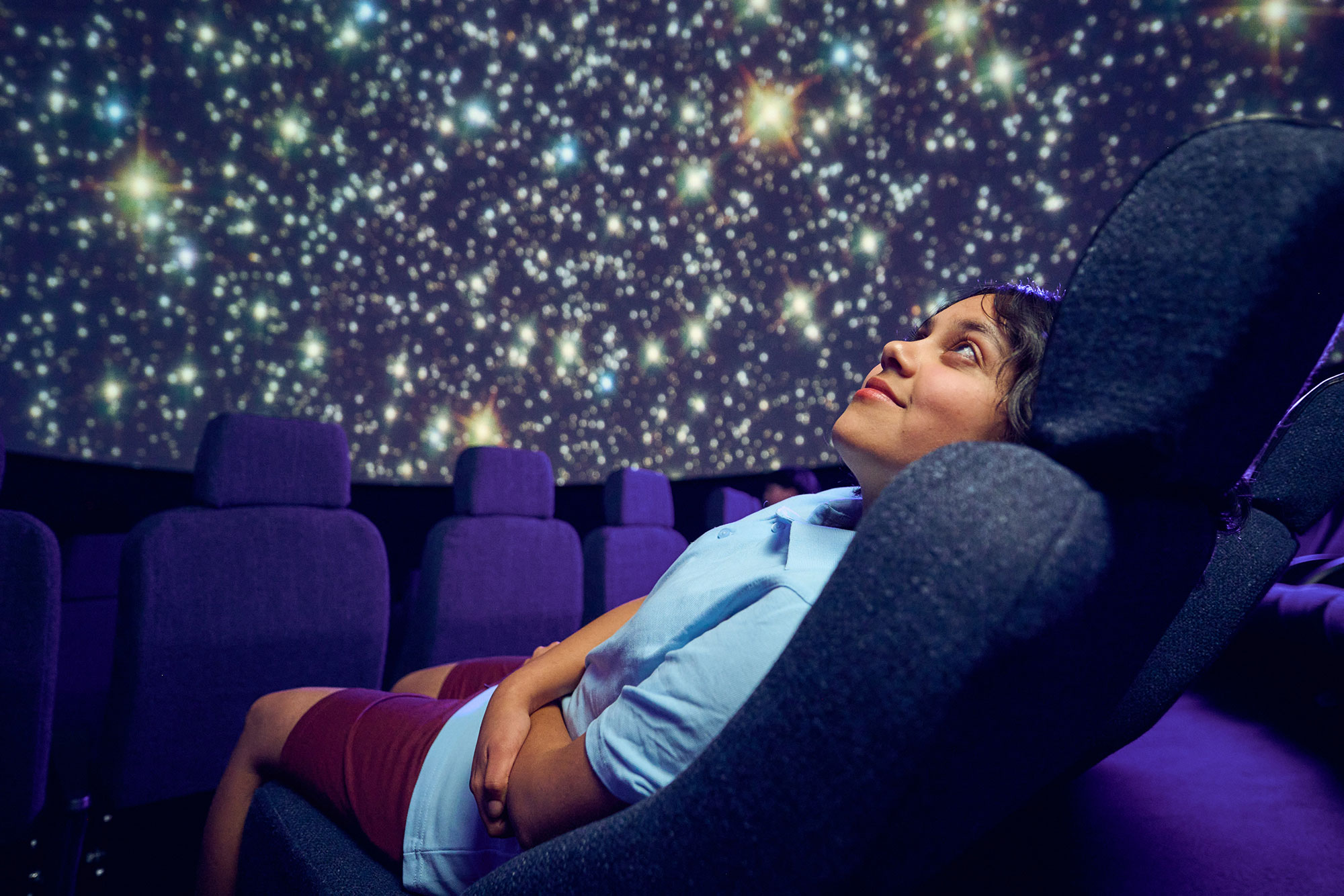
A fulldome experience in reclining seats.
A story told through the eyes of Margaret, as she steps back in time to relive childhood fears of the dark.
Artful depictions of the layers and inner workings of our local star, the Sun.
Stunning visualisations of being inside a supernova and drifting through a stellar nursery.
Exploration of physics concepts related to light, heat and astronomy.
Some of the historical and cultural significance of the stars, sun and constellations.
A 10-minute live guided tour of the night sky.
Students will learn
That the Sun is a star, and how scientists were able to test this hypothesis historically.
That the Sun and constellations have had different meanings across cultures throughout history.
That we can use the light from distant stars to understand what elements are present.
That the heat inside the Sun transfers through convection currents, and that new elements are formed inside the hot cores of suns.
Availability
Terms 1 & 3, Monday to Friday
Duration: 45 minutes
Student information
Years 7 to 10, VCE
Minimum 15 students
Maximum 140 students
Bookings
Planetarium
Screening with presenter led tour of the night sky


Victorian Curriculum Links
Science: Levels 7 and 8
Nature and development of science
-
scientific knowledge, including models and theories, can change because of new evidence (VC2S8H01)
Physical sciences
-
energy exists in different forms, including thermal, chemical, gravitational and elastic, and may be classified as kinetic or potential; energy transfers (conduction, convection and radiation) and transformations occur in simple systems and can be analysed in terms of energy efficiency (VC2S8U15)
Science: Levels 9 and 10
Nature and development of science
-
scientific knowledge is contestable and is validated and refined over time through expanding scientific methods, replication, publication, peer review and consensus (VC2S10H01)
Earth and space sciences
-
the universe contains features including galaxies, stars, solar systems and black holes; the big bang theory models the origin and evolution of the universe and is supported by evidence (VC2S10U13)
Physical sciences
-
wave and particle models can be used to describe energy transfer (conduction, convection and radiation) through different media; waves (electromagnetic and mechanical) have different properties, features (including amplitude, wavelength, frequency and speed) and applications (VC2S10U14)
Unit 1: How is energy useful to society?
-
Area of study 1: how are light and heat explained
-
Area of study 2: how is energy from the nucleus utilised?
Unit 2: How does physics help us to understand the world?
-
Area of Study 2: How does physics inform contemporary issues and applications in society?
-
-
Options 2.13, 2.14
-
Accessibility
Please view our accessibility page for general information. A sensory map of Melbourne Museum can be found on our Visual Stories page where step-by-step visual and written access guides are available. Contact our team on 13 11 02 or email us at [email protected] to discuss how we can support your visit.
Museums Victoria Learning Access Fund
The Museums Victoria Learning Access Fund aims to enhance access to our museums (Melbourne Museum, Scienceworks and Immigration Museum), programs and events by offering free or subsidised education programs for eligible schools. Find out more about the fund.

Sign-up to Museum Teachers
Subscribe and get special offers, teacher news and free entry to all museums.