The State election will be held on Saturday 28 November 2026. During the caretaker period (starting 6 pm on Tuesday 3 November) content will only be added to this website in line with the caretaker conventions.

Solar System Adventures: Where’s the Water?
Explore the solar system in search of our most precious resource: water.
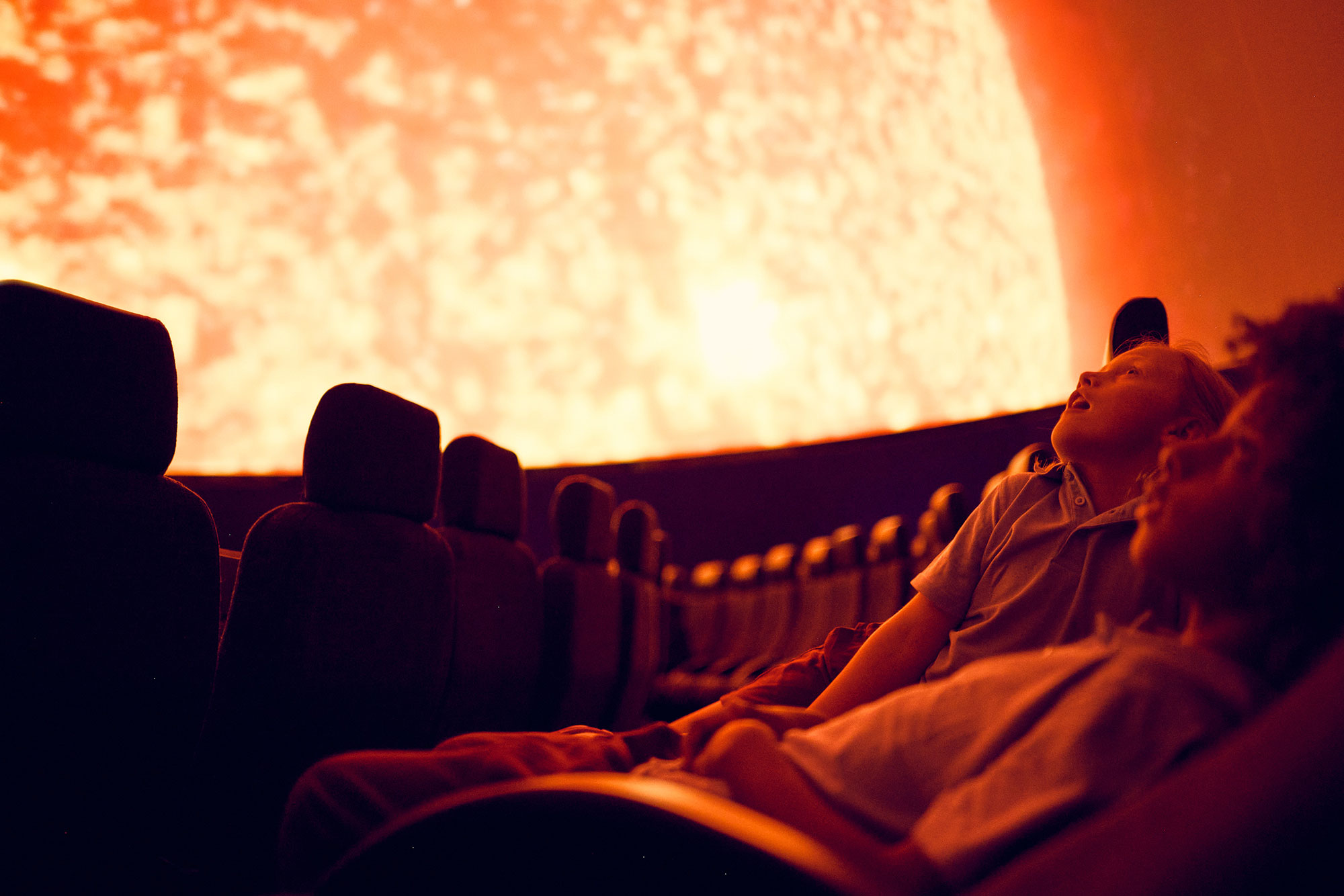
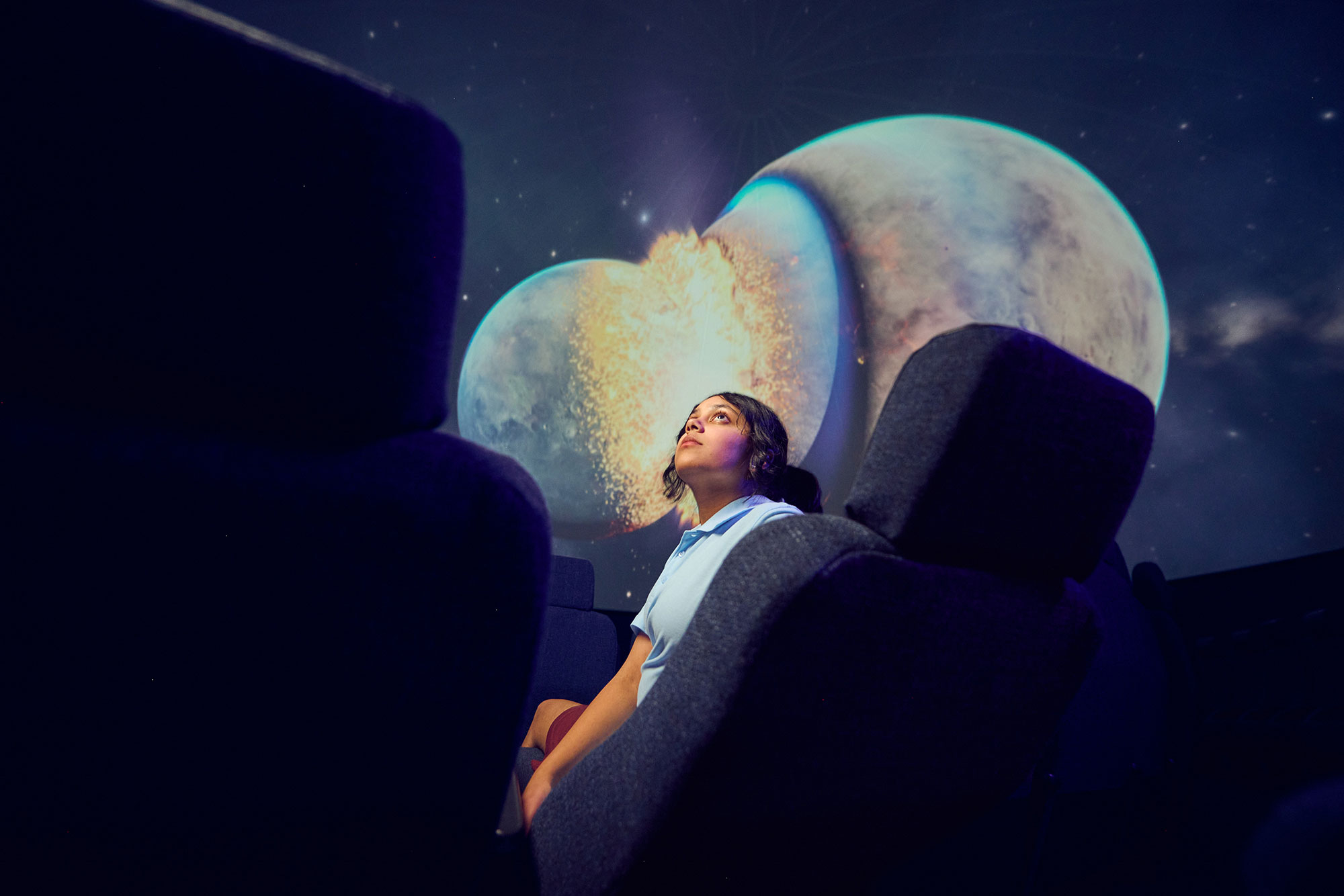
Students will be taken on a guided tour of our solar system. This curriculum-aligned Planetarium show explores the solar system through a unique lens, visiting planets, moons and other space rocks along the way, and ultimately connects Earth’s special environment with the search for life.
Students will experience
Launching off Earth and seeing the ways our oceans and atmosphere protect life on Earth.
Plunging into dark shadowy craters on scorching hot Mercury.
Visiting the Moon to explore where there may be water and learning about previous lunar landings.
Following the path of the Voyager 2 spacecraft to the outer planets.
Visiting the ice giants Uranus and Neptune, and giant ice mountains on Pluto.
Drifting through Saturn’s rings and landing on Saturn’s moon, Titan.
Sailing through jets of salty water erupting from Saturn’s tiny moon, Enceladus.
Exploring the asteroids and dwarf planet in the asteroid belt...and maybe even witness an asteroid crash-landing on Earth!
Students will learn
About the crucial role that water plays for life here on Earth.
That water can be found in solid, liquid and gaseous forms.
About the planets, moons and dwarf planets in the solar system, and what their environments are like.
About some of the space missions that have allowed humanity to learn about these distant worlds.
Availability
Terms 1 & 2, Monday to Friday
Duration: 45 minutes
Student information
Years 3 to 8
Minimum 15 students
Maximum 140 students
Bookings
Planetarium
Presented by a museum educator



Victorian Curriculum Links
Science: Levels 3 and 4
Chemical sciences
-
solids, liquids and gases have observable properties; adding or removing heat energy leads to a change of state between solids, liquids and gases (VC2S4U04)
Earth and space sciences
-
water is an important Earth resource that originates from various sources; water cycles through the environment by moving through the sky, landscape and ocean, and involves processes including precipitation, evaporation, transpiration, condensation, melting, freezing, crystallisation, infiltration and run-off (VC2S4U07)
Physical sciences
-
heat energy can be generated from different sources; temperature changes may happen when heat is transferred from one object to another (VC2S4U09)
Science: Levels 5 and 6
Biological sciences
-
habitats can be described by their physical conditions; changing the physical conditions of a habitat, including by human activity, may affect the growth and survival of organisms (VC2S6U01)
Science: Levels 7 and 8
Physical sciences
-
energy exists in different forms, including thermal, chemical, gravitational and elastic, and may be classified as kinetic or potential; energy transfers (conduction, convection and radiation) and transformations occur in simple systems and can be analysed in terms of energy efficiency (VC2S8U15)
Accessibility
Please view our accessibility page for general information. A sensory map of Melbourne Museum can be found on our Visual Stories page where step-by-step visual and written access guides are available. Contact our team on 13 11 02 or email us at [email protected] to discuss how we can support your visit.
Museums Victoria Learning Access Fund
The Museums Victoria Learning Access Fund aims to enhance access to our museums (Melbourne Museum, Scienceworks and Immigration Museum), programs and events by offering free or subsidised education programs for eligible schools. Find out more about the fund.

Sign-up to Museum Teachers
Subscribe and get special offers, teacher news and free entry to all museums.