Isograptus victoriae
Fossil animal colony formed ‘V’ for Victoria
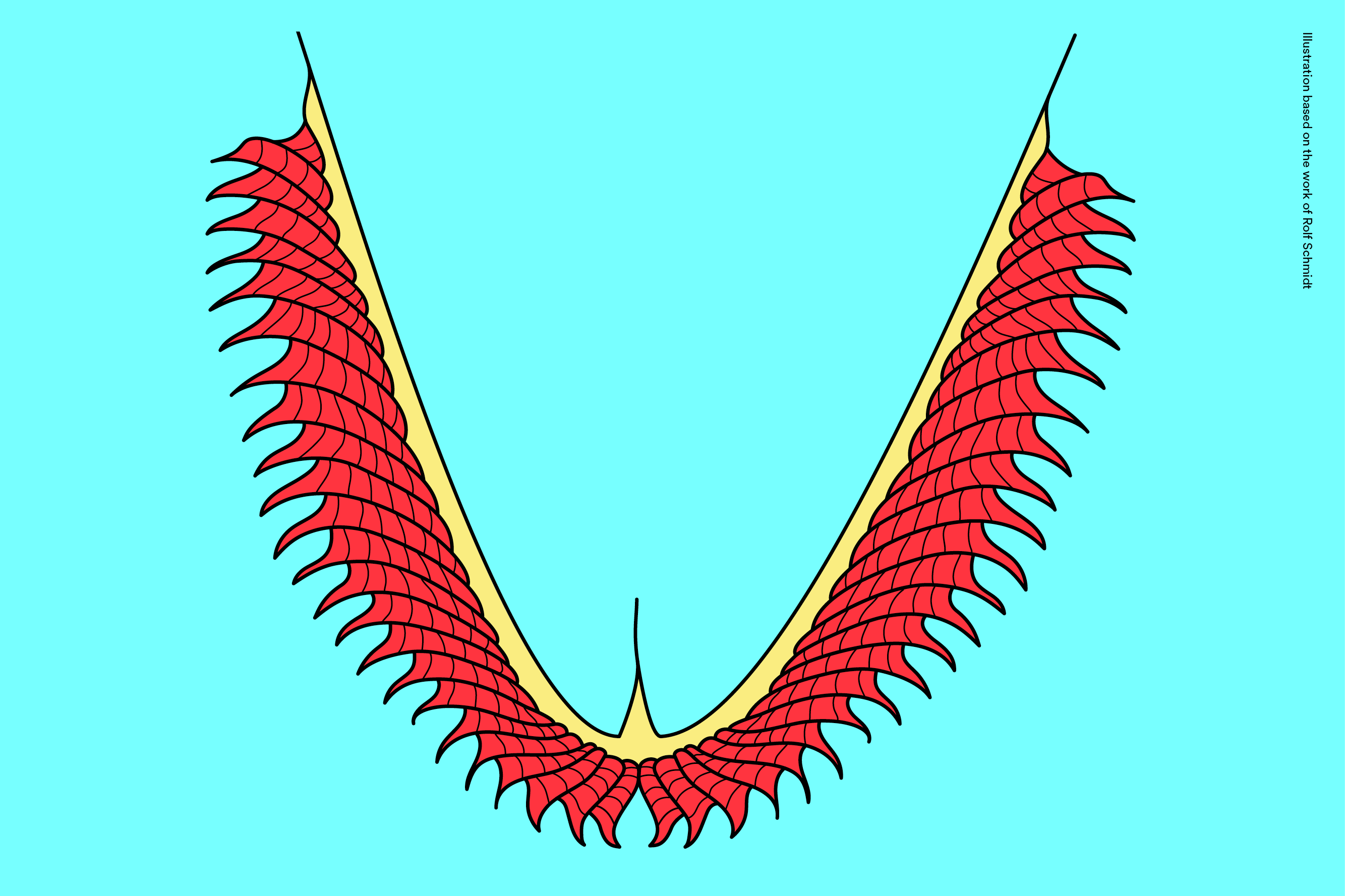

These little ‘Vs’ are the remains of marine animals called graptolites that were abundant in the Ordovician, a time when life was abundant in the sea but not on land. Graptolite fossils are the remains of twig-like or net-like colonies of microscopic animals. Tiny feelers snatched or trapped food from the water current.
Their three-dimensional shapes were flattened by burial to form fossils like the V-shaped Isograptus victoriae. Fossils like Isograptus victoriae showed where the distorted rocks in central Victoria belonged to the same layers. Miners used them to track seams of gold underground. These fossils also show up worldwide – and help align sequences of rock layers thousands of kilometres apart.
About the animal
|
How do you say its name? |
Eye-so-GRAP-tus vic-TOR-ee-ye / GRAP-toe-lite |
|
How big? |
A few centimetres long |
|
When did it live? |
470 million years ago |
|
What did it eat? |
Plankton |
Fossil facts
|
Significant location |
Castlemaine, Goldfields |
|
Traditional Owners |
|
|
Who named it? |
Bendigo teacher and palaeontologist Dr William Harris (1886-1957) |
|
What is special about it? |
Isograptus fossils are found in sedimentary rocks around the world, so they act as time markers, indicating these rocks are all the same age. |
|
Significance of the fossil |
The first Isograptus victoriae were found in Victoria. |
|
Full name and meaning |
Isograptus victoriae, named after the Australian state of Victoria. Graptolite fossils resemble hieroglyphs written on the rock and are named from the Greek graptos meaning ‘written’, and lithos meaning ‘rock’. |
Baragwanathia
First giant of the plant world
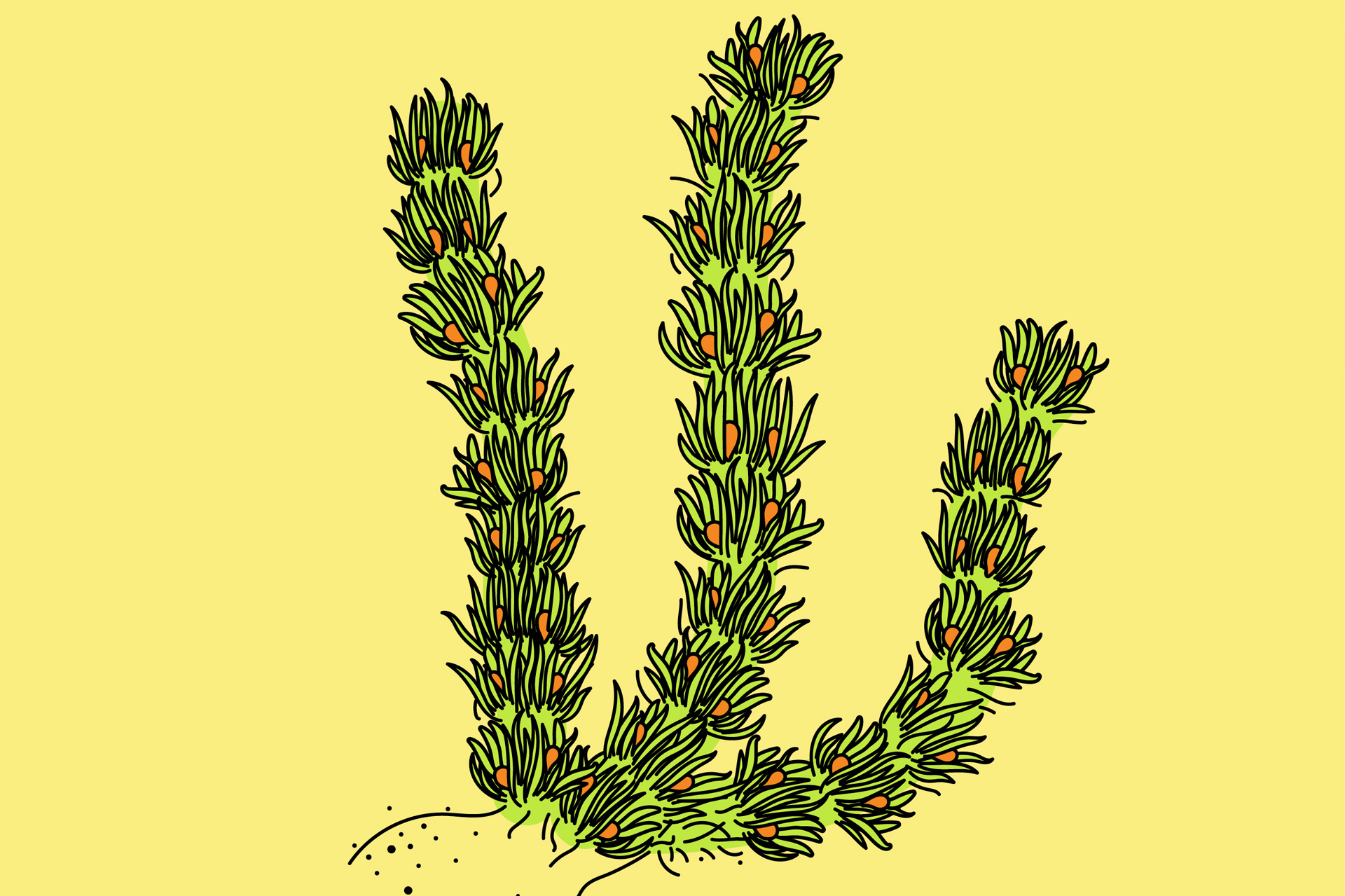
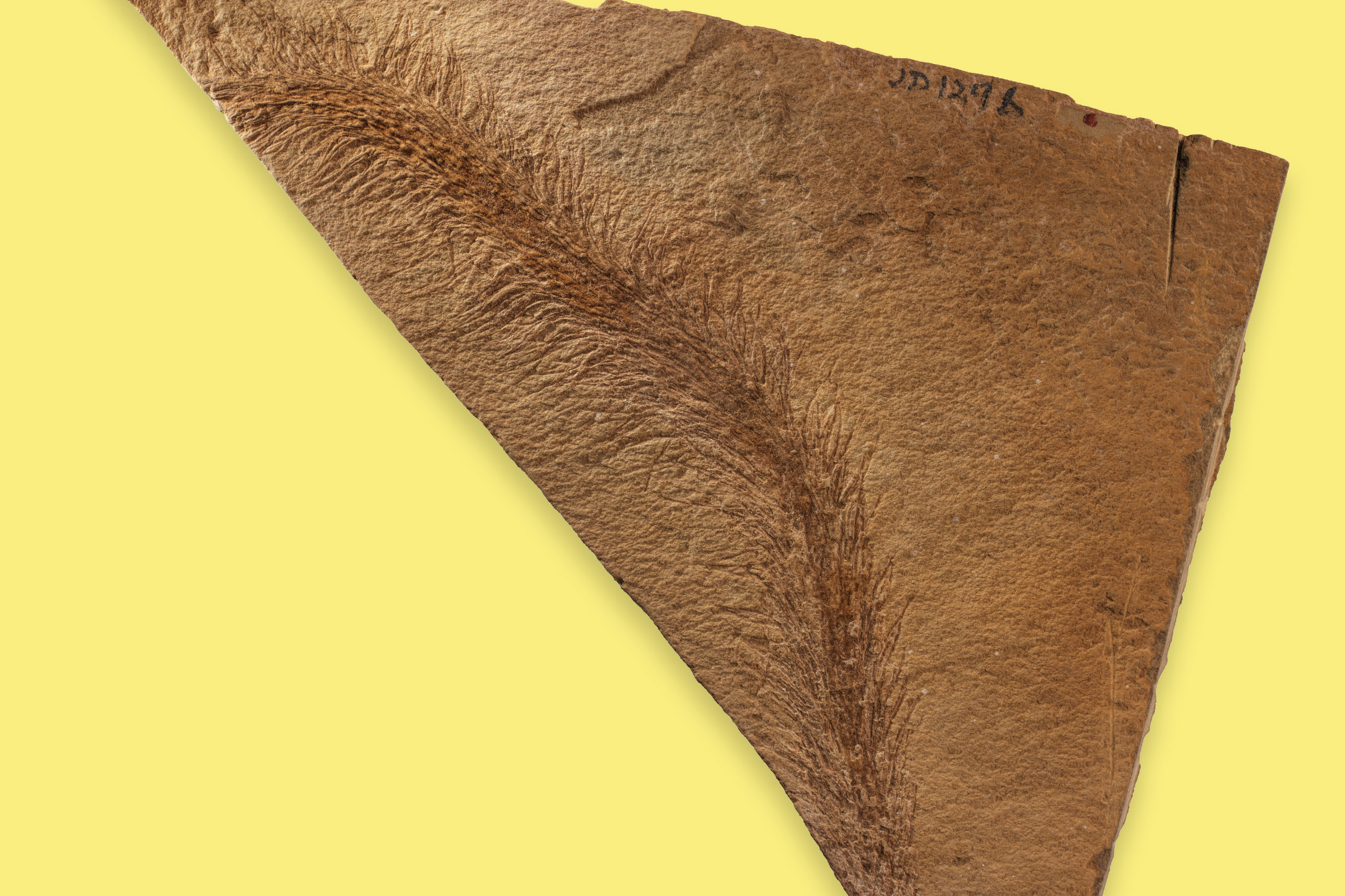
The fossil plant Baragwanathia was one of the first plants adapted to living outside water. When Baragwanathia was named by the pioneering female scientist Dr Isobel Cookson, it was considered the world’s oldest land plant.
By transporting water and nutrients inside its strong stems, Baragwanathia was able to survive sunlight and open air. Small, simple leaves covered its stems, which were over a metre long. Most other plants at this time were only a few centimetres tall.
Baragwanathia plants were washed into the sea which covered most of Victoria during the early Devonian and today we find their fossils preserved in marine sedimentary rocks. They still show even microscopic details of the plant’s anatomy. This is partly because bacteria that break down such tough plant tissue were only beginning to evolve.
About the plant
|
How do you say its name? |
Barra-gwuh-NAY-thee-A |
|
How big? |
About a metre long |
|
When did it live? |
Around 400 million years ago |
Fossil facts
|
Significant location |
Yea, central Victoria and Thomson River, West Gippsland |
|
Traditional Owners |
|
|
Who found it? |
William Baragwanath and others |
|
Who described and named it? |
Australian palaeontologist Dr Isobel Cookson (1893-1973) and British botanist Prof. W.H. Lang (1874-1960) |
|
What is special about it? |
Baragwanathia is one of the world’s oldest land plants. |
|
Significance of the fossil |
The first Baragwanathia fossils were found in Victoria. |
|
Full name and meaning |
It was named after geologist William Baragwanath (1878–1966), who found its first fossils. |
Bishops whitmorei
Tiny mammal among Victoria’s dinosaurs
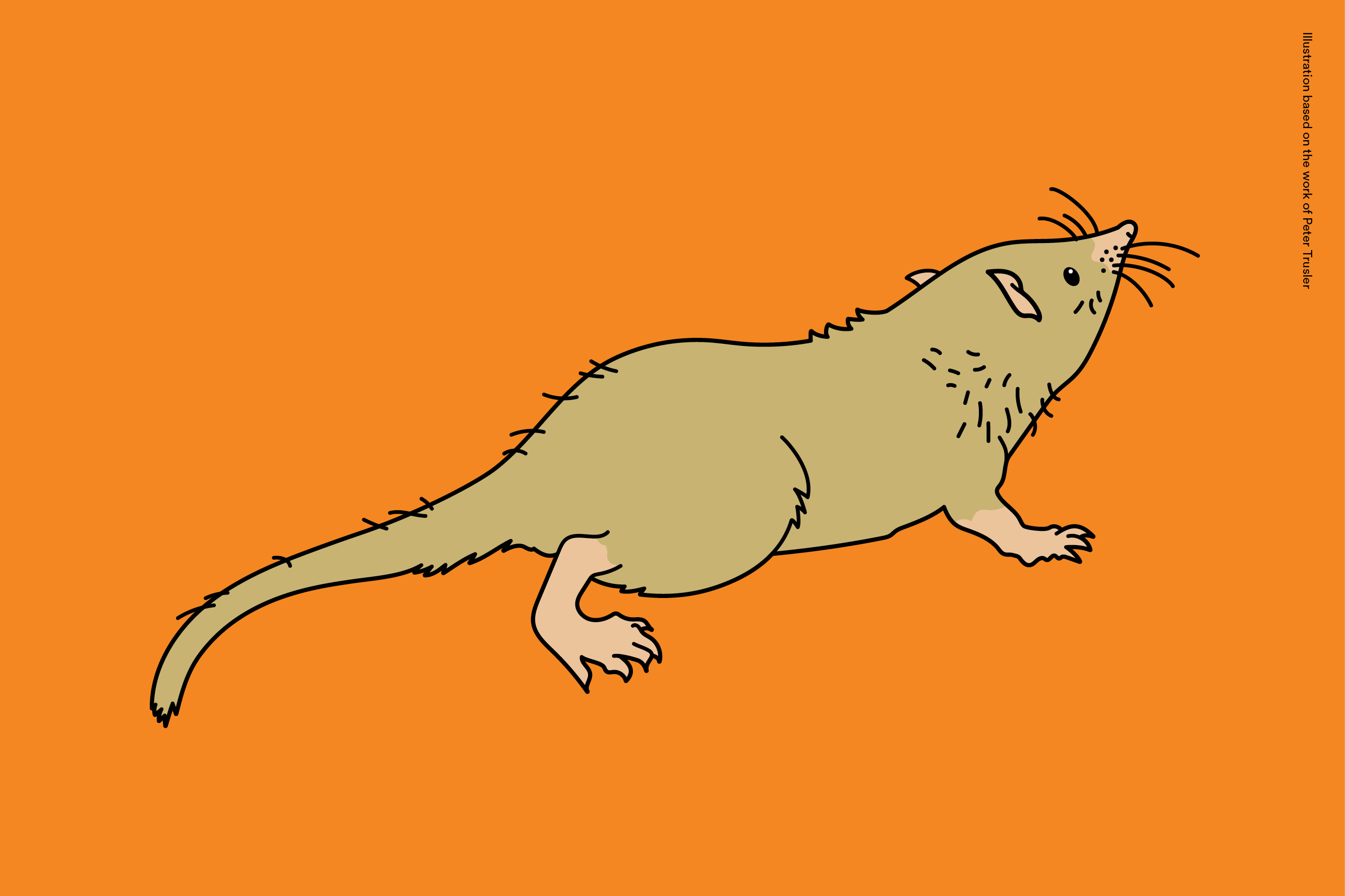
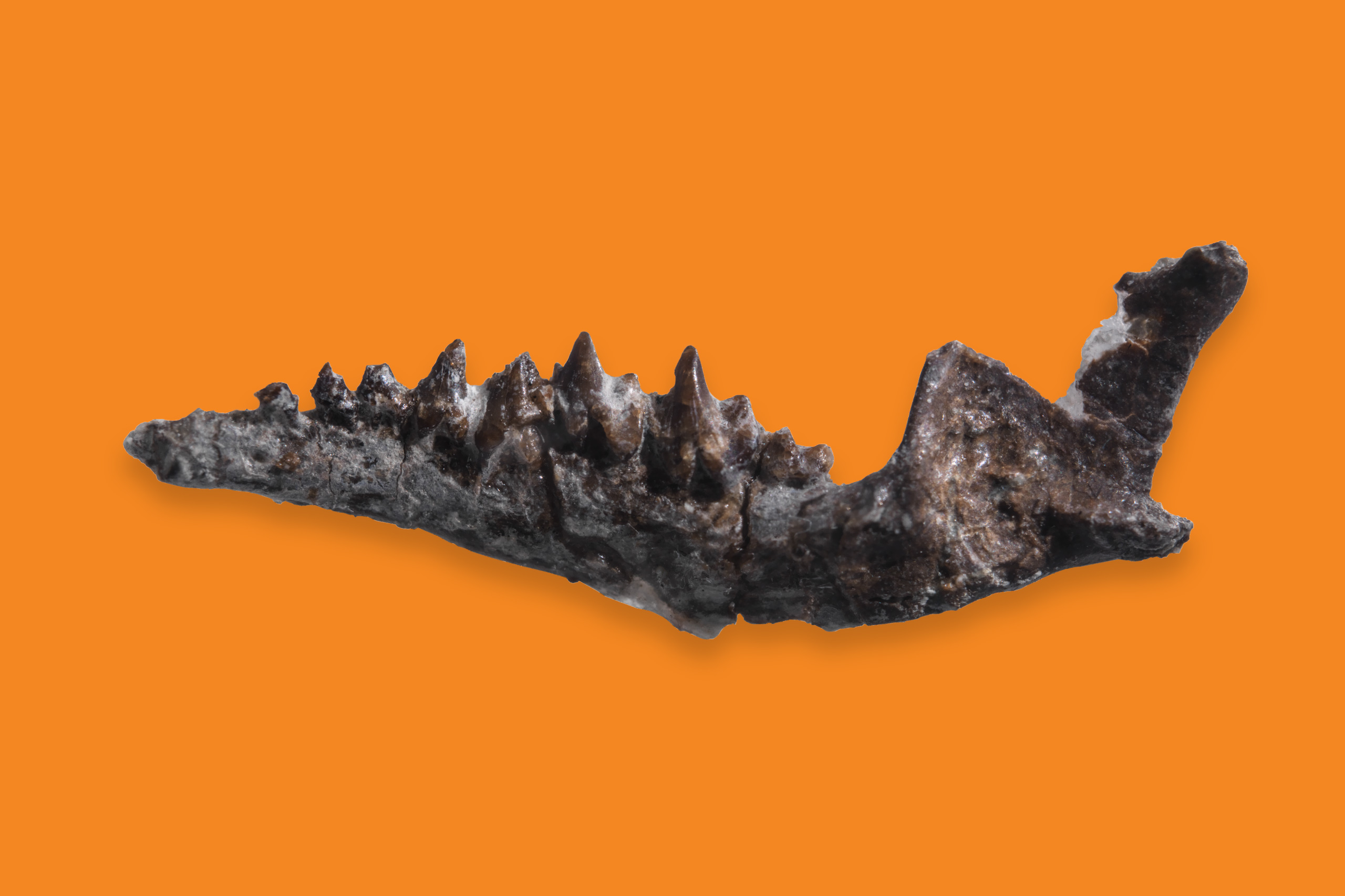
When the polar dinosaurs roamed Victoria 130 million years ago, this tiny mammal also thrived in the cool Gondwanan forests. Its teeth and jaws are only a few millimetres long. They were found fossilised in ancient riverbeds, along the modern coastline. It took keen eyes to spot them, and painstaking skill to free them from the rock. In life, it was likely an insect-eater, and looked much like today’s shrews or antechinuses.
Similarly aged mammals in Australia include the ancestors of the platypus and echidna. But exactly where Bishops sits in the mammal family tree is controversial: it might be related to the platypus and echidna or could be a vanished branch of placental mammals — the group that now includes cats, dogs and human beings.
About the animal
|
Scientific name |
Bishops whitmorei |
|
How do you say its name? |
Bish-ops whit-MORE-eye |
|
How big? |
Five centimetres long |
|
When did it live? |
130 million years ago |
|
What did it eat? |
Insects |
Fossil facts
|
Significant location |
Inverloch, South Gippsland |
|
Traditional Owners |
|
|
Who found it? |
Volunteer ‘dinosaur diggers’ Katch Bacheller and Norman Gardiner |
|
Who described and named the fossil? |
Senior Curator of Vertebrate Palaeontology at Museums Victoria, Dr Thomas Rich |
|
What is special about it? |
Bishops lived among dinosaurs when the Australian continent was near the South Pole. |
|
Significance of the fossil |
Bishops is unique to Victoria. |
|
Full name and meaning |
Named for Drs Barry Bishop and Frank Whitmore, of the National Geographic Society, who supported the fossil digs where Bishops was found. |
Koolasuchus cleelandi
Cool Cretaceous monster amphibian
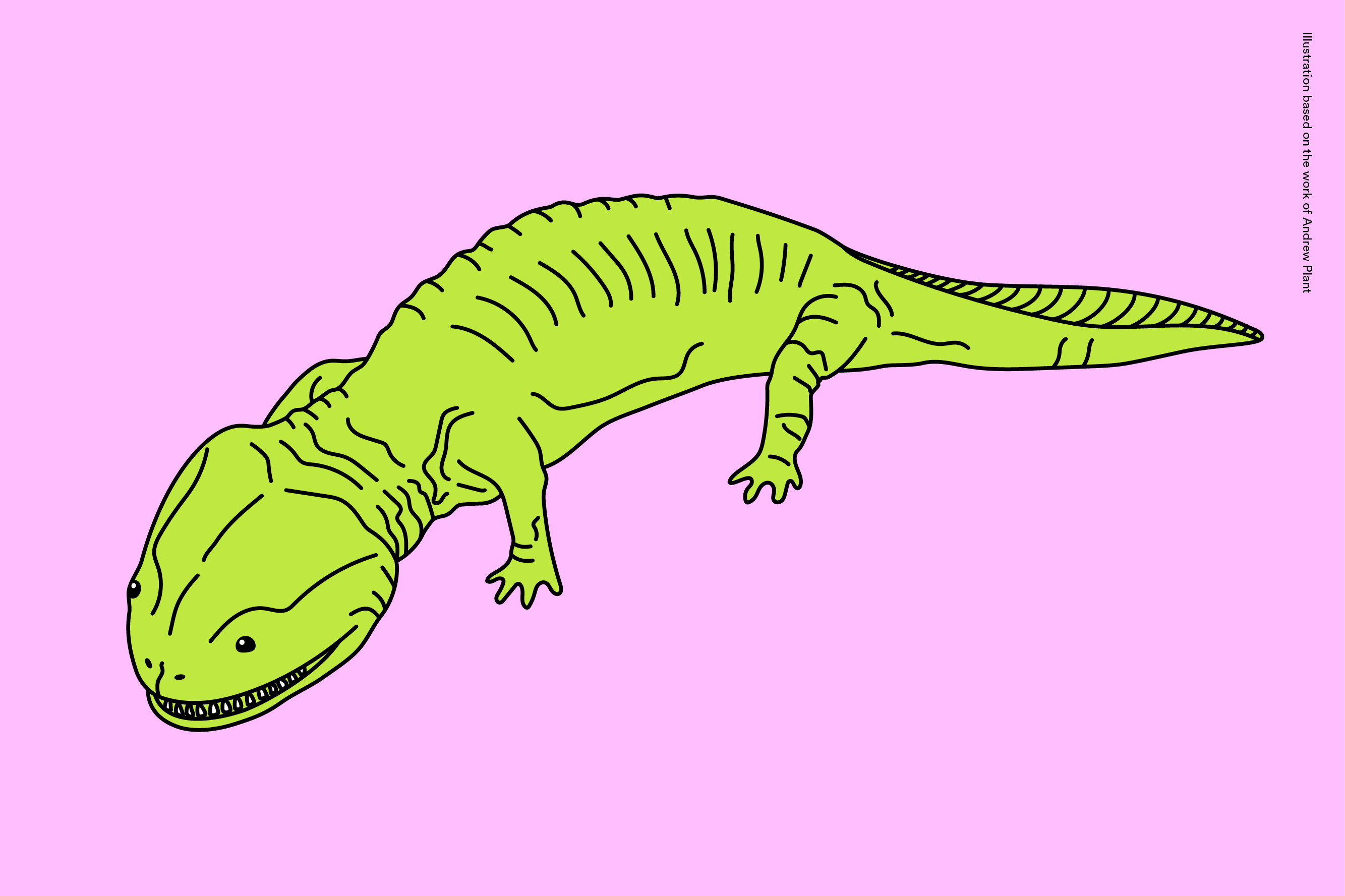

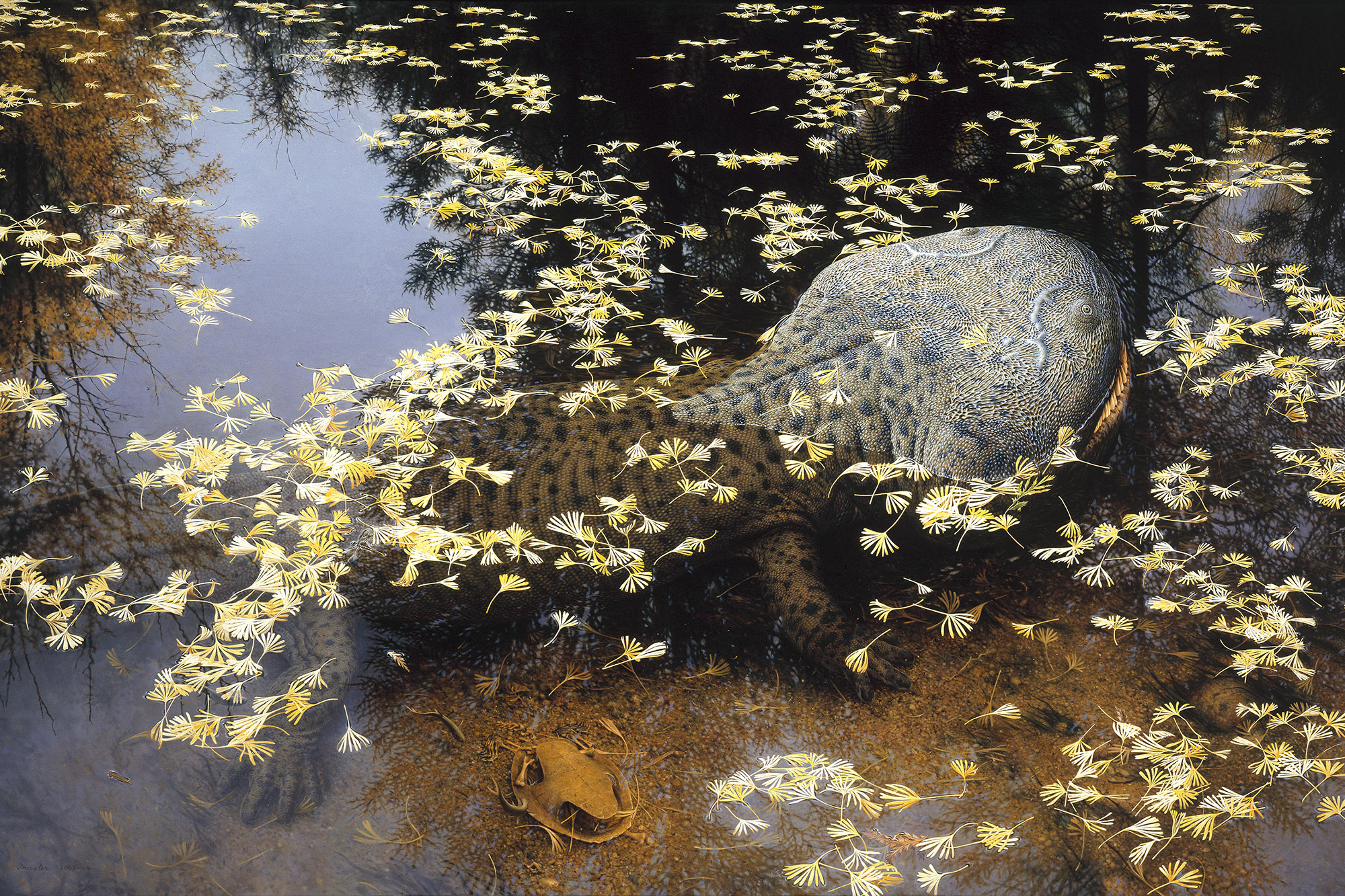
The car-sized amphibian Koolasuchus lived alongside dinosaurs in Victoria during the Cretaceous Period. In a head the size of a dustbin lid were dozens of ridged fangs for piercing prey, and two-inch tusks growing from the roof of its mouth.
Resembling something between a huge newt and a crocodile, Koolasuchus was adapted to life in the rushing rivers that once separated Australia and Antarctica. Its fossils are only found at a few beaches and coves in south Gippsland.
Koolasuchus was an unexpected discovery, as it is the long-last member of its lineage, known as the temnospondyls. It lived in Victoria as much as 50 million years after all other temnospondyls went extinct worldwide.
About the animal
|
Scientific name |
Koolasuchus cleelandi |
|
How do you say its name? |
Cool-a-SOO-cuss clee-LAN-die |
|
How big? |
About four metres long |
|
When did it live? |
Around 125 million years ago |
|
What did it eat? |
Small dinosaurs, turtles, and fish |
Fossil facts
|
Significant location |
San Remo, South Gippsland |
|
Traditional Owners |
|
|
Who found it? |
Michael Cleeland |
|
Who named it? |
Vertebrate palaeontologist Professor Anne Warren |
|
What is special about it? |
It is a 'relic' species that lived 50 million years after its relatives went extinct. |
|
Significance of the fossil |
Koolasuchus is unique to Victoria. |
|
Full name and meaning |
Named for Michael Cleeland and Lesley Kool, who found the first Koolasuchus fossil and prepared it from surrounding rock. |
Janjucetus hunderi
Fierce whale ancestor of modern giants

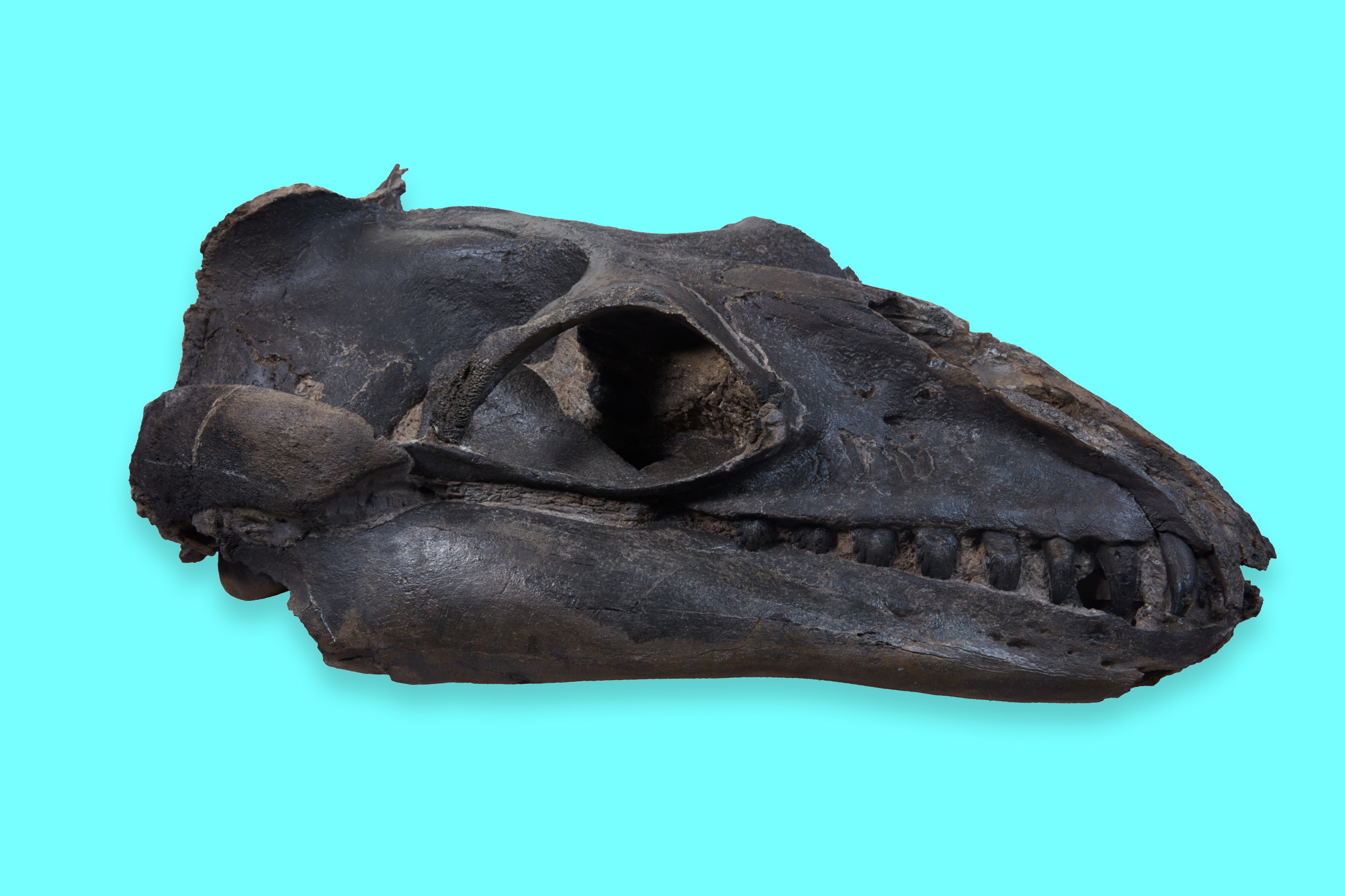
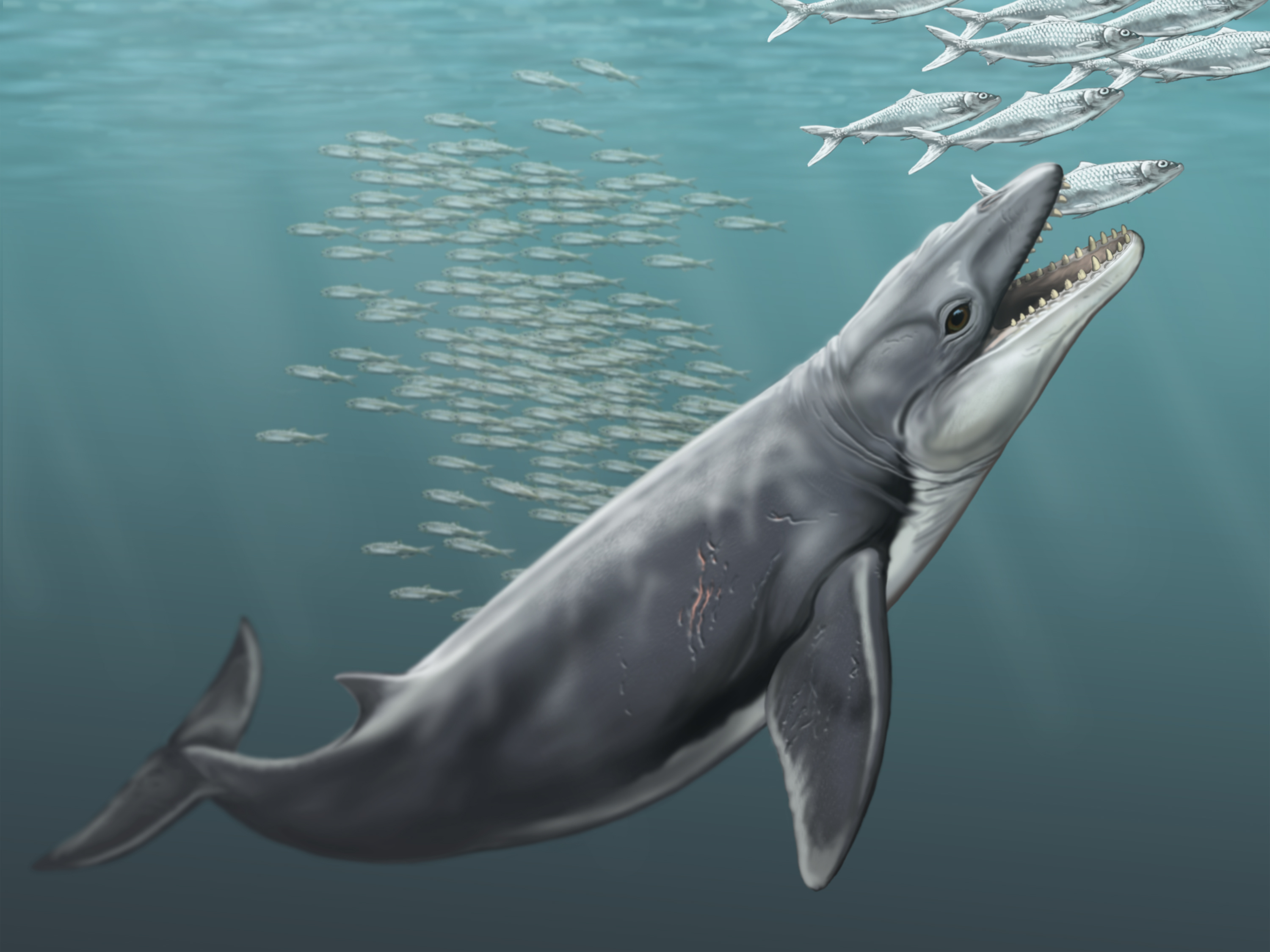
Janjucetus was a small whale that lived around 25 million years ago off the Victorian coast. It hunted large fish for food, gripping them between its sharp teeth with the help of powerful jaw muscles.
Despite having fearsome teeth, the skull bones of Janjucetus show that it was in fact a very primitive baleen whale – but without baleen. Janjucetus is therefore a vivid evolutionary link between ancient whales and modern giants like the Blue Whale. A few fossils of relatives have been found elsewhere in the southern hemisphere, but Janjucetus has only been found in Victoria.
About the animal
|
Scientific name |
Janjucetus hunderi |
|
How do you say its name? |
Jan-juh-SEE-tuss HUN-der-eye |
|
How big? |
Three metres long |
|
When did it live? |
25 million years ago |
|
What did it eat? |
Fish |
Fossil facts
|
Significant location |
Jan Juc, Surf Coast |
|
Traditional Owners |
|
|
Who found it? |
Local teenager Staumn Hunder, who spotted the fossils on the shore. |
|
Who described and named it? |
Senior Curator Vertebrate Palaeontology, Museums Victoria, Dr Erich Fitzgerald |
|
What is special about it? |
Janjucetus was a predatory ancestor to the giant filter-feeding whales of today. |
|
Significance of the fossil |
Janjucetus is unique to Victoria. |
|
Full name and meaning |
Named after the place it was found, Jan Juc, and the person who found the fossil, Staumn Hunder. |
Pelagornis
Giant toothed bird of Bayside
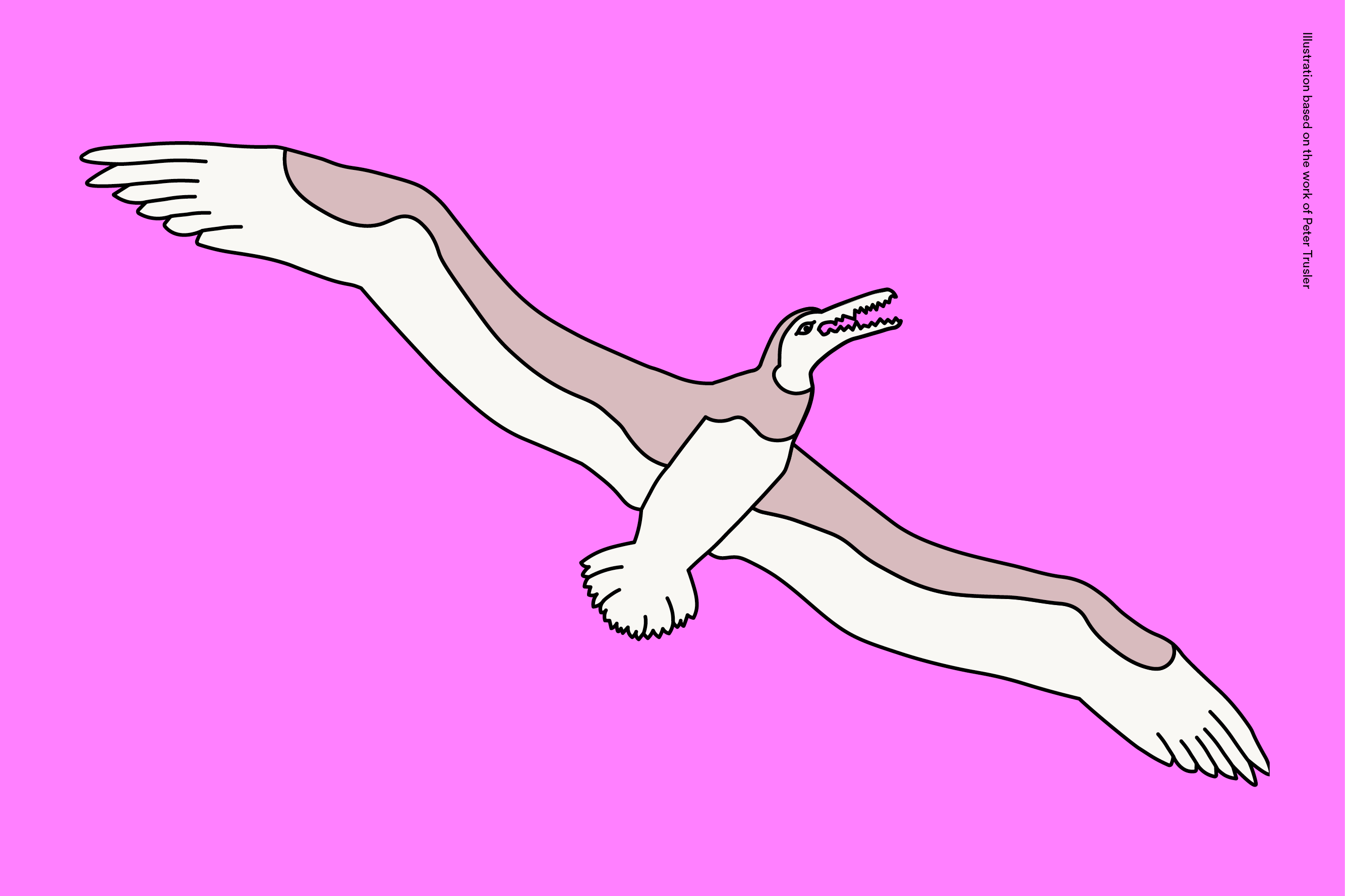
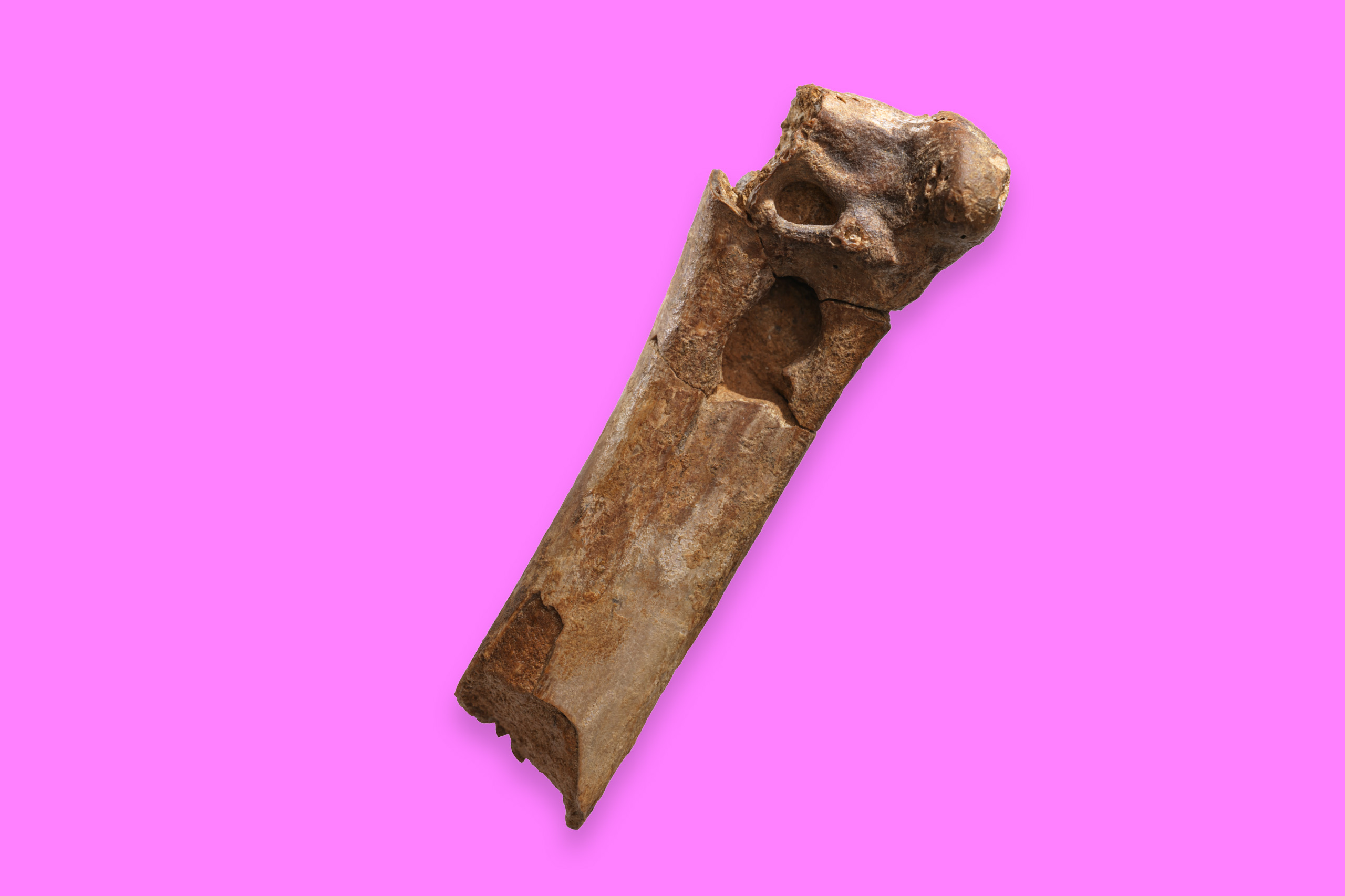
Pelagornis was an ocean-going bird, with a wingspan twice the size of a living albatross – 6 metres wide. Its lineage roamed the world’s skies from just after the extinction of the dinosaurs until about 2.5 million years ago. It captured prey in a beak over 30 cm long that was studded with spiky projections of bone that provided the same function as teeth.
Most fossils of Pelagornis worldwide are found in rocks that once formed on the floor of shallow coastal seas. Along the southern coast of Victoria, including inside Port Phillip, the oceans of the past 25 million years are preserved in rock layers. The 5-million-year-old fossils of Pelagornis from bayside Beaumaris, Victoria were discovered more than 150 years after it was first named and proved this bird had a worldwide distribution.
About the animal
|
Scientific name |
Pelagornis |
|
How do you say its name? |
Pell-uh-GORE-niss |
|
How big? |
Its wingspan in life was likely more than six metres — far wider than birds alive today. |
|
When did it live? |
The Victorian Pelagornis lived here 5 million years ago. |
|
What did it eat? |
Fish or squid |
Fossil facts
|
Significant location |
Beaumaris, Port Phillip |
|
Traditional Owners |
|
|
Who named it? |
French palaeontologist Édouard Lartet (1801-1871) |
|
Who found it? |
Pelagornis fossils have been found at Beaumaris by keen-eyed members of the public |
|
What is special about it? |
Bony projections formed ‘teeth’ along the beak of Pelagornis. |
|
Significance of the fossil |
Fossils from Beaumaris, Victoria are the only fossils of these birds in Australia and show that Pelagornis visited every continent on Earth. |
|
Full name and meaning |
Pelagornis simply means ‘ocean-going bird’. |
Palorchestes azael
Mystery marsupial of Australia’s Ice Age

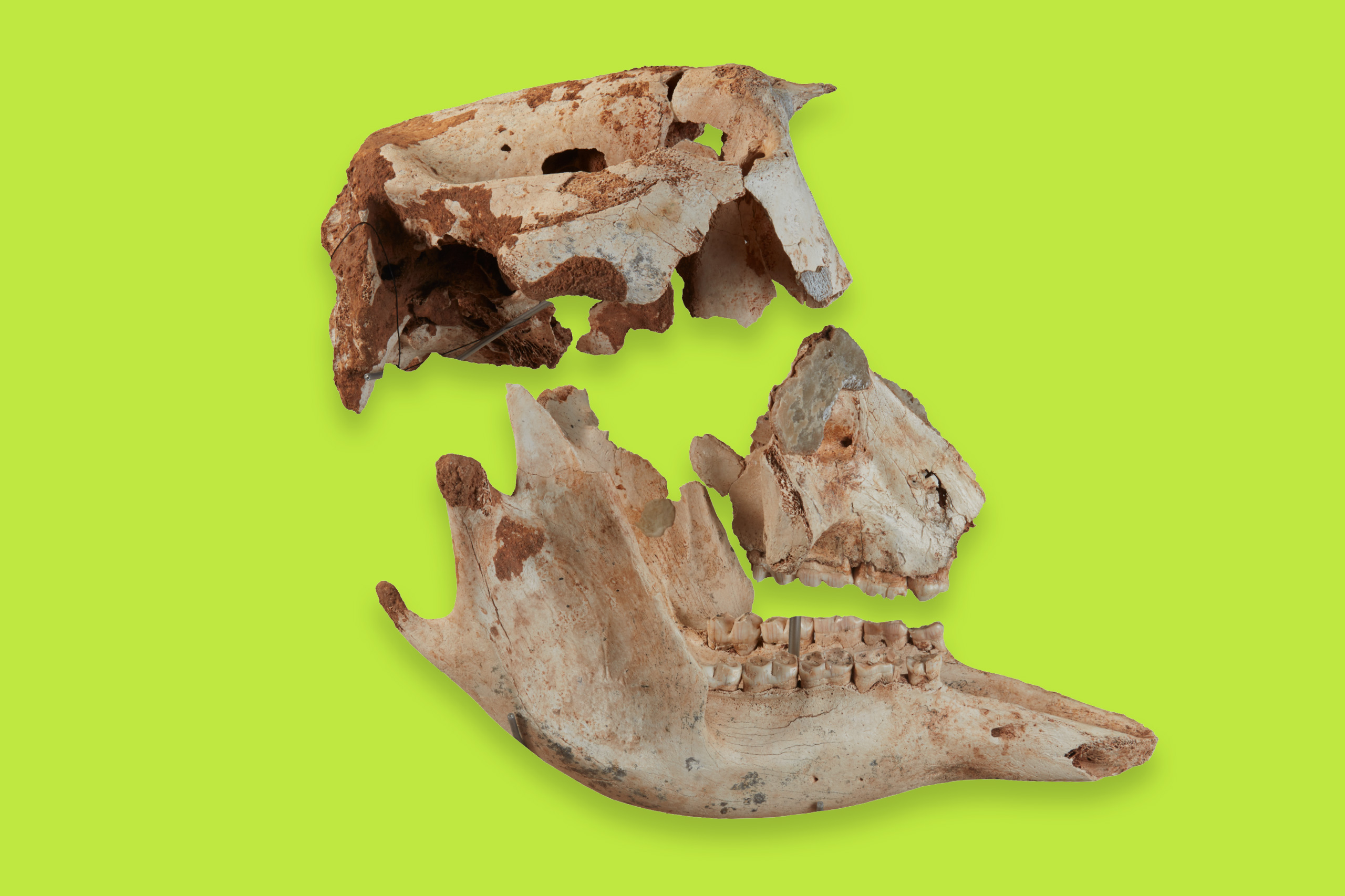
Palorchestes was a marsupial heavier than a buffalo and remains the biggest mystery of Australia’s Ice Age. This creature could have been seen by the First Peoples of Australia, along with the giant kangaroo Procoptodon and ‘marsupial lion’ Thylacoleo.
It had a tall, narrow skull, with tiny eyes, scoop-shaped front teeth, and a long, flexible snout. Its teeth and jaws look like those of a giant kangaroo, but Palorchestes was more closely related to wombats. Scientists think it may have used its muscular arms and clawed hands to tear apart tree ferns or even termite mounds for food.
The best-known fossils of Palorchestes come from limestone caves in Victoria. Museums Victoria scientists visiting the caves of Buchan, east Gippsland collected Australia’s most complete Palorchestes fossils.
About the animal
|
Scientific name |
Palorchestes azael |
|
How do you say its name? |
PAL-or-KESS-teece-uh-ZEEL |
|
How big? |
About two metres long and weighed nearly 1000 kilogrammes. |
|
When did it live? |
From 2 million years ago until only 40,000 years ago. |
|
What did it eat? |
Nobody's sure yet |
Fossil facts
|
Significant location |
Exceptional skull and limb bones found in the caves of Buchan and Murrindal, East Gippsland |
|
Traditional Owners |
|
|
Who named it? |
Founder of London’s Natural History Museum, Professor Richard Owen (1804-1892) |
|
Who found it? |
Most recently, an exceptional fossil skull was collected in 2001 by Museums Victoria palaeontologist David A. Pickering. |
|
What is special about it? |
Palorchestes is a bizarre mammal with extreme anatomy, unlike anything before or since. |
|
Significance of the fossil |
The most complete fossils of Palorchestes are found in eastern Victoria. |
|
Full name and meaning |
Palorchestes is Greek meaning ‘ancient leaper’. The first fossils were mistaken for a giant kangaroo. |
Leaellynasaura
Slender polar dinosaur
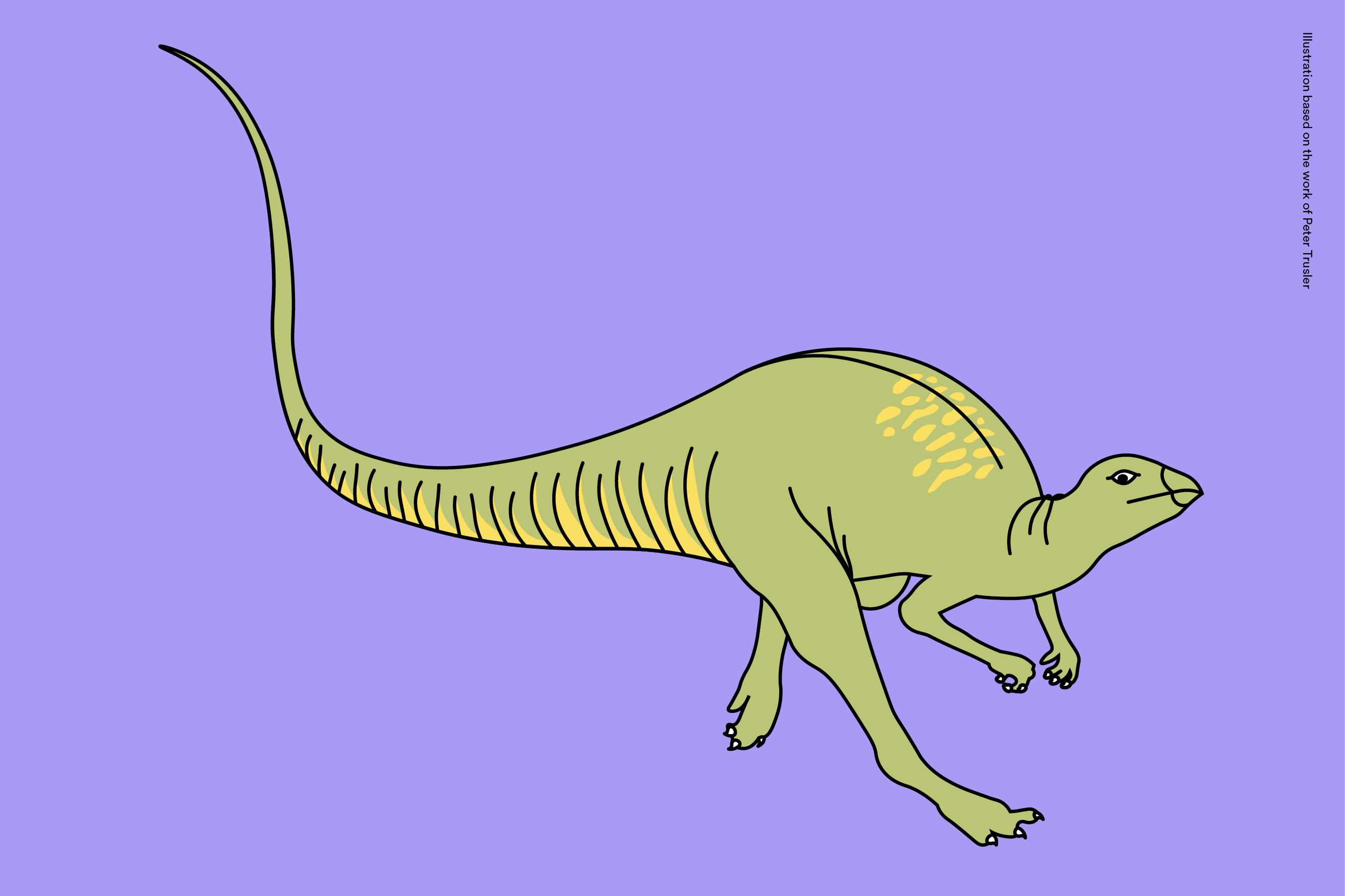
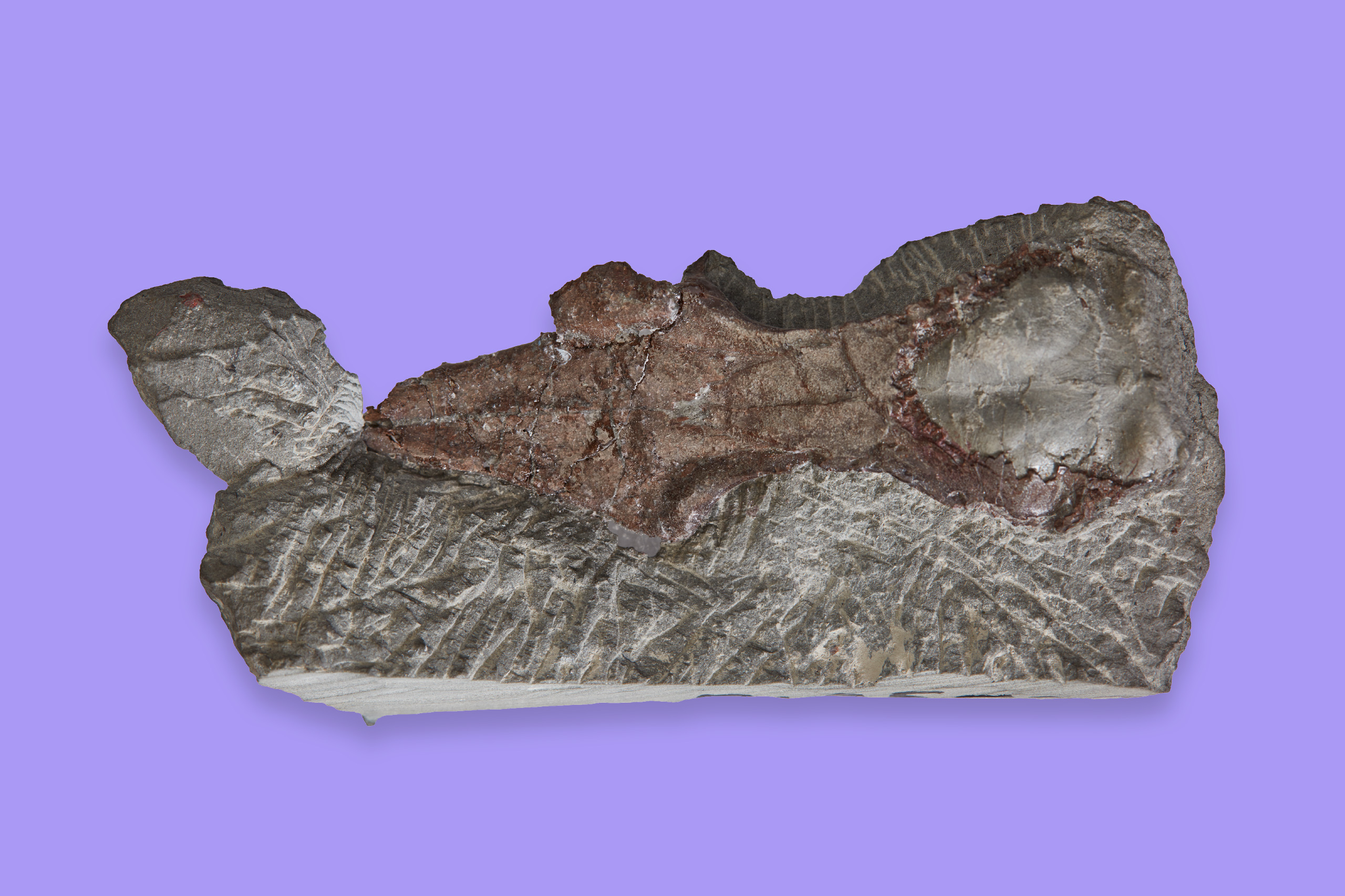
Leallynasaura is the smallest of the two-legged, plant-eating ornithopod dinosaurs found in Victoria. It would have stood no higher than a wallaby, although its tail was three times the length of its body. It had delicate leaf-shaped teeth, suitable for snipping new growth from soft plants like ferns.
The skull of Leaellynasaura has large eye sockets, indicating it could stay active in low light conditions. During the Cretaceous Period, Victoria was inside the southern polar circle, and the winter Sun would not have risen above the horizon for weeks on end.
Its delicate fossil bones were recovered from a tunnel dug through solid sandstone, at the bottom of Dinosaur Cove near Cape Otway. It took jackhammers and even explosives to reach rich seams of fossil bones. Leaellynasaura is related to dinosaurs found in South America, which is a sign that these landmasses were once connected via Antarctica, in the supercontinent Gondwana.
About the animal
|
Scientific name |
Leaellynasaura amicagraphica |
|
How do you say its name? |
LAY-ell-ee-nuh-SORE-uh |
|
How big? |
Leaellynasaura is a small dinosaur, about 60 centimetres high and 2 metres long. |
|
When did it live? |
110 million years ago |
|
What did it eat? |
Soft plants like ferns and horsetails |
Fossil facts
|
Significant location |
Dinosaur Cove at Cape Otway |
|
Traditional Owners |
|
|
Who named it? |
Dr Tom Rich and Dr Pat Vickers-Rich |
|
Who found it? |
The volunteer Friends of the National Museum of Victoria field crew |
|
What is special about it? |
It was a speedy herbivore. Its tail was three times longer than its body. |
|
Significance of the fossil |
It shows dinosaurs were active year-round in Cretaceous Victoria, despite long polar winters without sunlight. |
|
Full name and meaning |
Leaellynasaura was named after Leaellyn Rich, the daughter of the scientists who described it. The species name amicagraphica translates to ‘friend writing’, and honours both the Friends of the Museum of Victoria and the National Geographic Society for their support of Australian palaeontology. |