Lithography was a relatively new printing process when introduced to Australia in the early 19th century. Comparatively cheap and capable of producing large editions, it was the perfect medium for Frederick McCoy's ambition to publish descriptions of Victoria's animals and fossils.
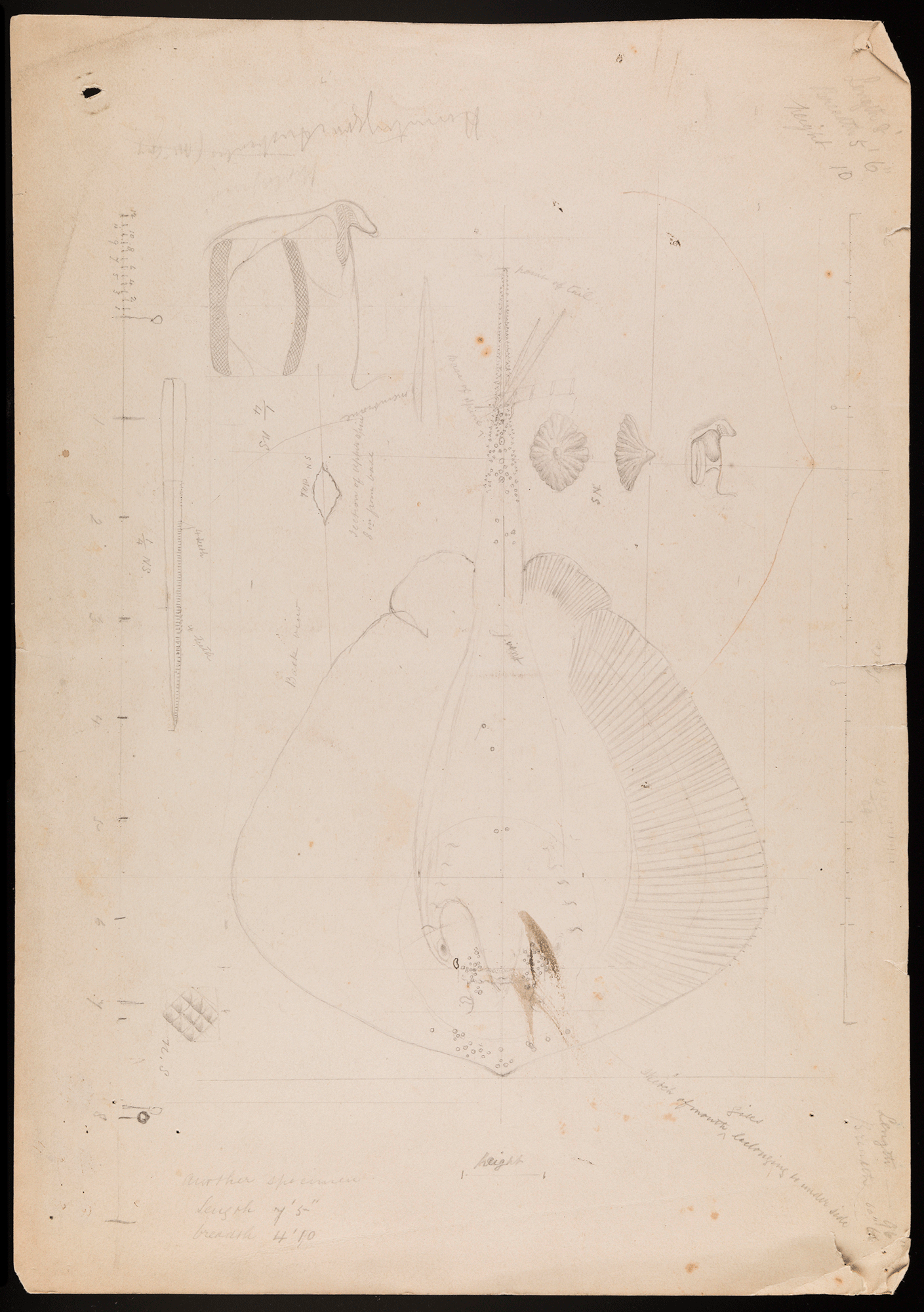
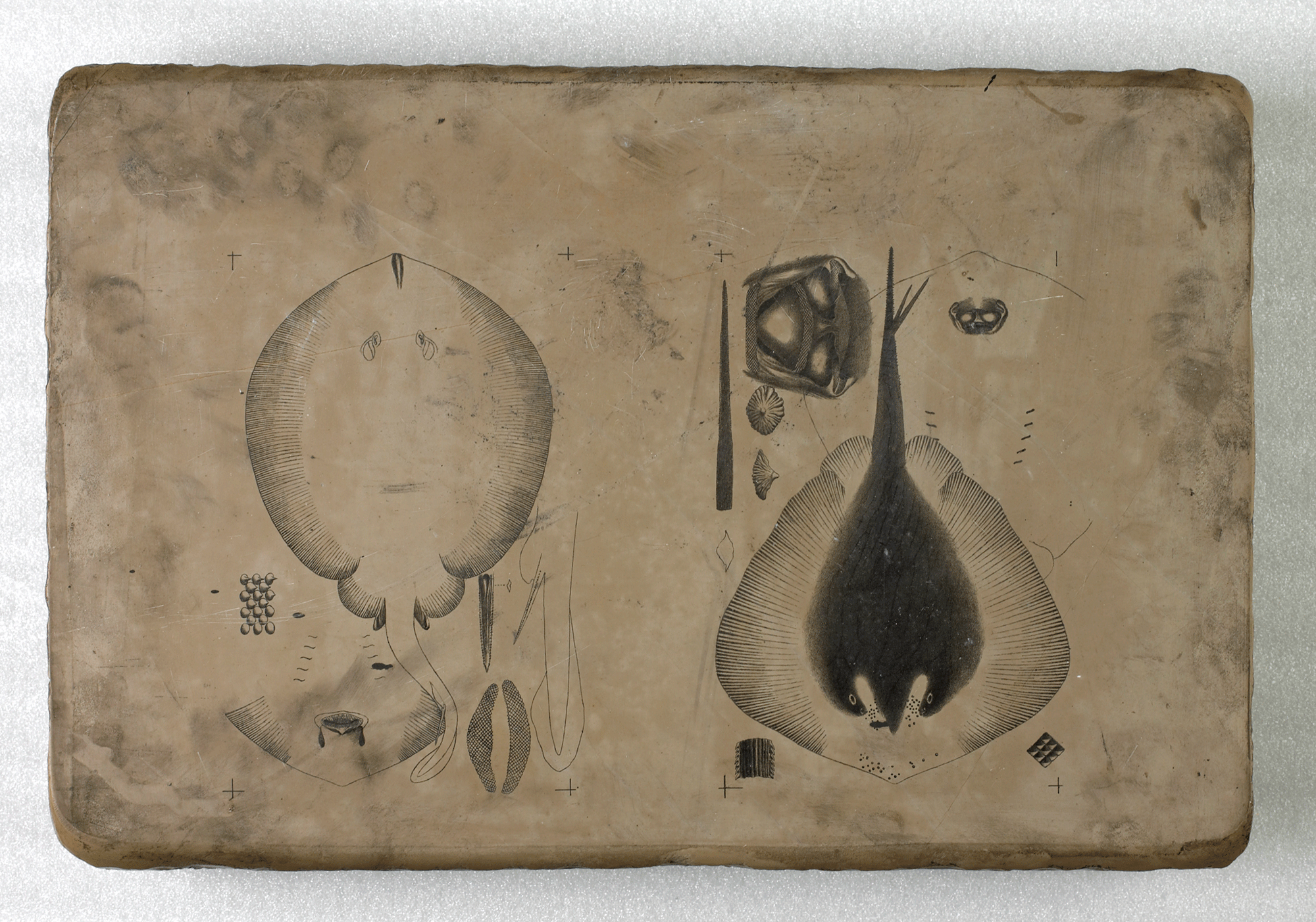
Using a greasy crayon and lithographic ink, the artist drew or painted directly onto a fine-grained limestone slab. This image was chemically fixed to the stone with a solution of gum arabic and nitric acid.
The stone was then dampened and rolled up with greasy ink, which adhered to the line work but was repelled by the water held in the stone's grain. Paper was placed on the stone and both passed through a special press that exerted considerable pressure via a scraper. The proof was examined and modifications made as required.
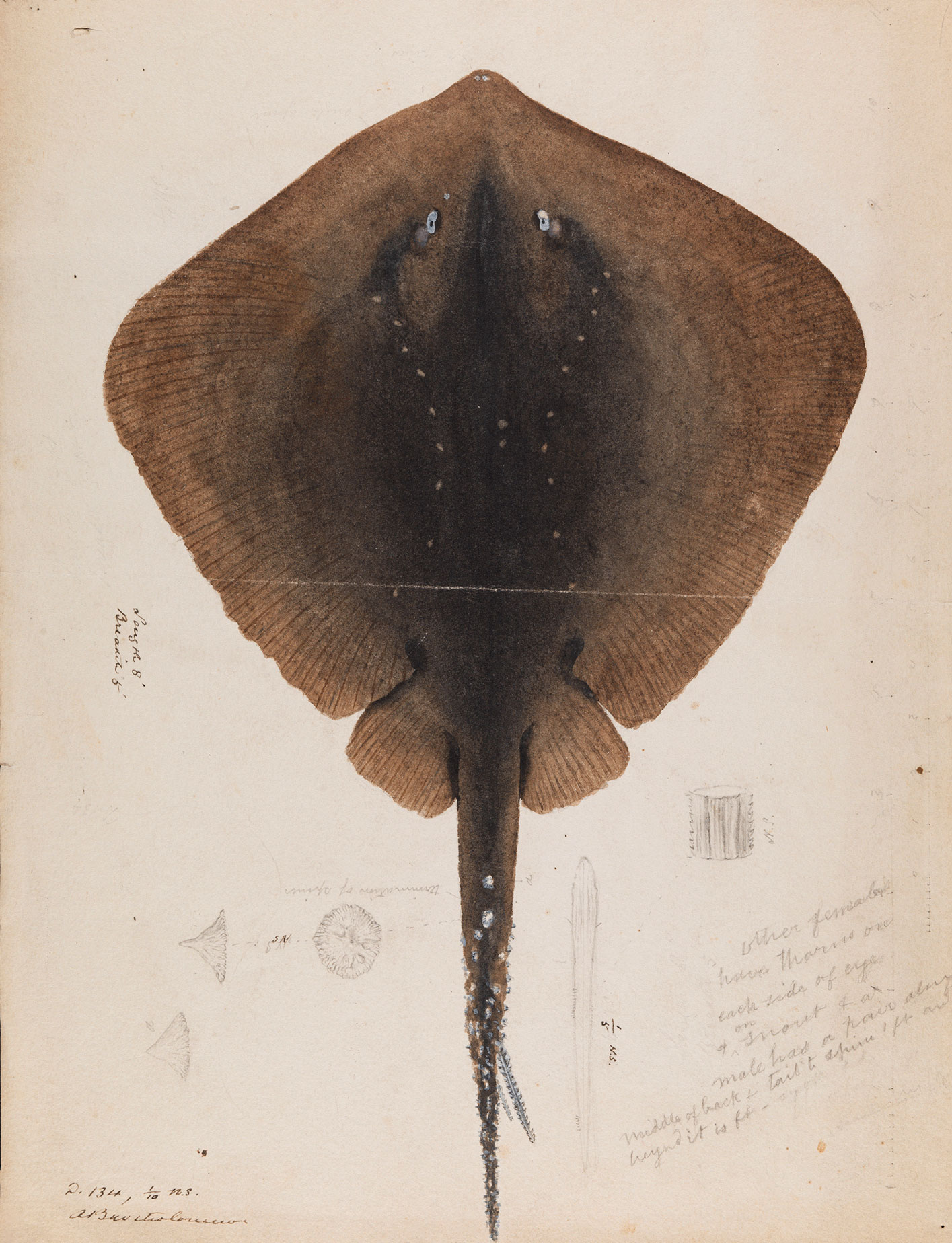
In the late 1850s Ludwig Becker and Frederick Schoenfeld produced lithographs for the Memoirs of the Museum. Proofs were then hand-coloured by artists as a 'pattern' which colourists subsequently used as a guide to create the edition. These initial plates languished for two decades, as the Memoirs were never published.
The resulting plates were some of the most accomplished scientific illustrations produced in Australia during the colonial period1.
1Thomas Darragh, 'The Prodromus of Palaeontology and of Zoology', in Carolyn Rasmussen. (ed), A museum for the people: a history of Museum Victoria and its predecessors, 1854 -2000, 2001, pp. 72-74.