As is still the case today, changes to routine for taxidermy and preparation departments tend to come with chance events; perhaps the most dramatic being the stranding of a great whale.
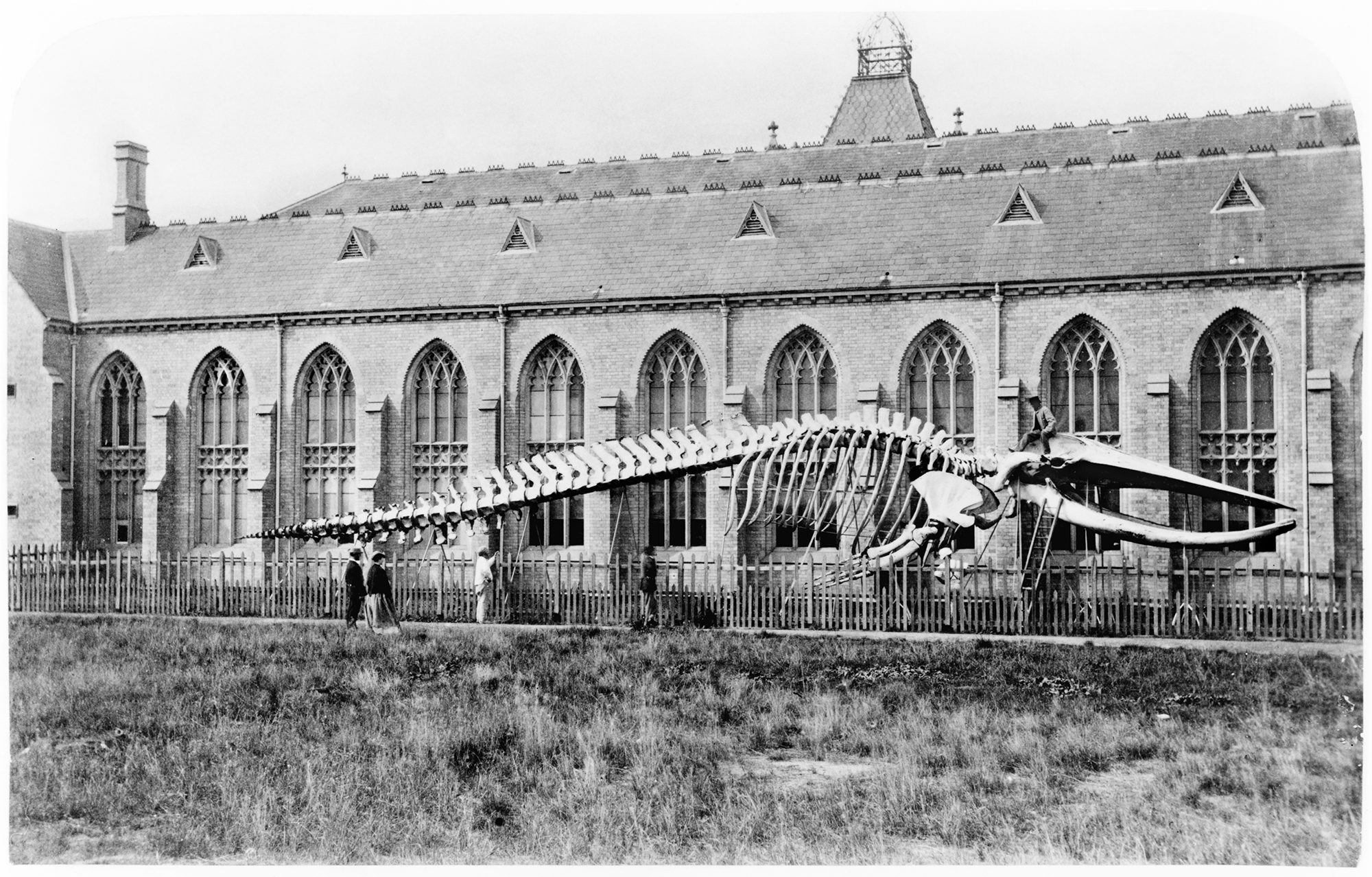
Such an event occurred at Jan Juc in 1867 when an oversize (27.5m) Southern Right Whale washed ashore.
The opportunity to gain a dramatic new exhibit for the museum was irresistible. What remained of the carcass was rendered and the resulting skeleton masterfully articulated by William Kershaw. Such an undertaking would have dominated the efforts of several men for months, a significant investment for a relatively small and understaffed institution.
McCoy over-enthusiastically described the specimen as a species new to science, naming it Physalis grayi. Later the specimen was recognised as Balena australis (now renamed Eubalaena australis) and McCoy's new species sank into synonymy.1
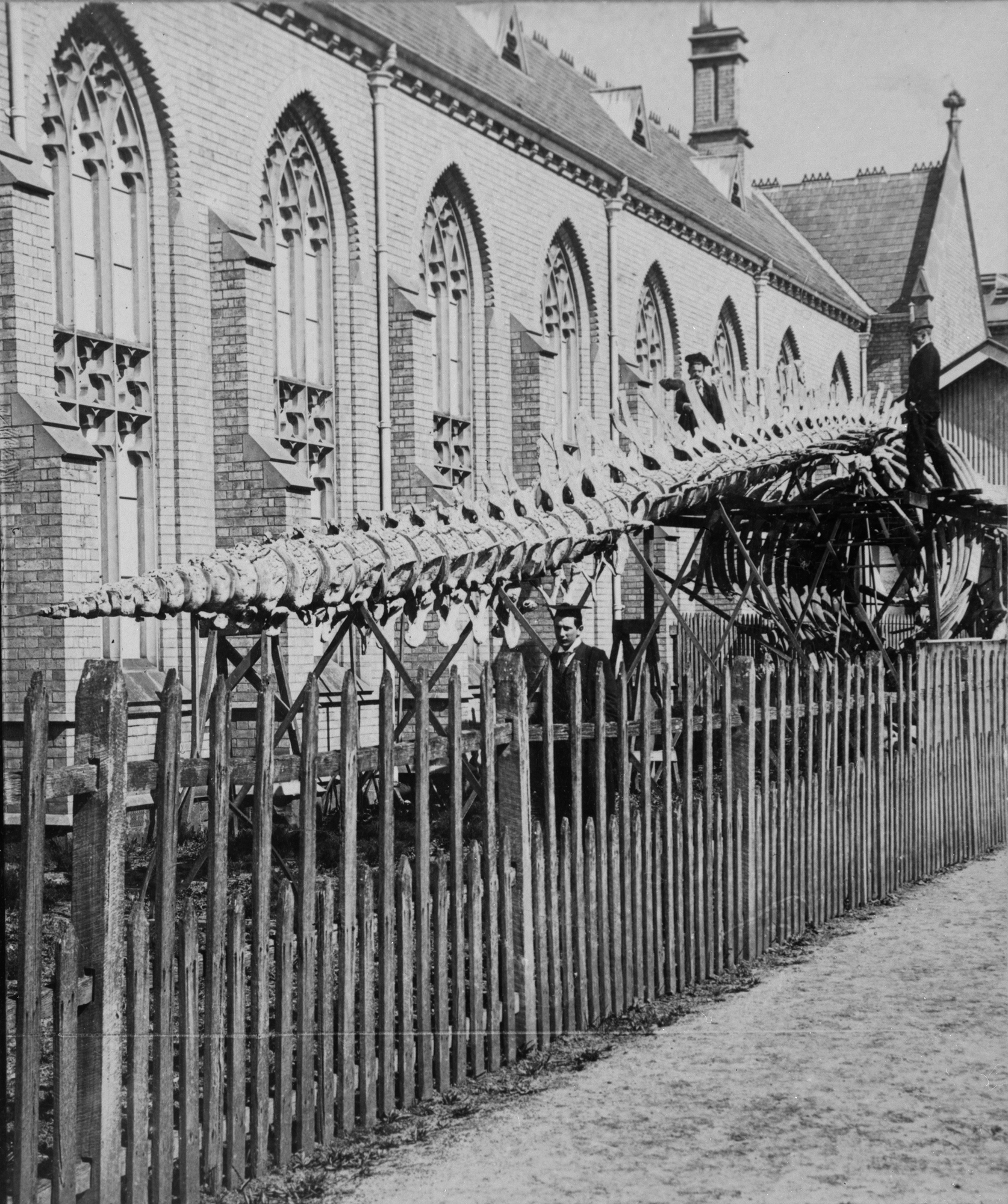
Articulated whale skeleton, Enbalaena australis outside the University museum. (1)