The Prodromus of Zoology was a prodigiously large endeavour, of a quality 'far exceeding any equivalent publications of other colonies.'1 It was received by both the academic and general community with fascination and praise, for the quality of illustration and McCoy's authoritative descriptions.
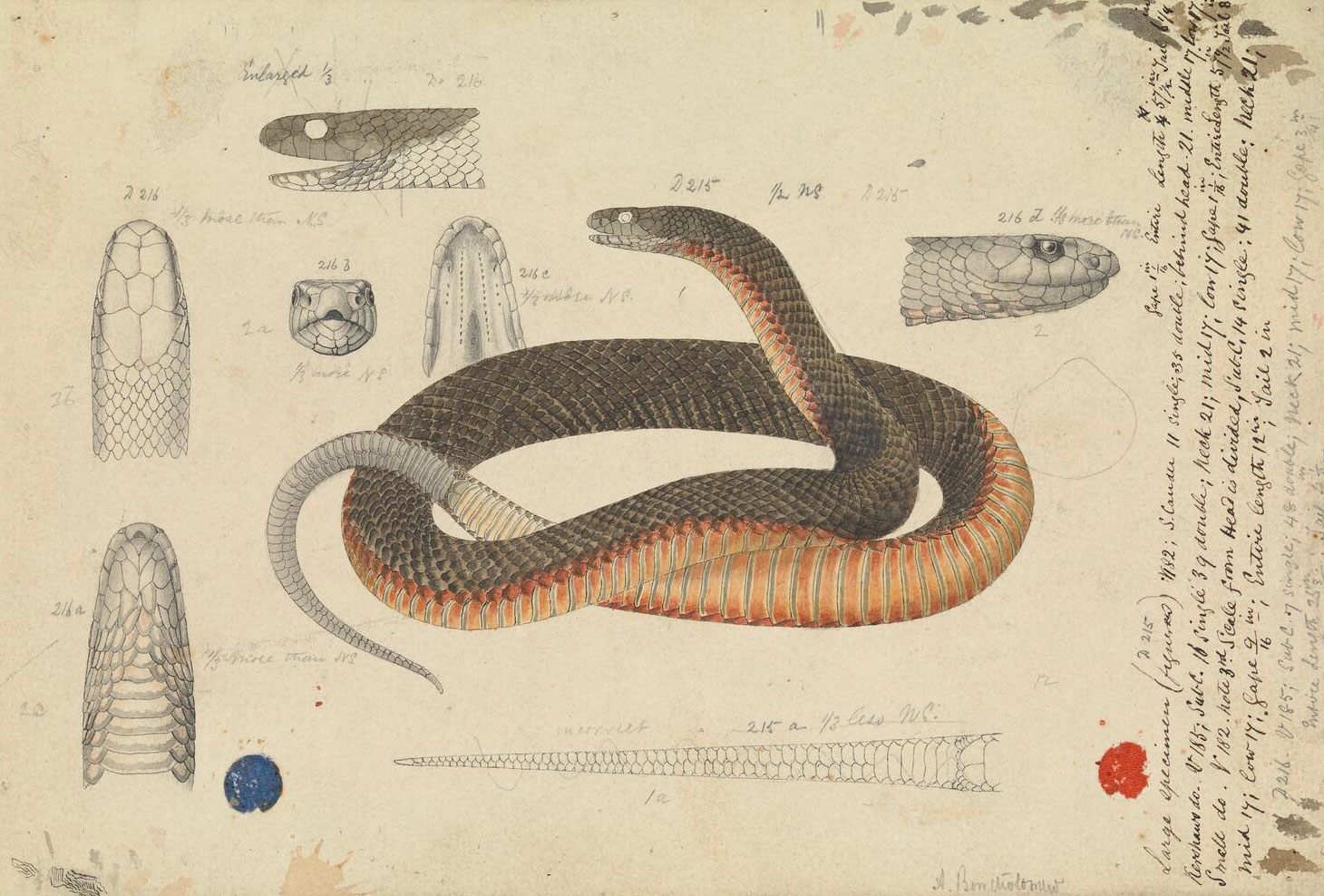
The first issue quickly sold out and the publisher was 'unable to supply the numerous orders he receives for copies'2 , illustrating the public's desire to understand the wildlife around them. McCoy described this response as 'beyond all expectation', but as a scientific visionary he understood the audience's hunger for the new and exotic.
McCoy sent copies of the Prodromus to museums and universities around the world, in exchange for the latest international research. Museum records show it was sent to Argentina, Austria, Paris, Prague, London, Belgium, America, Luxembourg and Vienna, allowing the worldwide scientific community to share in Victoria's natural history.
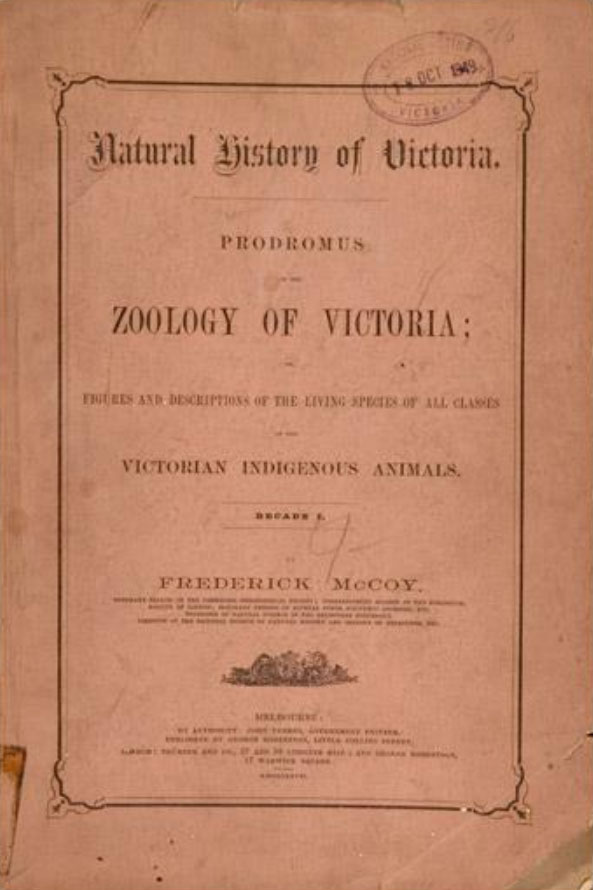
McCoy also encouraged peer review of the publication, submitting it to the scrutiny of revered British journals Annals of Natural History and The Popular Science Review.
The critical acclaim the work received encouraged its most prolific artist, Arthur Bartholomew, and vindicated McCoy's perseverance. It was described at the time as 'a work of great importance, not only in the colony, but to Naturalists in all parts of the world.'3 For those unable to travel to the 'new world' the Prodromus unveiled fascinating creatures from an exotic environment.
1Tom Darragh, The Prodromus of Palaeontology and of Zoology in Rasmussen, A Museum for the People, 2001, p. 74.
2Outward Letter Book, 1878.
3S Dallas (ed.), The Popular Science Review, p. 177.