The Prodromus project followed a popular formula of the time, seeking to identify and classify the natural wonders of the 'new world'.
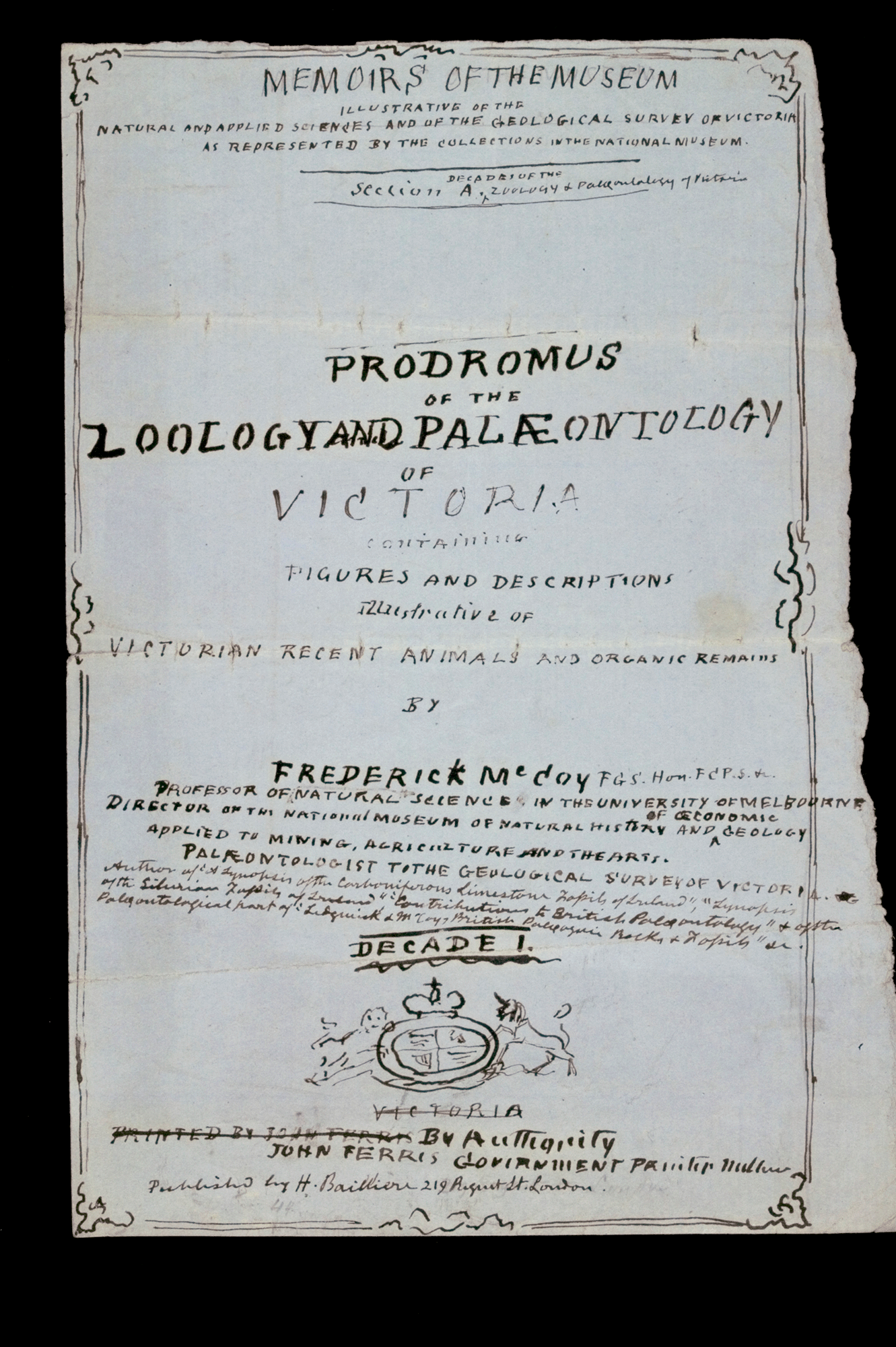
Such publications reached a peak in popularity with the work of John Gould in England and the earlier work of James Audobon in America. In Australia, many professional and amateur publications, including Aldine's systematic studies of the colonies and Louise Anne Meredith's Bush Friends From Tasmania, contributed to the genre.
The publication of the Prodromus was an enormous undertaking, utilising the work of numerous artists, collectors, lithographers and publishers, over an extended period of time. Although costly in both financial and professional terms, it was met with critical acclaim and wide popular support. Financial battles were waged and lost by McCoy, but ultimately the Prodromus has stood the test of time and remains one of Museum Victoria's finest publications.
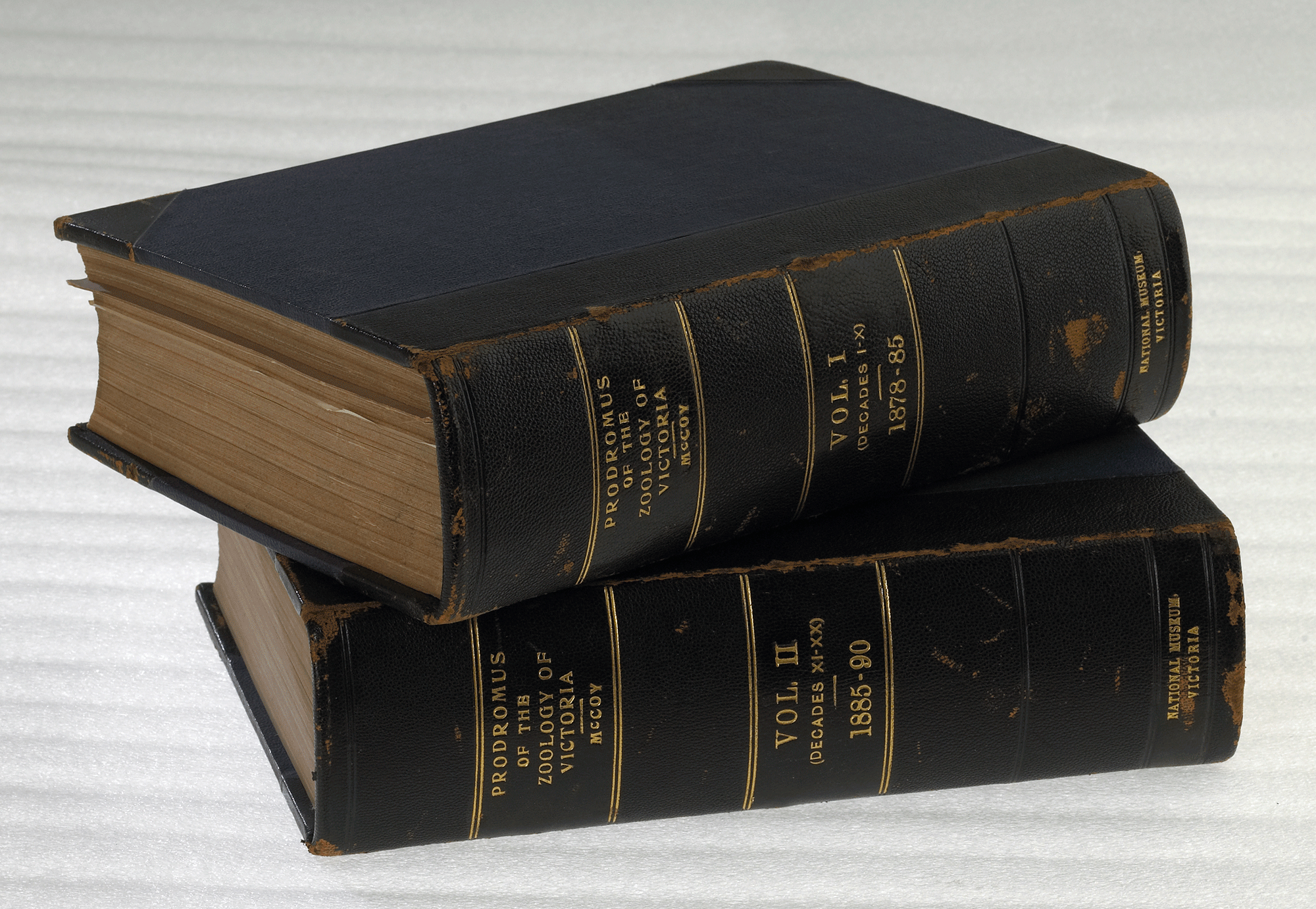
McCoy died without completing his systematic study, but even at the time few believed that 'any of us will live to witness the completion of the work, if the entire Fauna of Victoria is to be illustrated.'1
1878 - Decade 1 and 2
1879 - Decade 3 and 4
1880 - Decade 5
1881 - Decade 6
1882 - Decade 7
1883 - Decade 8
1884 - Decade 9
1885 - Decade 10 and 11
1886 - Decade 12 and 13
1887 - Decade 14 and 15
1888 - Decade 16 and 17
1889 - Decade 18 and 19
1890 - Decade 20
1S Dallas (ed.), The Popular Science Review, 1879, p. 177.