Student activity
Suitable for: Years F to 6
Learning area: Science
Topics: Experiments, Energy & forces
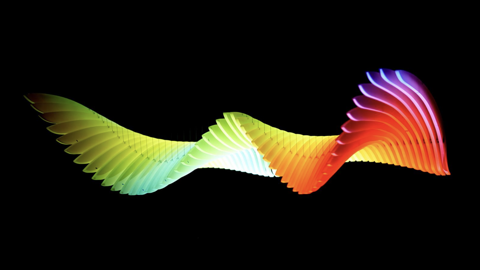
Mix coloured lights and learn how our eyes and brain see colour!
This resource provides video and written instructions to guide students as they use classroom materials to make coloured torches and experiment with additive colour mixing and the science of colour.
In this activity students will
- Learn about the rods and cones within our eyes that allow humans to see light and colour.
- Understand that red, green and blue (RGB) are the primary colours for light and how human brains interprets light.
- Experiment and play with coloured torches to understand how light travels in straight lines and creates shadows.
- Learn that red, green and blue lights are used on TVs, phone screens, and digital displays to create all the colours on a screen.
Suggested questions to engage students
- What colours do you create when you mix two primary colours together?
- How can you make white light?
- What coloured shadows do you create when you move an opaque object in front of the wall? Can you count the colours?
- Why are red, green, and blue lights on digital screens?
What to do
Download the instructions for this activity, then watch the video to see how it's done.
- Torch Colour Mixing Activity| 601.76 KB .pdf file
Victorian Curriculum Links
Science: Levels 3 and 4
Science Inquiry
-
observations can be used as a basis for posing questions to identify patterns and relationships, and to predict the outcomes of investigations (VC2S4I01)
Science: Levels 5 and 6
Physical Science
- light can be produced from many sources; light travels in a straight path, can form shadows, and can be absorbed, transmitted, reflected or refracted by objects (VC2S6U08)


Sign-up to Museum Teachers
Subscribe and get special offers, teacher news and free entry to all museums.