Student activity
Suitable for: Years 5 to 6
Learning area: Science
Topics: Experiments, Energy & forces
Understand the science of refraction using a glass prism and bubbles to create your own rainbows.
In this activity students will
- Learn that refraction is the bending of light as it passes from one substance to another.
- Watch a video describing how rainbows are created.
- Carry out a demonstration to create a visible rainbow using bubble mixture.
Suggested questions to engage students
- When do we see a rainbow?
- Are there other places at home that you’ve noticed can make a rainbow?
- Are the colours of the rainbow always in the same order? Why?
Watch
Watch this short video to introduce students to the idea that refraction of light results in a visible rainbow.
What to do
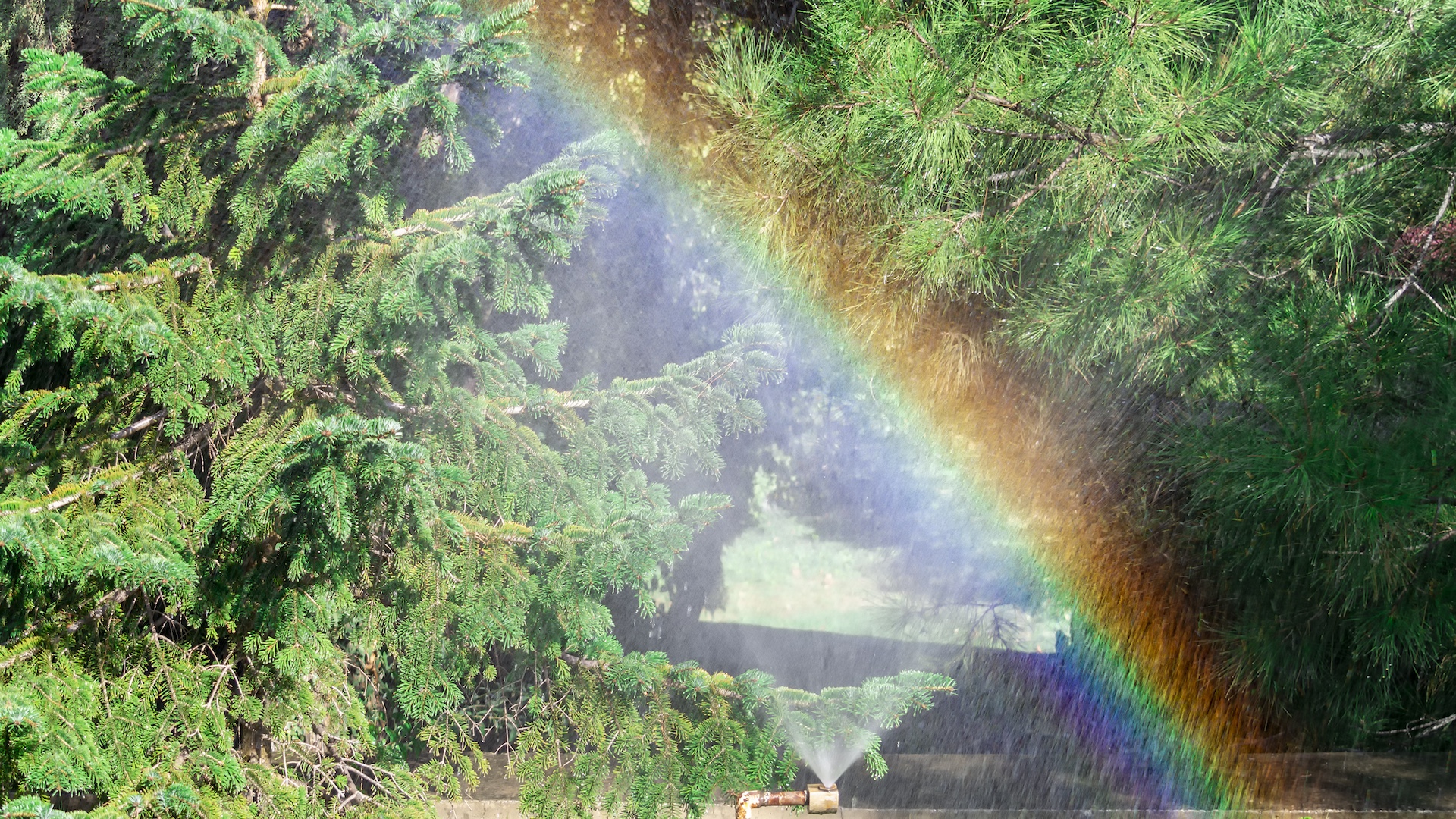
Explain to students that when a rainbow is visible in the sky on a rainy day, the arc of colour is caused by sunlight hitting droplets of water. Light reflects off the surface of the raindrop, which causes it to bend. Some light enters the raindrop before reflecting back out.
Sunlight is made up of all the colours we see in the rainbow, although it appears white. When light is bent (refracted), different colours bend by different amounts, so they spread out. That's why we see colours fanning out when in a rainbow.
Students can carry out a simple demonstration to create their own rainbow in the classroom:
Materials
- Dishwashing liquid
- Water
- Small bowl/dish (for mixing bubble mixture)
- Sheet of plain white paper
- Bubble wand (or turn anything into a bubble wand as long as it has at least one hole to stretch bubble mix over that you can blow through, like a straw, cylindrical tube, strainers, handles of craft scissors – be careful!)
Steps
- Make bubble mix by adding 1 part dishwashing liquid to 10 parts water in a small bowl/dish. It's best to let it rest overnight, if possible. If you have trouble making bubbles, add more dishwashing liquid.
- Place a sheet of white paper in a brightly lit place, such as next to a window or under a bright light (eg a lamp).
- Dip a bubble wand (or your make-shift bubble wand) into the mixture and blow into the hole. Look at the light shining through the bubbles against the white paper background. If you can’t, try shining a torch light directly through the bubbles.
- Bonus experiment: Dip the mouth of a lid or cup straight down into the soap solution. Pull it out slowly – a soap film should have formed over the opening. Turn the lid or cup onto its side and hold it above the piece of paper. You may see stripes of different colors forming.
So what's happening?
Like leftover raindrops in the air, bubbles also spread out the colours of light. A soap bubble is a super thin film of soapy water, with air inside.
When light hits the bubble, some of it will bounce off the surface while some will pass through. Some light is then reflected off the internal surface of the soap film. This causes the beam of sunlight to split up into separate light rays travelling in different directions that look very colourful.
View more videos from Science is a Superpower:
Victorian Curriculum Links
Science: Levels 5 and 6
Physical sciences
-
light can be produced from many sources; light travels in a straight path, can form shadows, and can be absorbed, transmitted, reflected or refracted by objects (VC2S6U08)


Sign-up to Museum Teachers
Subscribe and get special offers, teacher news and free entry to all museums.