There are 14 species of snake illustrated in the Prodromus of the Zoology of Victoria, four of which were described for the first time by Frederick McCoy.

The largest and most lethal of Victoria's snakes were included in the first few pages of the Prodromus. Perhaps these discoveries spurred him on, for he showed a particular fascination with snakes, particularly the more venomous species.
His text featured numerous anecdotes of fatal and near-fatal snakebites around Melbourne, and also included several descriptions of snakebite cures administered by Professor Halford of the School of Medicine at the University of Melbourne, who advocated the intravenous injection of liquor of ammonia to the patient. McCoy reported the efficacy of the cure in the case of a stationmaster at Elsternwick, who was bitten by a Copperhead.
Several of the species McCoy documented are now rare or extinct in the locales from which they were previously collected. For example, Ludwig Becker encountered the Death Adder toward the Murray River, while McCoy described observing a Little Whip Snake in the sand hills at Brighton Beach.
McCoy focused on the taxonomy of Australian venomous snakes, which to that point was not well understood. In a parallel project in Sydney, Gerard Krefft of the Australian Museum produced The Snakes of Australia (1865-69), which was illustrated by the talented sisters Helena and Henrietta Scott.
Bandy Bandy
Vermicella annulata
Public Domain (Licensed as Public Domain Mark 1.0)
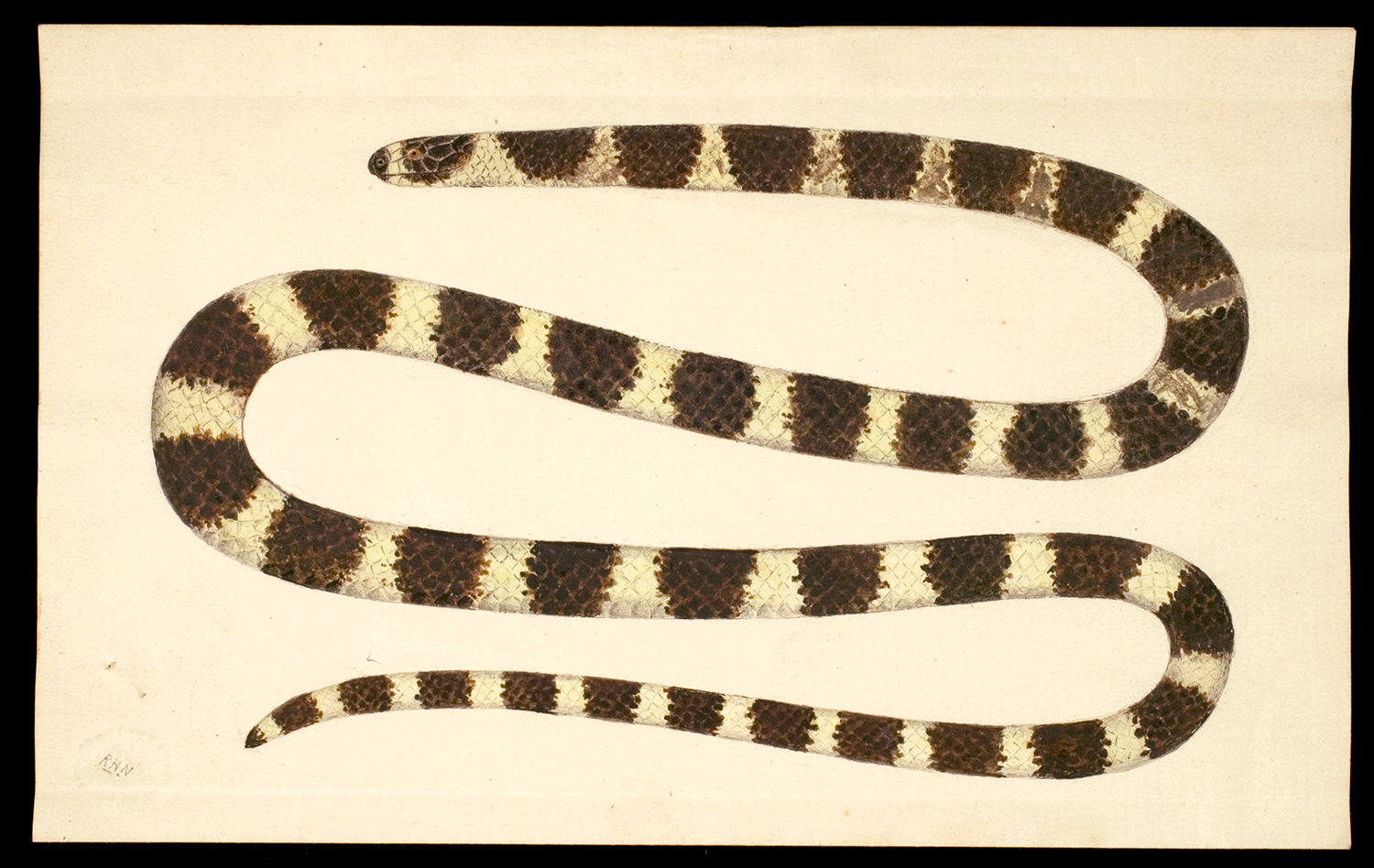
Plate 52. The Black and White Ringed Snake, Vermicella annulata (now known as the Bandy Bandy, Vermicella annulata) found in Sandhurst
This is one of the rarer Snakes of Victoria, and does not occur much further south than Sandhurst.
It is impossible to confound it with any other land Snake from its striking colours arranged in numerous, nearly regular, alternate black and white bands. These colours are nearly pure when the skin has been newly changed, but the white gets a slight yellow tinge, and the black a brown coat, when the skin is old; the pattern varies a little on the head, and the figured specimen differs from all the others in having the black bands wide and including a white patch, below.
The curious peculiar character of having no teeth behind the fang in the upper jaw is quite clear in all the specimens examined.
Black Snake
Pseudechys porphyriacus
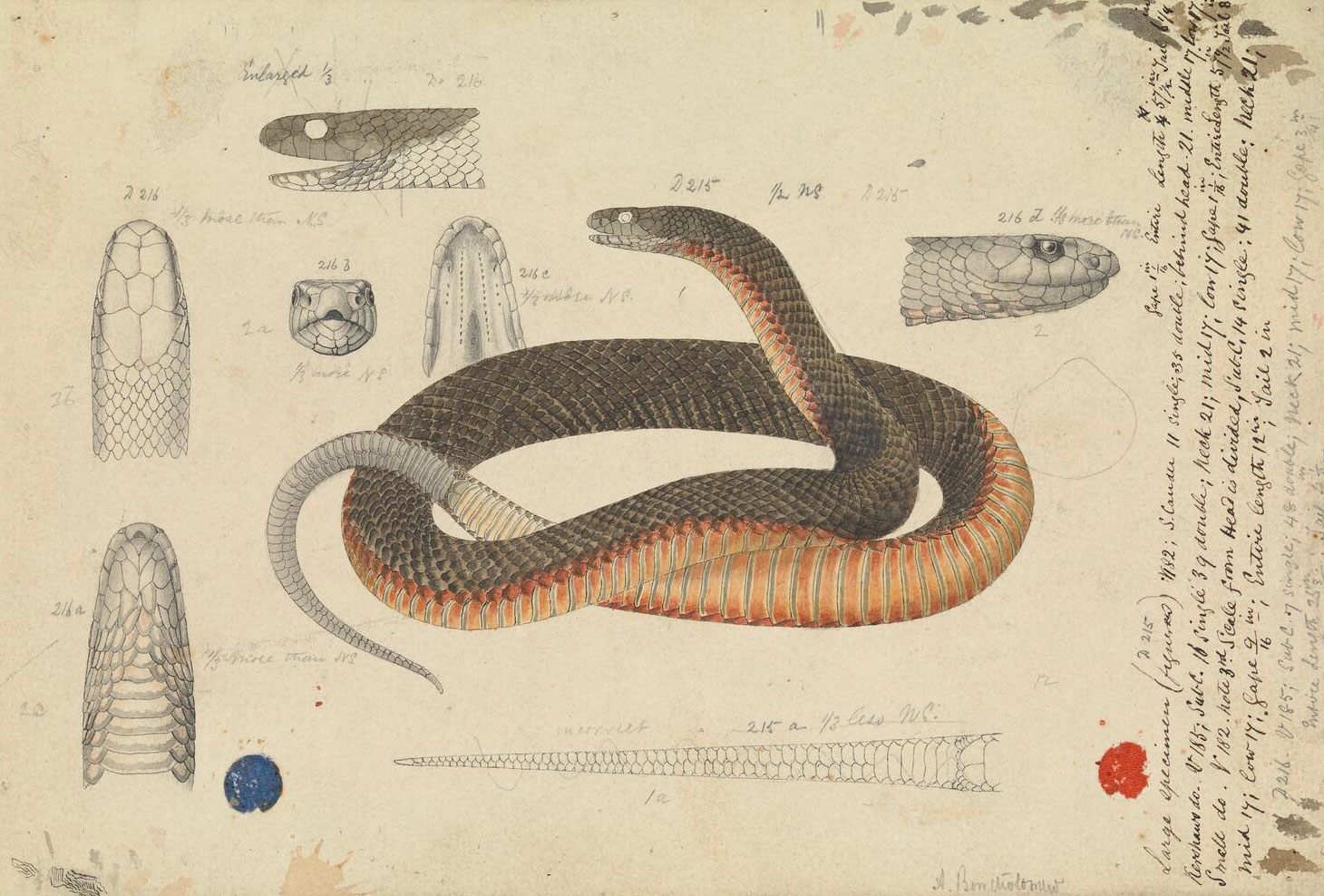
Plate 1. Black Snake, Pseudechys porphyriacus (now known as Red-bellied Black Snake, Pseudechis porphyriacus) caught at Studley Park
This is the most beautiful of all the Victorian snakes, and one of the most deadly in effects of its bite. It is, however, fortunately much rarer in Victoria than in the warmer more northern colonies of Australia; and although not uncommon near the northern Murray boundary if is seldom found in the cooler southern districts, and is not known at all in Tasmania. The only locality near Melbourne where it is not very uncommon is Studley Park, where in the bend of the Yarra the specimen here figured and some others I have seen were killed.
Like the other genera of the family Elapidœ, the poison-fang in Pseudechys is grooved in the front face for the duct of the poison gland, which opens near the point, and, as in the family generally, there are a few small harmless solid teeth behind the fang in the upper jaw, besides two rows on the palate, and the usual row of small hooked solid teeth on the lower jaws.
Some fatal cases of snake-bite in man from this species are known, and a large-sized dog will usually die in an hour from the effects of its bite.
Discover more snakes
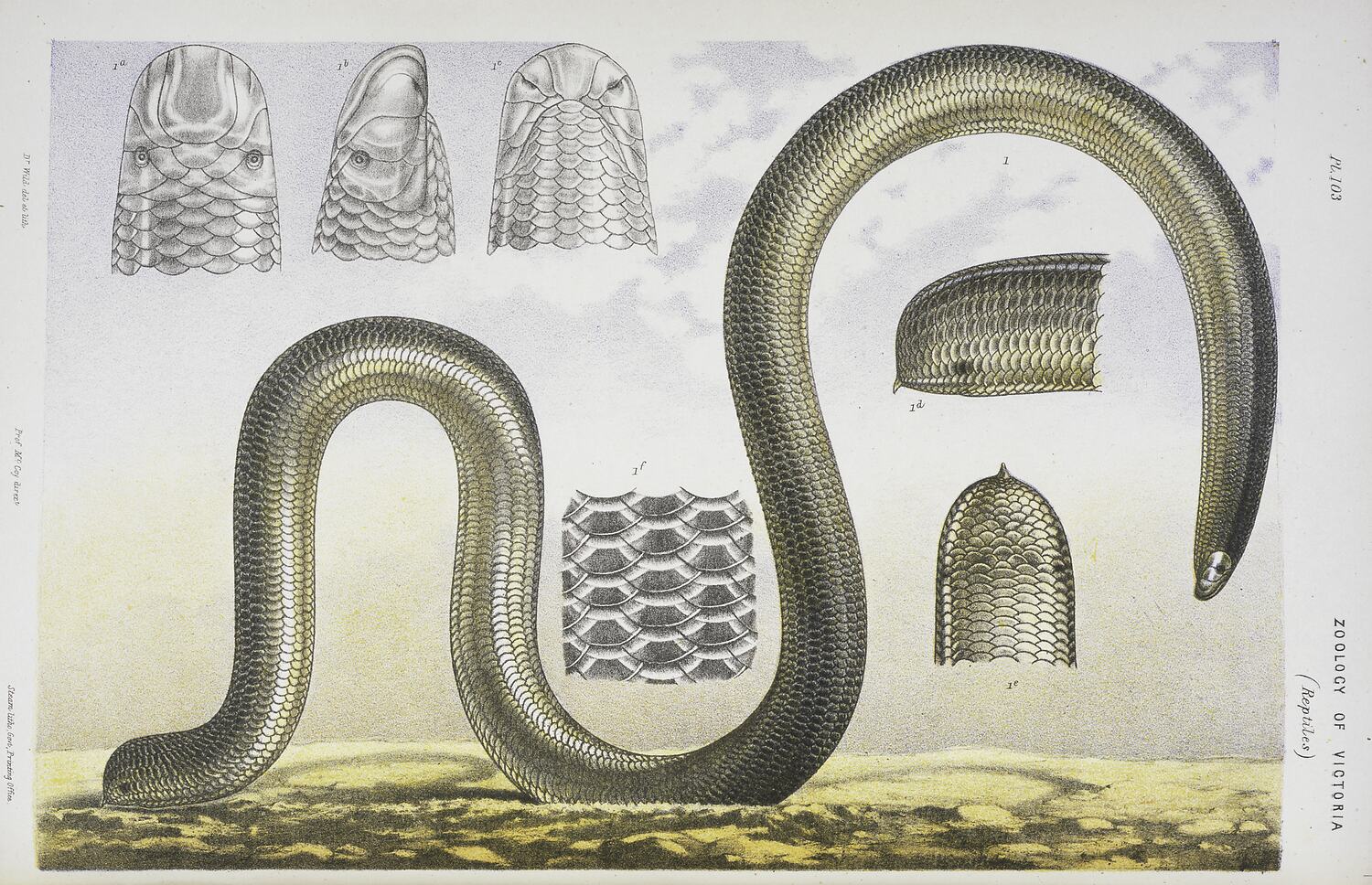
Plate 103. The Blackish Australian Worm-Snake, Typhlops nigrescens (now known as the Blind Snake, Ramphotyphlops nigrescens) found in Murchison
Artist: John James Wild
Source: Museums Victoria
Public Domain (Licensed as Public Domain Mark 1.0)
The "Slow-Worms" or "Blind-Worms" of English writers, and their numerous allies in various foreign countries, are very difficult to classify, from their having several characters of Lizards combined with most of those of Snakes. The absence of external limbs, although striking the popular eye, is not a distinctive character, for in some undoubted Lizards these are wanting.
By a sort of practical joke, not uncommon in nature, the posterior, or tail end, in this species is made to look almost exactly like a head, by a pair of round black spots, so nearly of the size, shape and color of the real eyes of the other end, and so similarly placed over the ends of the transverse, lunate, mouth-like slit on the ventral surface of that end, as to be readily taken for the eyes by an unpractised observer, taking away even the crucial test by which the boys in Leech's caricature terminated their dispute as to which was the head of the Skye terrier, by one at last "seeing the eyes" at the most unlikely end.
The "Blackish Worm-Snake" is not uncommon in the northern warmer parts of the colony in localities having a loose, friable, or sandy soil, in which burrows to a considerable depth with extraordinary ease and quickness. The specimen figured is from Murchison, presented by Mr. H.J.E. Brisbane; but two still larger ones sent to me alive by Mr. J.P. Watt, from Taripta, I have kept alive for quite some time in large glass jars half filled with sandy soil at bottom, into which, when brought to the surface, they burrow so rapidly that the whole body is out of sight in an instant-the head being first raised, then arched and forced down with such strength that the glossy smooth body is quickly buried to the greatest depth. These specimens were dug out of an ant-hill in which they dwelt in the midst of the abundant insect food suited to them. It is almost impossible to hold them, they struggle with such strength, and are so smooth and slippery. The tongue is very long, narrow, flat, largely forked at the end, and of a dull red color, being darted out frequently to a length of an inch or so, as in ordinary Snakes. These Worm-Snakes are perfectly harmless, although, like the Slow-Worms and their allies in other countries, they are popularly supposed to be very poisonous. They do not attempt to bite when handled; and as the mouth is so very small...and there are no poison glands, there could be no harm to man if they did. It has not been figured of the colors of life before.
Plate 23, Figure 1. Common Brown Snake, Diemenia superciliosa (now known as Pseudonaja textilis), found at Sebastian, Sandhurst
Public Domain (Licensed as Public Domain Mark 1.0)
This is one of the largest of the poisonous and very dangerous snakes of the colony, and is more generally distributed than any of the others, being equally common from the south coast to our northern Murray boundary. In the experiments made by Dr. Halford on snake poisoning, tabulated in the Medical Society's Journal for March 1875, all the cases of people bitten by the Brown Snake and treated by the injection of ammonia recovered; but in one of the last cases mentioned in the public journals (Bendigo Advertiser, 27th October 1877), a snake of this species, 3 feet 6 inches long (the fifth in above table of measurements), bit Mrs. Eleanor Ingleby, residing at Sebastian, in the hand, and she died from the effects within fifteen minutes. The acting coroner, Mr. Strickland, who held the inquest, sent the specimen to the Museum, where it is now deposited, so that the species is determined with certainty.
Plate 32. Two-hooded Furina-Snake, Furina bicucullata (now known as Common Brown Snake, Pseudonaja textilis textilis) found at Longwood
Artist: Arthur Bartholomew
Source: Museums Victoria
Public Domain (Licensed as Public Domain Mark 1.0)
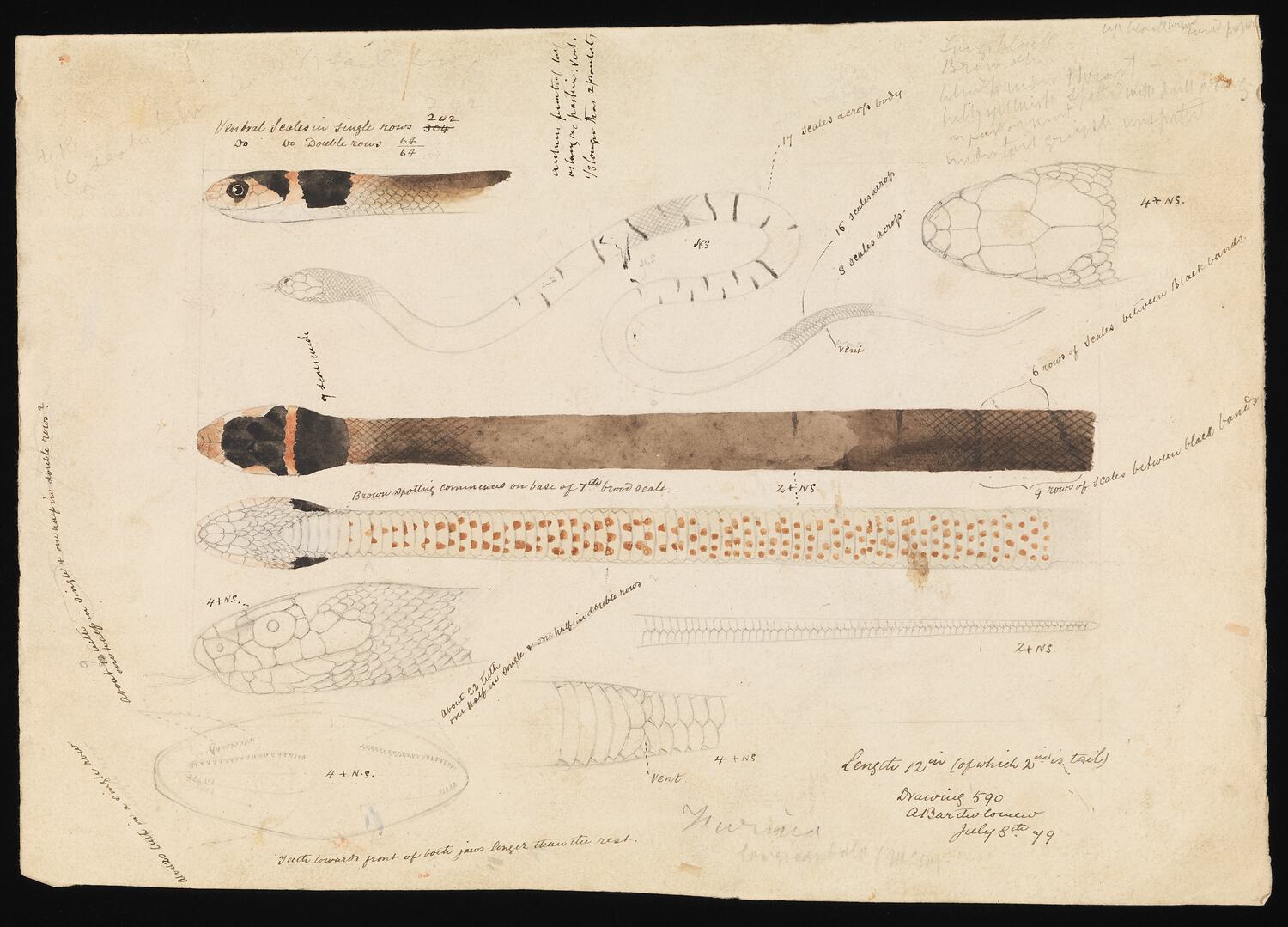
This rare and beautiful little snake is a clear example of the genus Furina, distinguished from Diemenia* by there being only a single nasal plate pierced by the small nostril, instead of two with the nostril between them.
No other Australian snake has the middle of the body marked with narrow black bands, often imperfect, on alternate sides like the example figured, but three other specimens of the same size are without them.
The specimen figured was found in a torpid state under a piece of bark in July at Longwood, by Mr. Harry Tubb, who presented it to the Museum collection; it has 202 ventral scales and 64 subcaudals, all divided. A second specimen, 12 inches long, was presented by Dr. McCrea; it has no bands on body and the spots on ventral scales are greyish.
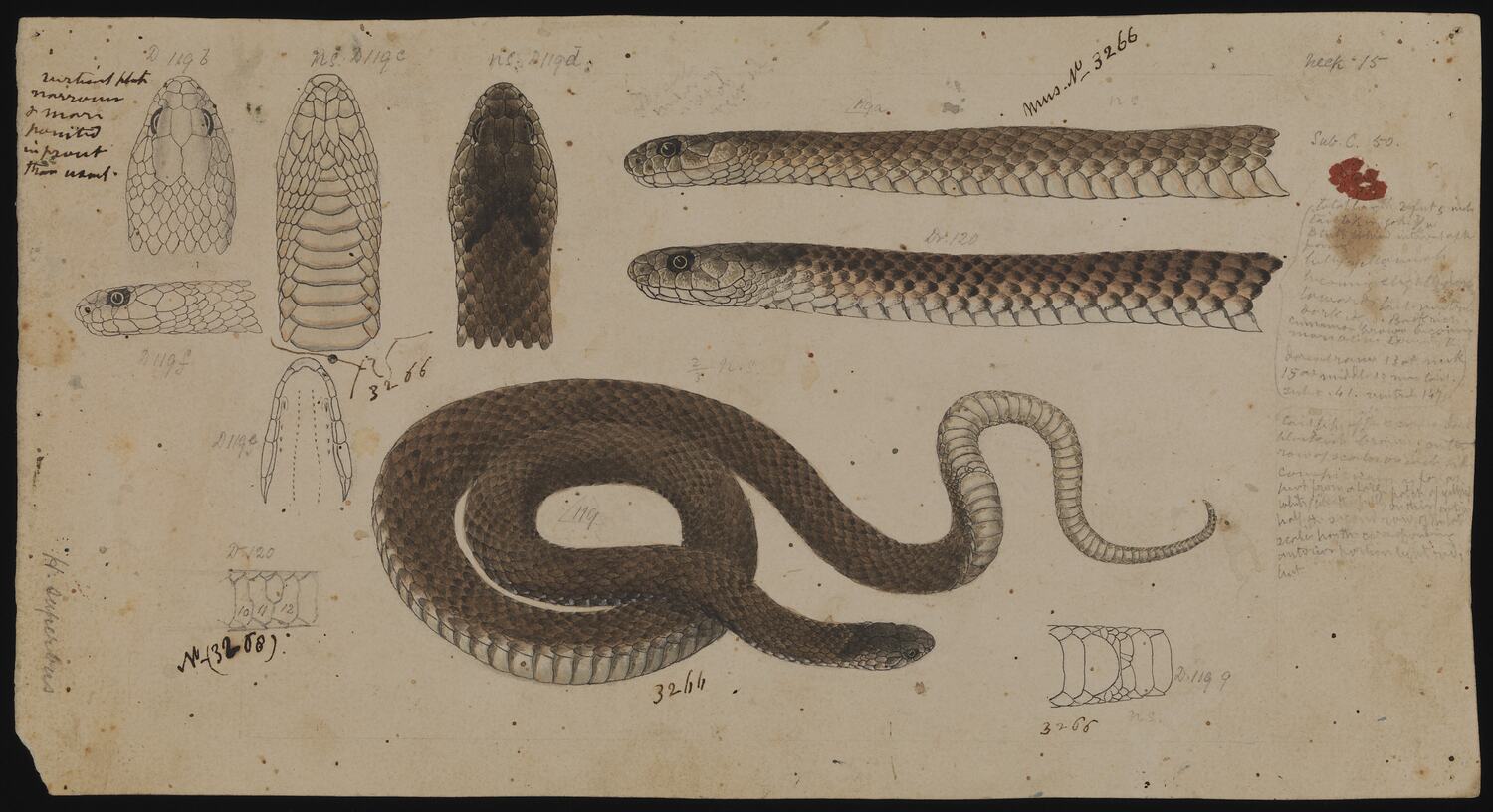
Plate 12. Death Adder, Acanthophis antarctica (now known as Acanthophis antarcticus) found at hot tracts near the Murray River
This is the only Australian snake approaching the true viperine venomous snakes in having the fangs perforated and not grooved; they are, however, not so movable, but permanently erect, as in the Elapidœ: the whole of the characters of the singular genus Acanthophis (of which the present species is the only one known) incline to classing it in the family Viperidœ rather than with Colubrine snakes, although it is intermediate between the two groups in many respects. The popular name seems to be indifferently Death Adder or Deaf Adder. The harmless horny spine at the end of the tail is its most dangerous weapon, in the popular belief. It is generally supposed to be the most deadly of all the Australian snakes. A large dog bitten by a captive Death Adder in one of Dr. Halford's experiments was dead in 18 minutes.
When irritated if flattens the thick part of the body very greatly, and has a particular action of snapping to one side and the other alternately with great quickness when about to strike.
Plate 2. Copper-head Snake, Hoplocephalus superbus (now known as Lowland Copperhead Snake, Austrelaps superbus) caught at Elsternwick
This species was long supposed to be confined to Tasmania, where it is very abundant; and my first announcement of its occurrence in the mainland near Melbourne was supposed by subsequent writers on the subject in New South Wales and London to be erroneous; these writers, however, now (without referring to their former criticisms) quote it as an undoubted Victorian species. In point of fact, it is very common about Prahran, Elsternwick, and the south-eastern suburbs of Melbourne, but its range seems very restricted, specimens not having yet been recorded from the northern western parts of the colony. The numerous young are brought forth in December and January.
The blackish examples, especially if the reddish color of the side scales and edges of ventrals is distinct, are frequently mistaken for the Black Snake; but the scales on the underside of the tail being only in a single row throughout, and there being one instead of two nasal plates, easily distinguish them.
A large number of the dangerous cases of snake-bites near Melbourne are due to this species, which for its size is extremely venomous. One remarkable case excited much attention a few years ago, when a station-master named Brown, on the Hobson's Bay Railway at Elsternwick, was bitten by a small individual of this species, which some workmen imagined they had killed, and after carrying it some distance hanging on a stick, threw it upon the platform, when Brown, taking it up, received a small wound in the finger, and shortly showed the usual signs of fatal snake-poisoning. In spite of the ordinary remedies, of excision of the bitten part, rubbing ammonia on the wound, ligatures, and sucking the wound, doses of brandy, galvanism, and being walked about by assistants, he was so completely at the point of death that the two surgeons attending him had gave him up, his sight being gone, his lower extremities completely paralysed, having dilated pupils, swollen face and neck, and coma, from which he could not be roused. The medical attendants, explaining to his friends that they could do no more, and that his death might be looked for in a few minutes, proposed to try what was then considered the dangerous remedy of injecting strong liquor of ammonia into the vein, as advocated by Professor Halford. On this being done by Dr. Halford, who was sent for, to the astonishment of all present, the man instantly recovered consciousness, the pupils of his eyes contracted, and, sitting up he recognized his wife and child and friends, and asked some questions about domestic matters, after having been cold, incapable of seeing, hearing, speaking, or moving, and almost pulseless for hours. He soon recovered, and remained on daily duty till lately.
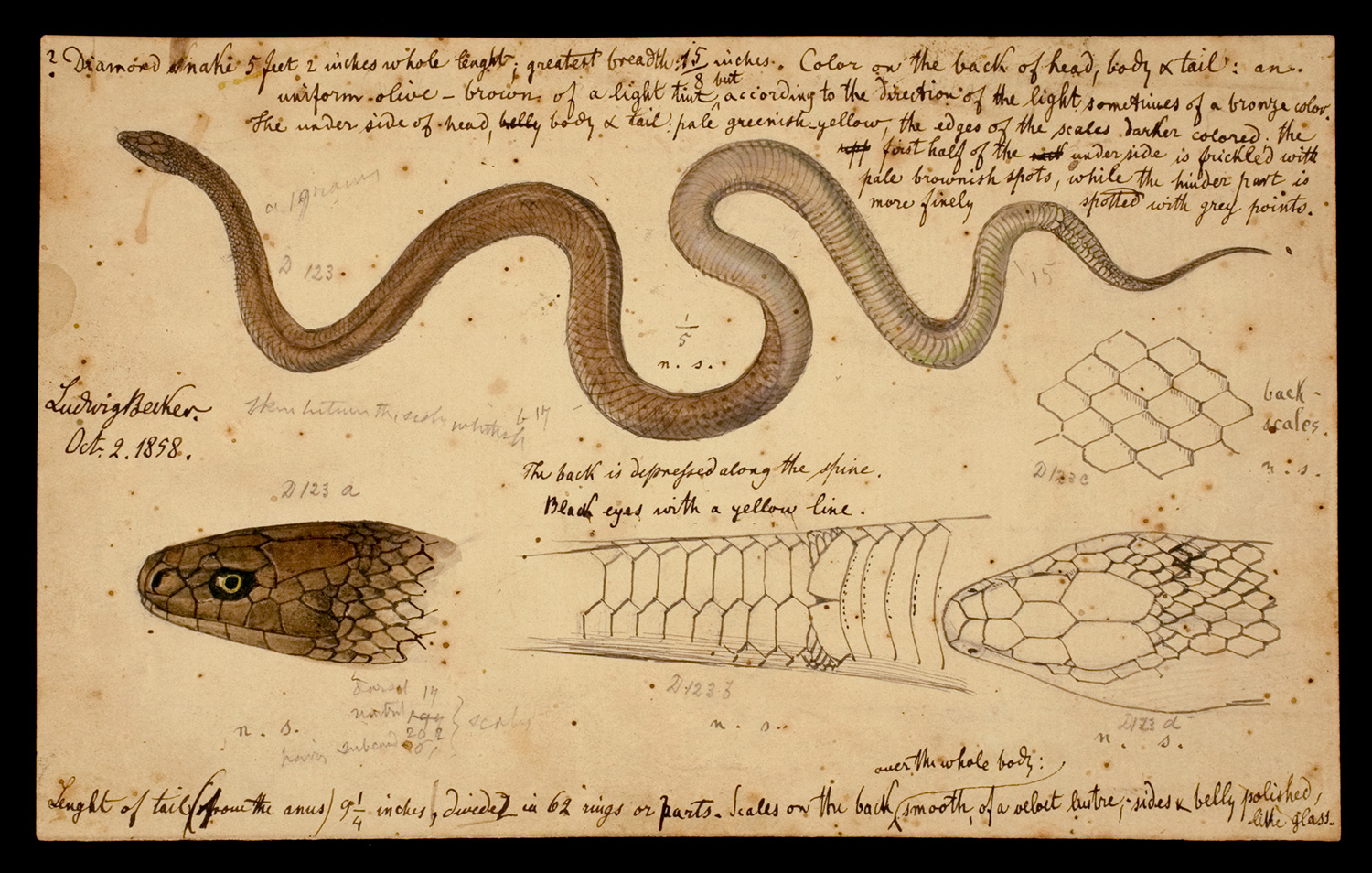
I have adopted the popular name "copper-head" for this snake from a well known vendor of a supposed antidote for snake-bites, who used to go about the streets with several specimens of this species in the bosom of his shirt, protruding now and then around his neck. On the evening of the last day on which I saw this, he was induced to cause one of them to bite him, to show the value of his antidote, and was found dead in a few hours. The color of the head is like that of an old dark copper coin. In Tasmania the name "Diamond Snake" is unfortunately given to this species, for that name belongs to a harmless snake of New South Wales, so that the numerous experiments made in former years in Tasmania to test the value of some pretended antidote, were supposed in London to have been made with the true harmless Diamond Snake, instead of, as was the case, with this very poisonous kind.
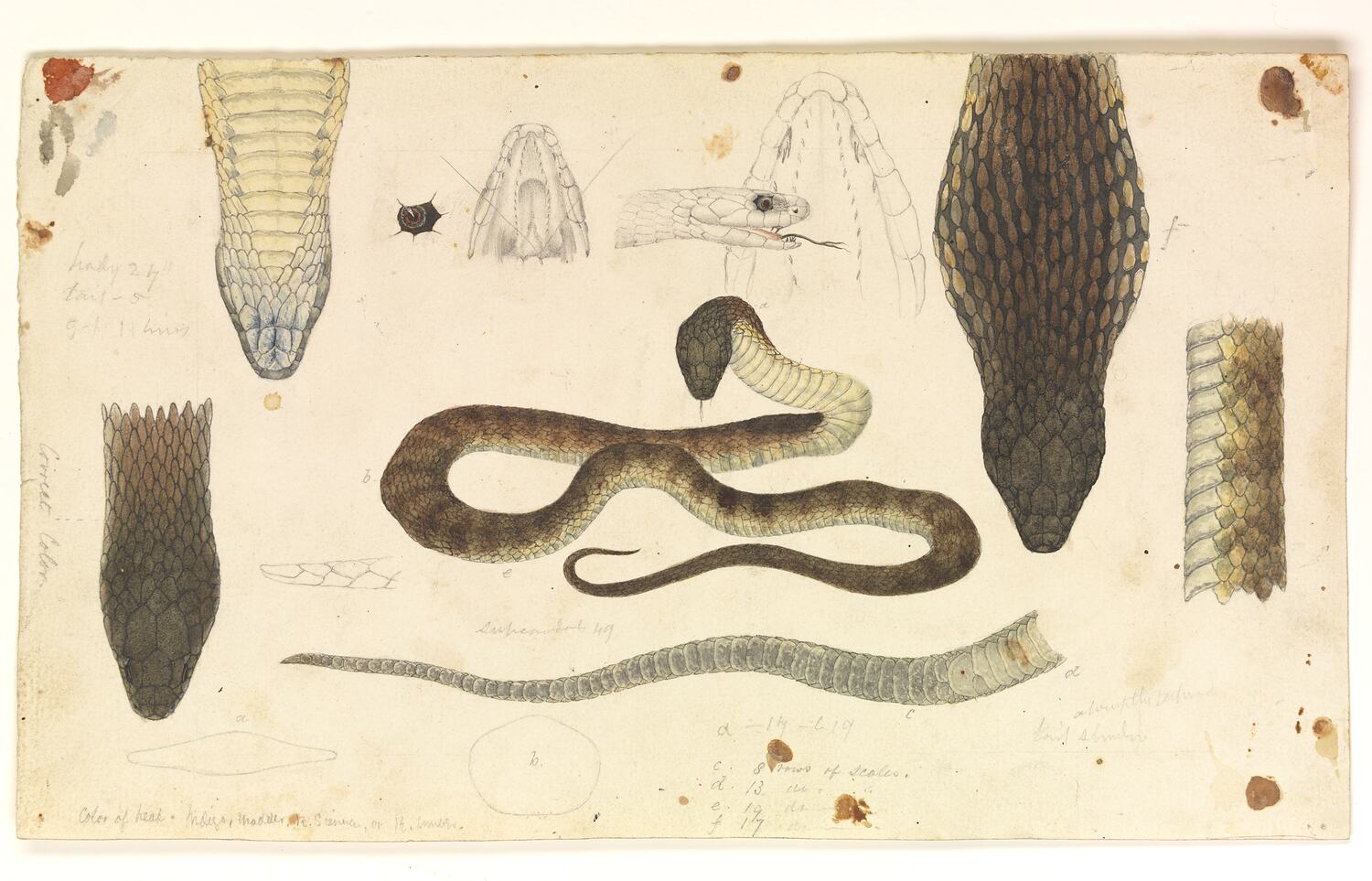
Plate 3. Tiger Snake, Hoplocephalus curtus (now known as Tiger Snake, Notechis scutatus) caught at the junction of the Murray and the Darling Rivers, Melbourne
This species which goes under the colonial name in Victoria of Tiger Snake from its tawny cross-banded coloring, and ferocity, is well know to frequently inflict bites rapidly fatal to men and dogs, and is extremely ferocious in disposition, reminding us strongly of its near ally, the Cobra di capello of India, like which it flattens and extends the skin of the side of the neck laterally when irritated, to twice its width when quiet; the black stretched skin being then very visible between the separated scales. It is common, especially on marshy places and near river-banks around Melbourne, and in most parts of the colony, as well as extending far beyond it to the warm north, and just as abundantly to the cool south of Tasmania.
The bands vary very much in distinctiveness, and are often very obscure near the head and tail; in some specimens they are rendered very conspicuous by an extension of some of the yellowish color of the belly on to two or three rows of the lateral scales between the ends of the bands. The blue on the chin is rarely seen, and soon disappears in specimens of spirit, exhibiting it when alive. As in all snakes the colors are most vivid just after casting the skin, and are darker and the markings less distinct before it. The fangs are single or double, small, under the junction of the second and third labial plates; one or two (rarely four) smaller teeth under the anterior part of the fourth labial plate. Iris orange; the pupils seem circular, and not vertically elongate, as Schlegal states in his "Essai sur la Physionomie des Serpens."
In Tasmania this is popularly called "Carpet Snake," a name which properly belongs to the harmless snake so called on the mainland. In this case, as with the H. superbus, the Tasmanian experiments on the treatment of bites from this highly poisonous species were unintelligible in Europe from the misuse of the established popular name of a different and innocuous form.
The greater number of fatal cases of snake-bites to men and dogs near Melbourne, and most of the experiments by Professor Halford and others to test the power of the poison, and the efficacy of the injection of ammonia into the blood, and other modes of treatment, refer to this species, which is by far the most abundant of all the dangerous snakes of the colony. In Dr. Halford's experiments at the University of Melbourne, of 31 dogs bitten by active Tiger Snakes, 27 dies and 4 recovered; the deaths occurring, on the average, in 2 hours 2 minutes. Deputy-Inspector-General MacBeth, causing 29 dogs to be bitten by Cobras found they all died, on the average, in 2 hours 42 minutes, showing that, contrary to the expressed opinion of many Indian practitioners, the Australian Tiger Snake is more rapidly fatal than that of the Cobra. Dr. McCrae, the Chief Medical Officer of Victoria, caused 14 dogs to be bitten by this species of snake, and none recovered. No remedies were used in any of these three sets of cases. The number of deaths of human beings in the colony from snake-bite in a year is very small; but some of the cases given in the Australian Medical Journal for March 1875 are interesting from the bites being publicly given in Melbourne, and the precise times noted both of the bite and the death of the man. One, a police magistrate bitten on the arm by a Tiger Snake, died in 24 hours; a man named Underwood, a well known vendor of a supposed antidote, was bitten in public by one of this species and was dead within an hour; another man named Cartwright, exhibiting some of these snakes, was bitten and also died within an hour. Dr. Casey, of Brighton, reported a case in which a man died within a half hour of the bite; and a man named Griffiths, handling some of these snakes as an exhibition at the Port Phillip Club Hotel, was bitten by a Tiger Snake, and died in less than half an hour. The symptoms seem to be much alike in all cases if snake-bite, viz.:-At first faintness and slight convulsions, then sickness of the stomach (probably a reflex action from the brain), with trembling and weakness in the limbs ; the pupils of the eyes dilated, a tendency to sleep, and then total paralysis and coma immediately preceding death.
The young of the Tiger Snake are about thirty in number, like the adult in all respects, and brought forth in January. The general food of the Tiger Snake is composed of frogs, lizards, and mice, &c. On one occasion, however, I put a live mouse into a box in which I had a Tiger Snake, to feed it, and was astonished to find the next morning that the mouse had killed the snake by biting the back of its neck, and had eaten some of its flesh. Keeping some of these snakes together in a box, I frequently noticed then bite each other vigorously when stirred up, without the poison-fangs producing any ill effect.
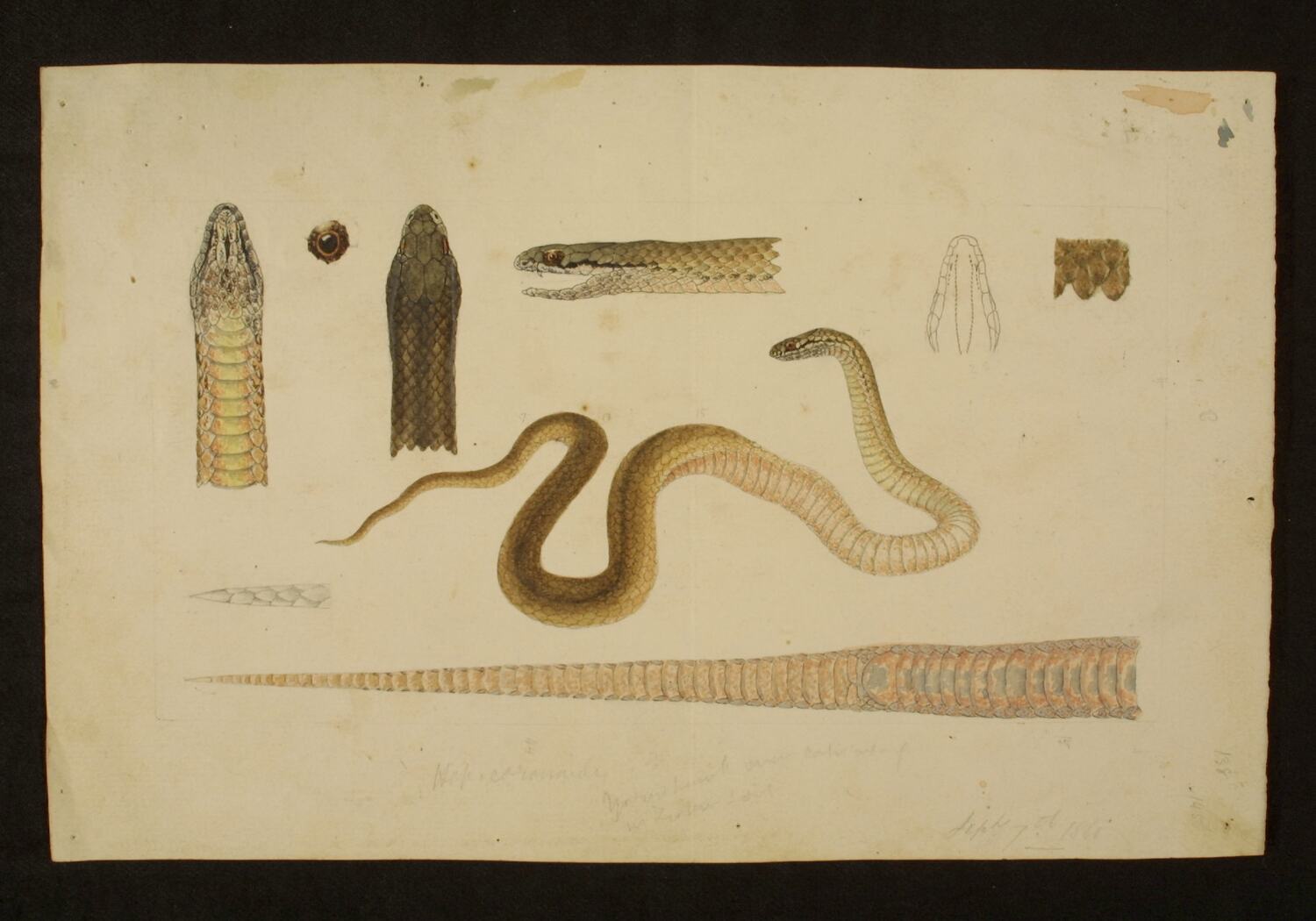
Plate 11, Figure 2. The White-lipped Snake, Hoplocephalus coronoides (now known as Drysdalia coronoides) found at Melbourne, Bullarook
Source: Museums Victoria
Public Domain (Licensed as Public Domain Mark 1.0)
It has been supposed hitherto to be peculiar to Tasmania, but it certainly (like the H. superbus, also supposed not to occur on the mainland) is a not uncommon species about Melbourne.
The figured specimen is that from Yarra-bank, while the one from Bullarook Forest was remarkable for a more general rusty reddish coloring.
The head only has been figured of this species before.