Molluscs have long been a focus for both amateur and professional naturalists. The distinctive, calcareous forms of seashells make them ideal for collection and classification. Unsurprisingly, shells from southern oceans were among the first Australian species to become known in Europe.
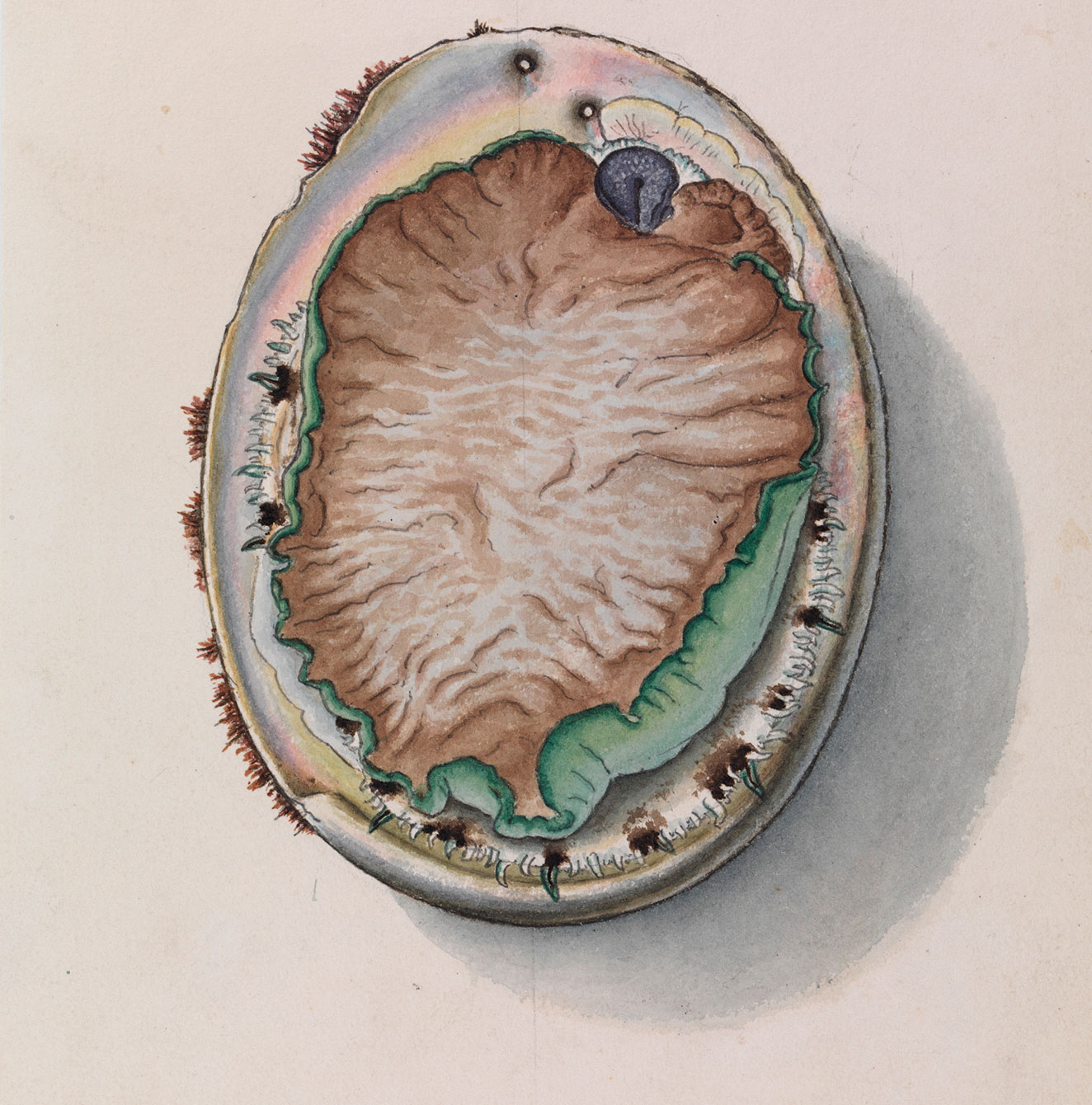
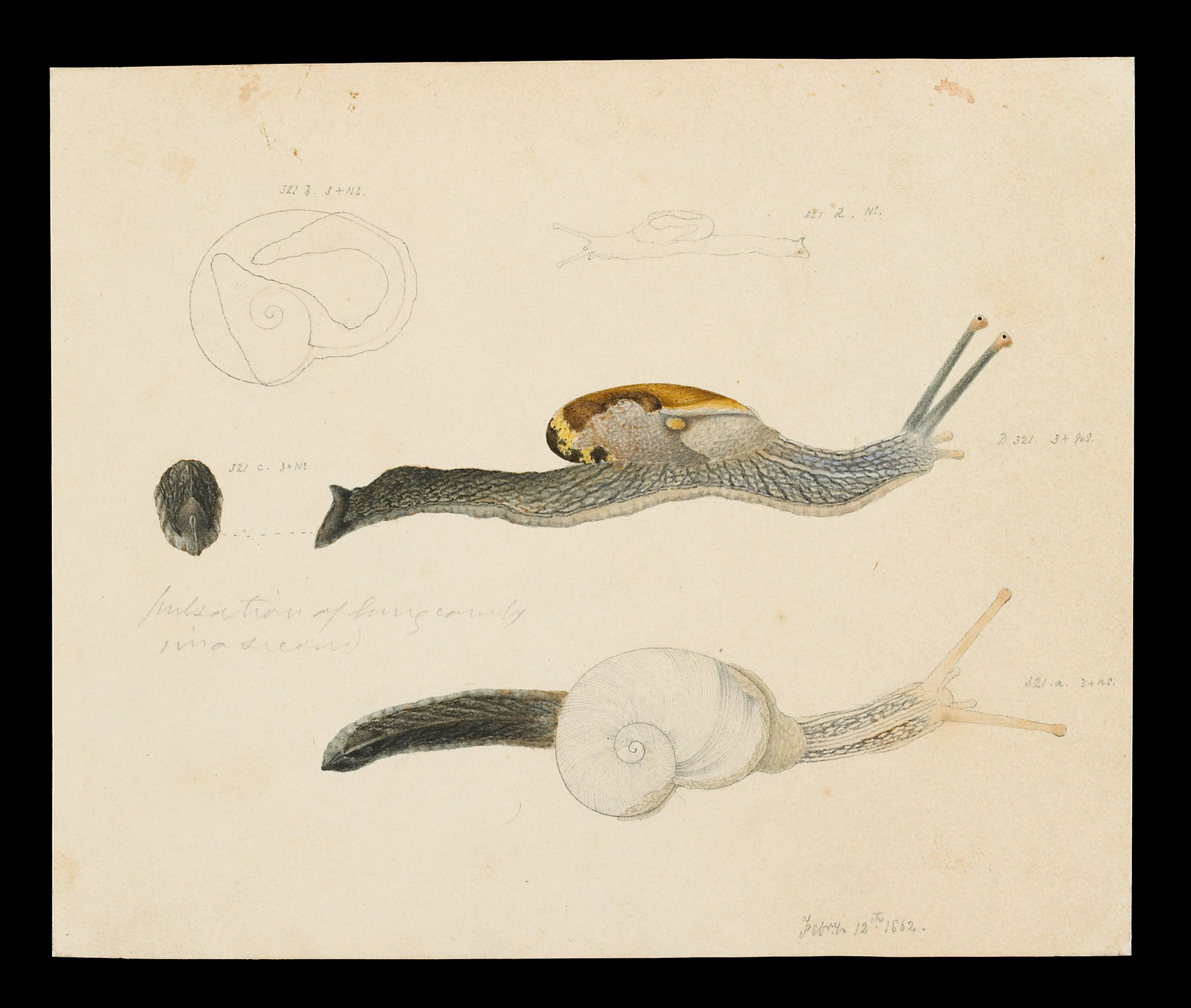
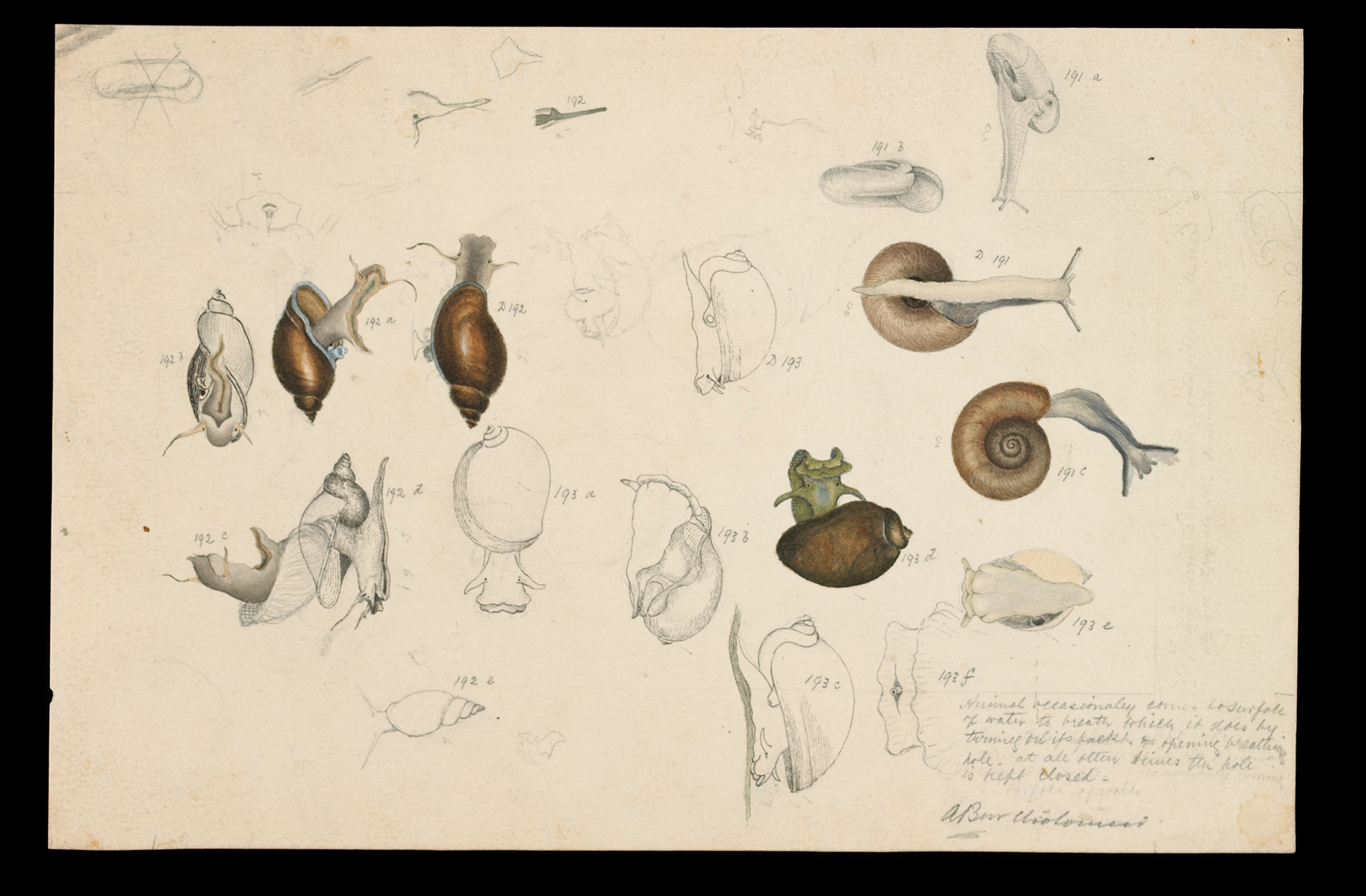
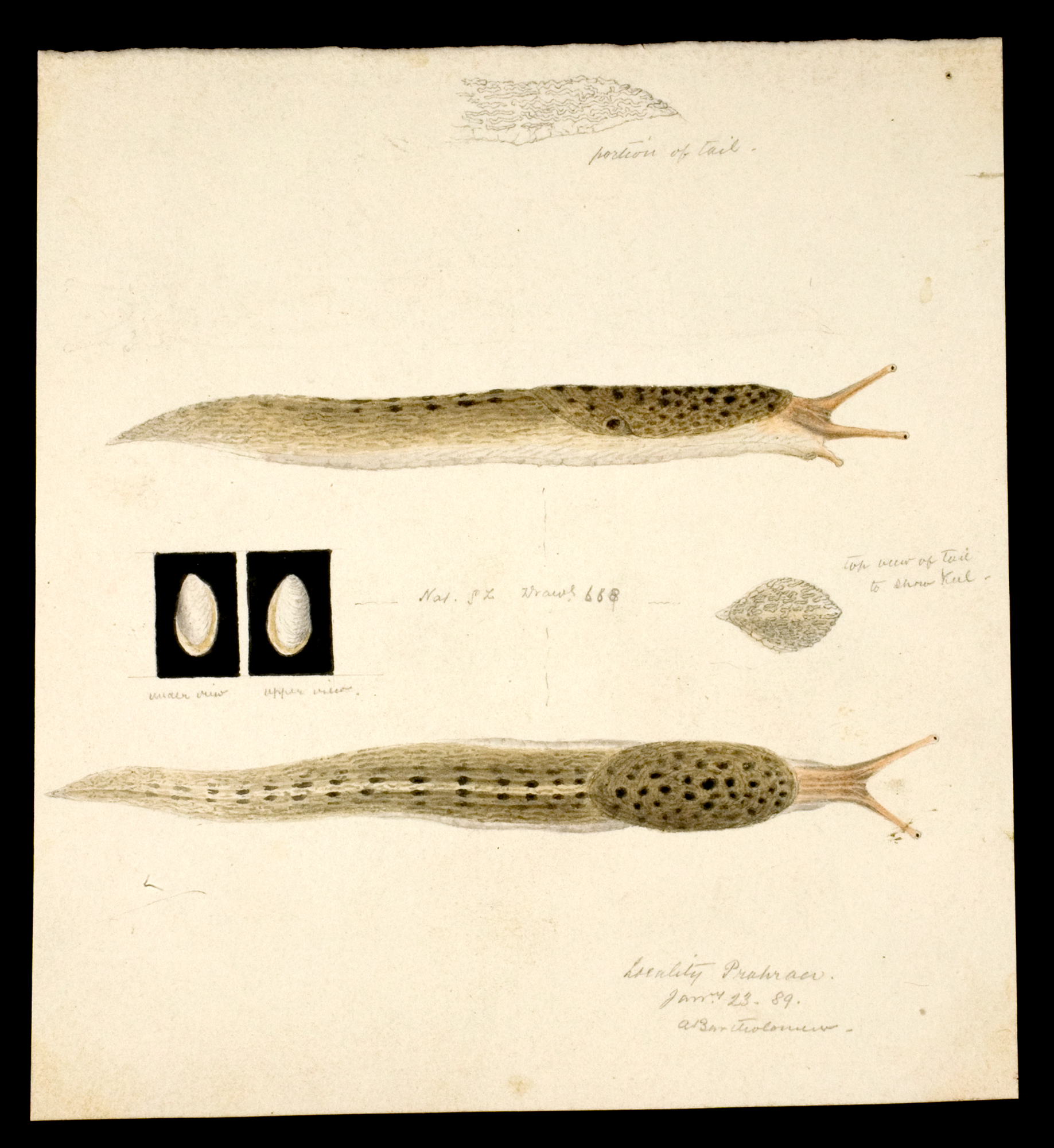
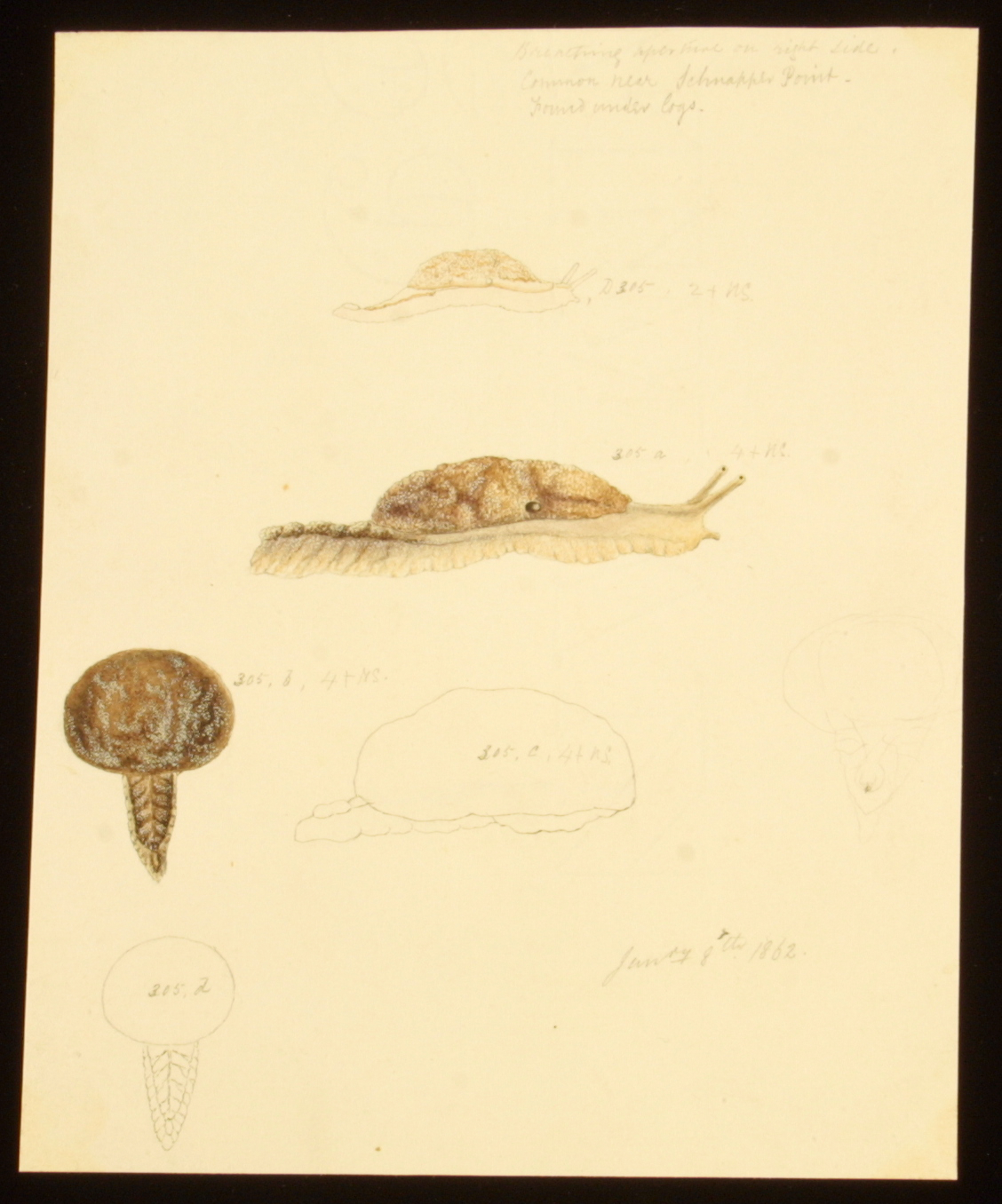
While a scientific generalist, Frederick McCoy had particular expertise in palaeontology. He was interested in living molluscs, especially Trigonia, which survived around Victoria's coast and were represented by related species in fossil records of both Australia and Europe. While evolutionists used the Trigonia as evidence for their theory, McCoy maintained a staunchly anti-Darwinist stance throughout his career.
McCoy commissioned illustrations of fossil shells for his Prodromus of the Geology of Victoria, but resisted the temptation to illustrate many living species. Keen to make the most of his unique geographic and historic position, he avoided expending resources on animals already adequately covered in the scientific literature.
Consequently the Prodromus of Zoology includes only four species of living molluscs. All cephalopods, they were the Paper Nautilus, the Southern Calamari, the Giant Cuttlefish and the Arrow Squid. Unpublished plates revealed another Giant Cuttlefish series, featuring a smaller and somewhat fresher specimen. While few species were illustrated, McCoy and his artists were clearly interested in cephalopods, dedicating multiple individual plates to each species.
Australian Giant Cuttlefish
Sepia apama
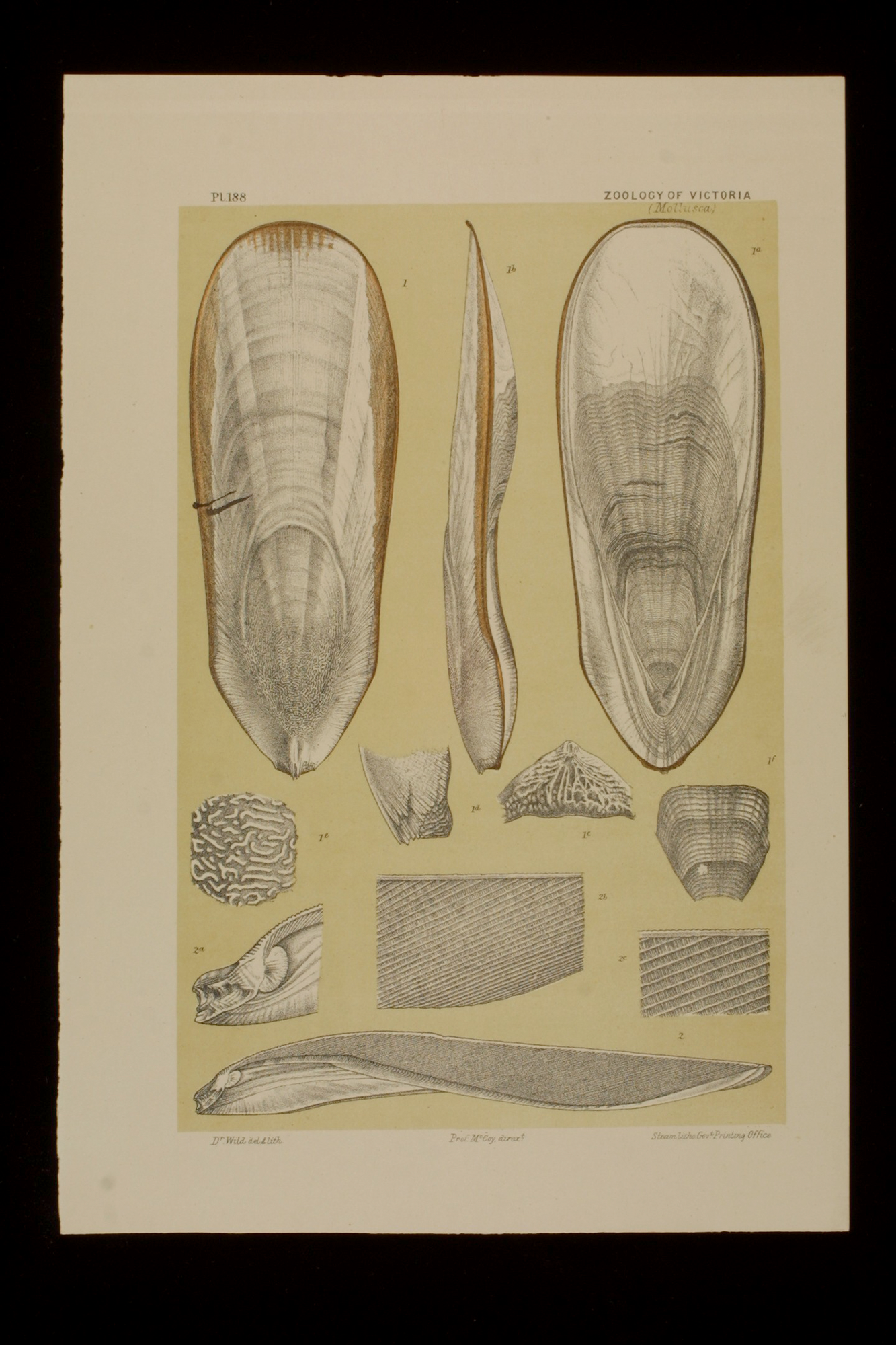
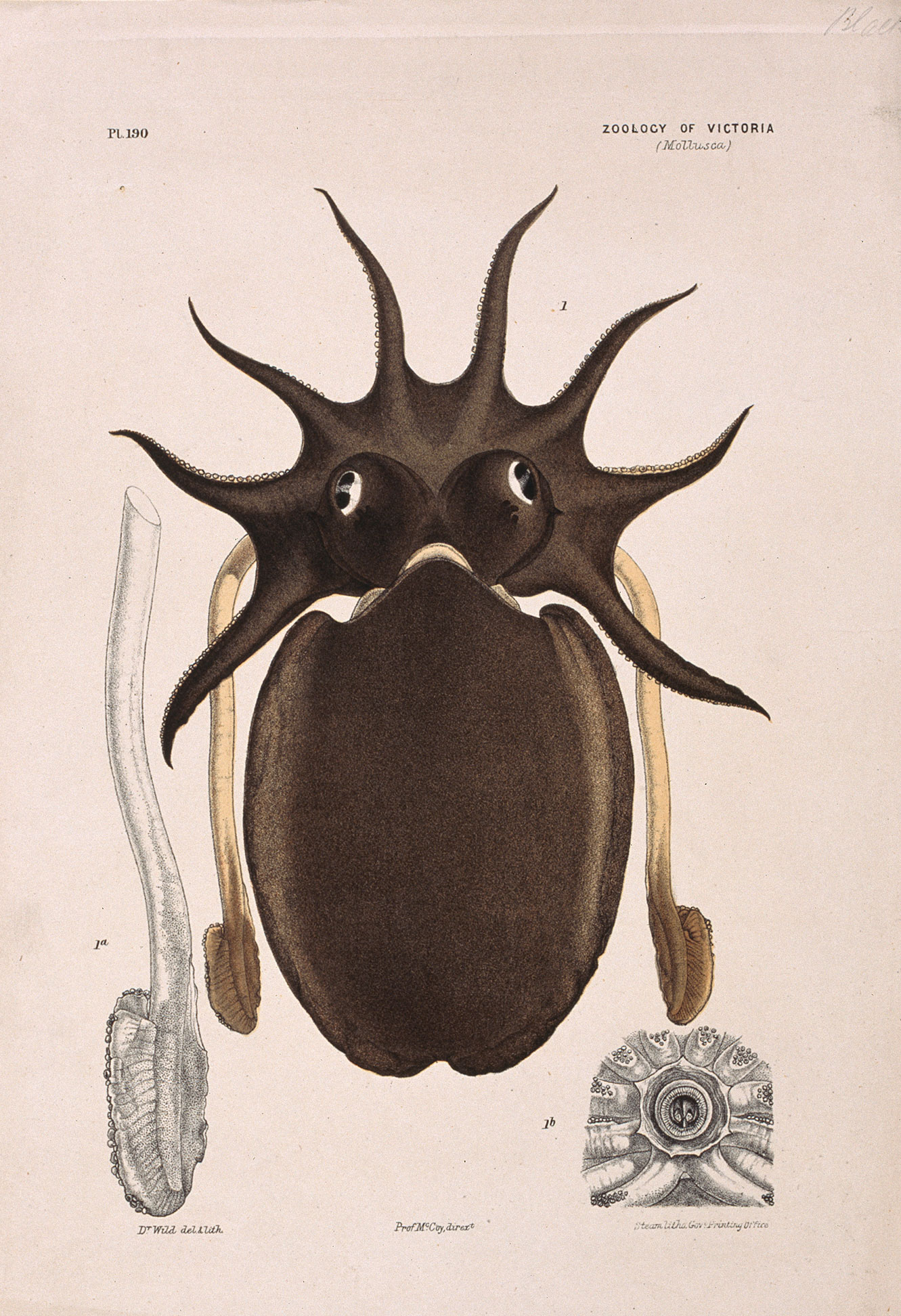
Plates 188-190. The Large Melbourne Sepia or Cuttle-fish, Sepia apama (now known as the Australian Giant Cuttlefish, Sepia apama)
This is the largest and commonest species of Sepia on our coasts, and its internal dorsal shell or "Cuttle-fish Bone" is abundant on the shores everywhere in the Colony, although it has not been figured before.
Plate 190. The Large Melbourne Sepia or Cuttlefish, Sepia apama.
This is the largest and commonest species of Sepia on our coasts, and its internal dorsal shell or " Cuttle-fish Bone " is abundant on the shores everywhere in the Colony.
Paper Nautilius
Argonauta nodosa
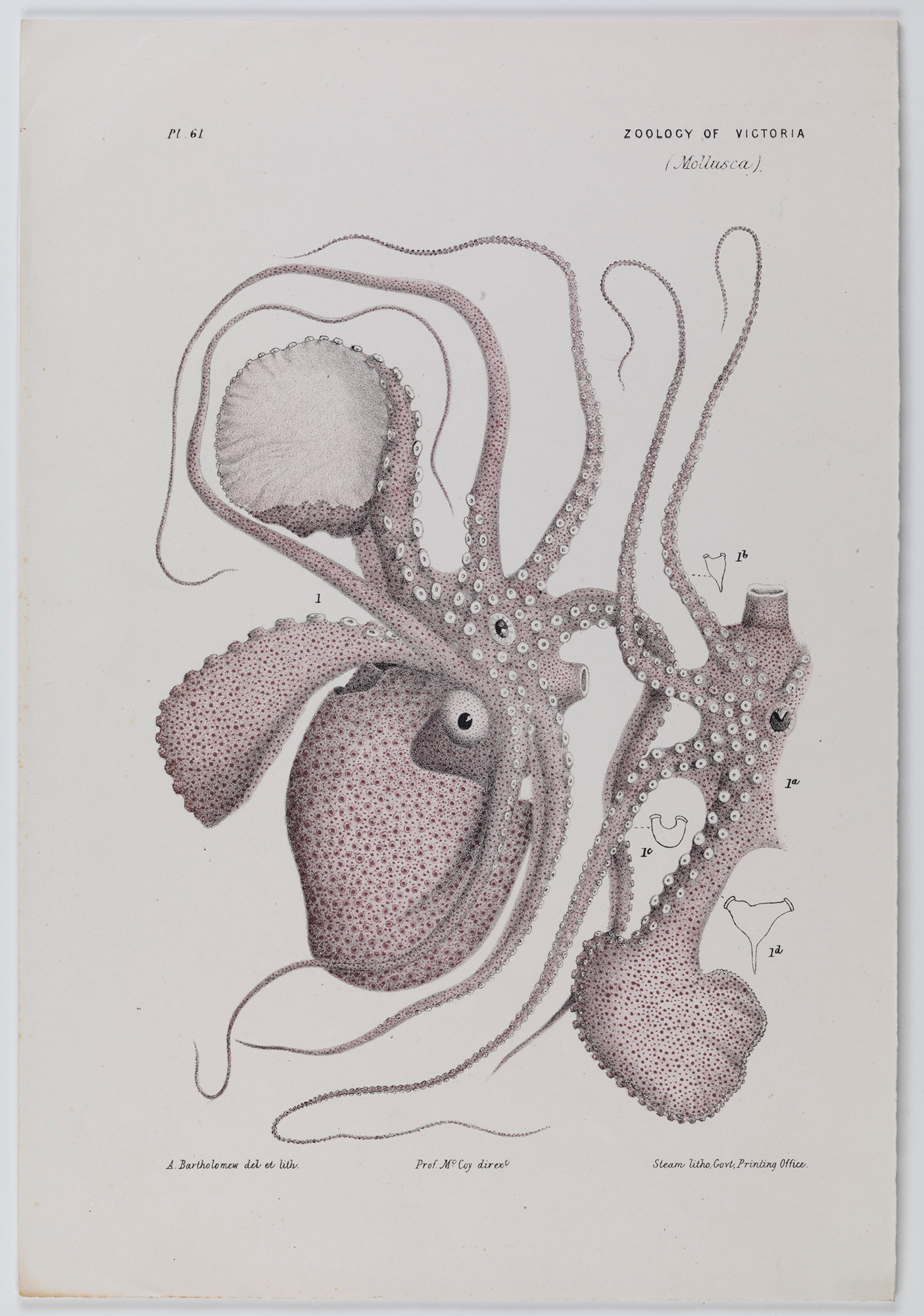
The beautiful objects popularly miscalled Paper-Nautili should not really be compared with true shells, like that of the Nautilus, to which the inhabitant is fixed by organic attachments, without tearing which or destroying the life of the Cuttle-fish it would be impossible to separate them. The Argonaut, or Paper-Nautilus, is always excessively thin, white, imperfectly calcified, so as to be slightly flexible when fresh, and totally unconnected with the Octopus inhabiting it; so that the so-called shell may be dropped if the Cuttle-fish be frightened, without injuring any of the soft parts of the animal.
Like all the Octopoda, the Argonauts are generally nocturnal, and inhabit the high seas, feeding on various floating small animals; rarely coming near the surface by day, except in calm weather. The females only approach the shallow waters of the coast in summer time, when the eggs are developed. It is in the hottest months of summer (January, February, and March), especially in the last few years, that they appear on the shore of Hobson's Bay, near Brighton, where the several specimens of the animal and the shell together have been obtained. The individual figured was given to me by a young friend (who requested that his name not be mentioned), and was kept alive in a large tub of sea-water for a considerable time. Nothing could be more ludicrously interesting than the vigilant look-out which the creature maintained, watching suspiciously, with its large perfect eyes just peeping over the edge of the shell in which it nestled, as represented in our plate, with the arms often curled inside along with the body when at rest; at other times they hung outside or streamed in a close group in front, when the animal and shell darted backwards by shooting water out of the funnel in front of the head. Occasionally it crawled about on the bottom, head downwards, with the shell covering over its upper part. When greatly frightened it abandoned its shell and darted away with great velocity, but got back into it again when left alone. The colors varied in a few seconds from the palest pink to rich madder purple, according apparently to the will or temper of the creature.
The specimens figured are from rocky parts near Brighton, but the so-called shells are found occasionally on all parts of the coast of the colony.
Southern Calamary
Sepioteuthis australis
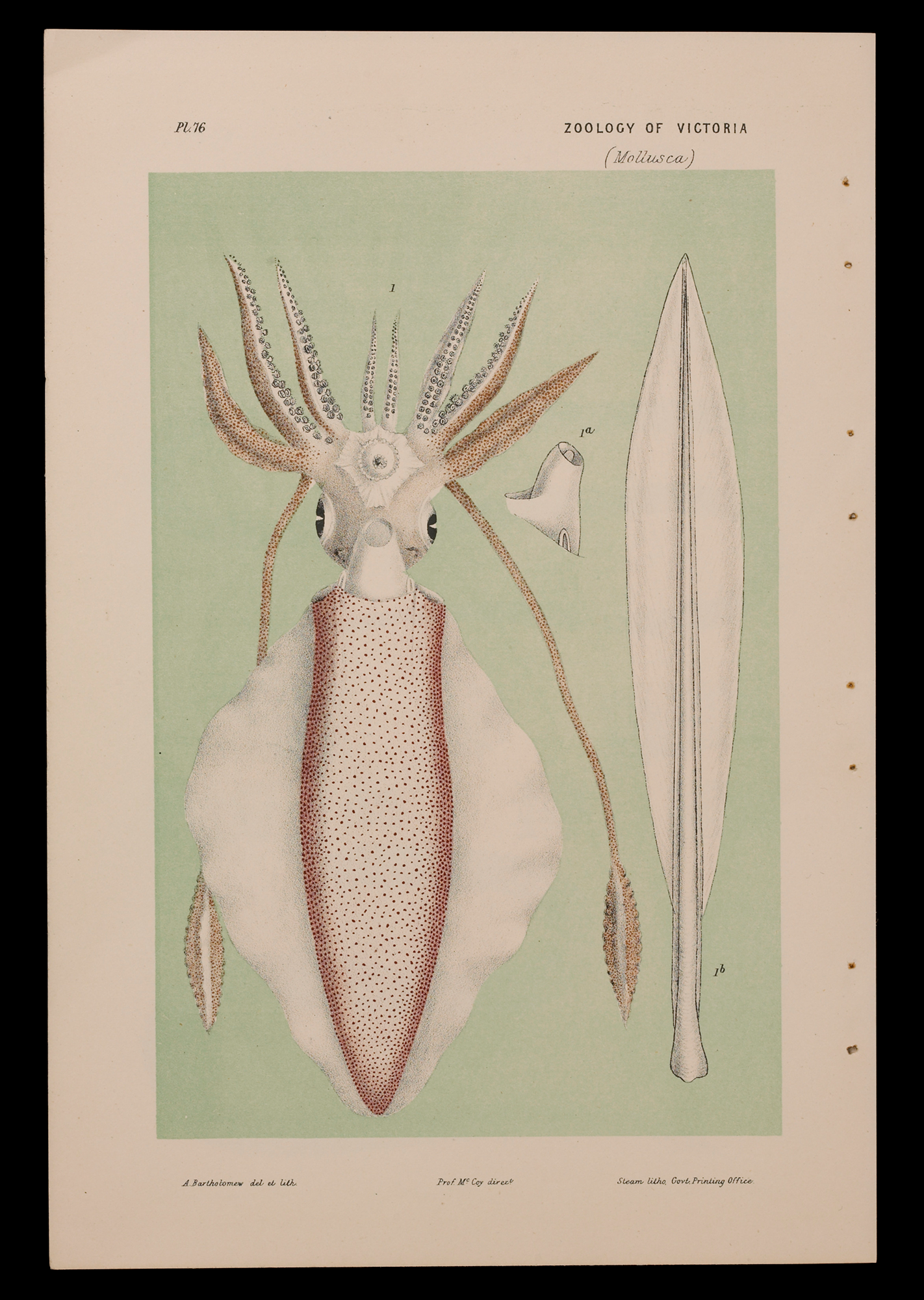
Plate 77. Southern Calamary, Sepioteuthis australis by Arthur Bartholomew
The enormous eyes of this Cuttlefish (as big as those of a calf in the specimen figured) roll about in their sockets in a way so suggestive of a vertebrate animal of the higher types, and give such an air of bright, energetic intelligence and activity to this fierce, predaceous creature, that it is difficult for an observer, unacquainted with its structure, to realise the fact of its belonging to so lowly a division of the animal kingdom as the Mollusca. It is one of the rarer Cuttlefishes of our Bay, the specimen described and figured having been obtained during the submarine blasting operations for removing rocks from the channels within the Heads, near Queenscliff.