Insects are a class of arthropods that have three pairs of legs and, most usually, two pairs of wings. In his Prodromus of the Zoology of Victoria, McCoy depicted 26 species of insects. They were generally large-bodied and often brightly-coloured species which would have attracted people's attention. Three species, the Violet-shouldered Phasma, Red-shouldered Phasma and Australian Painted Lady, were new to science.


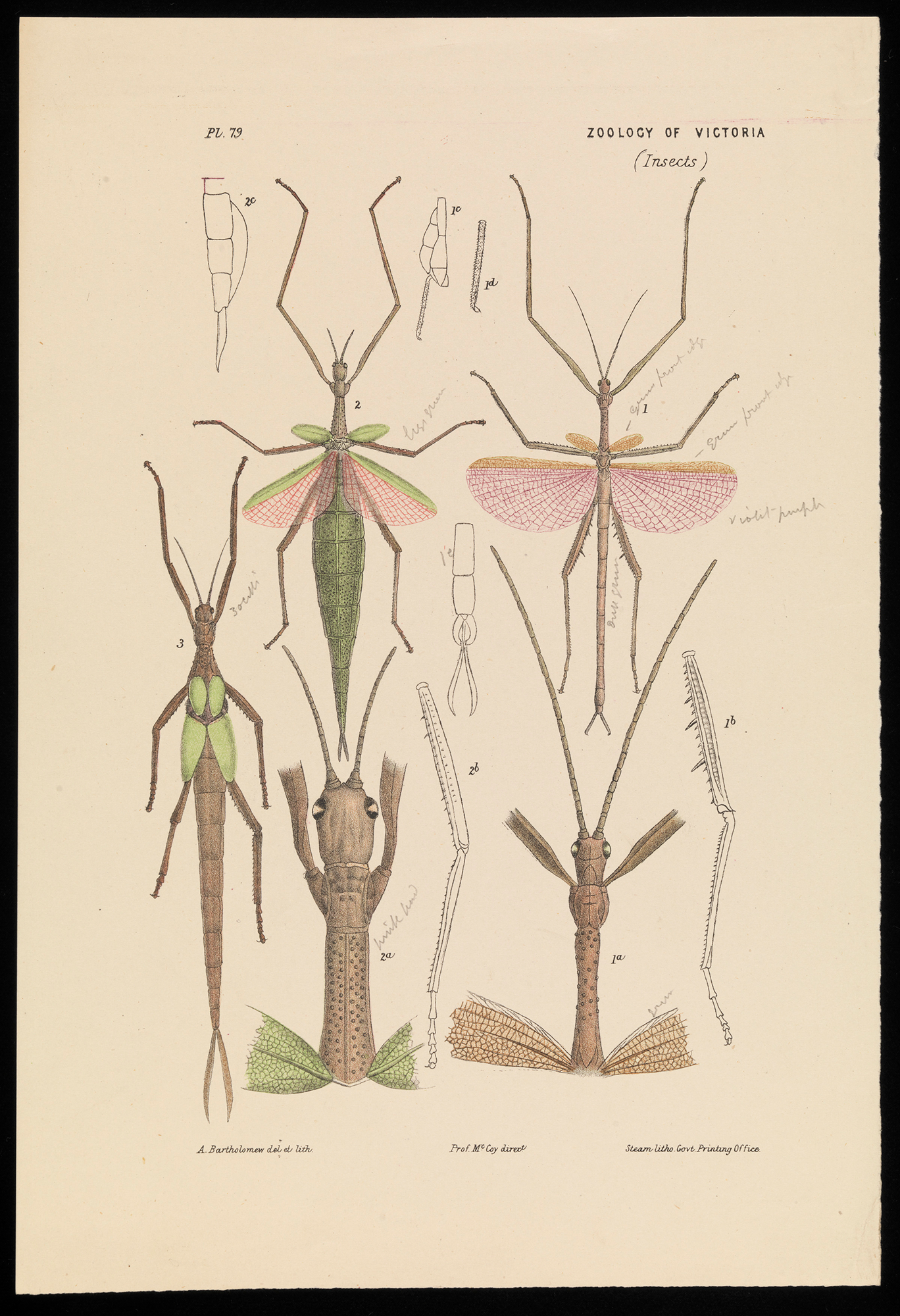
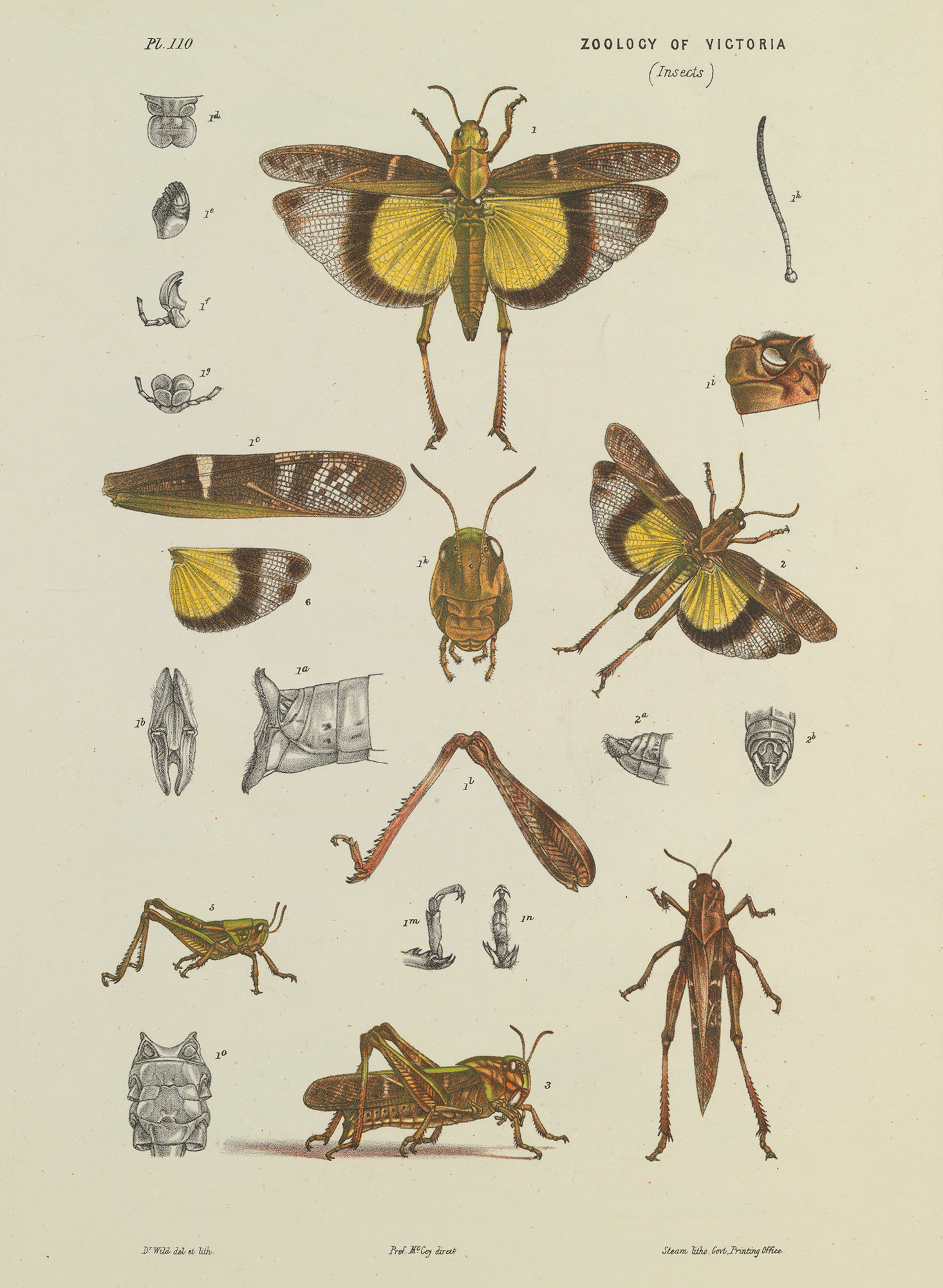
McCoy also featured species with an adverse effect on agriculture or forestry, such as the Vine Moth, Wattle Goat Moth and Yellow Winged Locust. His Prodromus was intended to be a practical volume to enhance prospects for commerce and industry, as well as providing detailed scientific information.
In addition to the published plates there is a significant collection of insect drawings by Arthur Bartholomew. With a few exceptions these images focus on the order Lepidoptera: moths and butterflies. For almost forty years insect larva were collected along with their host plants and brought to the laboratory for illustration.
Bartholomew would faithfully illuminate each life stage of the insect, noting the date of each successive metamorphosis. When the perfect imago (adult insect) emerged, the species would be identified by William Kershaw, pinned and entered into the collection.
The level of detail attained by Bartholomew in these illustrations makes them one of the most significant, and to this point neglected, contributions to natural history illustration in colonial Australia.
Gumleaf Grasshopper
Goniaea australasiae
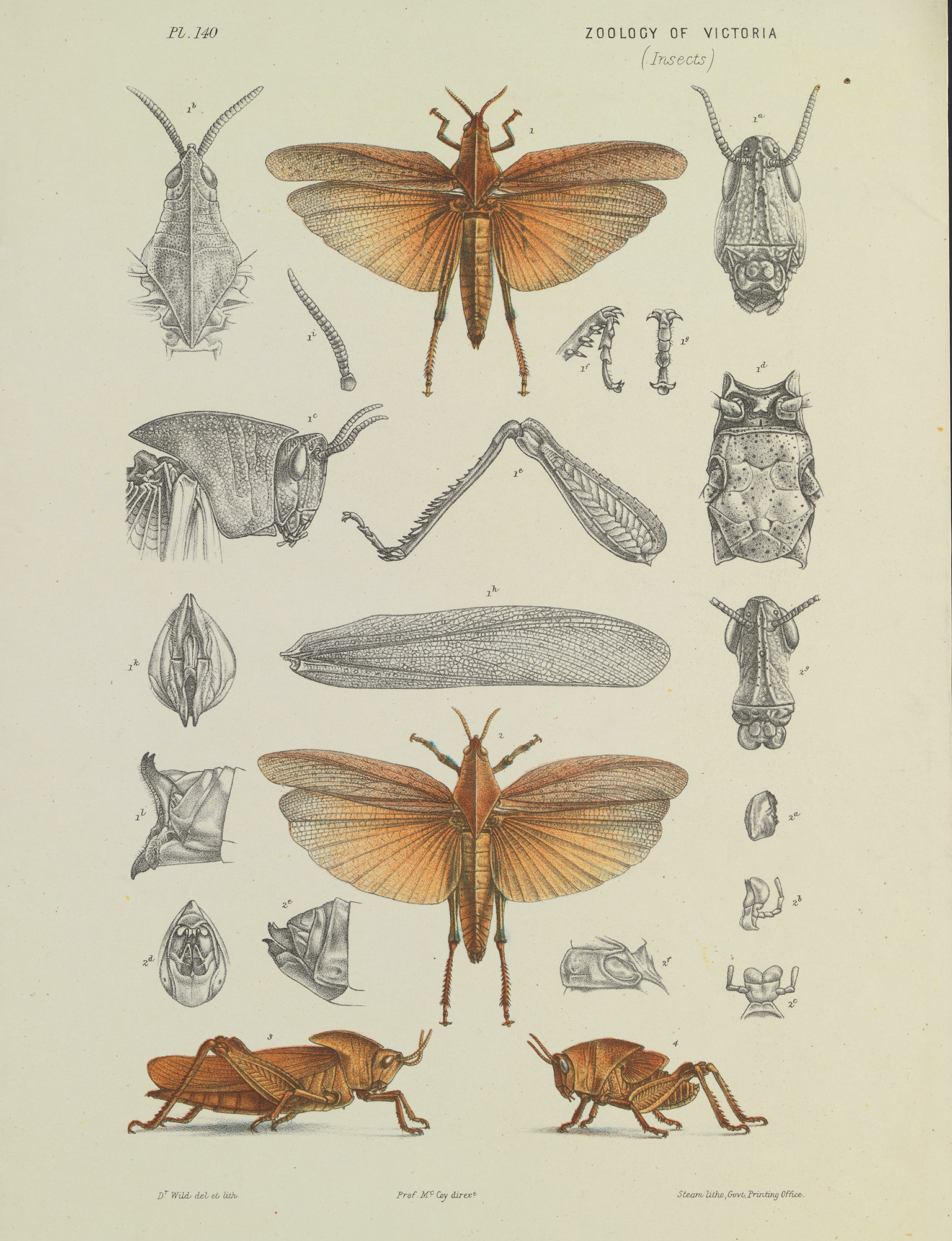
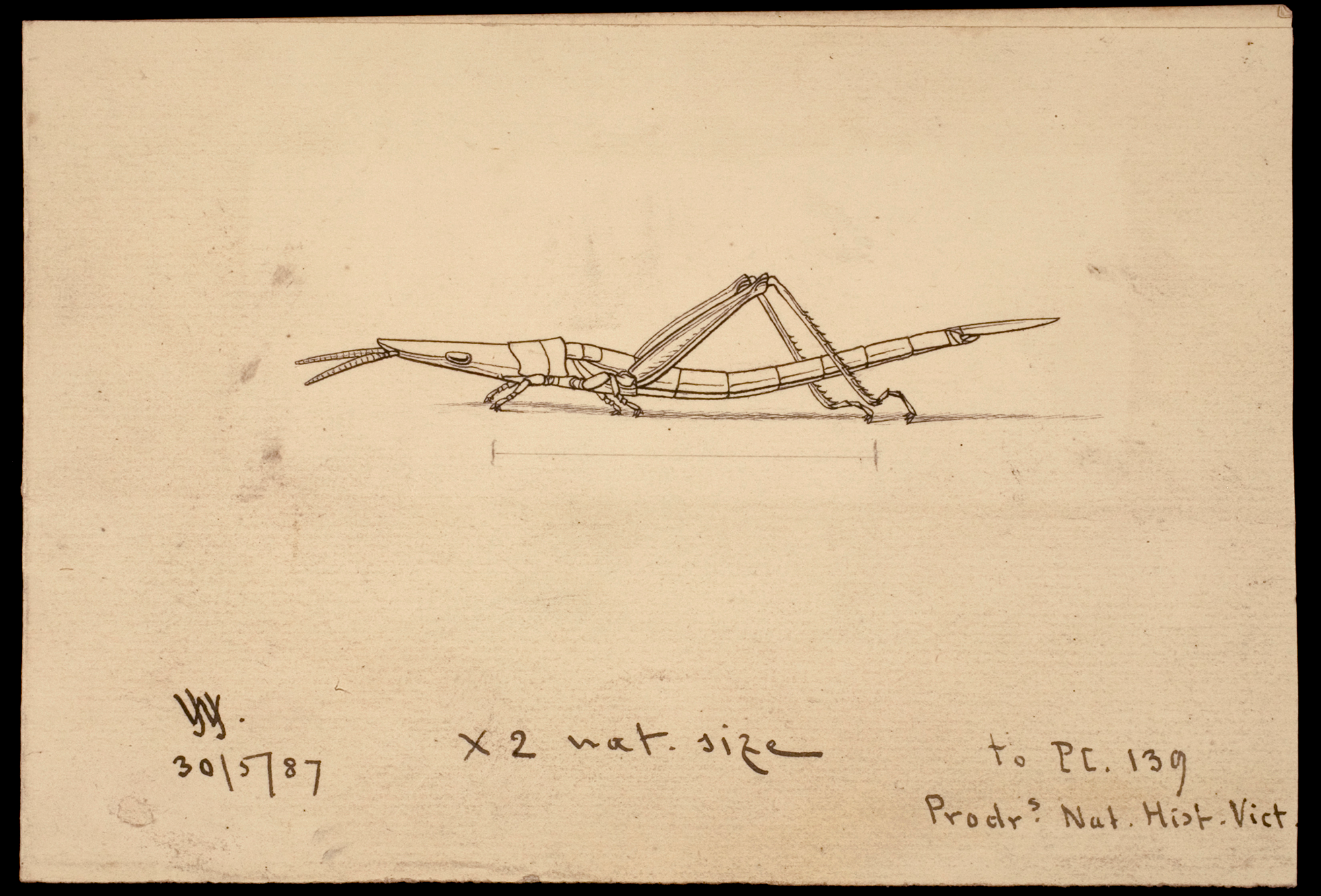
Plate 140. The Cinnamon Keel-backed Locust, Tropinotus australis (now known as the Goniaea australiasiae) found in Scrub or Dwarf Bushes around Melbourne
The Tropidonoti, or keel-backed Locusts, differ from ordinary Locusts in the great compression of the midline of the thorax into a hight-arched prominent keel, extending over the head on front and over the base of the abdomen behind, from which the genus derives its name.
The size of individuals of this species varies considerably, but the males are little less than the females...Some specimens are lighter than others in color.
Although not uncommon, it does not occur in the proportion of one to a hundred of the yellow-winged Locusts, Oedipoda musica, and like the Opsomala, has no gregarious habits, one or two individuals being found in one spot on the ground amongst the scrub or dwarf bushes around Melbourne. The female, when depositing her eggs, forces the abdomen an inch into the ground, making up for want of long ovipositor of the Grasshoppers.
Mountain Katydid
Acripeza reticulata
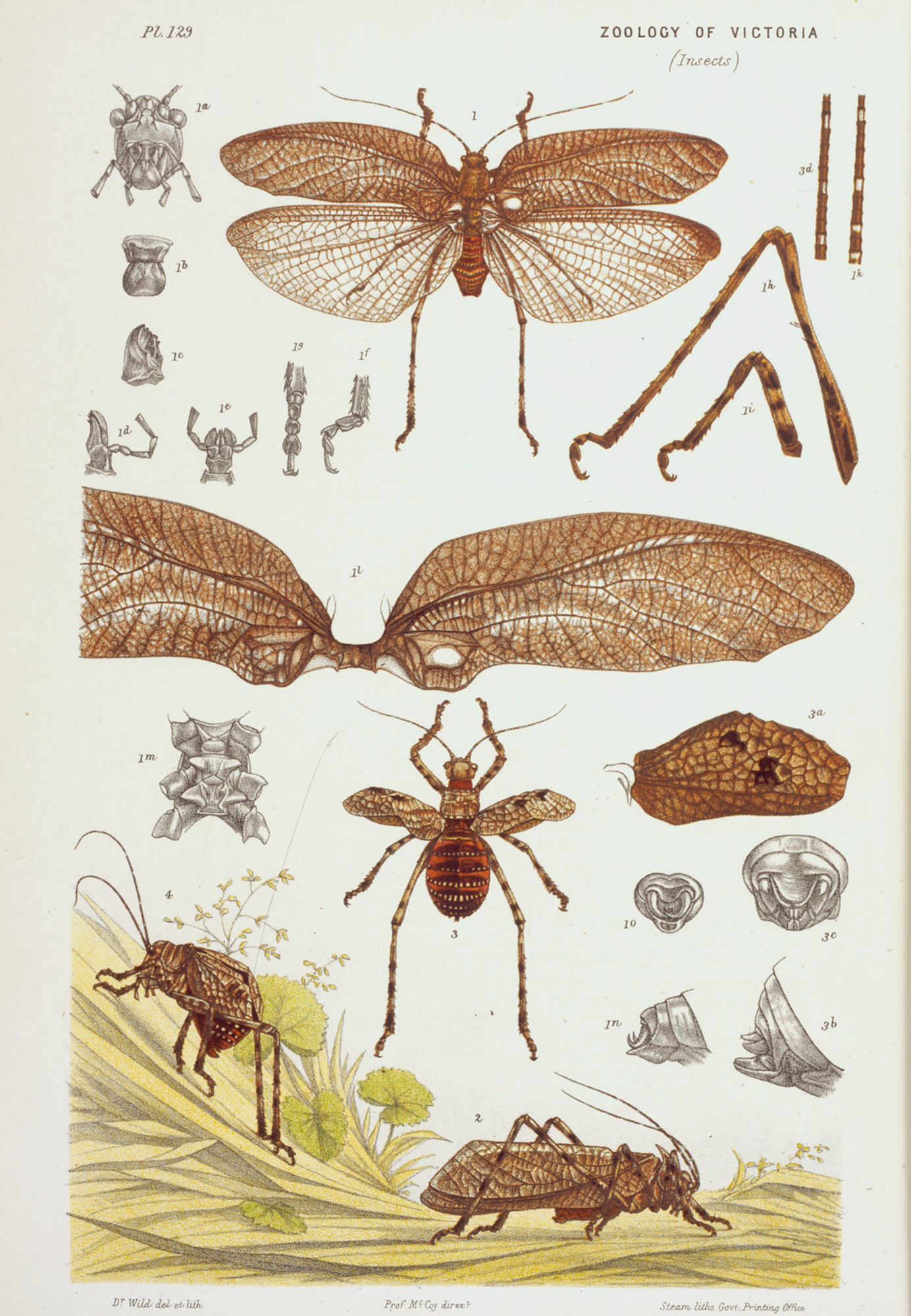
Plate 129, Mountain Katydid, Acripeza reticulata
This most abnormal genus differs from all others of the order in the large vaulted tegmina wrapping round the short swollen abdomen in the female, and in that sex being without wings; while the male has the ordinary elongation and shape of abdomen and elytra, and has ample wings. The small size of the ovipositor is an exception to the rule in the family Gryllidce.
Like all the Grasshoppers, or Gryllidce, the tarsi of Acripeza are 4-jointed, unlike the 3-jointed tarsi of the Locusts, which they resemble in the shortness of the ovipositor. In the long slender antennae, the drum in base of anterior tibiae, and slender legs and thighs, and the stridulating apparatus at base of anterior wing, they are in accord with the Gryllidce. The Acripezce are, however, very peculiarly distinguished from both by the apterous, deformed females; and the extraordinarily rugged, coarse reticulation of the elytra.
Discover more insects
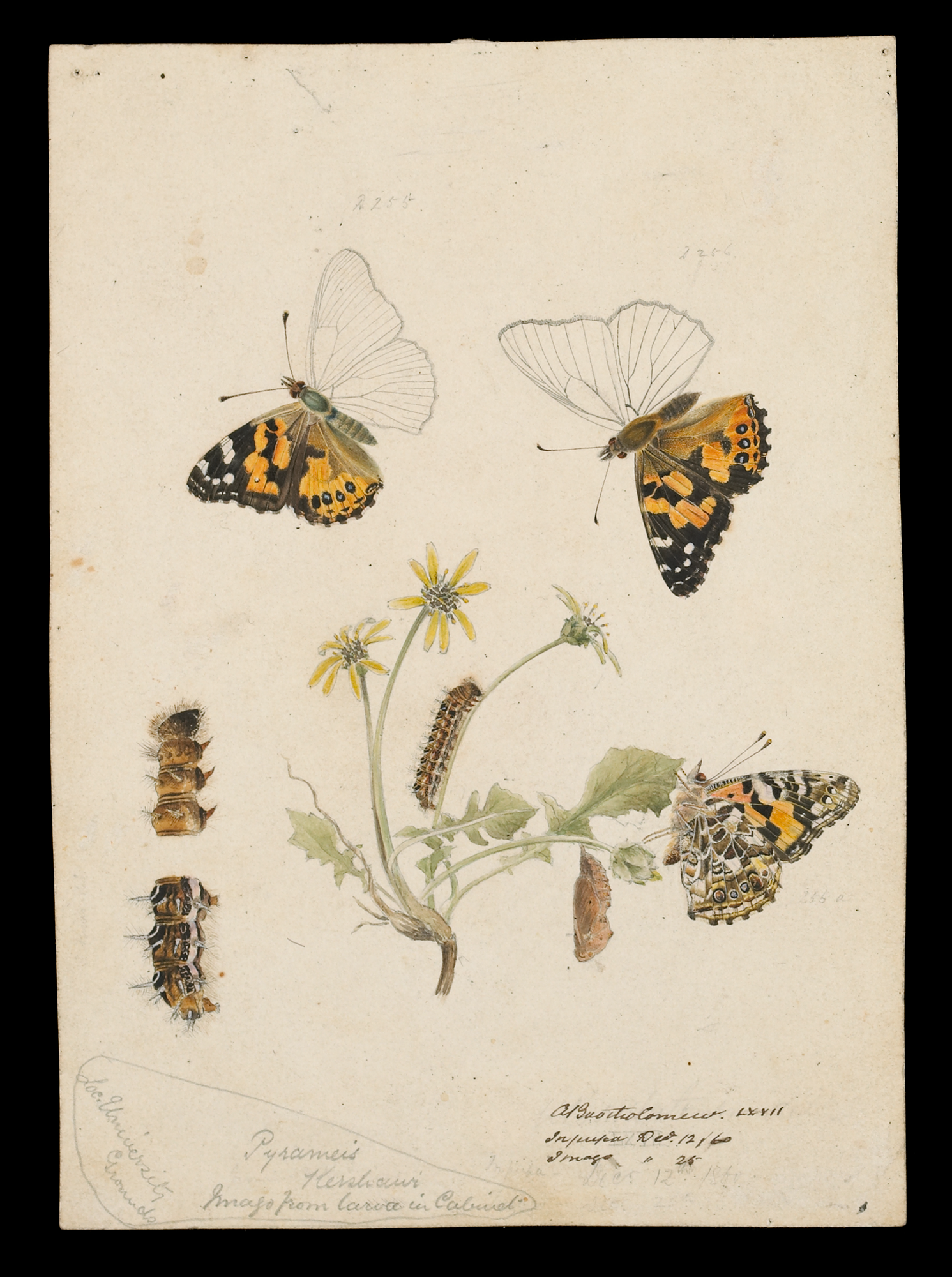
Watercolour, pencil and ink illustrations of an Australian Painted Lady, Vanessa kershawi, by Arthur Bartholomew, depicted on the host plant, the introduced Cape Weed, Cryptostommon calendulacea. These illustrations were commissioned by Frederick McCoy, the first Director of The National Museum of Victoria, for Plate 198 in The Prodromus of the Zoology of Victoria; Figures and descriptions of the living species of all classes of the Victoria indigenous animals. Bartholomew created this work well before 1868 when McCoy formally described the species as Cynthia kershawi, naming it after "my excellent friend, William Kershaw, the senior taxidermist at the Melbourne Museum, who made our singularly fine and extensive local collection of the Insects of Victoria, and whose unequalled knowledge of the habits and distribution of our Insects, and extraordinary zeal and devotion to his duties as my assistant in this branch of the Museum, I acknowledge, with great pleasure, by dedicating the species to him". McCoy subsequently placed the species in the genus Pyrameis, giving it the vernacular name Blue-spotted Painted-Lady Butterfly. These illustrations form part of the Museum's much larger Prodromus Collection. Many of the original illustrations and prints in the collection informed the production of The Prodromus, the first major publication of the National Museum of Victoria. Between 1878 and 1890, McCoy published his zoology 'Prodromus' as 20 parts in two volumes, with each part comprising 20 Plates. Unfortunately, almost 90 plates in the collection remain unpublished, and hundreds of illustrations were either not completed or not printed.
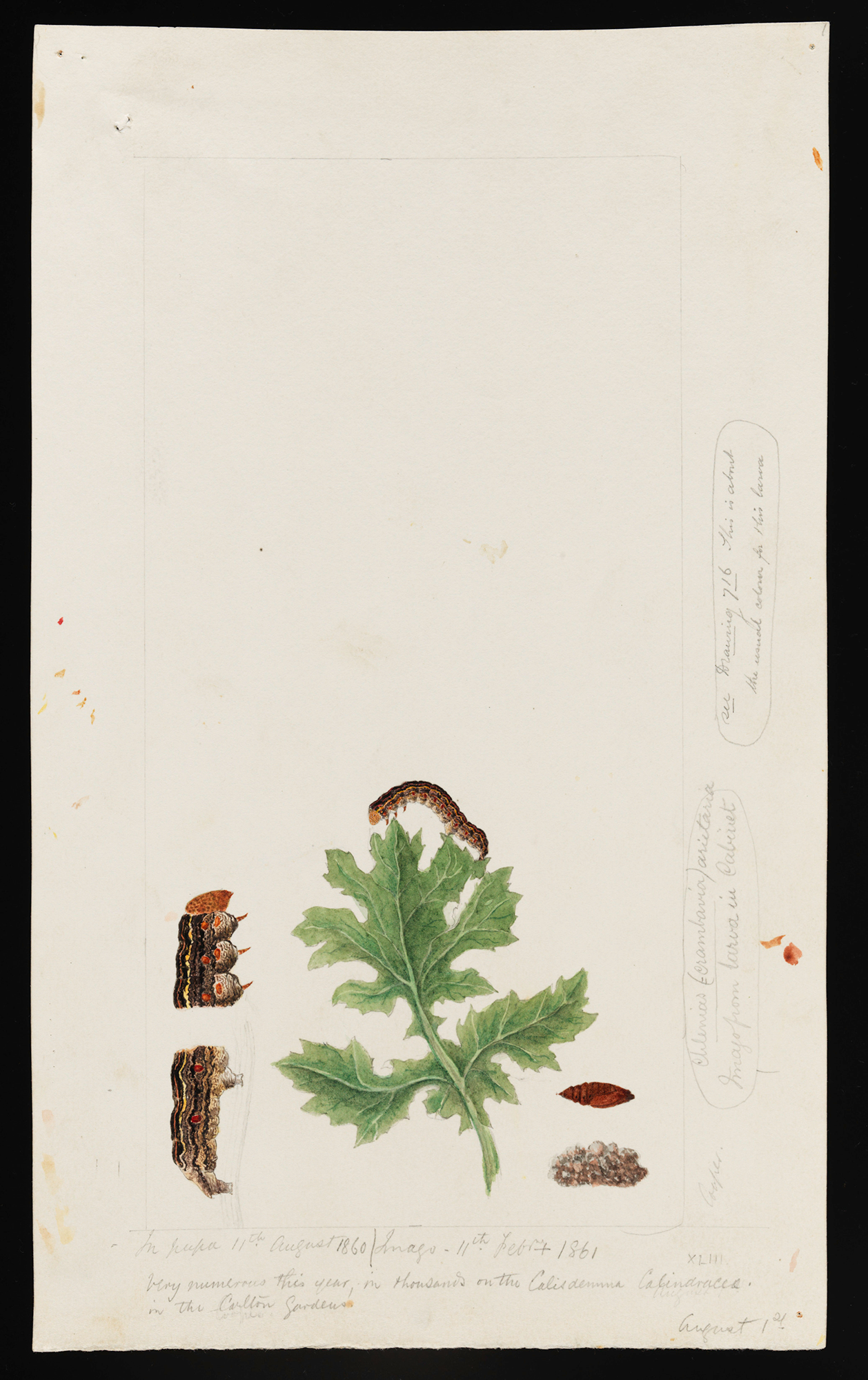
Unpublished watercolour illustration, No. XLIII (43), Brown Pasture Looper, caterpillar, Ciampa arietara and the host plant, by Arthur Bartholomew, from Carlton Gardens, Melbourne, 1 August, 1860. This work, commissioned by Frederick McCoy, Director of the National Museum of Victoria, forms part of the much larger Prodromus Collection. Many of the original illustrations in the collection informed the production of the two volume work 'The Prodromus of the Zoology of Victoria', the Museum's first major publication, commencing in 1878. For more than 40 years, Arthur Bartholomew meticulously and accurately illustrated specimens for McCoy.
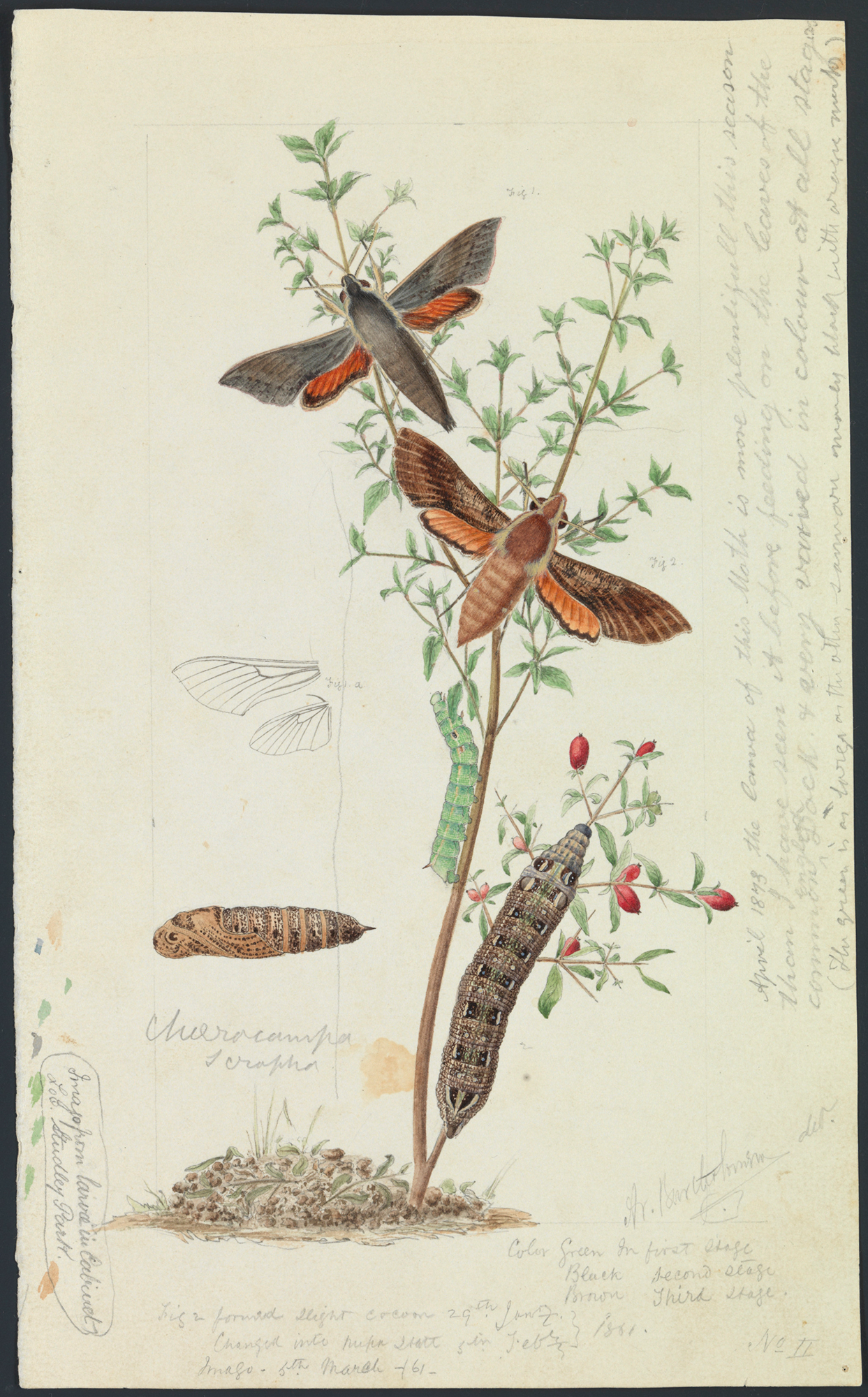
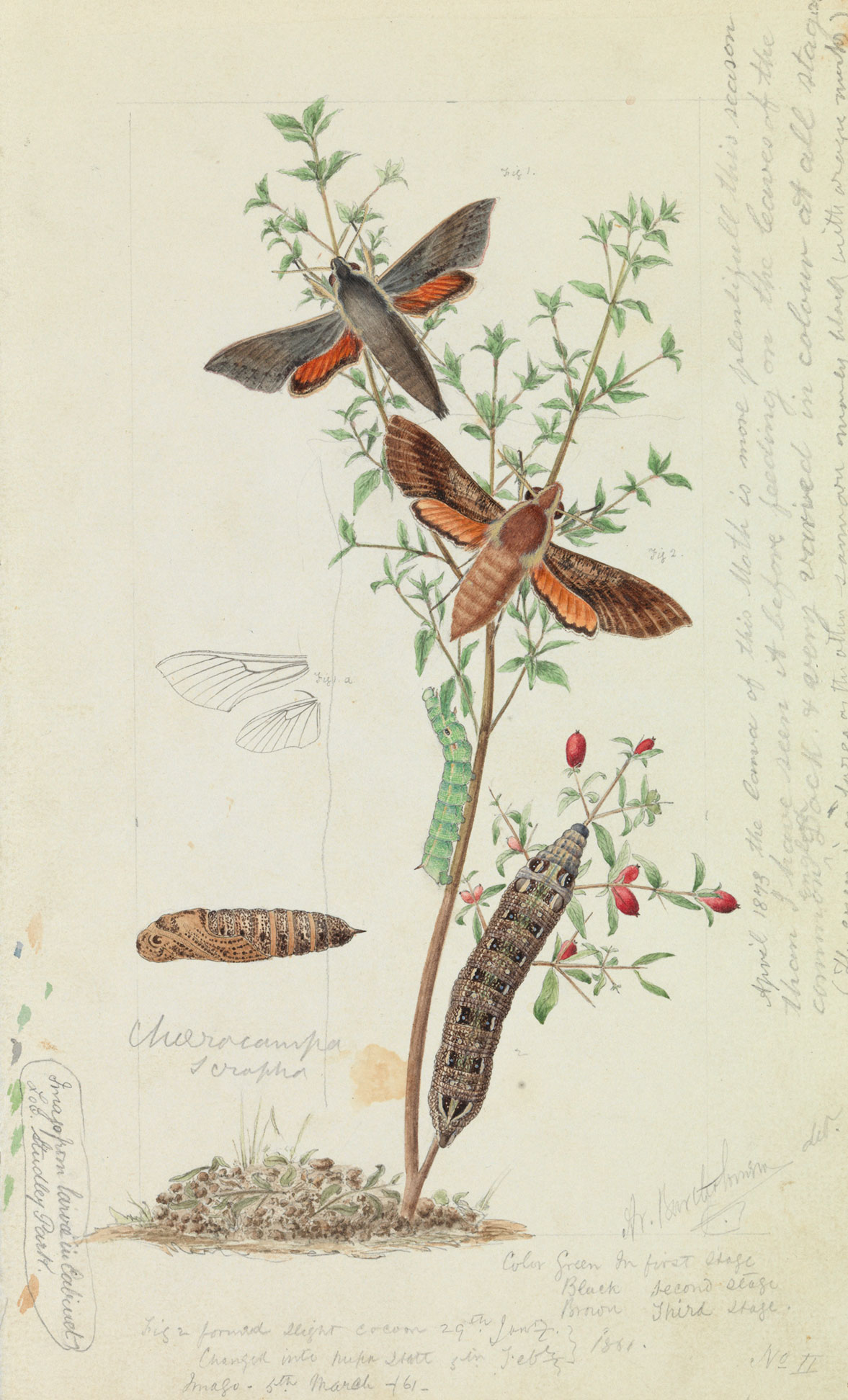
This unpublished scientific illustration (No. II) depicts the life stages of the Coprosma Hawk-moth, Hippotion scrofa (as Scrofa Hawk Moth, Chaerocampa scrofa), from Studley Park near Melbourne, by Arthur Bartholomew, January to March, 1861. Bartholomew illustrated the larva, pupa, adult moths, and the host plant, noting the date of each successive transition towards metamorphosis. When the perfect imago (adult insect) emerged, the species would be identified by William Kershaw, pinned and entered into the collection. The level of detail attained by Bartholomew in these illustrations makes them one of the most significant contributions to natural history illustration in colonial Australia. This illustration is annotated with pencil notes by Frederick McCoy and Bartholomew. McCoy, the first Director of The National Museum of Victoria, presumably commissioned this work for a future plate in 'The Prodromus of the Zoology of Victoria; Figures and descriptions of the living species of all classes of the Victoria indigenous animals'. Unfortunately, McCoy died before completing this enormous undertaking. Bartholomew’s illustration forms part of the much larger Prodromus Collection. Many of the original illustrations and prints in the collection informed the production of The Prodromus, the first major publication of the National Museum of Victoria. Between 1878 and 1890, McCoy published his zoology 'Prodromus' as 20 parts in two volumes, with each part comprising 20 plates. Unfortunately, almost 90 plates in the collection remain unpublished, and hundreds of illustrations were either not completed or not printed.
Unpublished Emperor Gum Moth, <em>Opodiphthera eucalypti</em> illustration by Arthur Bartholomew.
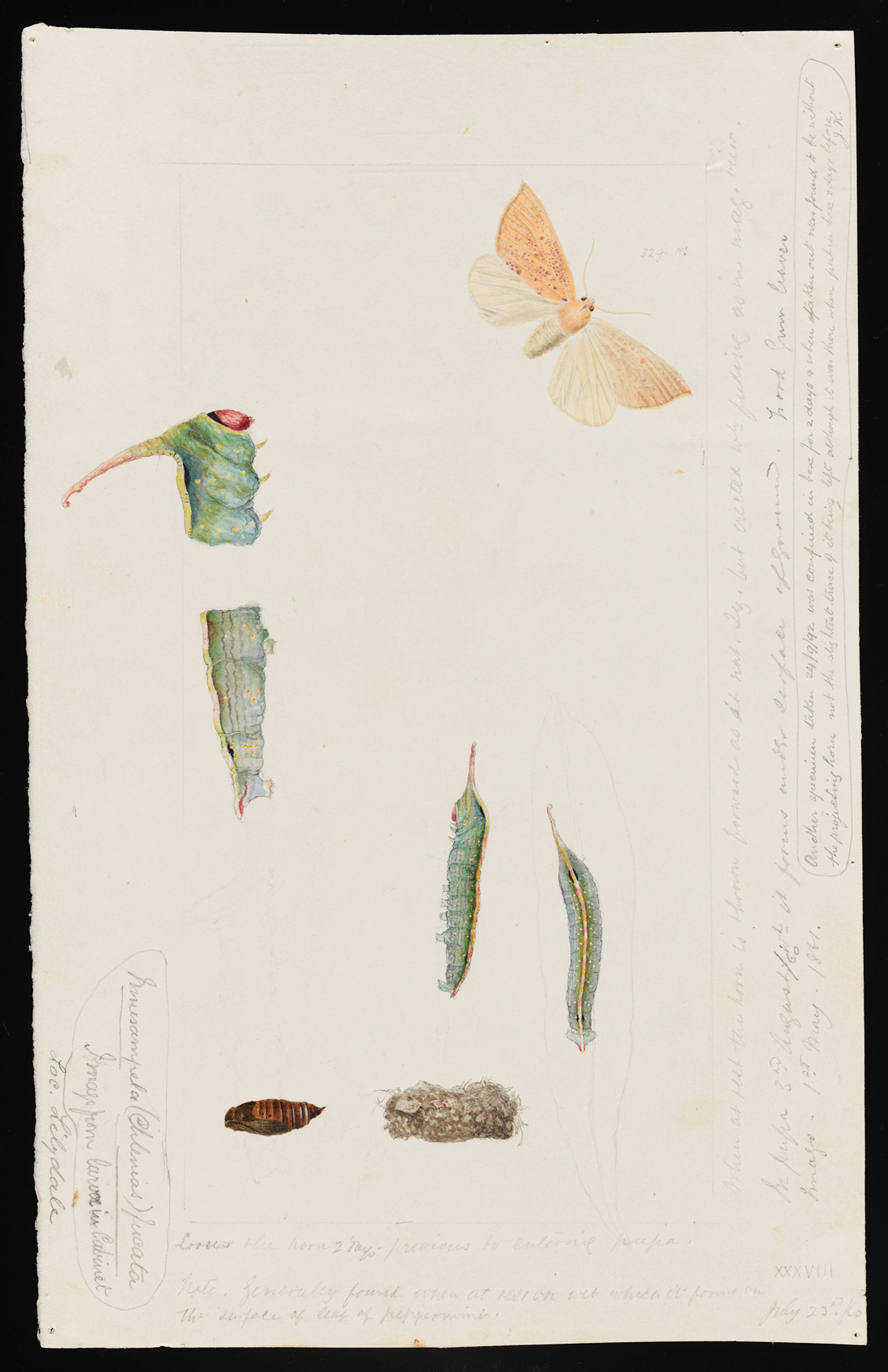
Unpublished watercolour illustrations, XXXVIII (38) and D329, pf the life stages of a Lemon Gum-moth, Plesanemma fucata [as Mnesampela (Chlenias) fucata], by Arthur Bartholomew, from Lilydale, 23 July 1860. Pencil annotations (38) include a note by J. Kershaw, describing the behaviour of this species, Frederick McCoy, the first Director of The National Museum of Victoria, presumably commissioned this work for a future plate in 'The Prodromus of the Zoology of Victoria; Figures and descriptions of the living species of all classes of the Victoria indigenous animals'. Unfortunately, McCoy died before completing this enormous undertaking. Bartholomew’s illustration forms part of the much larger Prodromus Collection. Many of the original illustrations and prints in the collection informed the production of The Prodromus, the first major publication of the National Museum of Victoria. Between 1878 and 1890, McCoy published his zoology 'Prodromus' as 20 parts in two volumes, with each part comprising 20 plates. Unfortunately, almost 90 plates in the collection remain unpublished, and hundreds of illustrations were either not completed or not printed.
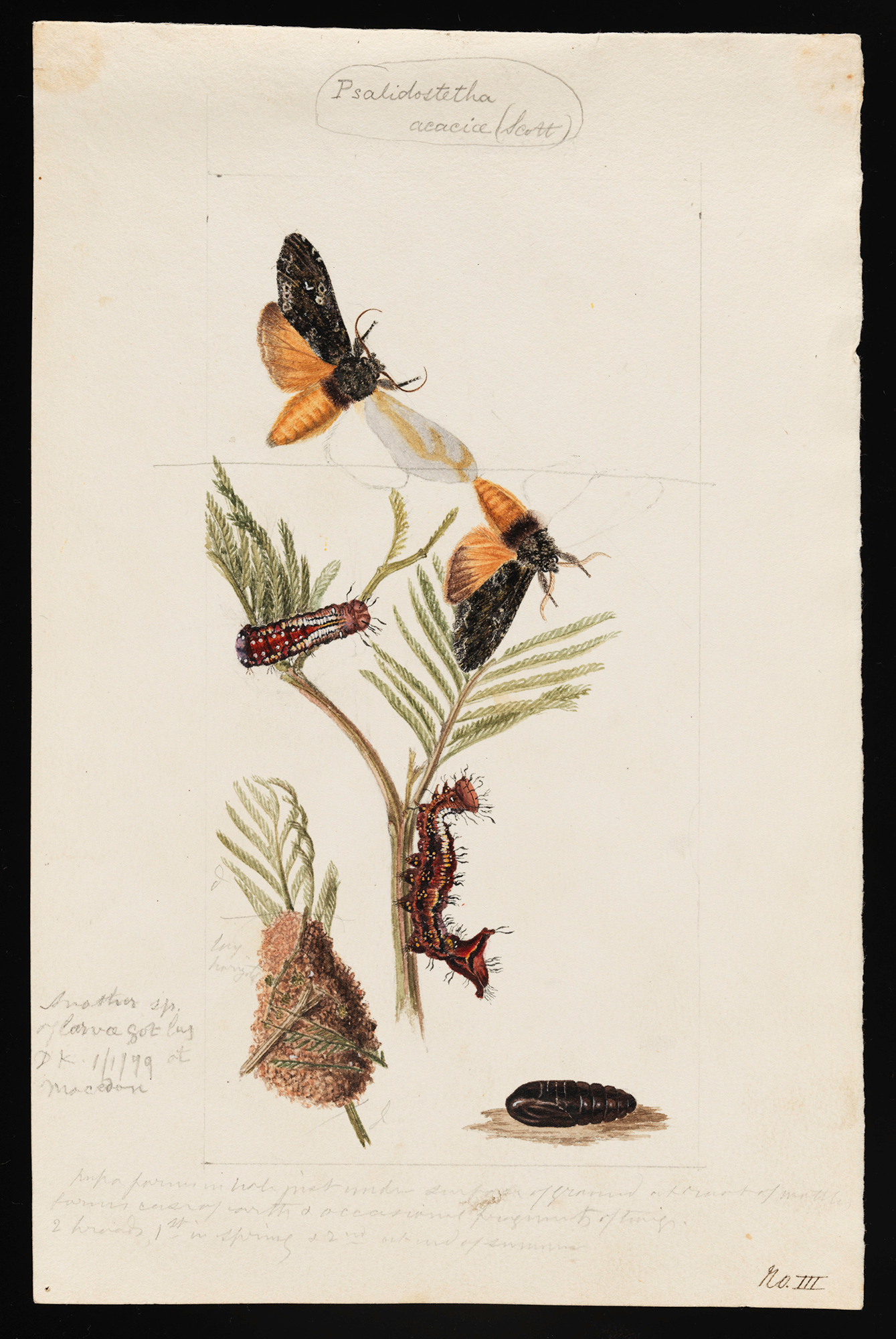
Unpublished watercolour illustration (No. III), of the life stages of a Golden Notodontid Moth, Neola semiaurata (as Psadilostetha acaciae), and the host plant, by Arthur Bartholomew, January 1879. The illustration is annotated in pencil by Frederick McCoy. McCoy, the first Director of The National Museum of Victoria, presumably commissioned this work for a future plate in 'The Prodromus of the Zoology of Victoria; Figures and descriptions of the living species of all classes of the Victoria indigenous animals'. Unfortunately, McCoy died before completing this enormous undertaking. Bartholomew’s illustration forms part of the much larger Prodromus Collection. Many of the original illustrations and prints in the collection informed the production of The Prodromus, the first major publication of the National Museum of Victoria. Between 1878 and 1890, McCoy published his zoology 'Prodromus' as 20 parts in two volumes, with each part comprising 20 plates. Unfortunately, almost 90 plates in the collection remain unpublished, and hundreds of illustrations were either not completed or not printed.
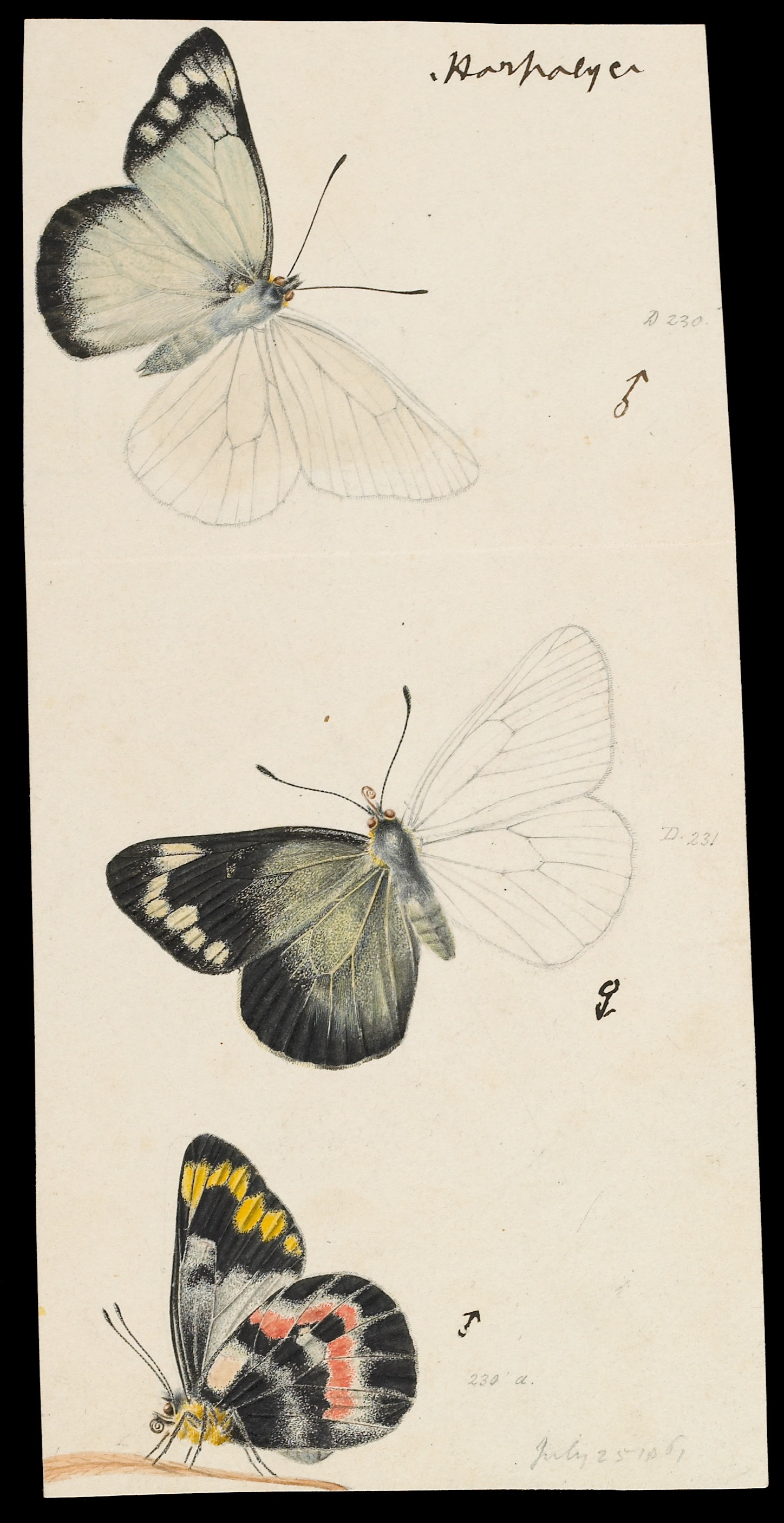
Plate 9. Pieris (Thyca) harpalyce (now known as the Imperial White Butterfly, Delias harpalyce)
Source: Museums Victoria
Public Domain (Licensed as Public Domain Mark 1.0)
The present species is remarkable for the extraordinary habit of spinning a large white silken sheet like a tough cobweb on which to attach the pupæ in large groups of very numerous individuals closely placed side by side.
As Mr. Wallace has noted that certain islands north of Australia have the individuals of the species of white butterflies distinguished from the individuals of the same species found in other islands by the greater or less acute pointing of the tip of the upper wing, it is interesting to note that in this species, although the upper wings of the male are more angulated or less rounded that in the female, yet the amount of straightening of the outer edge and consequent angularity varied in different individuals of the same brood.
Common everywhere in Victoria, flying at moderate heights about the she-oak trees (Casuarina), and occasionally visiting gardens.
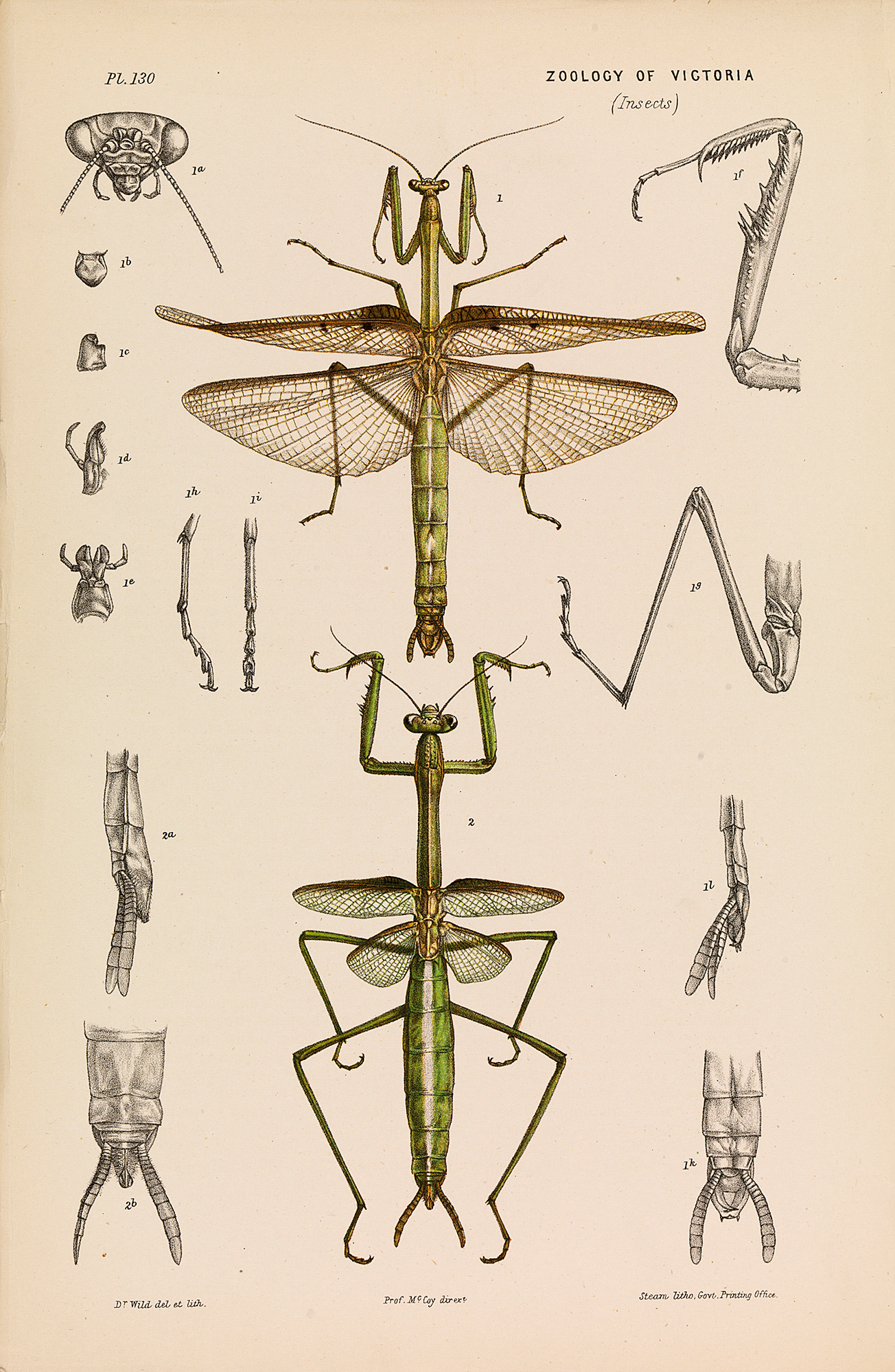
Plate 130. Large Brown Mantid, Archimantis latistyla
The name Mantis is, not only from the prophet-like customary attitude, but an allusion to their long emaciated forms; Theocritus being so injudicious as to see a resemblance between them and a thin young girl with long skinny arms.
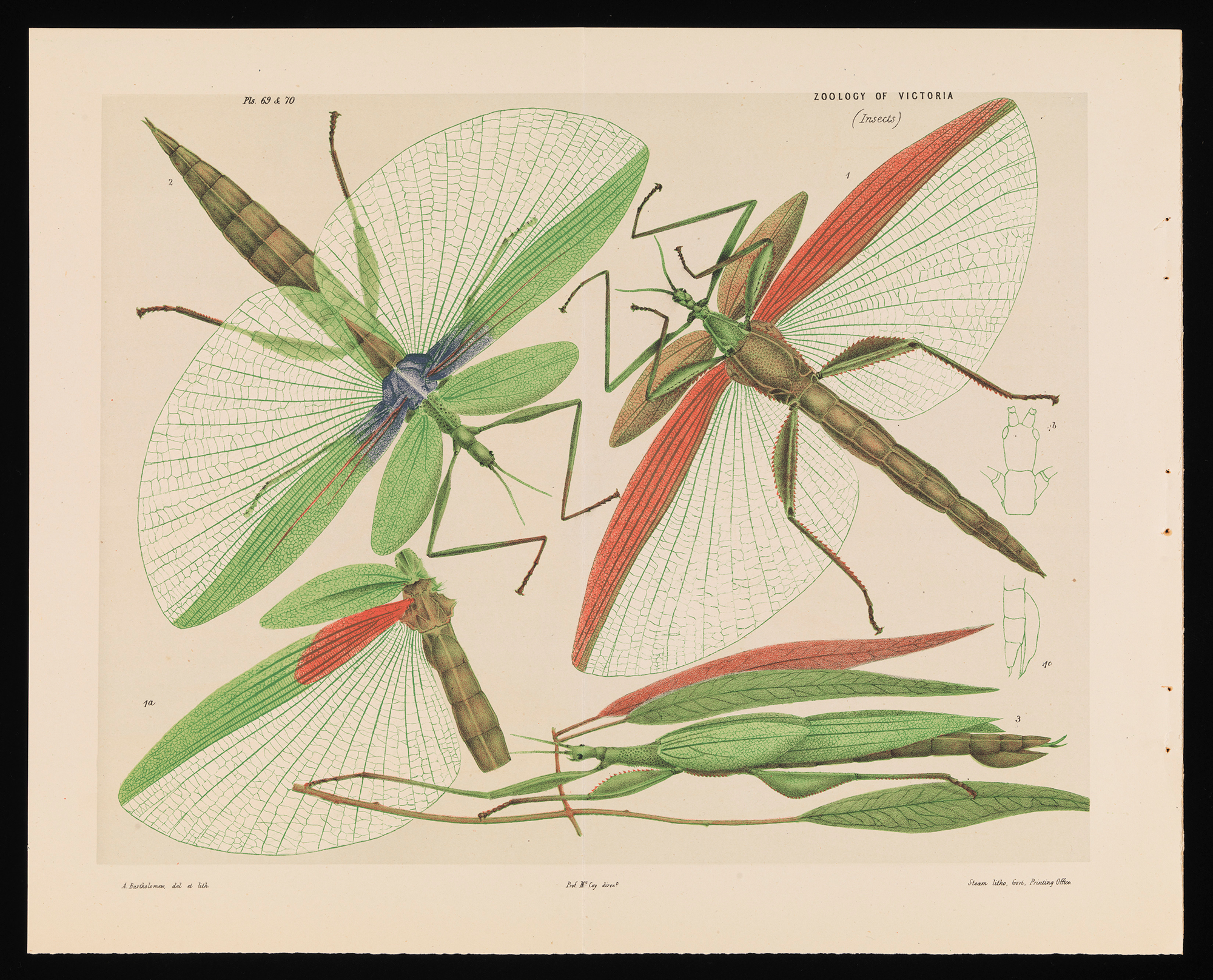
The Mantidae are often confounded with the leaf-eating Phasmce (of which examples are figured on our Plates 69, 70, and 79 of Decades VII. and VIII.), from which they differ in the raptorial anterior legs, carnivorous habits, and many points of structure. They wait motionless on trees and shrubs for the approach of smaller insects, which they suddenly snap up in the bend of their raptorial fore-legs, tearing them voraciously with their mandibles.
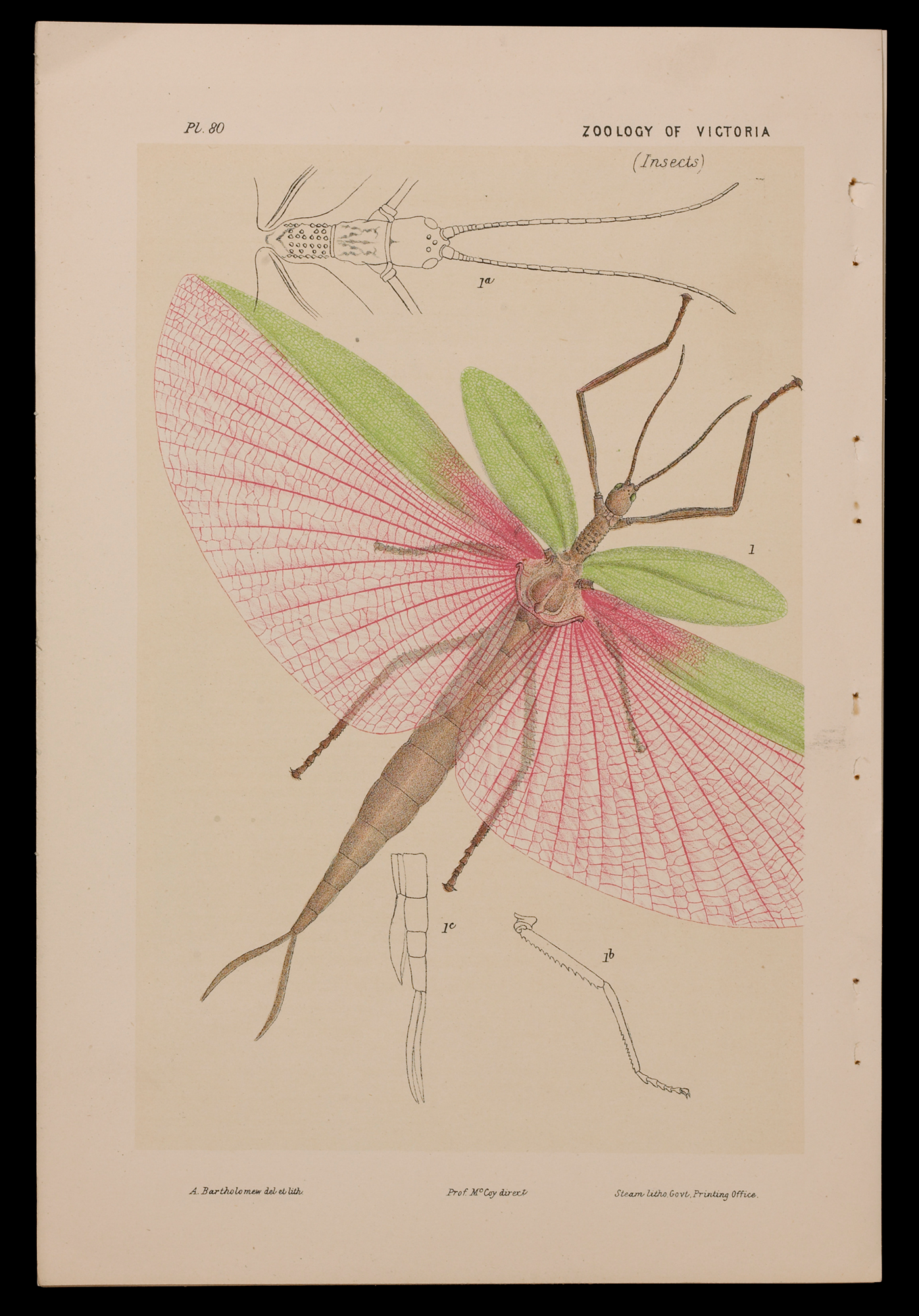
Plate 80. Large Pink-winged Phasma, Podacanthus typhon (now known as Podacanthus typhon) found in Richmond Paddock
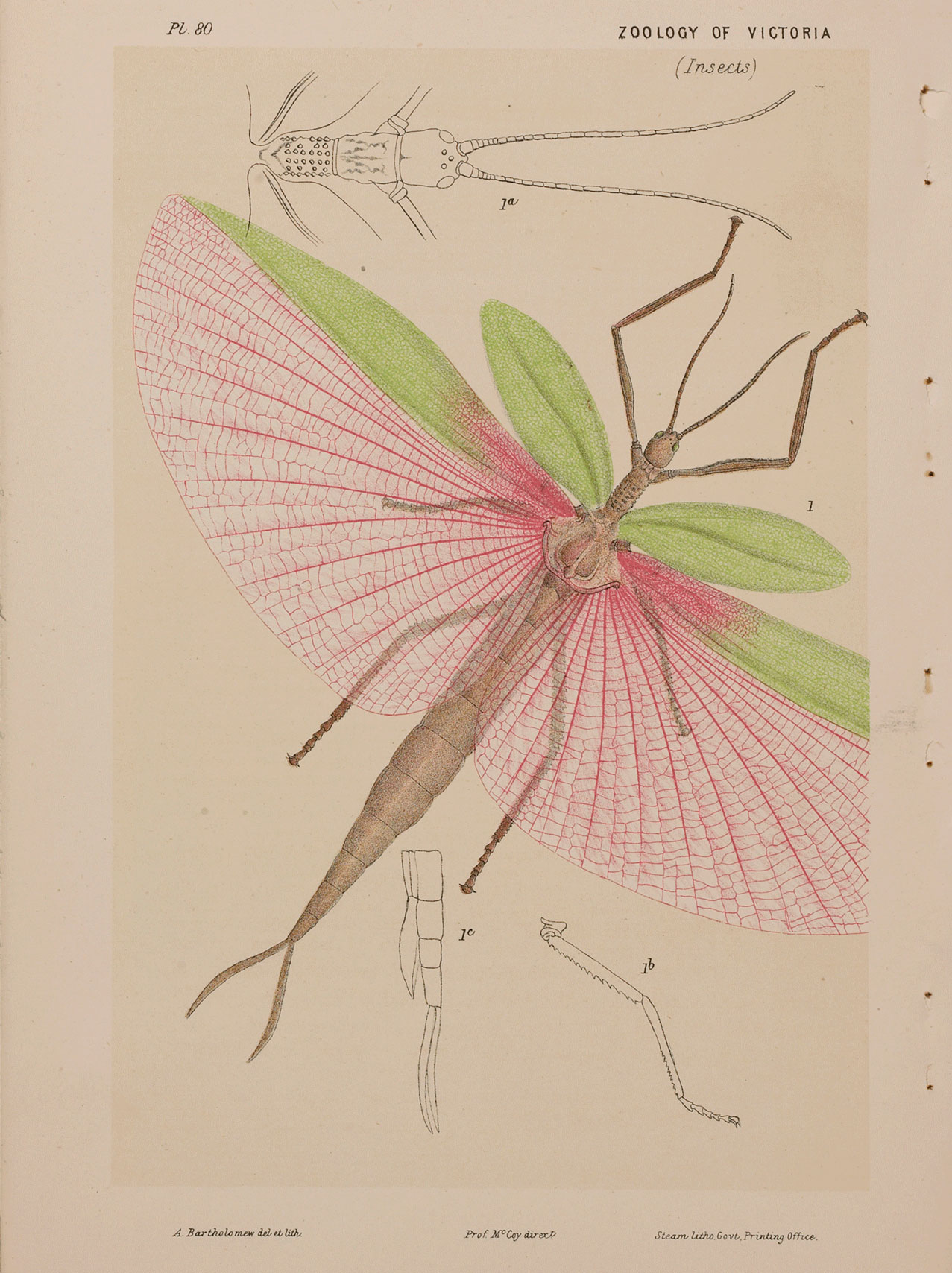
This most beautiful Phasma is readily distinguished from the other two large species found near Melbourne, the Tropidoderus rhodomus and T. iodomus, figured in our Plates 69-70, by the beautiful rosy-pink colour of the membrane of the lower wings, with the bright rosy-carmine veins, and the same colour occupying as much of the basal portion of the costal area as can be covered over by the tegmina when at rest.
I have not seen the males as yet, nor can I account for their apparent rarity.
Specimens are in the collection from the Richmond Paddock and other localities near Melbourne.
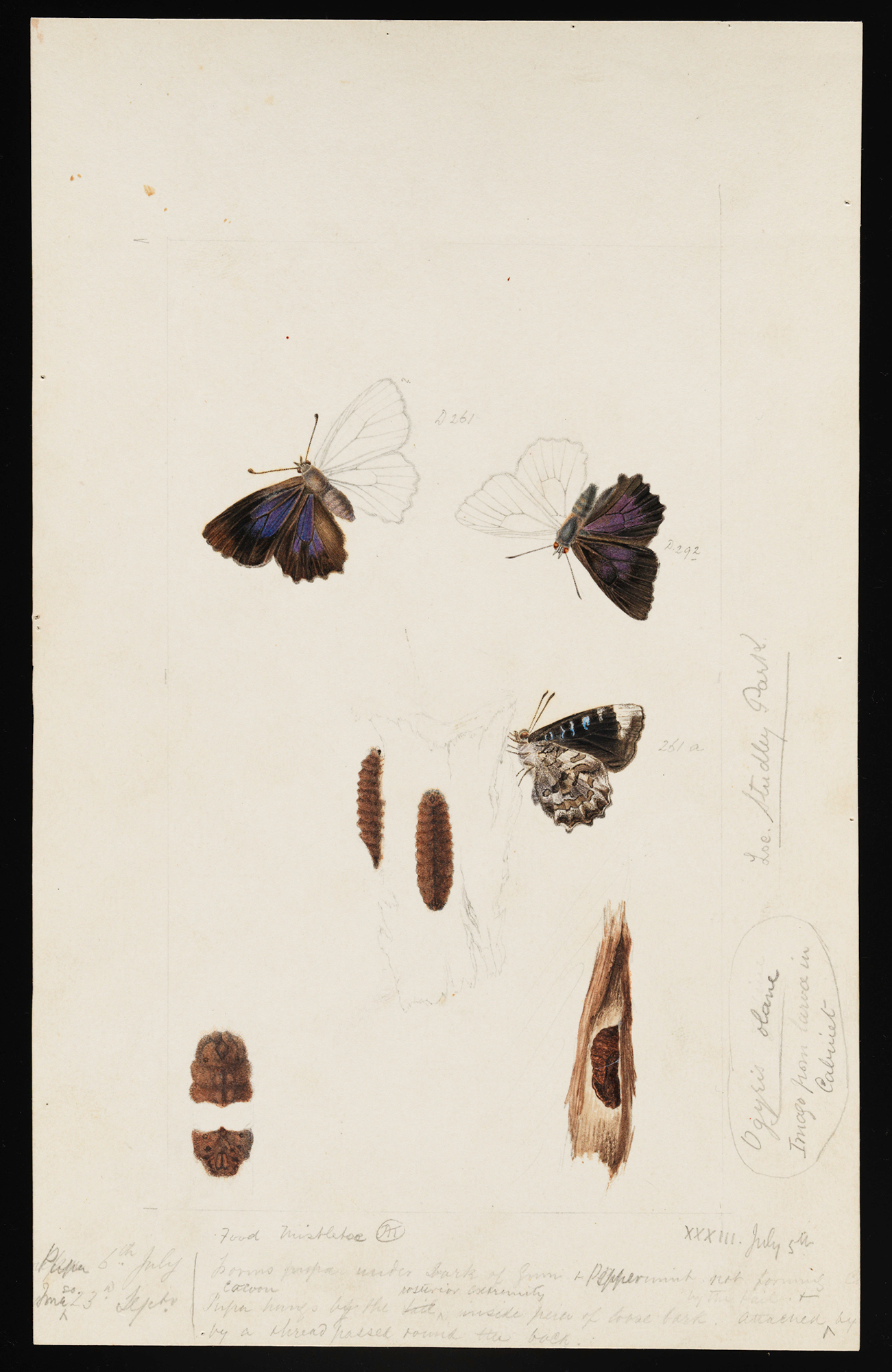
Unpublished watercolour illustration, XXXIII (33), of the life stages of a Dull-purple Azure Butterfly (as an Olane Blue), Ogyris olane olane, from Studley Park, Victoria, by Arthur Bartholomew, 5 July. Frederick McCoy, the first Director of The National Museum of Victoria, presumably commissioned this work for a future plate in 'The Prodromus of the Zoology of Victoria; Figures and descriptions of the living species of all classes of the Victoria indigenous animals'. Unfortunately, McCoy died before completing this enormous undertaking. Bartholomew’s illustration forms part of the much larger Prodromus Collection. Many of the original illustrations and prints in the collection informed the production of The Prodromus, the first major publication of the National Museum of Victoria. Between 1878 and 1890, McCoy published his zoology 'Prodromus' as 20 parts in two volumes, with each part comprising 20 plates. Unfortunately, almost 90 plates in the collection remain unpublished, and hundreds of illustrations were either not completed or not printed.
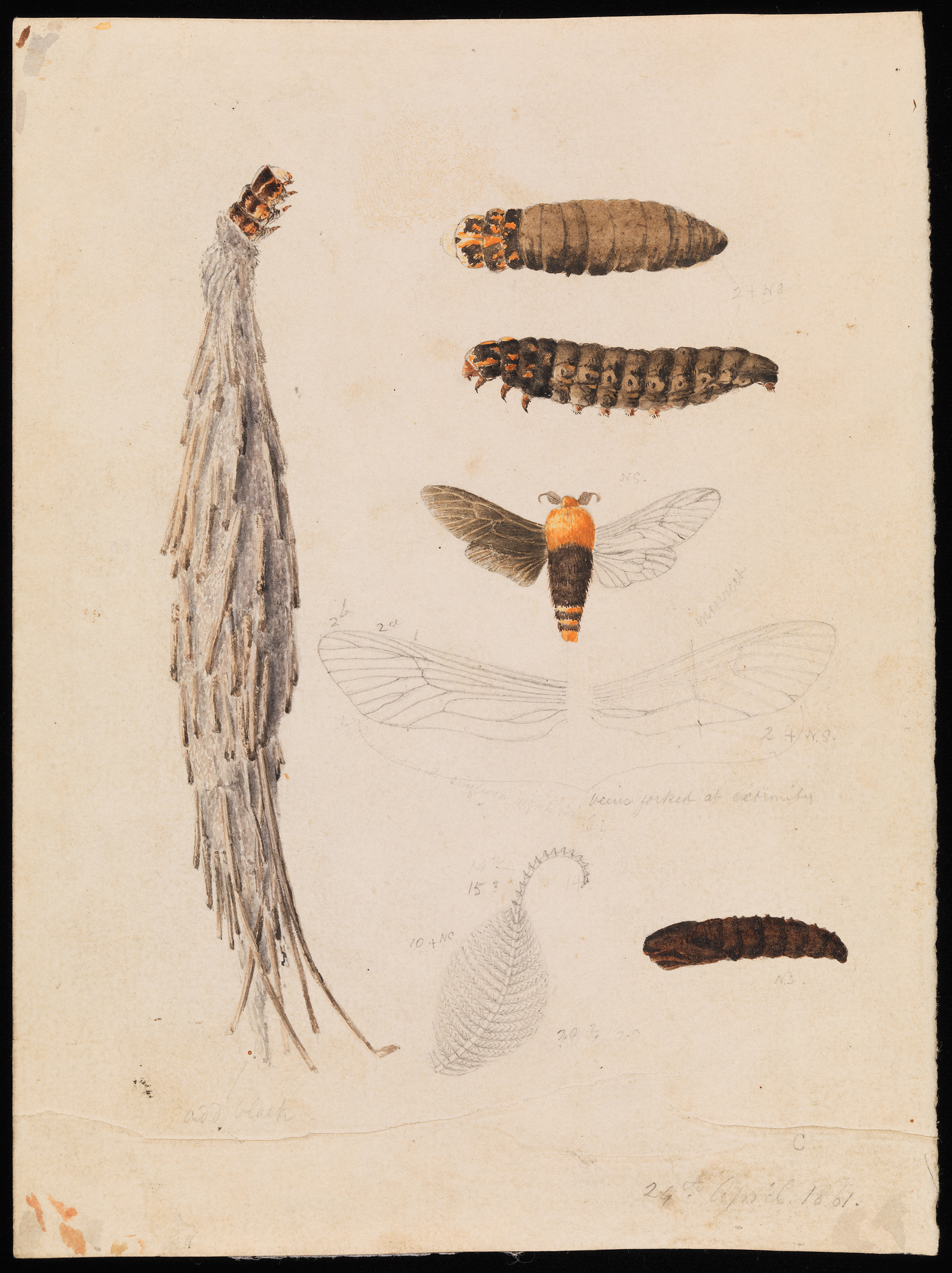
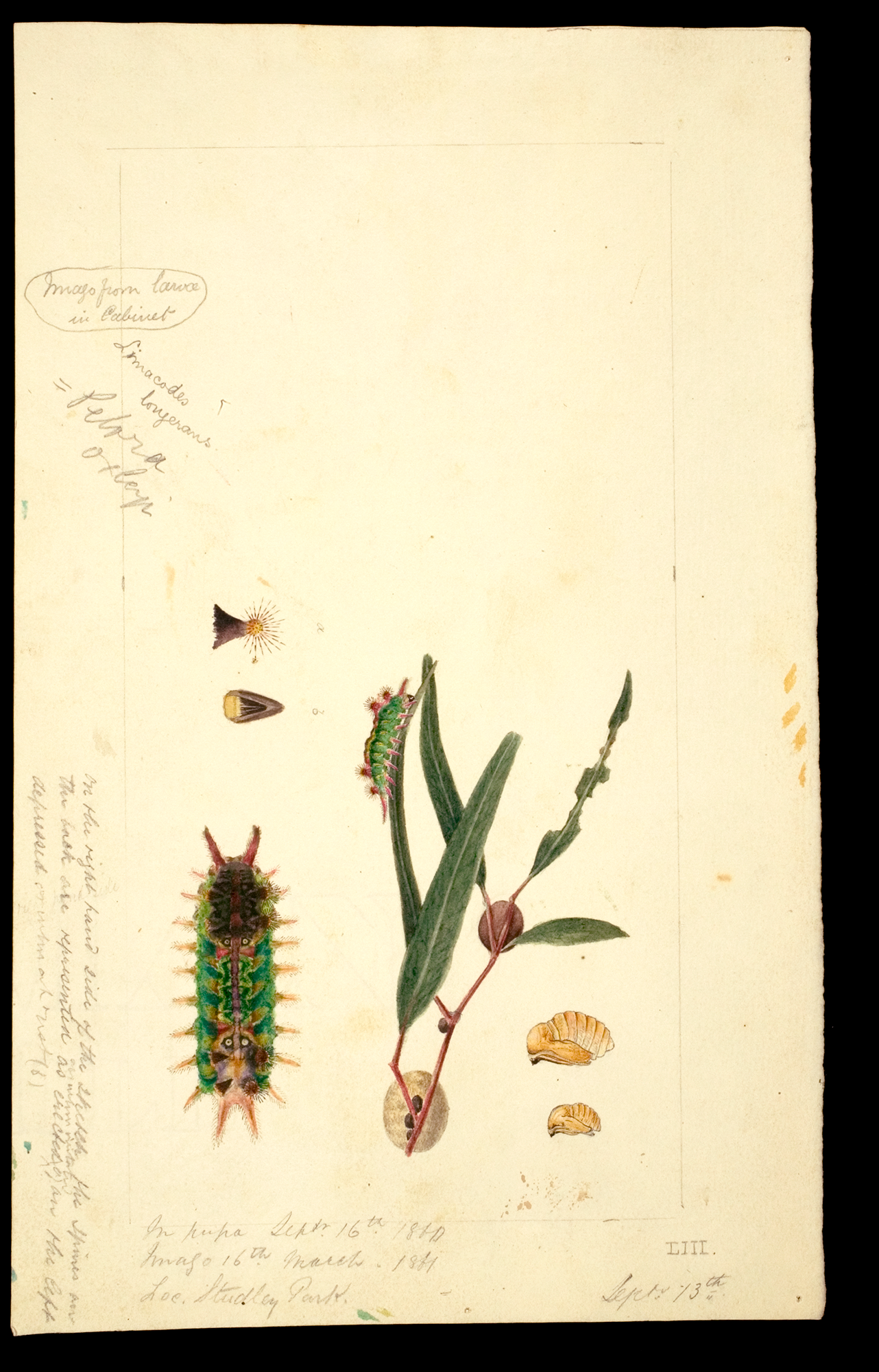
Unpublished watercolour and pencil illustrations LIII (53), of the larva, pupa and host plant of a Painted Cup Moth, Doratifera oxleyi, from Studley Park near Melbourne, by Arthur Bartholomew, 13 Sept. 1860, This illustrationincludes annotations by Frederick McCoy. Frederick McCoy, the first Director of The National Museum of Victoria, presumably commissioned this work for a future plate in 'The Prodromus of the Zoology of Victoria; Figures and descriptions of the living species of all classes of the Victoria indigenous animals'. Unfortunately, McCoy died before completing his this enormous undertaking. This illustration forms part of the much larger Prodromus Collection. Many of the original illustrations and prints in the collection informed the production of The Prodromus, the first major publication of the National Museum of Victoria. Between 1878 and 1890, McCoy published his zoology 'Prodromus' as 20 parts in two volumes, with each part comprising 20 plates. Unfortunately, almost 90 plates in the collection remain unpublished, and hundreds of illustrations were either not completed or not printed.
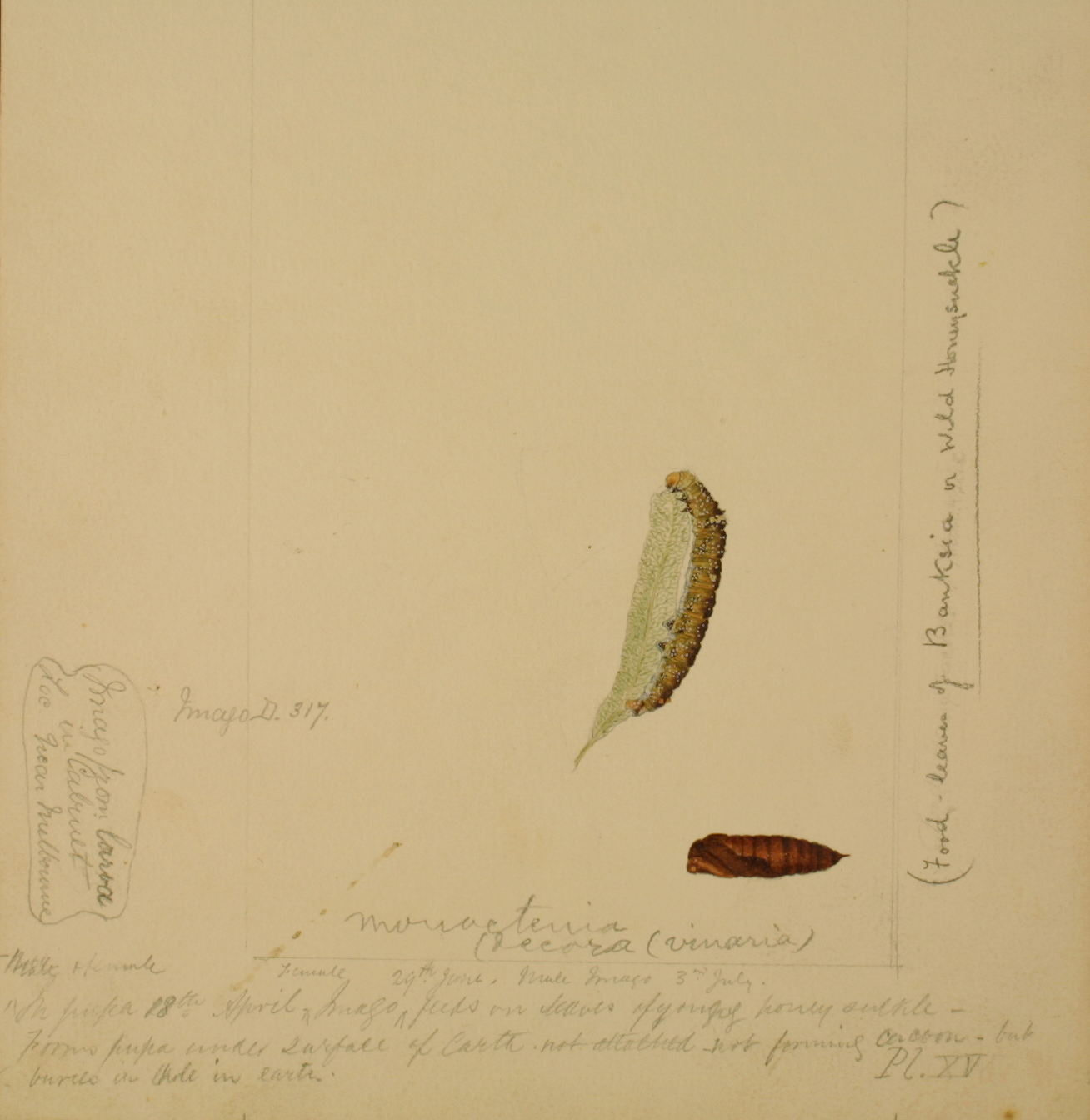
Unpublished watercolour illustration (No. XV) of a Caterpillar, Pink Bellied Moth, Oenochroma vinaria, by Arthur Bartholomew, 18 Apr 1861. See PZD 317 and PZD 322 for the adult of this specimen. Frederick McCoy, the first Director of The National Museum of Victoria, presumably commissioned this work for a future plate in 'The Prodromus of the Zoology of Victoria; Figures and descriptions of the living species of all classes of the Victoria indigenous animals'. Unfortunately, McCoy died before completing this enormous undertaking. Bartholomew’s illustration forms part of the much larger Prodromus Collection. Many of the original illustrations and prints in the collection informed the production of The Prodromus, the first major publication of the National Museum of Victoria. Between 1878 and 1890, McCoy published his zoology 'Prodromus' as 20 parts in two volumes, with each part comprising 20 plates. Unfortunately, almost 90 plates in the collection remain unpublished, and hundreds of illustrations were either not completed or not printed.
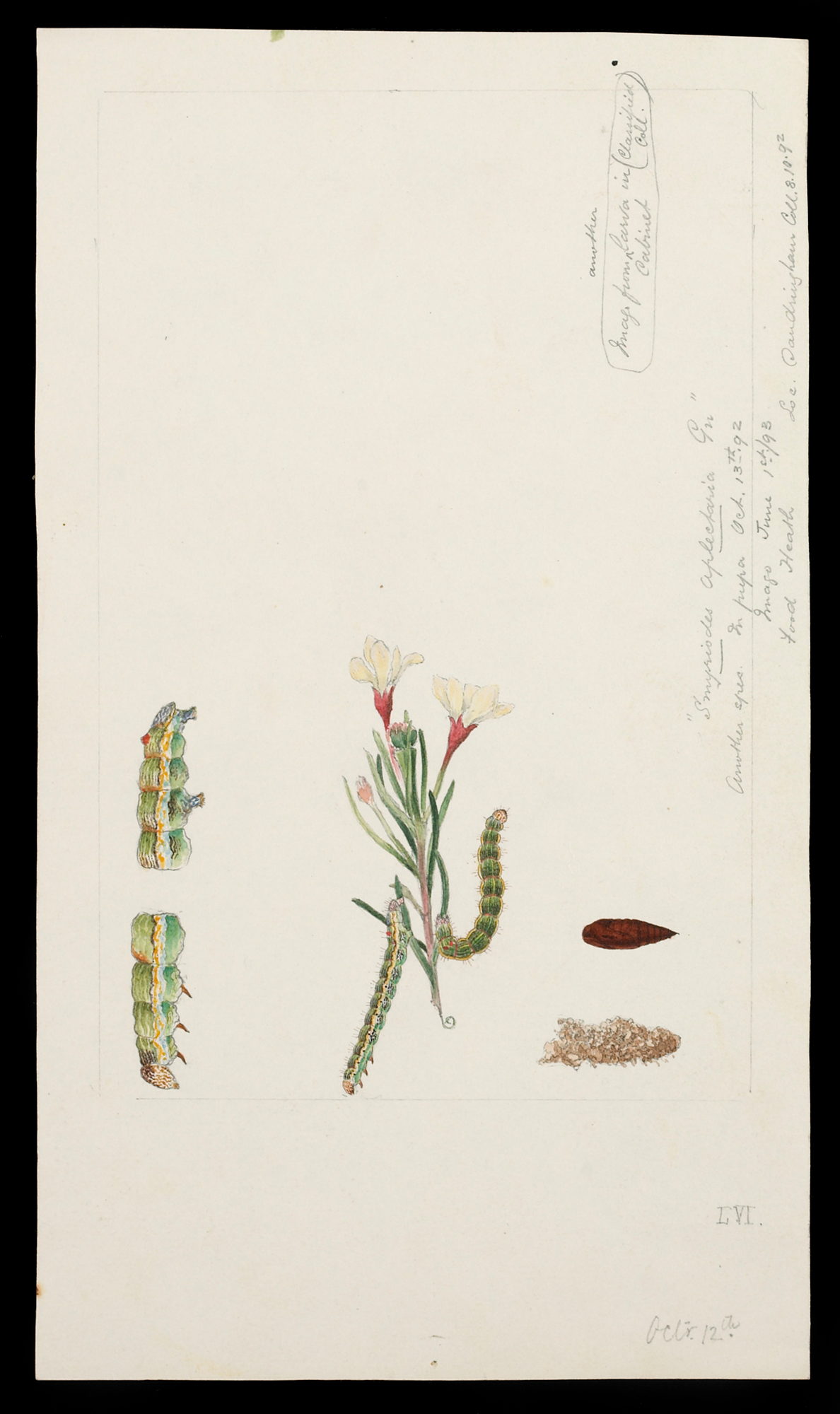
Unpublished watercolour illustration LVI (55) of the larva, pupa and host plant (Heath) of a Plain-line Moth, Smyriodes aplectaria, from Sandringham (coll: 8 August 1892), by Arthur Bartholomew, 12 October 1892. Frederick McCoy, the first Director of The National Museum of Victoria, presumably commissioned this work for a future plate in 'The Prodromus of the Zoology of Victoria; Figures and descriptions of the living species of all classes of the Victoria indigenous animals'. Unfortunately, McCoy died before completing his this enormous undertaking. This illustration forms part of the much larger Prodromus Collection. Many of the original illustrations and prints in the collection informed the production of The Prodromus, the first major publication of the National Museum of Victoria. Between 1878 and 1890, McCoy published his zoology 'Prodromus' as 20 parts in two volumes, with each part comprising 20 plates. Unfortunately, almost 90 plates in the collection remain unpublished, and hundreds of illustrations were either not completed or not printed.
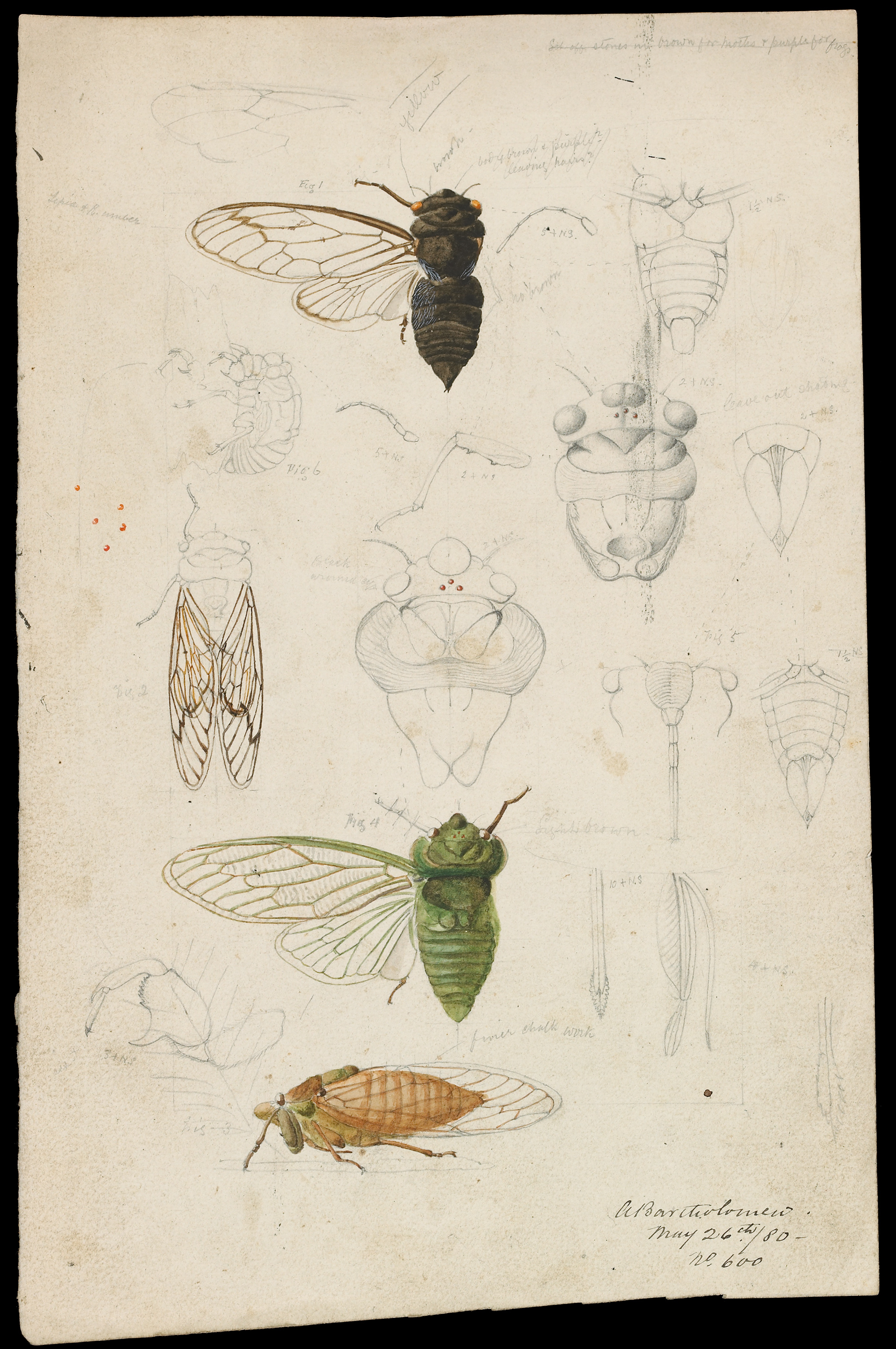
Plate 50, Figure 1. The Great Black, or Manna cicada, Cicada moerens (now known as Redeye, Psaltoda moerens)
Plate 50, Figure 4. The Great Green Cicada, Cyclochila australasiæ (now known as Greengrocer, Cyclochila australasiae) found on the banks of the Yarra
Source: Museums Victoria
Public Domain (Licensed as Public Domain Mark 1.0)
Redeye
The Cicadæ, forming the old genus Cicada of Linnæus, constitute now the family Cicadidoe, to the section Octicelli of which (or those having 8 marginal cells to the upper wings) the two kinds figured on our plate belong. They are the largest and the most famous of the Homopterous insects, remarkable above all things for the loud song of chirping whir of the males in the heat of the summer. Our Cicada moerens, here figured for the first time, produces an almost deafening sound from the numbers of the individuals on the hottest days, and the loudness of their noise; which beginning with a prolonged high-toned whir like that of a knife-grinder, or the letter R loudly prolonged in a high pitch, continued for a minute or two, breaks into a series of diminuendo "squawks," like that of a frightened duck in a farmyard, loud enough to be heard some hundred yards off, and stunning our ears with the shrilling and squalling. This kept up with "damnable iteration," as Falstaff says, by hundreds of individuals all day long, would tax the patience of a saint, if such existed in Australia. One might also say with Virgil, "Et cantu queruloe rumpent arbusta Cicadoe" only to burst the Australian "bush" would be rather too much for their distracting powers.
The Greeks keeping the Tettix in cages for the sake of their song, and praising their musical performances so highly, one might almost think indicated a great falling off in their powers to please in our day. As the Chinese, however, do exactly the same still with their Cicada, I fancy (as the Cicadoe are too great conservatives to change) that the real fact may be that the ancient Greek taste for music may have resembled the execrable modern Chinese one, which, as I have heard it grandly exemplified in some of their theatres on the goldfields, might be said in its din to be diabolical-if the comparison were not perhaps unfair to the absent.
Both sexes have short lives in the perfect state, and may be seen lying about on the ground under the trees, dead or dying, in abundance after their noisiest few days. Our Nankeen Kestrel and other small hawks devour them on the wing in great numbers in their season, and they are probably very nice, like the Greek ones praised by Aristotle as the bonne-bouche. The pupæ, the bachelor males, and the females when full of eggs, are the greatest delicacy for the epicure, according to the Greek authority, but none of my friends have enabled me to say whether in their opinion the Australian species merits the praise.
Greengrocer
This species is much less abundant than the C. moerens, and seems more confined to moist places, such as river banks and deep ravines and gullies. The song begins like the quacking of a duck for some time before breaking into the continuous "whir," and is far louder than that of the C. moerens, becoming perfectly unbearable and deafening where they abound. It seems to frequent the various species of Acacia (popularly called Wattles) quite as often or more often than the Eucalypti. It appears at about the same time as the C. moerens in the hottest time of the year, but is much less widely distributed. It is not uncommon along the banks of the Yarra, near Melbourne. The pupa resembles that of the C. moerens, but is larger, and the tooth-like spines on the anterior legs are darker, larger, and stronger; and the large basal tooth has a small additional spine near its base.
Plate 40, Figures 1-6. Saunders' Case-Moth, Metura elongata (now known as Oiketicus elongatus)
Source: Museums Victoria
Public Domain (Licensed as Public Domain Mark 1.0)
The larvae and cases of this species far exceed any of the others in size, and when, as last year, they are unusually abundant they attract the attention of the most incurious observer. The larvæ are found indifferently not only on a great variety of native trees, but on a singular variety of imported foreign trees and shrubs in the gardens round Melbourne. The size of the Victorian specimens is slightly less than that of the New South Wales examples, but I do not think there is any specific difference.
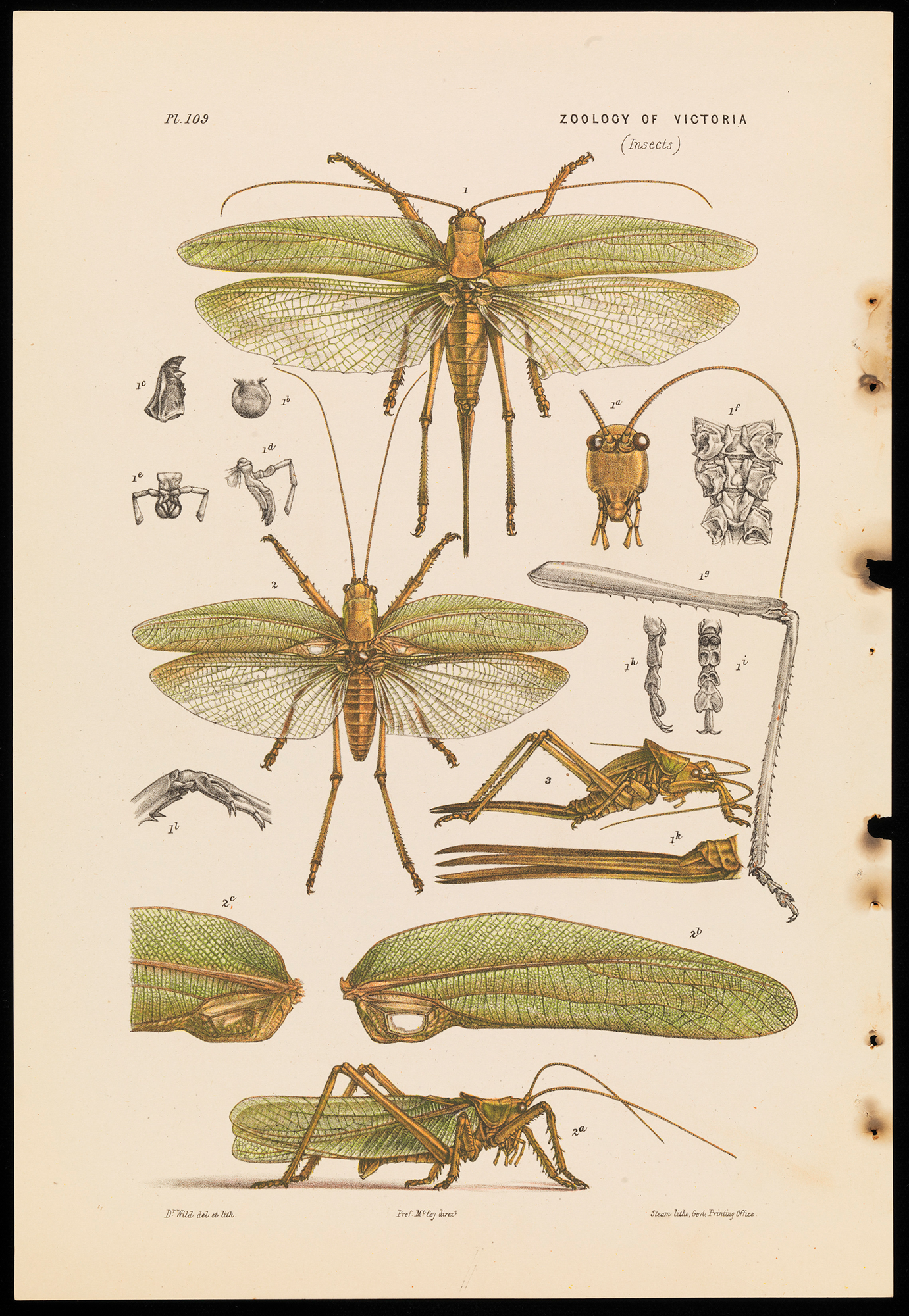
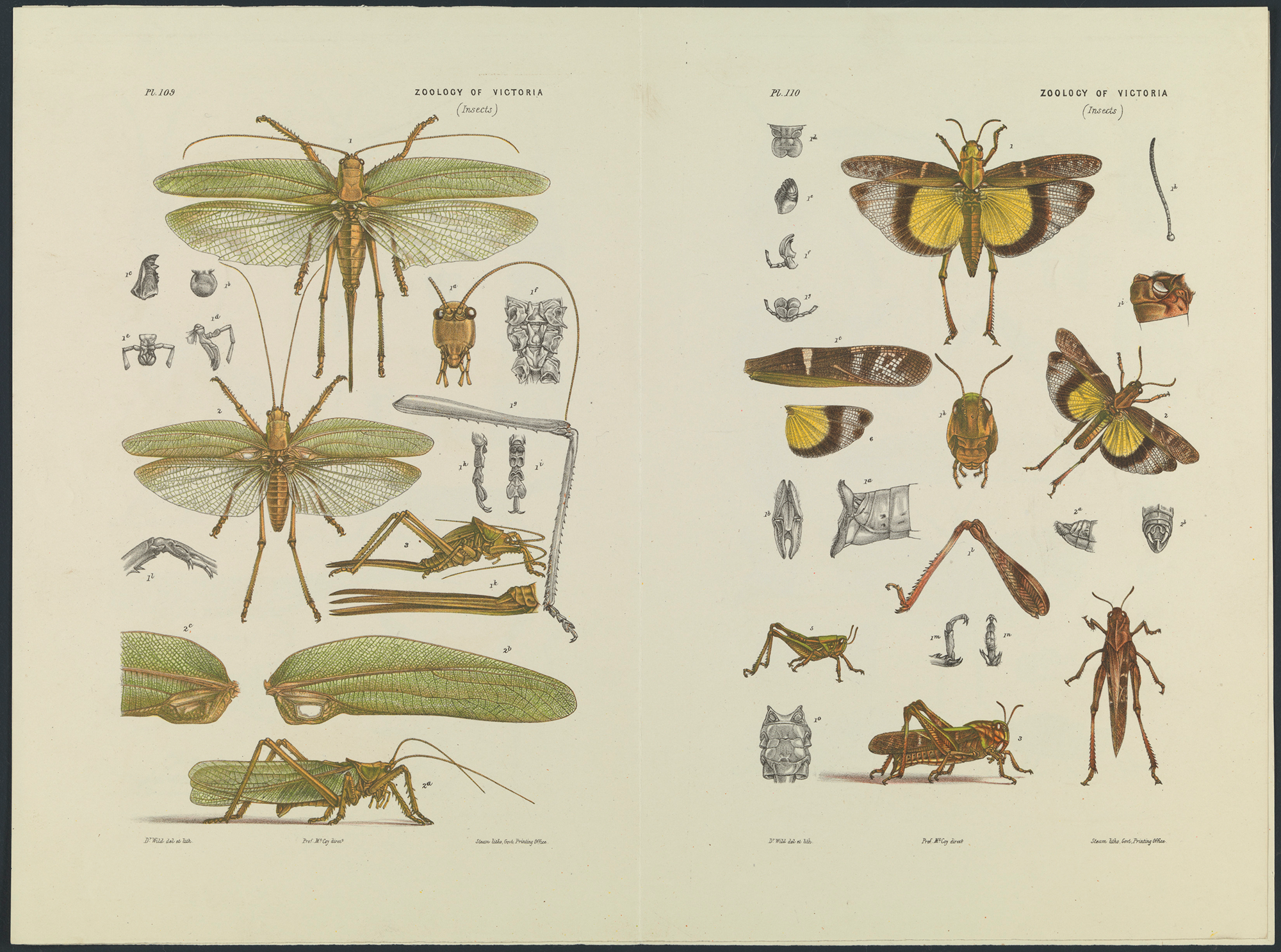
Plate 109. The Great Green Gum-tree Grasshopper, Locusta vigentissima (now known as Terpandrus sp.)
This fine Grasshopper is not very uncommon on gum-trees everywhere in Victoria, the male making a loud shrilling noise in summer. It has not been figured before.
Plates 69-70, Figure 1. The Red-shouldered Phasma, Tropidoderus rhodomus (now known as Tropidoderus rhodomus) found at Inglewood
When seen flying against the sun, the red of the under-side of the costal area of the wings overpowers the green of the distal portion of the upper surface, shining through, so as to appear of strikingly vivid scarlet vermillion, which disappears like magic when the creature alights, suddenly folds its great wings in a narrow green layer over the abdomen concealed by the costal area, the red base of which is exactly covered over and hid by the green tegmina, so that the whole agrees so nearly with the foliage of the Eucalypti on which it rests that the sharpest eye would miss it, especially if looking for the splendid scarlet flying creature of an instant before.
A rare species, occurring in the warmer northern parts of Victoria. The species figured is from Inglewood, and was procured for the National Museum from Mr. Plant, who found it.
Unpublished watercolour illustration of the larva, pupa and adult of the Urticating Anthelid Moth, Anthela nicothoe, and the host plant (Pinus insignis), by Arthur Bartholomew. Note the ghosting above the sketch of the pupa where an earlier illustration has been erased. Frederick McCoy, the first Director of The National Museum of Victoria, presumably commissioned this work for a future plate in 'The Prodromus of the Zoology of Victoria; Figures and descriptions of the living species of all classes of the Victoria indigenous animals'. Unfortunately, McCoy died before completing this enormous undertaking. Bartholomew’s illustration forms part of the much larger Prodromus Collection. Many of the original illustrations and prints in the collection informed the production of The Prodromus, the first major publication of the National Museum of Victoria. Between 1878 and 1890, McCoy published his zoology 'Prodromus' as 20 parts in two volumes, with each part comprising 20 plates. Unfortunately, almost 90 plates in the collection remain unpublished, and hundreds of illustrations were either not completed or not printed.
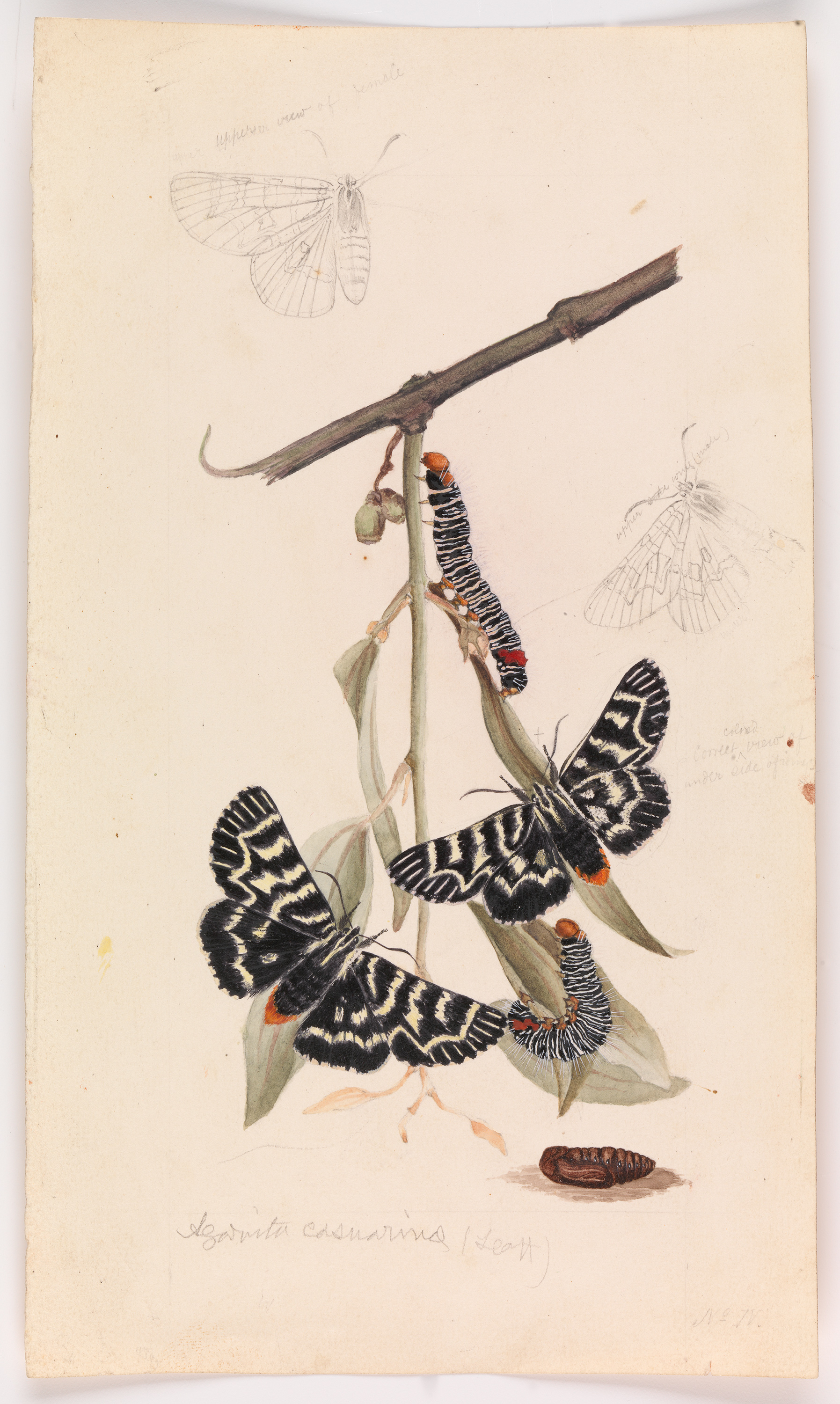
Plate 8, Figures 9-13. The Vine Day-moth, Agarista glycine (now known as the Vine Moth, Phalaenoides glycinae)
Source: Museums Victoria
Public Domain (Licensed as Public Domain Mark 1.0)
This species received its specific name from Lewin observing that in New South Wales the larvæ fed on the leaves of the leguminose plant, the Glycine bimaculata. In this colony, however, it is generally called the Vine-moth, from one of the most extraordinary changes of habit ever recorded in any insect. In the early day of this colony, before the introduction of the vine, the larvæ of this insect fed on the Gnaphalium luteoalbum, which is a very common weed, but since the planting of vineyards the Agarista glycine has increased enormously in numbers, and has totally abandoned its original food to devour the leaves of the grape vine, never now touching the former, but thriving and multiplying beyond measure on the foliage of so totally dissimilar a plant, that if the perfect female Day-moth be guided by ordinary instinct to choose that plant on which to deposit its eggs on which the larvæ might find suitable foliage for food (the perfect insect not only being deprived of jaws fit for eating leaves itself, but being separated from the foliage-eating larval stage of its existence by the intervening pupa stage, in which feeding, motion, and the senses are all stopped), it is not possible to conceive or understand how the egg-laying Day-moth could have gained such knowledge of the properties of the Vine as would induce if to abandon the natural food (not of itself, but) of its larvæ, and to put its trust in a foreign plant of which one might suppose it could know nothing.
The injury done to the vines in the extensive vineyards of Victoria by the larvæ of this species is enormous, and seems to be increasing. Their numbers are altogether too great to be dealt with by any other means than by hand picking, and there are not hands enough in the country yet for that, as the children by law must attend school. The Acclimatisation Society acclimatised the Indian Minah in the hope that, besides destroying the Grasshoppers and Locusts (which they do admirably), they might diminish this pest also; but they have unfortunately developed a taste for eating the grapes, and do not seem to like the larvæ of the Agarista. Before the new school law, children used to be employed thinning the numbers of the larvæ in an unpleasant but effective manner, by cutting each one across with a pair of scissors as they walked along the rows of plants, instead of delaying to pick them off. Even this sharp and decisive proceeding is too tedious to keep down their numbers, and, to add to the difficulty, the fowls even will not eat them, nor any other creature as far as I know. The only suggestion I can make is to employ hand-pickers at the time of the approach of the first brood of caterpillars, when the vines come first into leaf. Each one killed then prevents the formation of multitudes, as well as gives strength to the plant by their present removal. The next object of attention should be to kill all the moths of the first brood found on the wing, the figure here given rendering the right one easy of recognition, and this for each one killed will destroy myriads of eggs which would form the second brood.
Plate 79, Figures 1-2. The Violet-winged Phasma, Acrophylla violascens (now known as Didymuria violescens) found in Oakleigh
The deep violet colour of the under-wings in the males is so curiously different from the rosy pink of the same part in the females that no one would guess they were sexes of the same species if it had not been a matter of observation beyond doubt.
Not very uncommon at Oakleigh, near Melbourne.
A large variety, 3 inches 6 lines long (male), with stouter legs and paler wings, occurs at Warragul, and females found therewith have the wings colourless; but they seem to be only local varieties.
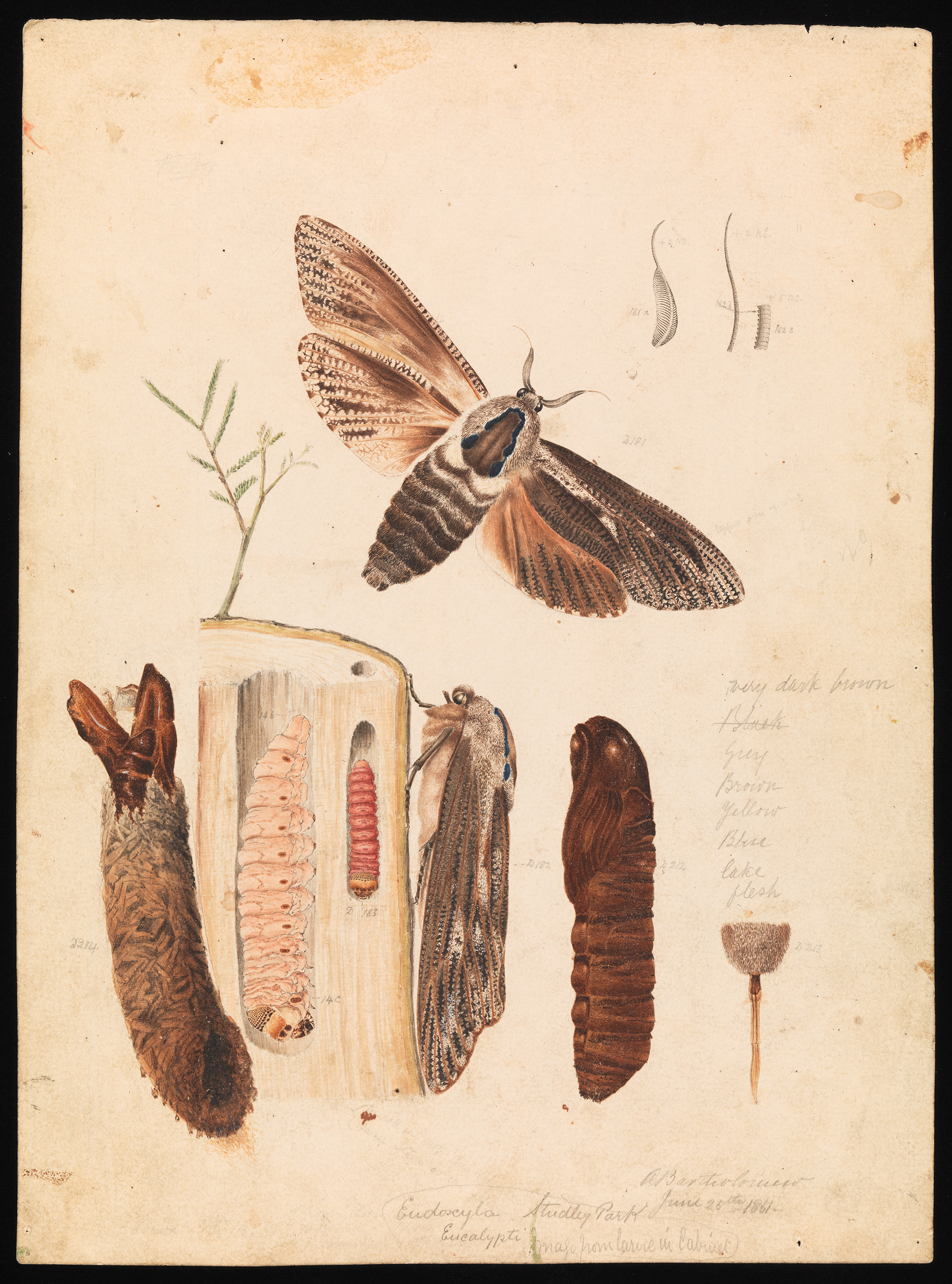
Plate 30. Large Wattle Goat-Moth, Zeuzera eucalypti (now known as Wattle Goat Moth, Xyleutes eucalypti found in all parts of the colony)
Source: Museums Victoria
Public Domain (Licensed as Public Domain Mark 1.0)
The moths of the family Hepialidæ are popularly known as "Swifts" or "Swift-moths," from the great quickness of their direct flight in the dusky twilight. The group is divided into three sections, typified by, lst, the Hepialus the true Swifts or Chost-moths; 2nd, by Cossus, or the Goat-moths; and 3rd, by Zeuzera, or the Wood-leopard-moths, as they are popularly called, respectively.
The larvæ of all are thick fleshy naked grubs, with a few hairs. Those of the first group inhabiting subterranean burrows and feeding on the roots of grasses; those of other two feeding on the interior of the wood of timber trees, to which they prove very destructive from boring great vertical canals, so weakening the tree that it either dies or is blown over.
In most forest-bearing countries the natural enemy of these larvae and protector of the trees from their destructive action is the group of Birds of the family Picidæ or Woodpeckers, who by instinct know where the larvae are, and by powerful strokes of their suitable bills cut down quickly on the larvæ through the sound wood, and transfixing the grub with their long worm-like barbed tongue, draw it out, and devour it. In Australia alone the Woodpeckers have not been provided; and the consequence is that every tree cut up for firewood is seen to be traversed with large cylindrical canals made by these or allied larvæ, which are the greatest destroyers of our forests- so abounding in the wood of almost every forest tree that, in a storm, it is dangerous to go near a large tree, as one apparently sound will snap across unexpectedly with a moderate wind from the number of those larvæ tracks.
The classical reader will remember the praises lavished by the Roman epicures of old on the Cossus as a delicacy for the table; being a thick, pink, fleshy caterpillar, as long as a man's finger, extracted from the wood of the Willow trees, and produced by a Goat-moth belonging to this family; it is curious to find that the very similar larvæ of the present insect, abounding in the Wattle trees, or Acaciæ, of Australia, are highly prized for food by the natives. When properly cooked I am told by all bushmen that they are delicious, but circumstances over which I have no control have prevented me from trying them, to test the fact myself.
Considering the great importance attached lately by the Government to the preservation and cultivation of the Wattle or Acacia trees, and the great and increasing annual money value of the bark, it is important for bark-strippers and the persons employed by the Government to foster the growth of the Wattles to know the appearance of the insect represented on our plate, as the greatest destroyer of these trees, so that attention may be given to killing the perfect moth; the large abdomen of the female of which is distended with millions of eggs, each of which will produce a voracious grub as thick as the thumb and five or six inches long, eating the timber for years.
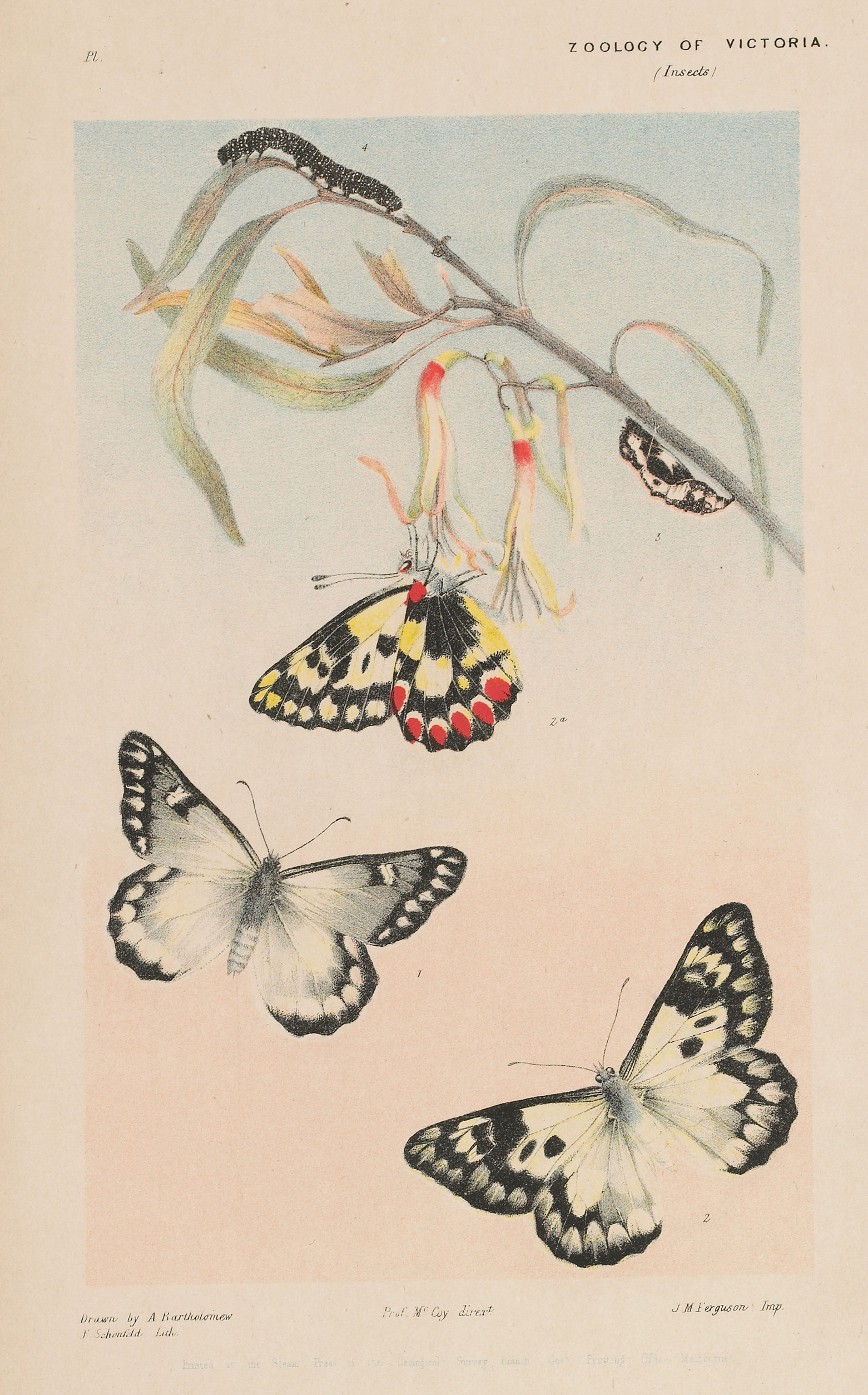
Plate 10. Pieris (Thyca) aganippe (now known as the Wood White Butterfly, Delias aganippe)
Source: Museums Victoria
Public Domain (Licensed as Public Domain Mark 1.0)
The larvæ of this species feed on the leaves of the Loranthus or Native Mistletoe as it is called, which clings parasitically to the lofty branches of the so-called Gum Trees (Eucalypti), and the pupa differs completely from that of the Thyca Harpalyce in being solitary.
This species is not so common as the Thyca Harpalyce, and has a rather swifter, although slow, flight. And keeps for the most part about the tops of the Gum and "Wattle" trees (Acacia), and on the so-called Native Cherry (Exocarpus), on the leaves of which the larva feeds as well as on the Loranthus; rarely approaching the ground level. There are two broods in the year, remaining in the pupa state about three weeks, varying according to the weather; a few of the last brood continue in the pupa state over rhe winter, the butterfly appearing in the spring. The male seems to be scarcer than the females, and are always smaller.
Plate 110, Figures 1-6. Australian Yellow-winged Locust, Oedipoda musica (now known as the Yellow-winged Locust, Gastrimargus musicus)
The wonderful migrations of countless millions of individuals of several species of this group-the Locusts-at certain times of the year, in various countries, especially North Africa, Arabia, India, China and even the warm parts of Europe, have been the subjects of records the most ancient, interesting, and important of all the popular references to insects. In most of the countries named, the flights or migrations are approximately from E. to W. (in Victoria they are generally from N. to S.) chiefly carried on by the action of strong winds blowing at the time, as the power of the wings for flight is not great, and the creatures seem to have little or no power of directing their flight, so that the great clouds of locusts raised, and mainly carried, by the wind are unable to avoid a river in their course; and as each individual's flight is for the most part short, the insects falling into such rivers are in many cases described as forming putrefying heaps of dead bodies many feet high and many miles long, creating a pestilence, while the flight itself often darkens the noon-day sky so that one could not see to read in the houses for hours. When they all alight, as they do at sundown, every trace of green vegetation disappears as if by magic, from the action of their voracious jaws, the places where they pass seeming as if burnt up-the Latin Locusta being derived (locis ustis) from the parched arid appearance wherever they have been. In nearly all ancient writers the popular or local names of Locusts have reference to their appearance in myriads, or their destructive voracity.
Very common everywhere in Victoria in the latter part of the summer.