The temperate waters around Australia's southern coast possess a unique fauna. Distinct from that of the tropics, it was also radically different from that of the northern hemisphere familiar to Frederick McCoy before his arrival in Melbourne. It is therefore unsurprising that 61 fish were included in the Prodromus, making it the second largest group featured.
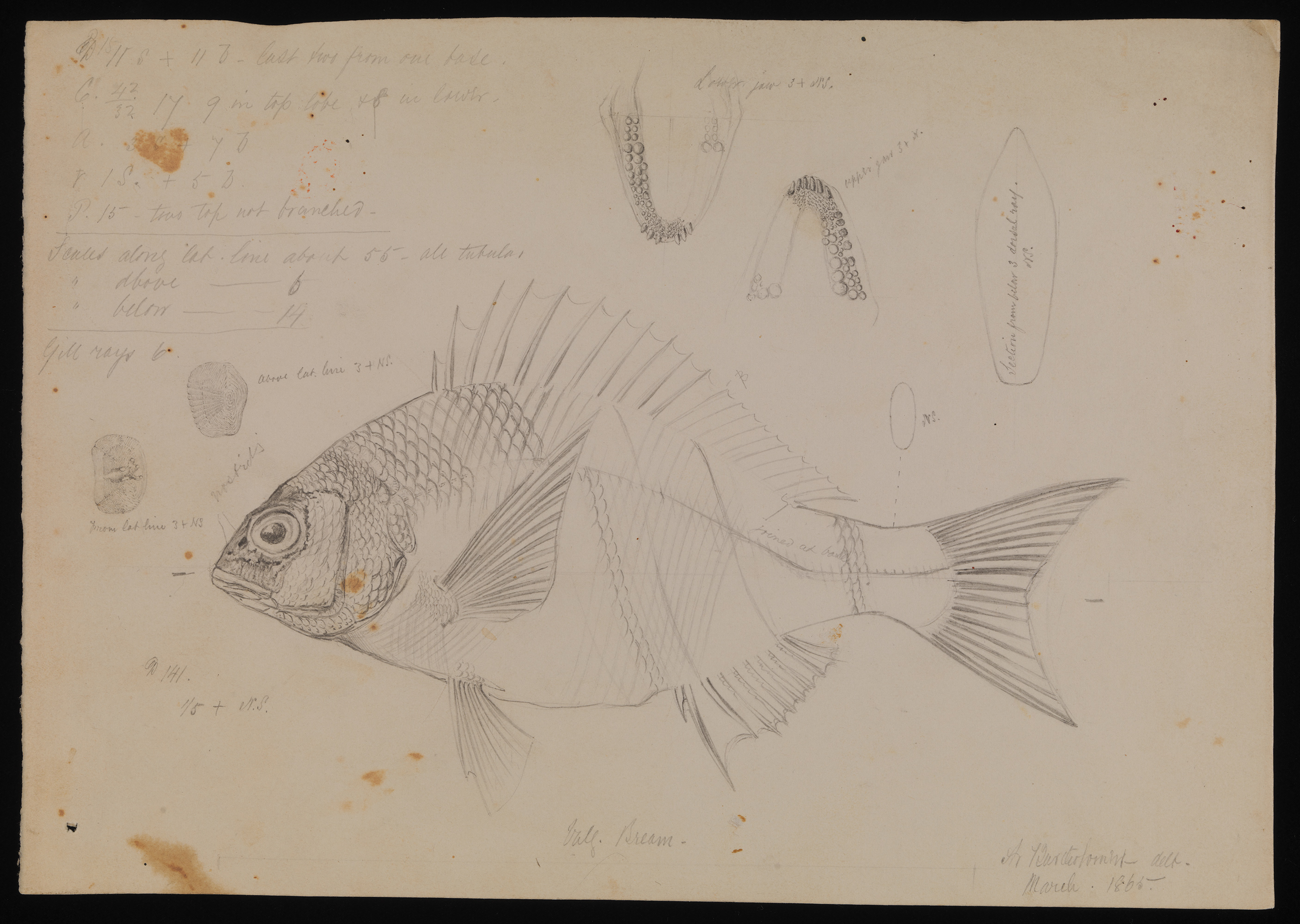
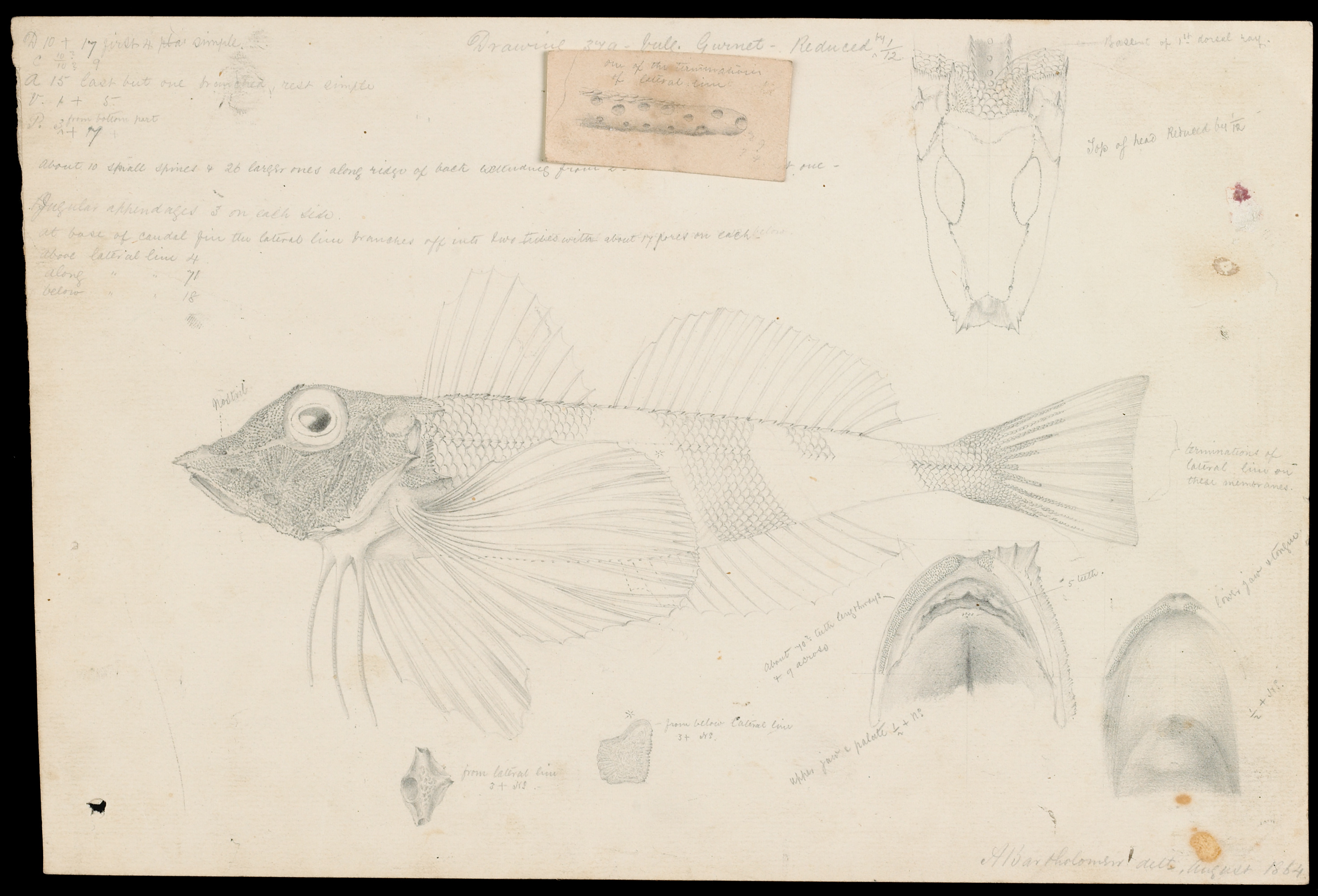
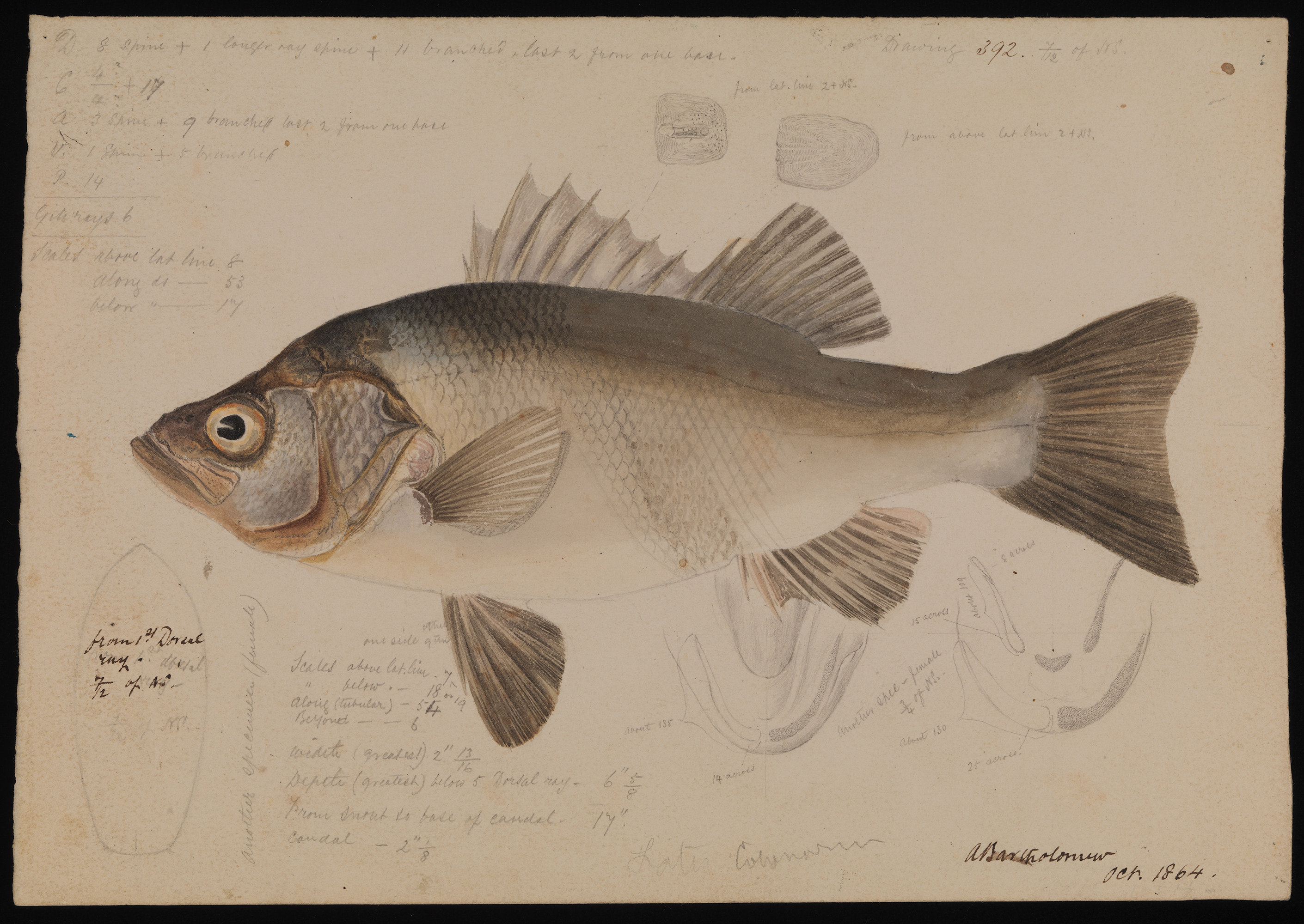


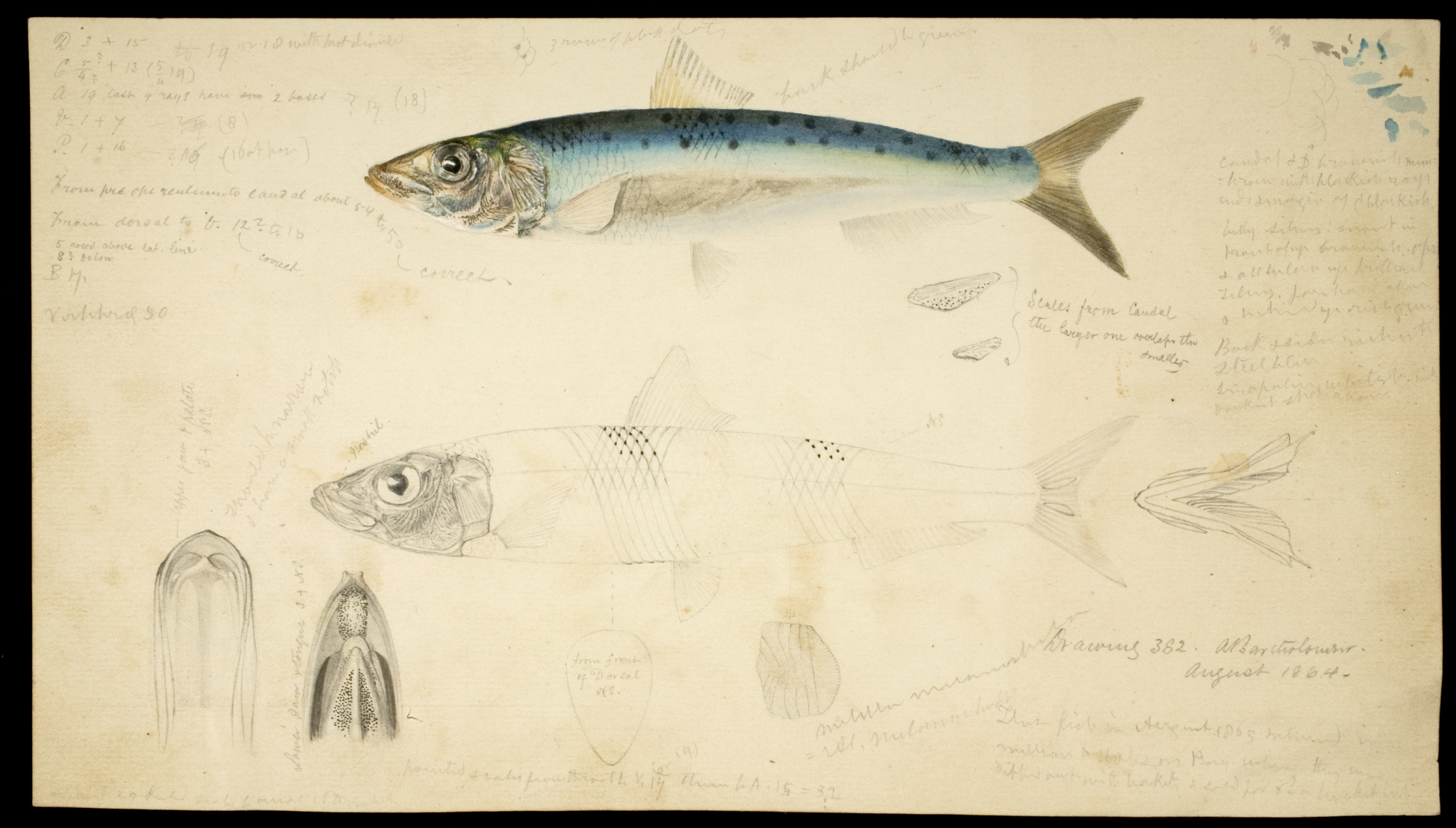
From an estimated 600 species of fish inhabiting Victorian waters, McCoy's choices of which to illustrate were governed by opportunity, size and an eye to the market. Many were taken from the closest saltwater environment, Hobson's Bay, while other interesting specimens were provided by Mr. Jenkins, a Melbourne fishmonger with whom McCoy seemed to develop a particular rapport.
Of the few freshwater fish illustrated, McCoy focused on larger species with commercial value, such as the Golden Perch and Murray Cod. Spectacular or dangerous fish were also well covered, with 14 species of sharks, along with oddities such as the Tasselled Anglerfish and deep sea Oarfish.
McCoy planned to provide a much more systematic coverage of Victorian fish, particularly species with commercial potential, and of the 84 unpublished plates 40 were dedicated to fish. These included individual plates for juvenile, female and male Snapper, as well as John Dory and Boarfish.
An impressive suite of drawings was also retained in the collection, almost all by Arthur Bartholomew. Created with the intent to publish, these contain all the information required to complete a lithograph in the style established by the Prodromus. Bartholomew's concentration and meticulous eye for detail made his original fish drawings more compelling and lively than many completed prints.
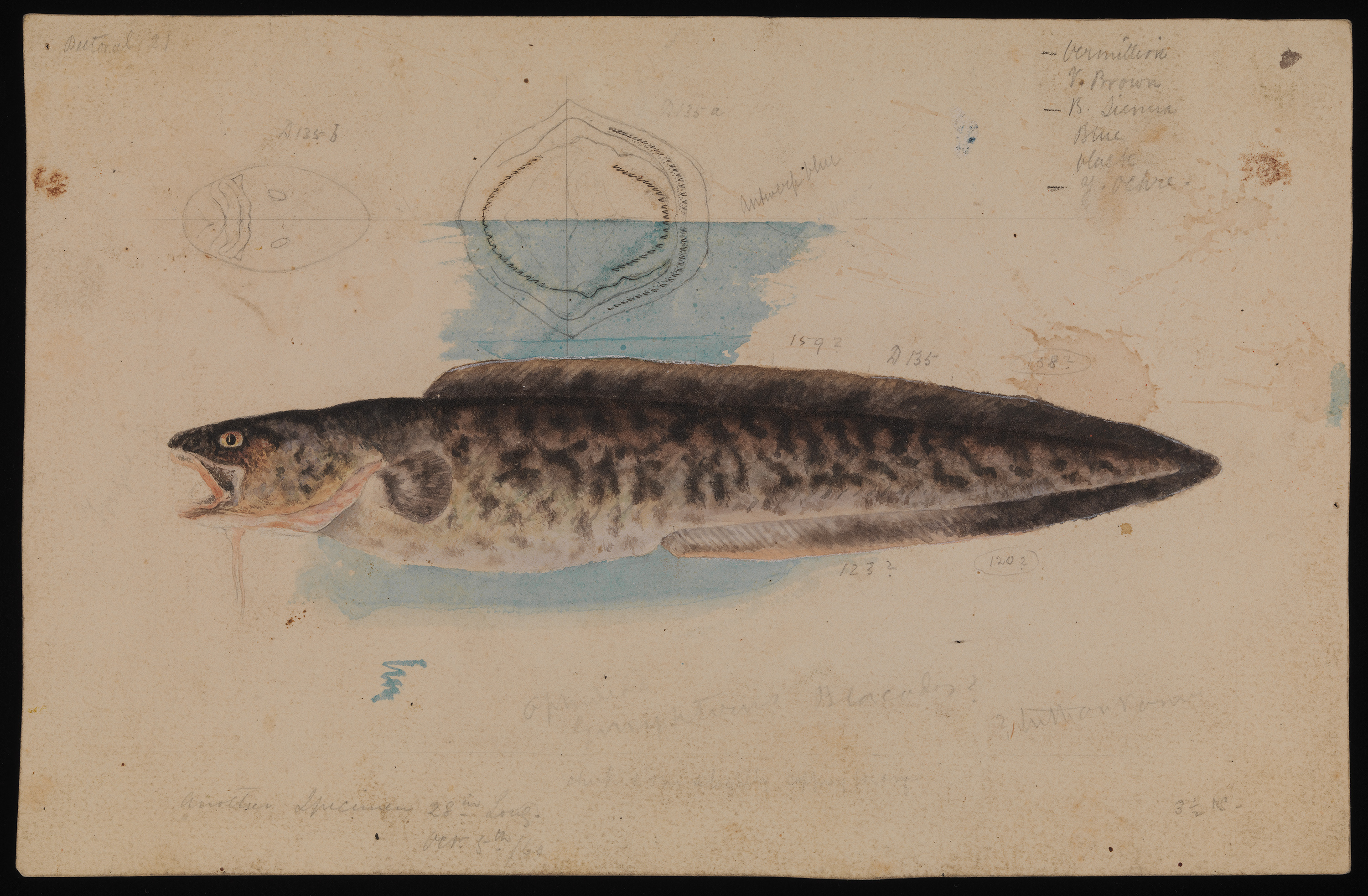
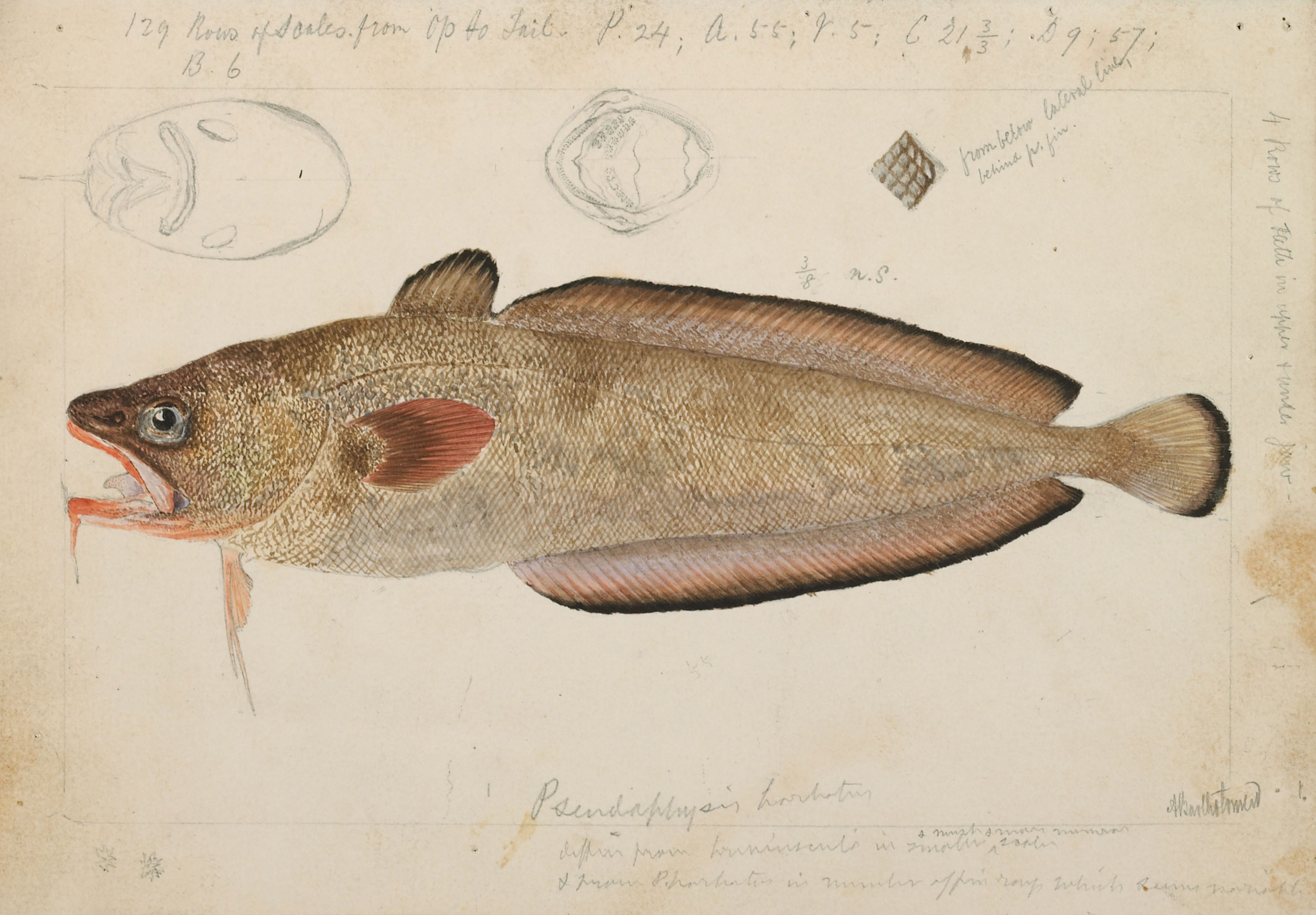
Bearded Rock Cod
Pseudophycis barbata
Source: Museums Victoria
Public Domain (Licensed as Public Domain Mark 1.0)
Plate 20. The Australian Rock Cod, Pseudophysis barbatus (now known as Bearded Rock Cod, Pseudophysis barbatus), found in Port Phillip Bay
This fish, not being figured before, may "point a moral and adorn a tale" apropos of the utility of having our colonial fishes accurately figured and described for reference. I was called upon soon after arriving in the colony to assist at a grand dinner in the old Criterion Hotel of "merchants, bankers, and others," who had been brought to gather to taste this fish, to satisfy themselves it was a real Newfoundland cod, a bank of which had been discovered in Victorian waters by fishermen-practical men-who proposed to give the assembled gentlemen and their friends the opportunity of subscribing so many thousands for a fleet of boats, so many thousands for curing establishments on land, so much to the discoverers, &c., and to form a cod fishing company. The small size of the cooked fish and its inferior flavour was explained by the discoverers having been so ill provided that they could only catch a few very young ones. The statistics of the Newfoundland cod fisheries were quoted to show the great profit which would arise from this investment, and all went well, until one of the guests, who shall be nameless, earned great unpopularity by giving some reasons for believing that the samples 16 and 17 inches long, were not young, but adult; and referring to the title of Sam Slick's new book at the time, "How many Fins has a Cod?" showed that , as the real cod had three dorsal fins and two anal ones, and that the Victorian fish in question had only two dorsal and one anal, they could not have been even of the same genus, and that no arguments based on the identity with the true cod could be relied upon for the commercial speculation. The project collapsed; and although none of the capitalists willing to invest in the matter then knew "how many fins had a cod," the figure now given will settle the identity of our fish for the future.
This species seems to vary more than usual in the number of the fin rays, some of our specimens having more and some having less than in Dr. Günther's type. The very much smaller and more numerous scales readily distinguish it from the New Zealand Pseudophysis breviusculus.
The abdomen between the throat and the anal fin is very prominent, owing to the unusually large size of the liver.
Caught commonly with a line all the colder months of the year in Port Philip Bay on rocky reefs in five or six fathoms of water. It is sold in the markets commonly for the table, but the flesh is soft and not very good. The fisherman report the spawning time to be in April.
Blue Morwong
Nemadactylus valenciennesi
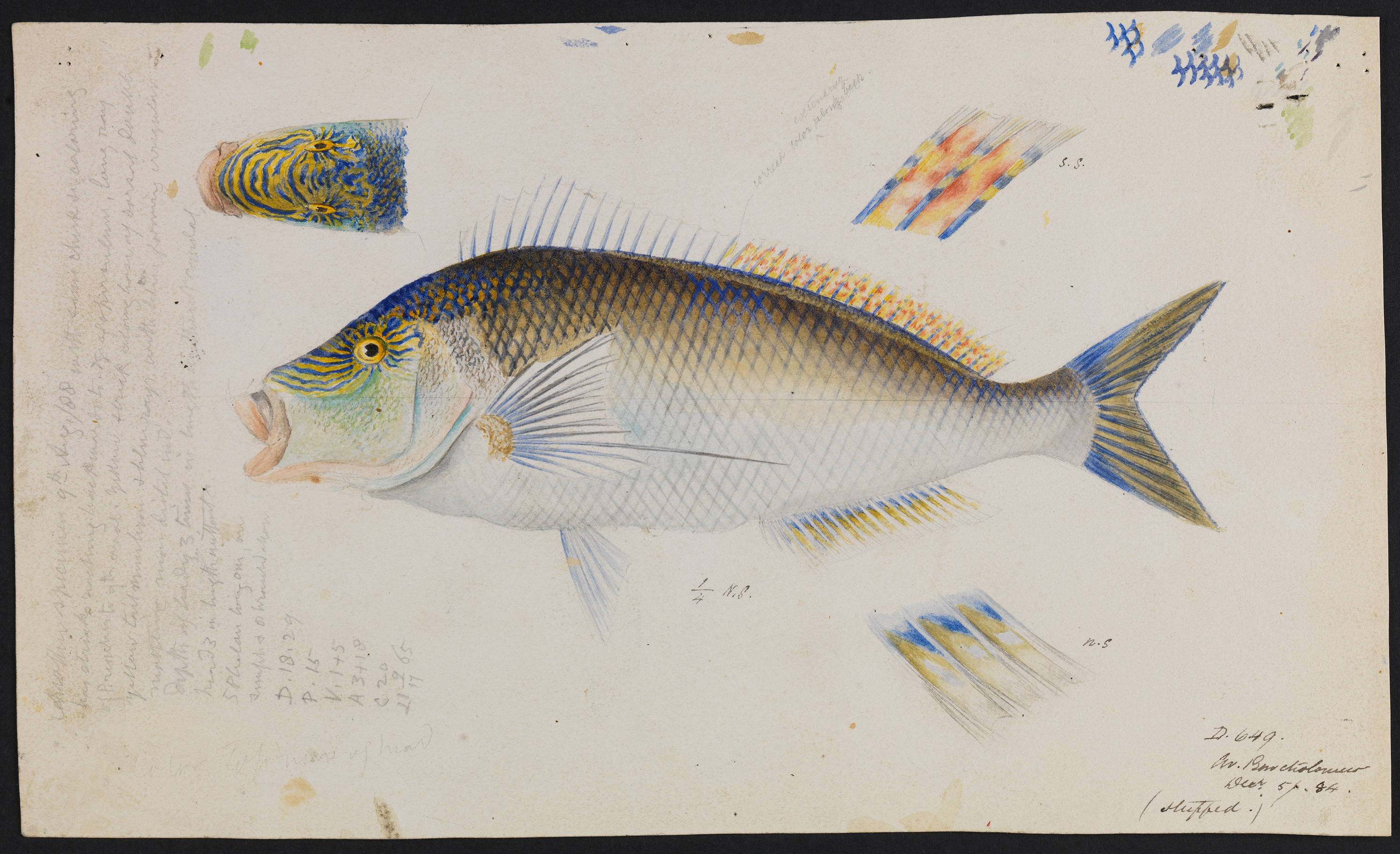
Public Domain (Licensed as Public Domain Mark 1.0)
Plate 174. The Long-fingered Chilodactylus variety, Chilodactylus carponemus (now known as the Blue Morwong, Nemadactylus valenciennesi), found at Port Phillip Heads
I believe the fish figured on this plate to be only a variety of that represented on Plate 173. The specimen figured was caught at Port Phillip Heads in December, 1884.
Discover more fish
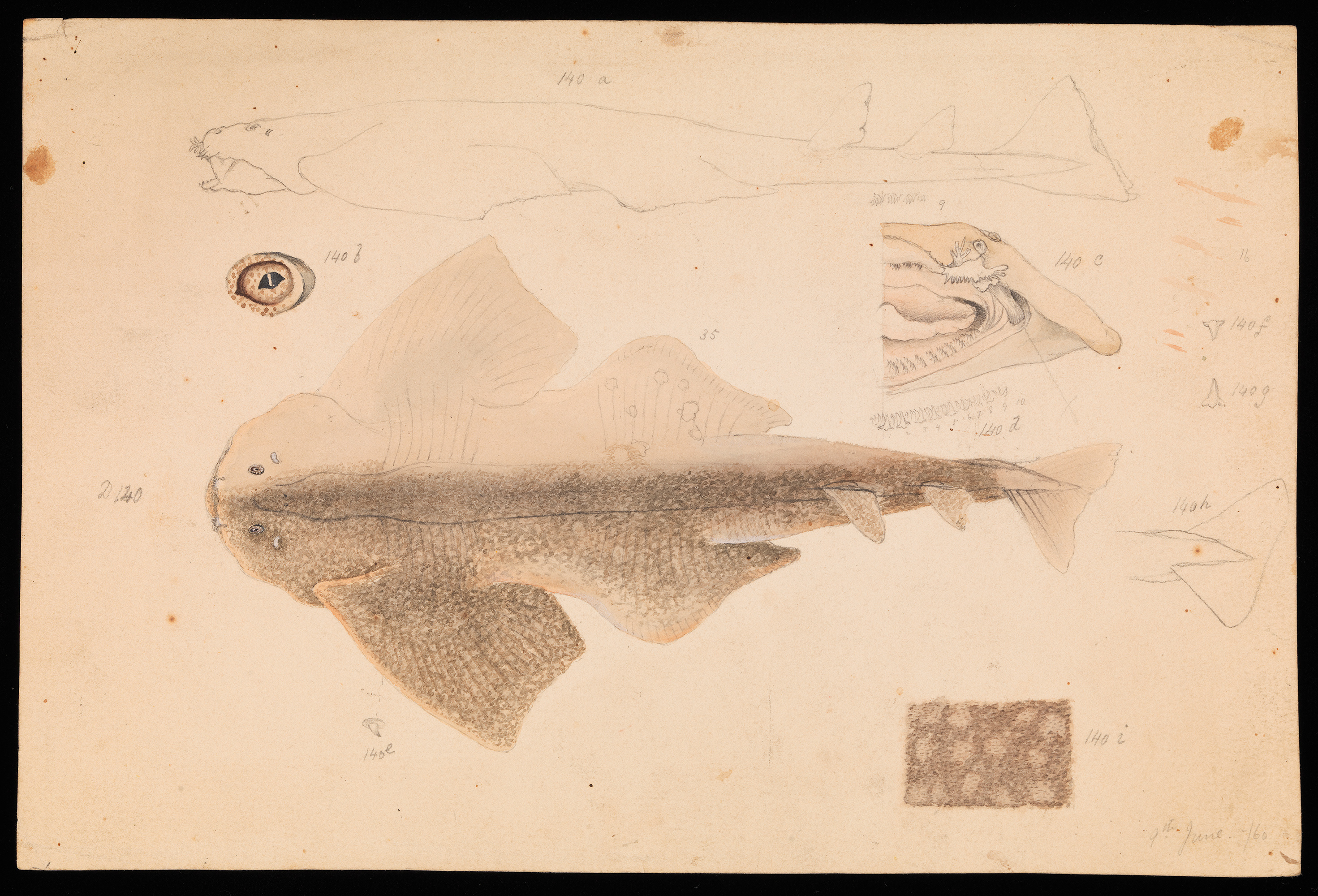
Plate 34. Angel-fish, Rhina squatina (now known as Angelshark, Squatina australis) found at Hobson's Bay
Source: Museums Victoria
Public Domain (Licensed as Public Domain Mark 1.0)
If sailors be good judges of the matter, this fish must be very like an angel, for the Italian fishermen call it "Angelo," the French "Squale ange," and the English-speaking seamen in Britain and America call it commonly "Angel-fish" or "Angel-shark." If the likeness exists at all, it must be quite strong in our Victorian specimens, of which I have had five or six preserved for the Museum collection, all caught in Hobson's Bay, and clearly identical with the common English examples of the species; although, with its small power of swimming, and habit of keeping on the bottom, it is difficult to see how it could pass over so great a space, unless indeed, like some few dog-fish brought up from the dredges in the "Challenger," it may have kept at the bottom all the way. It is a very voracious creature, all our specimens being full of various bottom-keeping fish, as well as Gasteropodous shells…The color varies a little, some of the specimens being brown, and others more greenish than the usual color mentioned above. The skin was formerly used in Europe for polishing wood and ivory work.
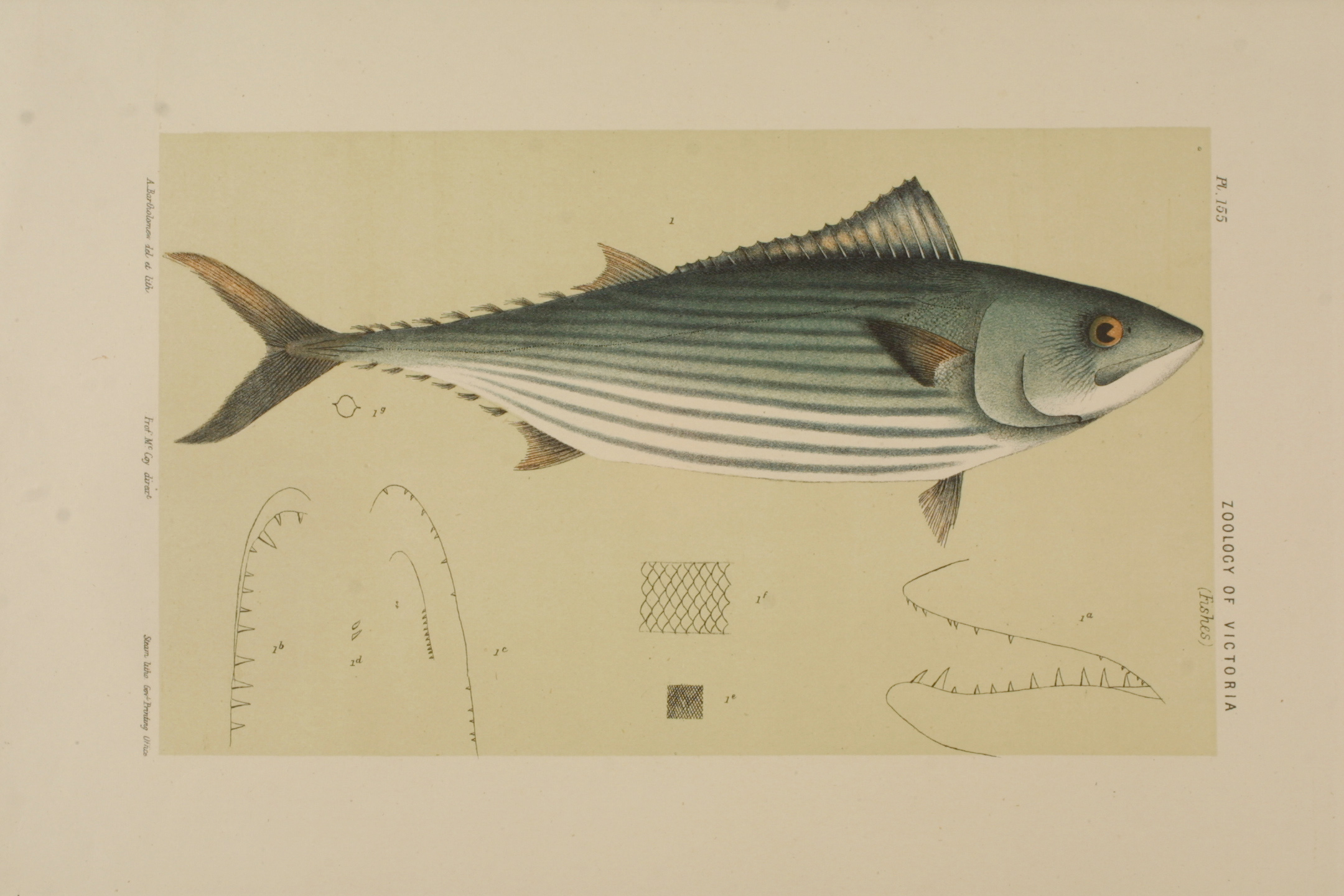
Plate 155. The Melbourne Pelamyd, Pelamys schlegeli (now known as the Australian Bonito, Sarda australis) found in Port Phillip
Public Domain (Licensed as Public Domain Mark 1.0)
The Pelamyds differ from the Tunnies chiefly in their larger teeth. The beautiful species here figured does not agree exactly with any of the preciously known. Its fin-rays are fewer than in P. sarda, and the color streaks are less oblique and more over the sides and belly, and the pectoral fin is larger. The P. orientalis of Japan, which approaches it in many respects, has, according to Schlegel's figure, a more flexuous lateral line and smaller pectoral (its length going about eight and a half in length of body, instead of considerably less than one-eighth, as in our example).
The longitudinal streaks in ours are more numerous, and extend more over belly, and do not conform so nearly to line of back.
The only specimen seen of this fish was caught in Port Phillip Bay on 19th of January, 1877.
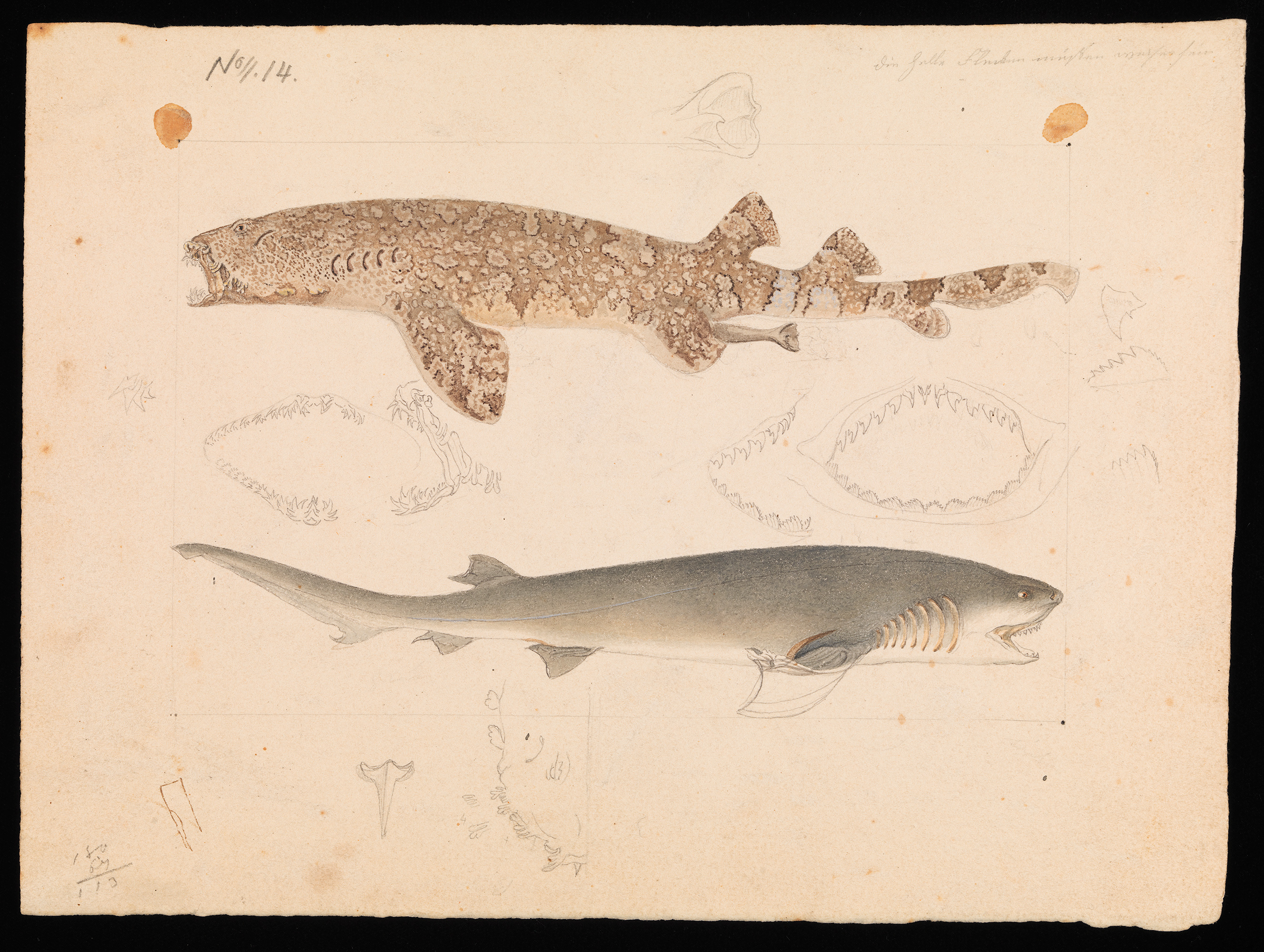
Plate 43, Figure 1. Carpet Shark, Crossorhinus barbatus (now known as the Banded Wobbegong, Orectolobus ornatus)
Plate 43, Figure 2. Seven-gilled Shark, Notidanus (Heptanchus) indicus now known as the Broadnose Sevengill Shark, Notorynchus cepedianus) found in Hobson's Bay
Public Domain (Licensed as Public Domain Mark 1.0)
Banded Wobbegong
This most beautiful Shark is not very uncommon in Hobson's Bay, three fine specimens being in the Museum collection. The coloring varies in size and shape of the cloudings and spottings a little; and the number of lobes into which the skinny appendages of the sides of the head and neck are divided is so irregular that the two sides are often dissimilar in one individual.
Broadnose Shark
The sharks of this genus are easily distinguished from all others by having only one dorsal fin, and the peculiar conformation of the teeth, as well as the great size and number of the gill-openings.
This is one of the rarer Sharks found in Hobson's Bay, from which locality there are three specimens in the Melbourne National Museum, the one above described being the largest of the three, and a female. A smaller male is in the collection, with moderate claspers.
Plate 4. Australian Bream, Chrysophrys australis (actually Black Bream, Acanthopagrus butcheri) caught at Mordialloc Creek and Gippsland Lakes
Public Domain (Licensed as Public Domain Mark 1.0)
The "Bream" of colonists is the chief sport of amateur fisherman, who catch great quantities by rod and line in the brackish water of the mouths of the rivers and creeks, and sea entrances to the Gippsland Lakes, which they enter during the summer months, spawning there about November and December. They go down to the sea again about the end of June, when the cold weather comes on, and may be caught in the sea, commonly about the ends of the piers, with rod and reel during the winter months. The bait is usually small fish, or small shrimp or worms. The fish is moderately good for the table, except at spawning time, when the flesh becomes flabby, and the colors dull. The weight rarely exceeds 6 lbs., and is usually much less. The largest specimen I have seen, now in the Museum is 17 ½ inches long, but differs in nothing from the above example in proportion, or numbers of fin-rays and scales. It is from the Mordialloc Creek. Young specimens, 4 ½ inches long, from Hobson's Bay, agree exactly in the number and disposition of the scales and fin-rays with the largest.
The species has not been figured before.
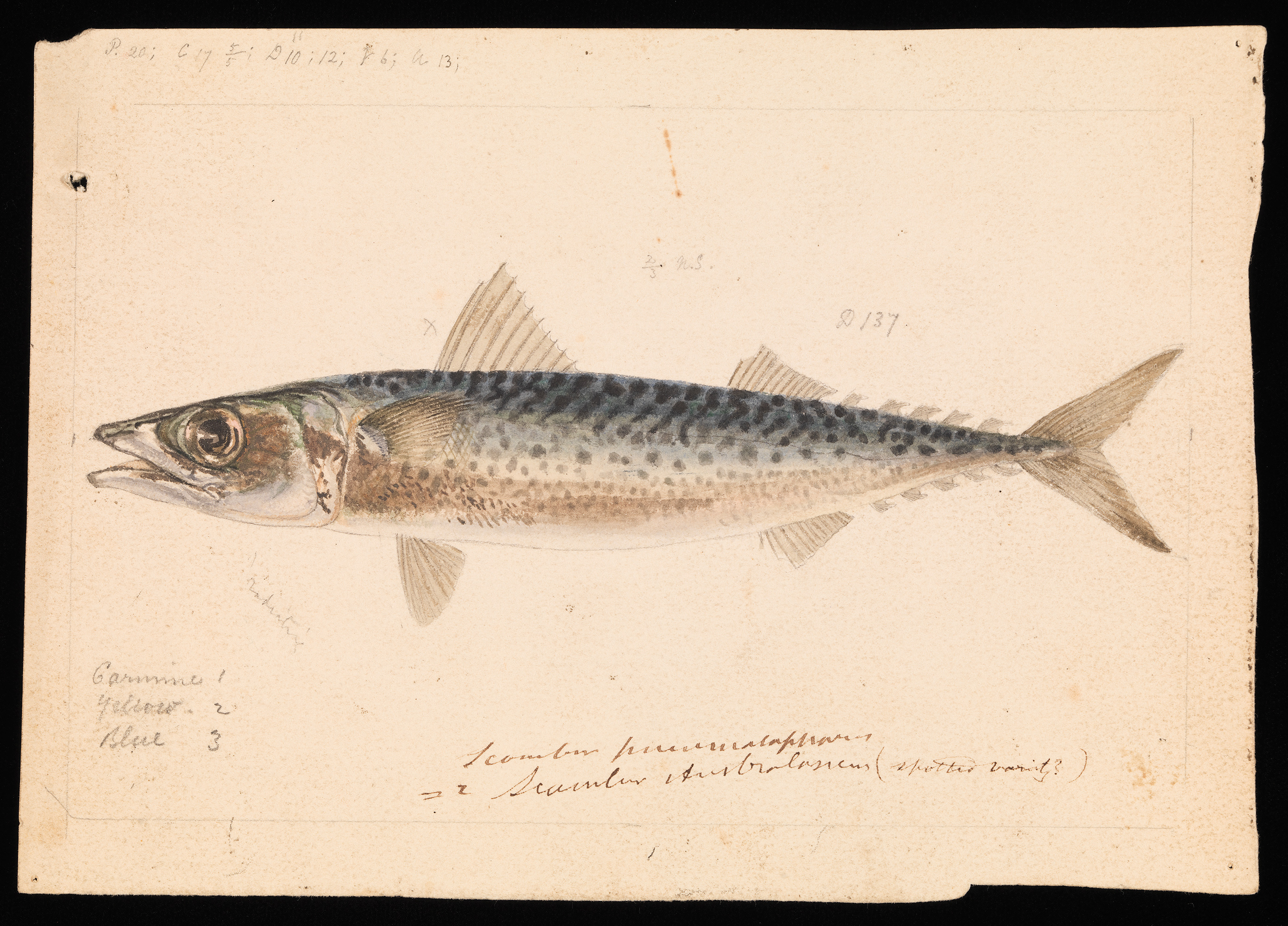
Plate 28. The Southern Mackerel, Scomber pneumatophorus (now known as Blue Mackerel, Scomber australasicus) found in Hobson's Bay
Source: Museums Victoria
Public Domain (Licensed as Public Domain Mark 1.0)
I cannot find the slightest difference between our Hobson's Bay and Mediterranean specimens on comparison. The speckling of the lower part of the sides and belly is, when alive, like that of the Spanish Mackerel (S. colias), but when preserved for some time in spirit there disappear, leaving the belly and lower part of sides plain silvery, as described in the Scomber Australasicus of Cuvier and Val., the claims of which to rank as a distinct species seems to me very doubtful. The eyelids leave the middle third of the eye bare. The preoperculum is radiatingly striated and of yellowish-bronzy tint.
This beautiful fish occurs rarely in Hobson's Bay, generally in the month of June, and in considerable numbers when it does appear.
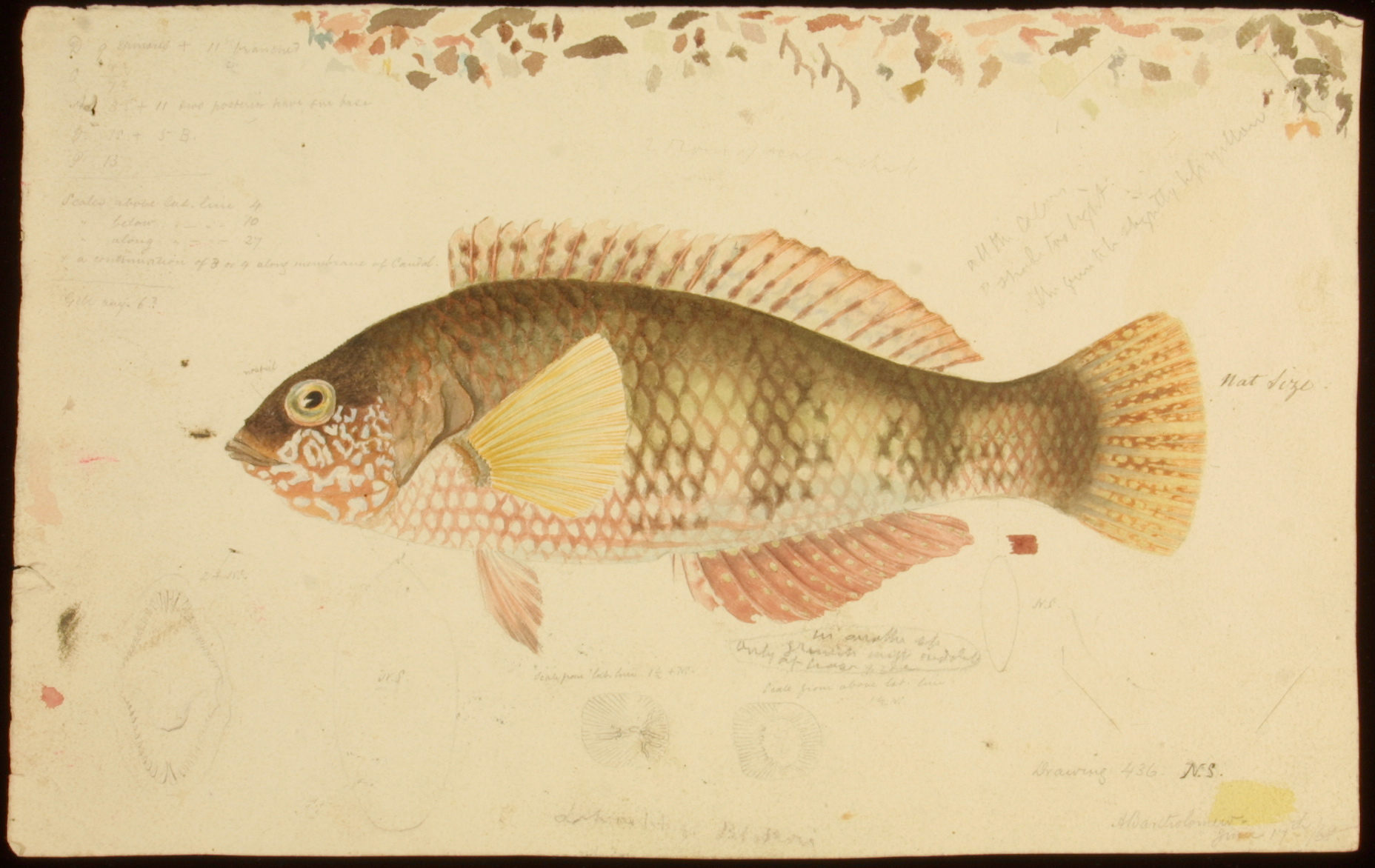
Plate 134. Bleeker's Parrot-fish, Labrichthys bleekeri (now known as the Bluethroat Wrasse, Notolabrus tetricus)
Public Domain (Licensed as Public Domain Mark 1.0)
This species like the other Parrot-fishes may be seen occasionally in the fish shops in April, May, and June, as beautiful curiosities rather than for sale for the table, the flesh not being generally esteemed. Small crustacea are found in the stomach, and obviously constitute the usual food.
This fish has not been figured before.
Plate 5. Spiny-sided Butterfly-Gurnard, Lepidotrigla vanessa (now known as Butterfly Gurnard, Lepidotrigla vanessa) caught at Hobson's Bay
Source: Museums Victoria
Public Domain (Licensed as Public Domain Mark 1.0)
The only specimens I have seen of this beautiful fish were caught in Hobson's Bay in the month of August in different years. It inhabits deep water and feeds in small shells and Crustacea. Like most of the gurnards, it groans or makes a grunting noise when taken out of the water until it dies.
The beautiful coloring of this fish in the fresh state has not been represented before.
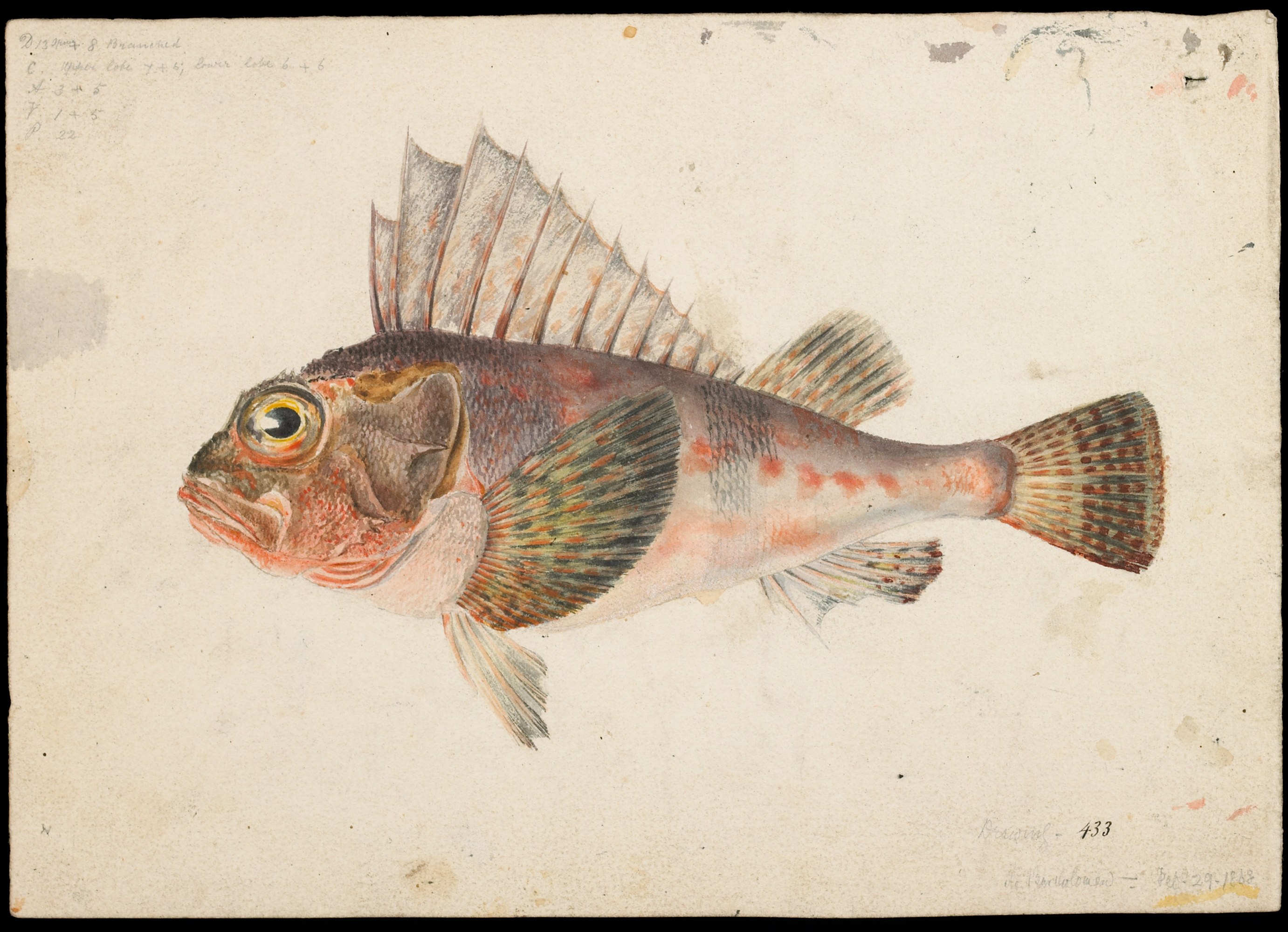
Plate 193. The Spotted Red Gurnet-Perch, Neosebastes scorpænoides (now known as the Ruddy Gurnard Perch, Neosebastes scorpaenoides)
Public Domain (Licensed as Public Domain Mark 1.0)
This very common fish in the Melbourne markets in winter is confounded by fisherman and dealers with the Banded Red Gurnet-Perch (Sebastes percoides)-(figured on our plate 33, of the Fourth Decade)-under the name Red Gurnet. It is easily distinguished by wanting the vertical or transverse dark bands, and even generically by the lower rays of the pectoral fins being branched like the others, while in the Sebastes several of the lower rays are unbranched and extended beyond the membrane.
Now figured for the first time, although so abundant on our coasts and in the markets.
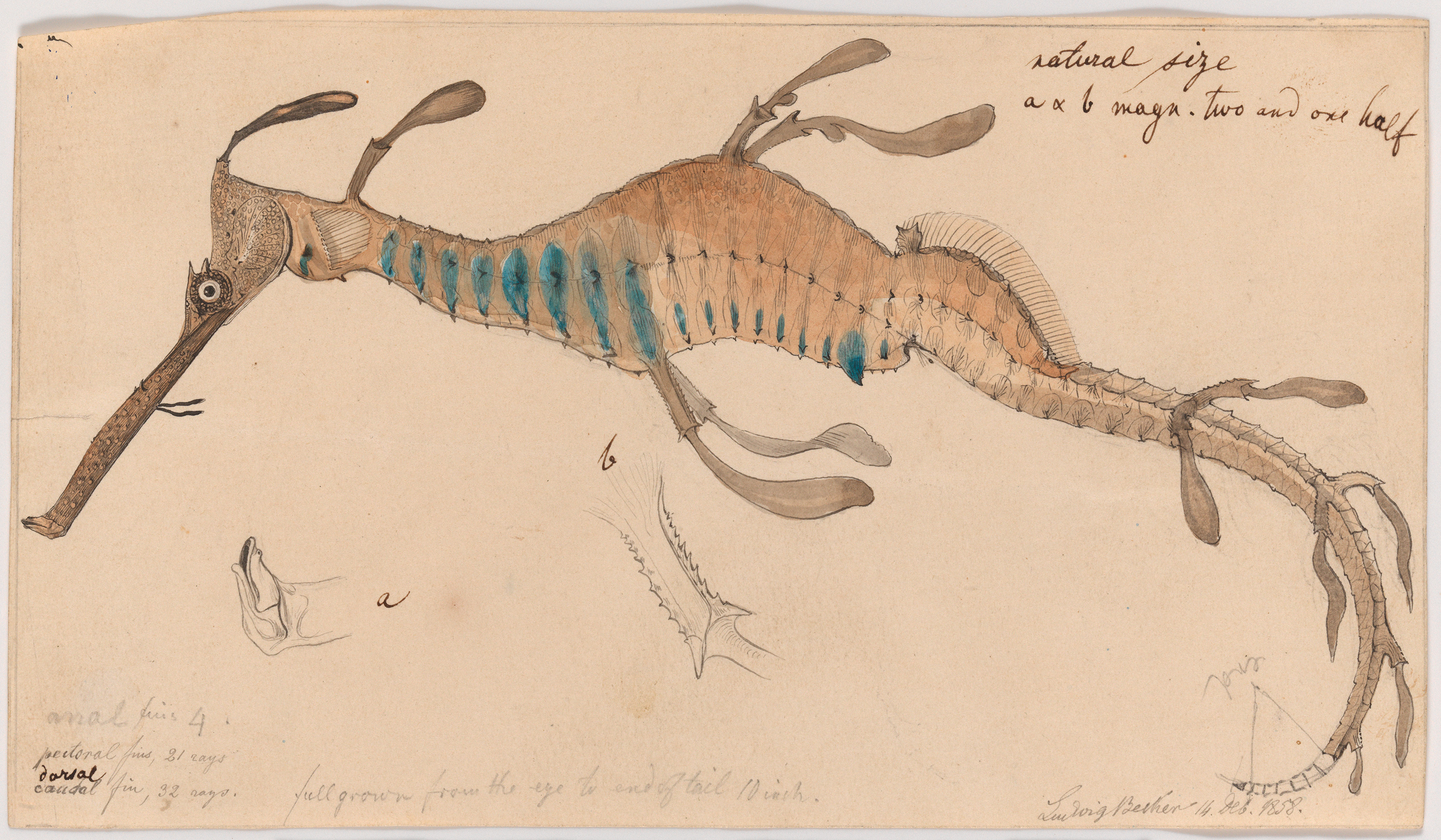
Plate 65, Figure 1. The Leafy Sea-Dragon, Phyllopteryx foliatus (now known as the Common or Weedy Seadragon, Phyllopteryx taeniolatus) found in Portland/Hobsons Bay/Western Port
Source: Museums Victoria
Public Domain (Licensed as Public Domain Mark 1.0)
This most singular-looking fish must have struck the Aborigines with some superstitious feeling, as I have seen a native drawing of a ghost, manifestly inspired by its strange form. The leafy appendages resemble bits of brown seaweed, and vary slightly, frequently showing a rich blue color. The above dull colors are those I have seen in one living specimen, and several just dead and quite fresh. The brilliantly colored fish represented in the Zoological Proceedings for 1865, plate 14, and in Mrs. Meredith's "Tasmanian Friends and Foes," plate 7, with yellow, crimson, and purple hues, is really a distinct species, for which I propose the name P. altus, because the greatest height or depth of the body exceeds the length of the snout from anterior edge of orbit, and equals about ten of the posterior body segments, or mid-row of spines in front of anal, while the greatest depth of the body in our common Victorian dull-colored species, as here figured, and as also in Shaw's original figure of the species, is scarcely ¾th the length of the snout, and only measures about 7 of the lateral spines of the hinder body segments in front of the anal.
Like the Pipe-fishes, the males of this fish carry the eggs in a soft membrane on the lower side of the tail, without, however, having a distinct pouch like the males of the true Pipe-fishes.
The Sea-dragons swim horizontally, like ordinary fish, and not in a vertical position, like Sea-horses.
Common at Western Port, not very uncommon in Hobson's Bay, and Geelong and Portland, from all of which localities specimens are in the National Museum.
Plate 14. Gippsland Perch, Lates colonorum (now known as Estuary Perch, Macquaria colonorum), found at Gippsland Lakes, Sandridge - mouth of the Saltwater River (Maribyrnong River)
Source: Museums Victoria
Public Domain (Licensed as Public Domain Mark 1.0)
This fish occurs in great numbers in the Gippsland lakes opening into the sea, and is brought to the markets at Melbourne in large quantities in the cold months; it also occurs at Sandridge and at the mouth of the Saltwater River. The flesh is moderately good for the table.
The previously described species of Lates inhabits the Nile and mouths of the large Indian rivers.
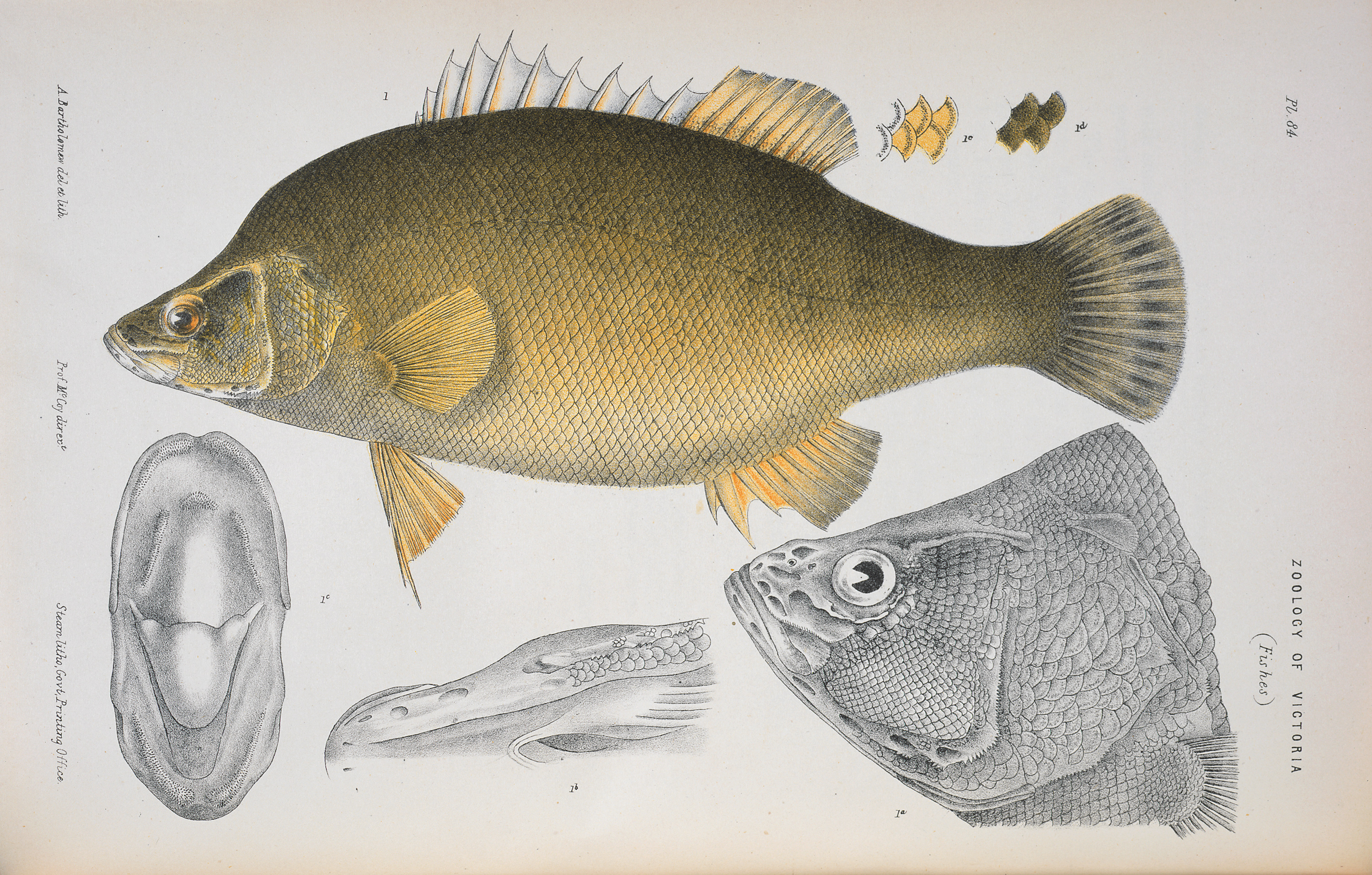
Plate 84. Murray Golden Perch, Ctenolates ambiguus (now known as the Golden Perch, Macquaria ambigua)
Source: Museums Victoria
Public Domain (Licensed as Public Domain Mark 1.0)
This beautiful fish is much esteemed for the table, and is commonly about 3lbs. or 4lbs. weight. An enormous specimen, of which the dimensions are given, (total length of 1 foot 11 inches) weighed 8 3/4lbs.
The general hue, like the fashionable color "old gold," is a most striking and beautiful characteristic of this fish, when fresh, distinguishing it from the many other Murray-River fish with which it comes plentifully to the market, and well warranting its popular name amongst the colonists of "Golden Perch." It has not been figured of its natural colors before.
Common in the River Murray and its branches, but not found in any river of Victoria flowing southwards to the sea.
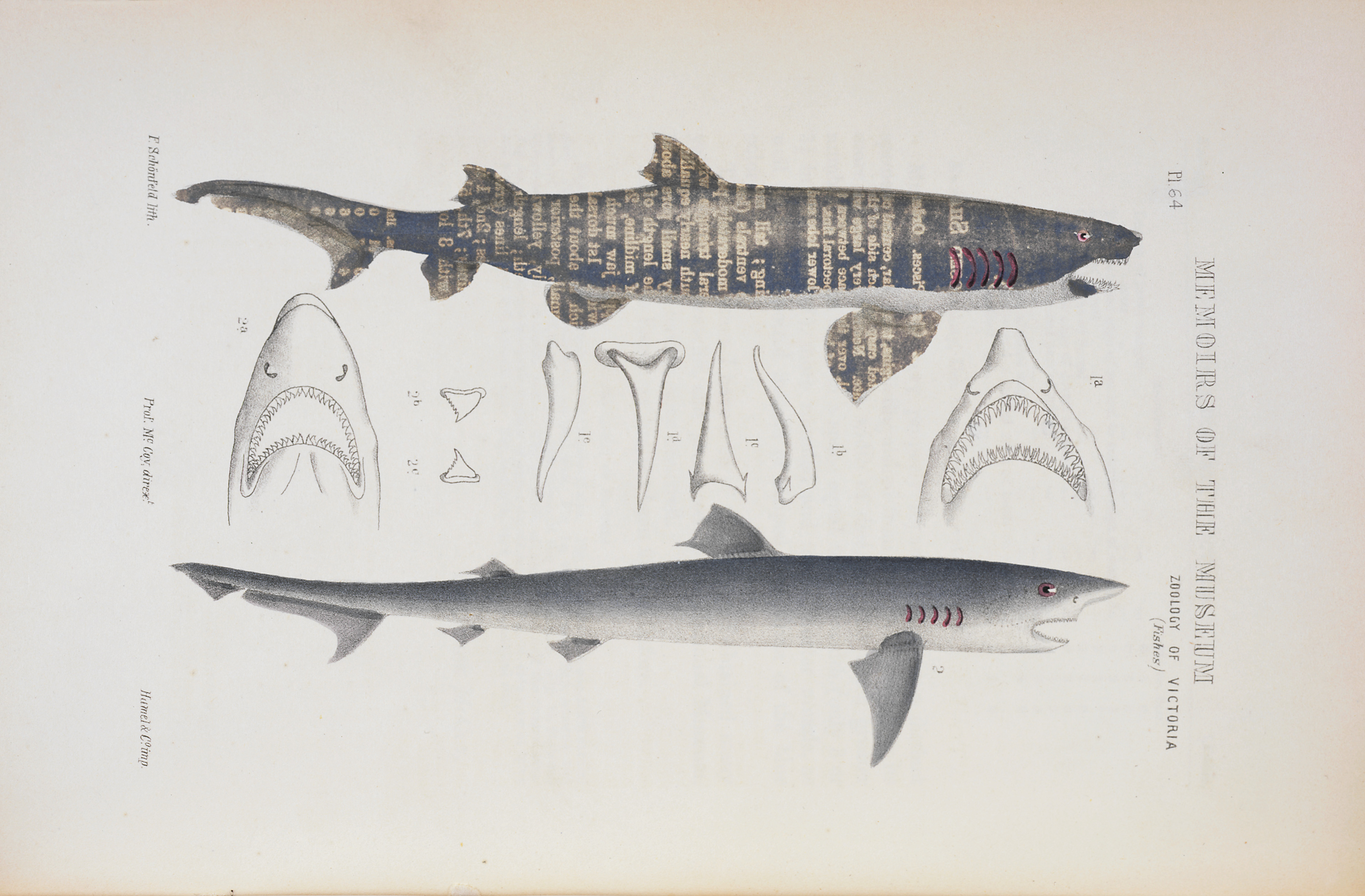
Plate 64, Figure 1. The Long-toothed Bull-Shark, or Shovel-nosed Shark, Odontaspis taurus (now known as Grey Nurse Shark, Carcharias taurus) found in "The Bay"
Plate 64, Figure 2. Australian Tope Shark, Galeus australis (now known as the School Shark, Galeorhinus galeus)
Grey Nurse Shark
This is one of the largest and most ferocious of our Sharks, and so common as to be an object of great terror to bathers, who occasionally suffer grievous lacerations when caught swimming even near the shore, towards which the species approaches into unusually shallow water.
The common name of Shovel-nosed Shark is given by the bay fisherman often to this species from the outline of the head, seen from above, being like the point of an unworn American or paddocking shovel in size and shape.
Enormous jaws of this species may often be seen in the fisherman's huts along the shore from Picnic Point to Mordialloc, and are easily known by the length and slenderness of the teeth, which are very numerous, about an inch long, and set in three of four rows on the under jaw, and two rows on the upper one, making a fearful armature of spikes, the lacerated wound produced by which is almost always fatal. One or two small teeth are remarkable as intervening between the third and fourth large ones on each side.
It is a very active and voracious species driving shoals of fish before it in terror as it dashes along; and it is one of those which will occasionally dart out of the water at a piece of meat, or the oar of a boat, or a man's arm or leg.
The great quantity of fish fit for the table devoured by this species induced the Government a few year ago to place large sums on the estimates to prevent its increase, by offering a reward to the fisherman for each one killed according to its size; and for want of authentic figures of the different species to refer to, the authorities were ludicrously imposed upon by the fishermen bringing myriads of the harmless little blunt-toothed Dog-fish and other small species of Sharks, which they gravely presented as the young of this gigantic one, and got paid for, at so much a foot, to the amount of many hundreds of pounds.
Its geographical range is very great, extending to the Cape of Good Hope and to the American coast, where individuals are often found to have remains of men and clothing in them when cut up; and it is the commonest of the large sharks seen swimming round our bathing enclosures in Hobson's Bay.
School Shark
This is a common Dog-fish in Hobson's Bay, usually from four to five feet long, of a graceful tapering form...
The young when brought forth are about 1 foot long, from thirty to fifty being found in a single female. At this size the unabsorbed portion of the egg, 1 inch in diameter, hangs from them. It is a very interesting sight to see, in the summer, the whole band of twenty of thirty little ones swimming about after, and generally under the parent, with an obvious display of mutual affection which is not looked for in fish which are not viviparous like this.
Like the English Tope (which has thirty or forty young twice a year), this is a most prolific Dog-fish, and is so abundant and so voracious for its size as to seriously affect the supply of the smaller sorts of fish, and is much hated by the fisherman accordingly. It is exceedingly active, and has the same habit as its European representative of swiftly rolling the line round its body when hooked, coming thus to the surface. It is more frequently caught by persons fishing with a line from the end of the piers for Flatheads than the latter.
This species has not been figured before.
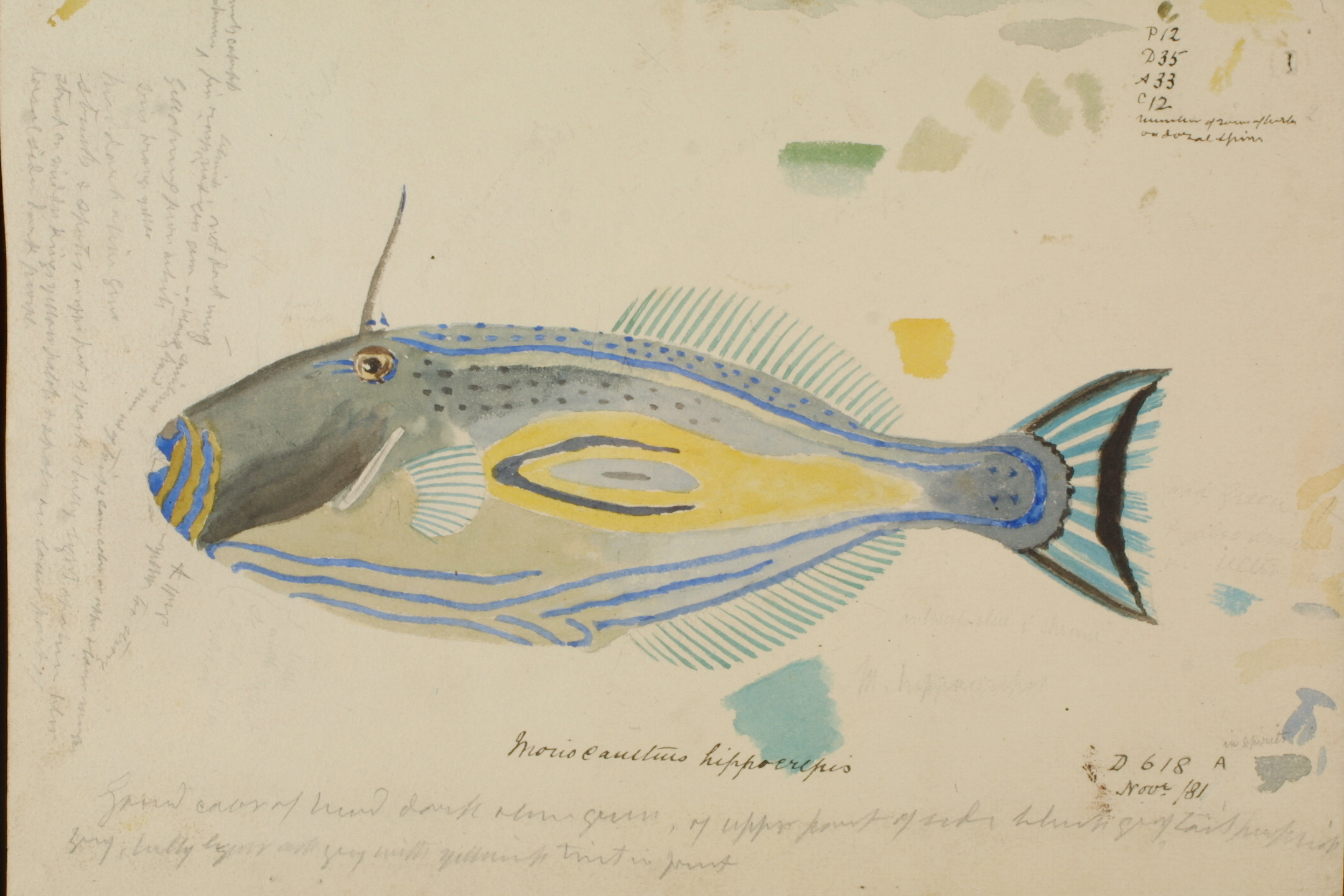
Plate 125. The Horse-shoe-marked Leather-jacket, Monacanthus hippocrepis (now known as the Horseshoe Leatherjacket, Meuschenia hippocrepis)
Public Domain (Licensed as Public Domain Mark 1.0)
The "Leather-jackets," as the species of Monacanthus are popularly called, are numerous in Australia, and are remarkable for the varied character of the small roughnesses which cover the skin outside, obscuring the scales, which are, however, distinctly visible on the inner side; these roughnesses are sometimes pointed spines, or with variously bent or dilapidated tips. The spine of which the first dorsal fin is mainly composed, when raised is fixed in that position immovably by a short, thick, bony piece falling under a notch in its base; the spine cannot be lowered until this so- called triggerbone is depressed.
This beautiful species, with its conspicuous horse-shoe-shaped black mark on the golden-yellow patch on each side, seems to have suggested the fountain (GREEK WORD - SEE ORIGINAL DOCUMENT), near Mount Helicon, sacred to the Muses, produced by a stroke of Pegasus' hoof, to Messrs. Quoy and Gaimard in giving it the specific name. Like most of the other Leather-jackets, it is greatly infested with a large Isopodous crustacean, which burrows in the hinder part of the abdomen.
Not uncommon at the Heads. The specimen figured was got by blasting the Lightning Rock there. It has not been figured of the colors of life before. Like the other Leather-jackets, it is good for food, although reputed poisonous.
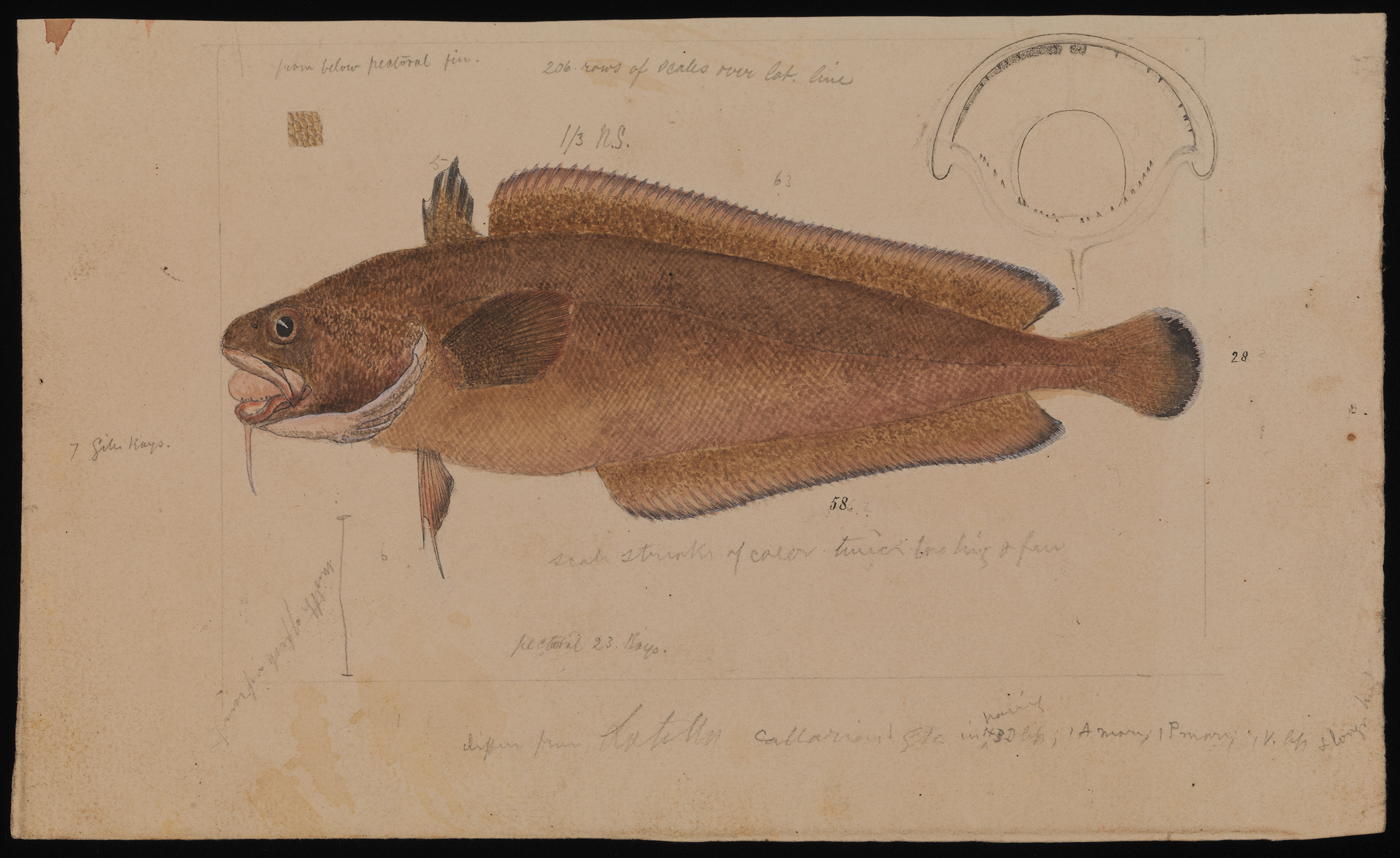
Plate 19. The Small-scaled Rock Cod, Lotella callarias (now known as Largetooth Beardie, Lotella rhacinus), found in Port Phillip Bay
Source: Museums Victoria
Public Domain (Licensed as Public Domain Mark 1.0)
This fish is much rarer than the ordinary Rock Cod; being caught however at the same time of year, and in similar localities in Port Phillip Bay. It is easily distinguished, even without even without the characters of the mouth, by the narrow uniform brown color and very much smaller and more numerous scales. It is moderately good for the table, but not in much request.
This species has not been figured before.
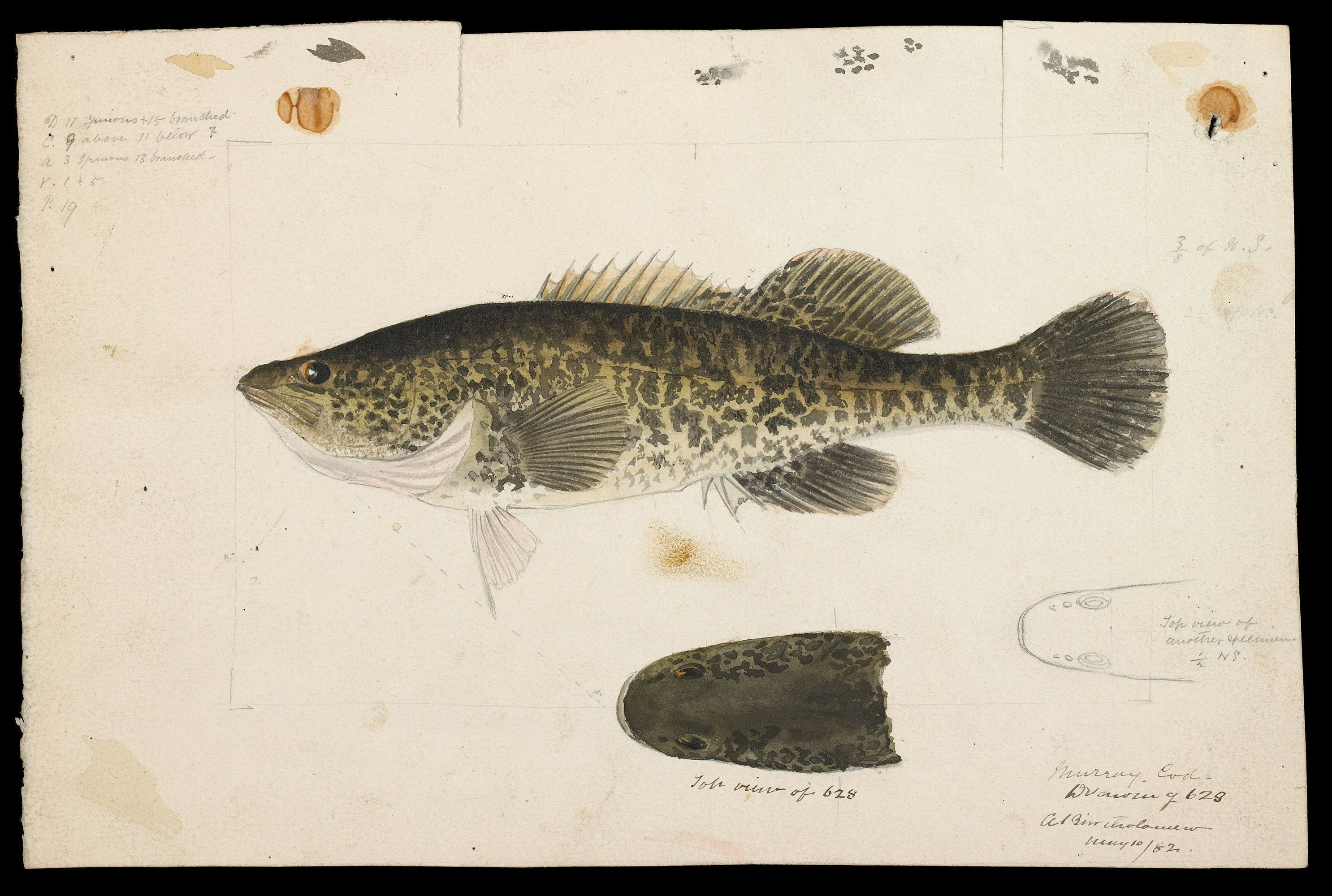
Plates 85-86. The Murray Cod-Perch, Oligorus macquariensis (now known as the Murray Cod, Maccullochella peelii)
Public Domain (Licensed as Public Domain Mark 1.0)
This great Cod-Perch is well known under the popular name of "Murray Cod" from its great abundance in the Murray River, and some fancied resemblance to a Cod, to which it has no affinity and little likeness. It is by far the largest of all our fresh-water fish, and is in request for the table all the year round. It sometimes reaches 100lbs. in weight, and examples of 40lbs. are common. It feeds voraciously on fish and crustacea; twenty full-grown specimens of the small Murray Crayfish (Astacopsis bicarinatus) were taken from the stomach of the specimen figured in our Plate 85, which measured three feet four and a half inches in length.
Very abundant in the Murray and all the rivers flowing into it, but not found naturally in any of the rivers of Victoria flowing south. The Acclimatisation Society many years ago introduced it for the first time into the Yarra, where it is now established, but does not thrive, although its voracity has sensibly diminished the numbers of several of the native fishes of that river, particularly the Blackfish (Gadopsis gracilis) and the Yarra Herring or Australian Grayling (Prototroctes maræna), which have now disappeared from the lower parts of the Yarra altogether.
Plates 85-86. The Murray Cod-Perch, Oligorus macquariensis (now known as the Murray Cod, Maccullochella peelii)
Public Domain (Licensed as Public Domain Mark 1.0)
This great Cod-Perch is well known under the popular name of "Murray Cod" from its great abundance in the Murray River, and some fancied resemblance to a Cod, to which it has no affinity and little likeness. It is by far the largest of all our fresh-water fish, and is in request for the table all the year round. It sometimes reaches 100lbs. in weight, and examples of 40lbs. are common. It feeds voraciously on fish and crustacea; twenty full-grown specimens of the small Murray Crayfish (Astacopsis bicarinatus) were taken from the stomach of the specimen figured in our Plate 85, which measured three feet four and a half inches in length.
Very abundant in the Murray and all the rivers flowing into it, but not found naturally in any of the rivers of Victoria flowing south. The Acclimatisation Society many years ago introduced it for the first time into the Yarra, where it is now established, but does not thrive, although its voracity has sensibly diminished the numbers of several of the native fishes of that river, particularly the Blackfish (Gadopsis gracilis) and the Yarra Herring or Australian Grayling (Prototroctes maræna), which have now disappeared from the lower parts of the Yarra altogether.
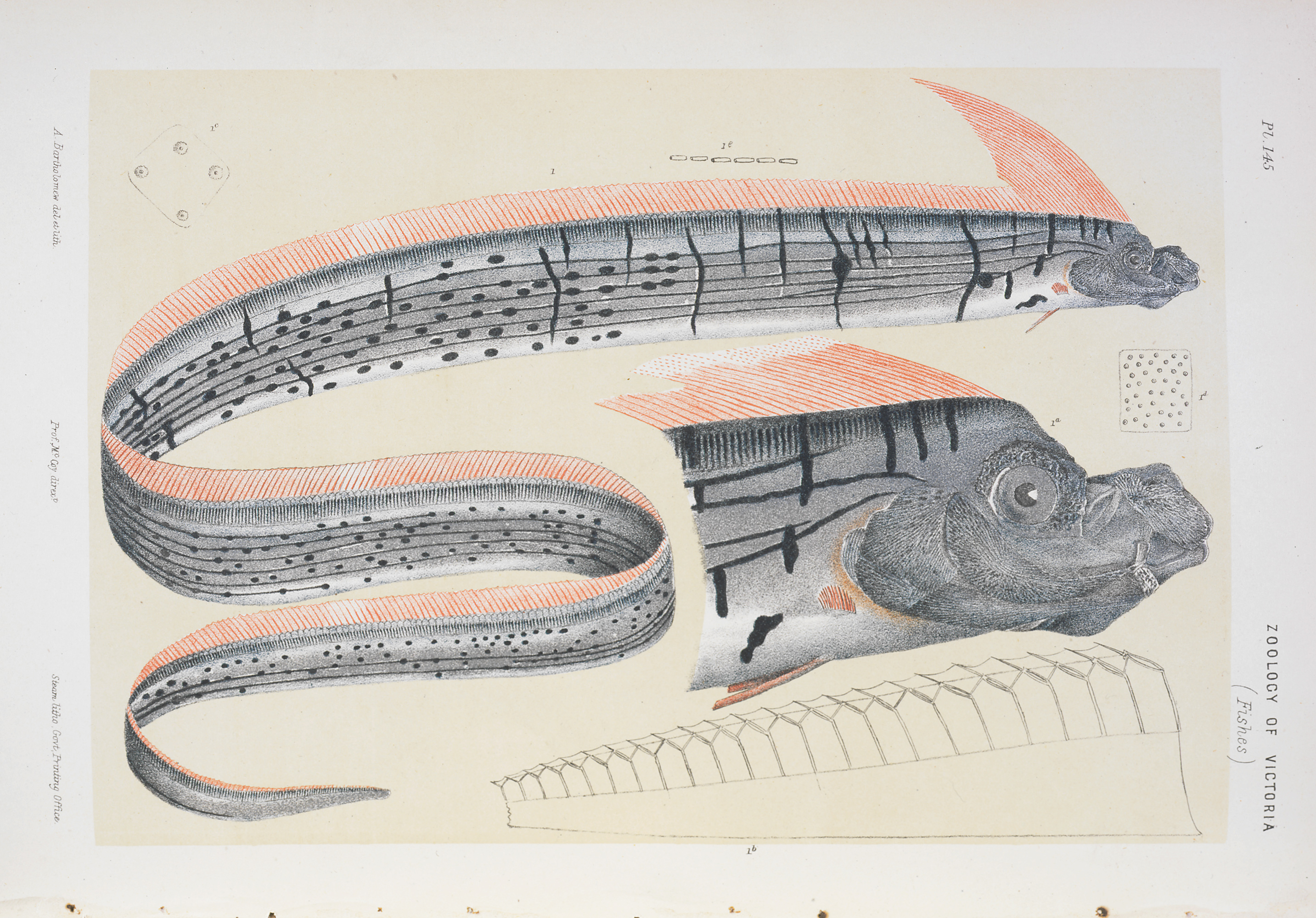
Plate 145. Banks' Oar-Fish, Regalecus banksi (now known as the Oarfish, Regalecus glesne) found between Victoria and Tasmania
Public Domain (Licensed as Public Domain Mark 1.0)
So few examples of this fish have been observed, and those described were so imperfect, that I am glad to be able to give a figure and description of an Australian one, caught in the waters between the Tasmanian and Victorian coasts, in May, 1878. The tail is more nearly perfect than in any other described one, although, unfortunately, slightly mutilated now in stuffing, but to so small an extent that I give a figure of this part, natural size, to show the defect exactly.
The silvering of the surface comes off at every touch, like the dust on a moth's wing.
I have little doubt that this fish is the "Sea Serpent" of the popular accounts in the newspapers of observations made far out at sea by captains of ships, perfectly trustworthy, but not sufficiently instructed in zoology to give good descriptions. The Regalecus like the Trachypterus, is so excessively fragile that it is obvious it could only live in the depths of the ocean, far from land, where the water is still and free from the turbulence of the shallow soundings near the coasts, in which the majority of ordinary fishes flourish; and the few specimens which have been caught were dead or dying, and much damaged in the shallow waters. As one recorded measured 24ft. with a depth of about 1, we have here no inconsiderable approach to the dimensions reported of the "Sea Serpent." Making some reasonable allowance for the portion not exposed above the surface, and bearing in mind that many fishes continue to grow as long as they live, we may reasonably expect far longer specimens to exist in their proper habitats far from the land, and occasionally showing on the surface there with just the appearance usually described, namely, a small head, with a "tall crest" and a fin along the back. Now there are Sea Snakes, well known, of small size, but no snakes or serpents have a crest and fin along the back; while the description is fairly matched by our fish. I think captains of ships are too familiar with Seals, Conger Eels, or long stretches of ocean seaweeds to mistake any of them, as different authors have suggested, for a "Sea Serpent," but the Regalecus, from its great rarity, would be quite unfamiliar, and its form would suggest a serpent to an untrained observer.
The specimen caught by three Cullercoats fishermen, 6 miles from shore, in 20-30 fathoms water, was first seen lying on its side on the top of the water, obviously dying. As they approached it righted itself and came towards them with a gentle, lateral undulating motion, showing its crest and part of the head above water. On being struck it made off with a vigorous vertical undulating motion, disappearing rapidly below the surface. It was brought to Newcastle next morning, and is the one described by Mr. Hancock and Dr. Embleton in the Annals of Natural History for July, 1849. Being destitute of teeth the creature is, of course, perfectly harmless, and probably feeds on minute crustacea and medusæ.
Plate 33. Banded Red Gurnet-Perch, Sebastes percoides (now known as Reef Ocean Perch, Helicolenus percoides) found on the Victorian Coast
Source: Museums Victoria
Public Domain (Licensed as Public Domain Mark 1.0)
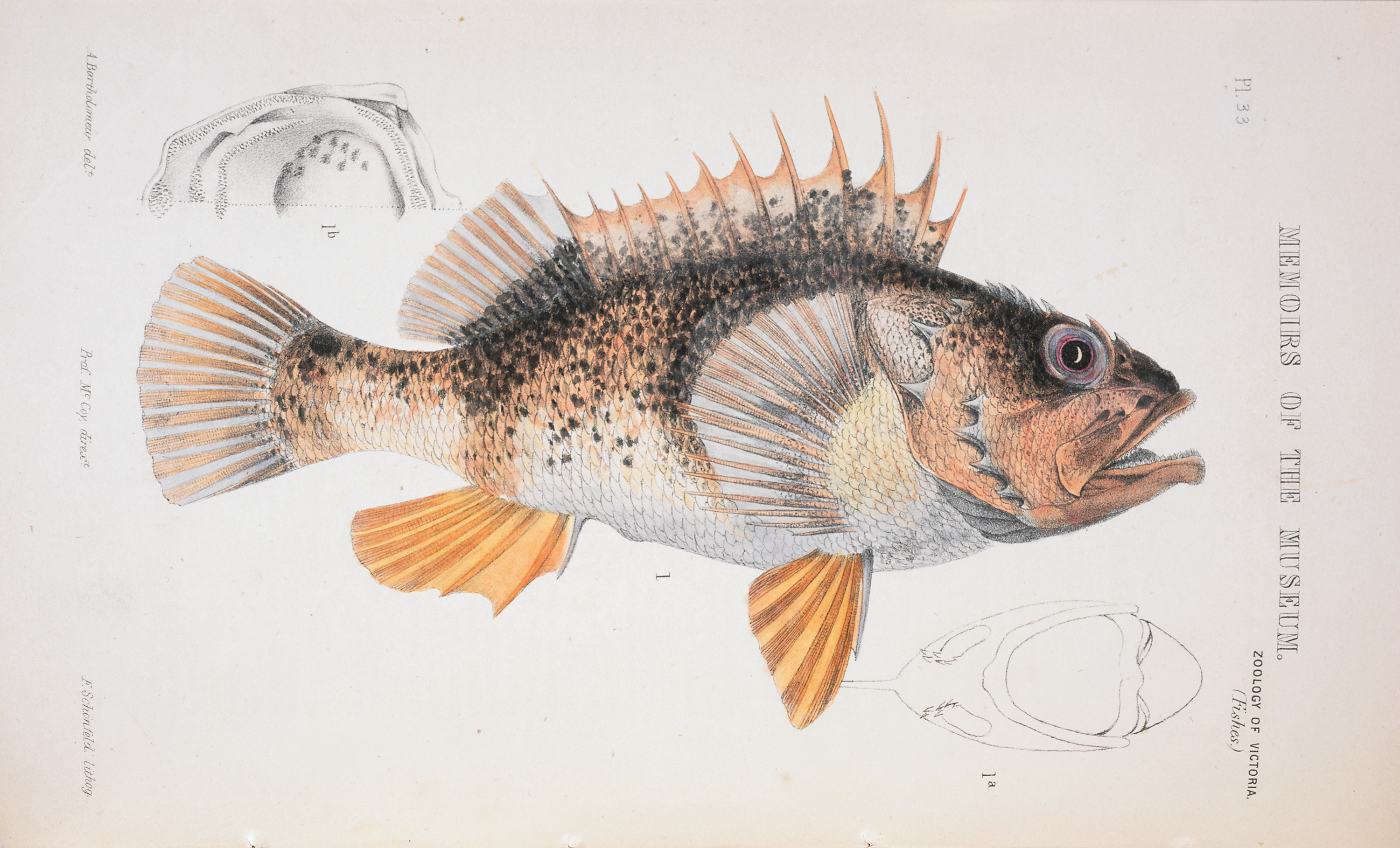
The fishes of this genus (Sebastes) resemble Scorpœa, but are distinguished by the scaly covering of all the plates of the head up to the front edge of the orbit, and by the absence of the fleshy or skinny filaments to the head and the sides of the body found on that genus.
The present species is popularly called "Gurnet", or "Gurnet perch", by the fisherman and dealers, as well as the more common Neosebastes scorpœnoides and N. pandus.
It has not been figured with the colors of life before.
Rather rare on the Victorian coast.
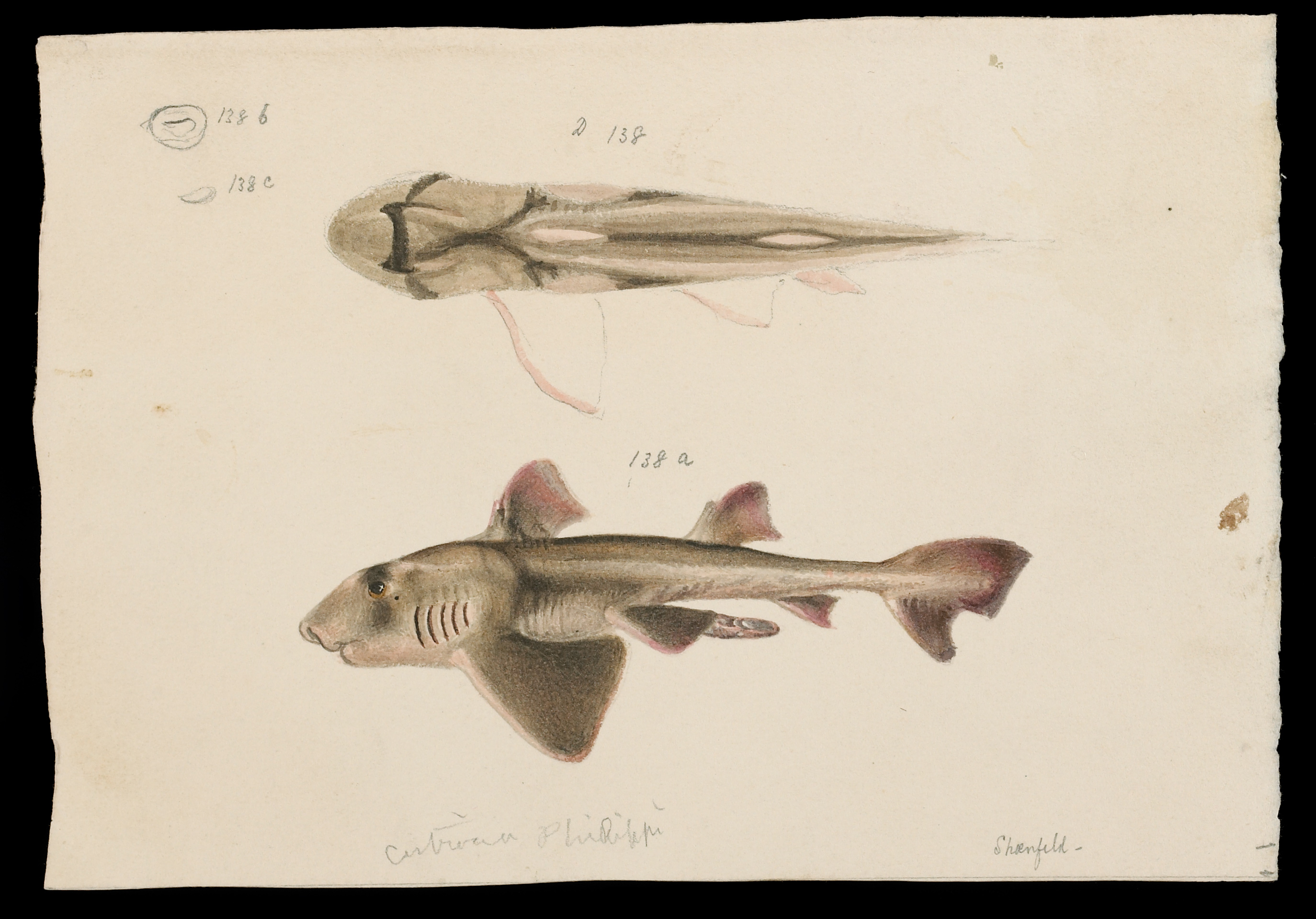
Plate 113. Port Jackson Shark, or Bull-dog Shark, Heterodontus phillipi (now known as the Port Jackson Shark, Heterodontus portusjacksoni) found in Hobson's Bay
Public Domain (Licensed as Public Domain Mark 1.0)
This shark, so famous amongst zoologist and geologists under the name of Cestracion, or Port Jackson Shark, is called the Bull-dog Shark by Victorians, from the form of the head and muzzle. No other Shark has any approach to the extraordinary structure, shape and arrangement of the teeth of this genus, which has been taken by Agassiz and Owen as illustrating in our time the European fossil genus Cochliodus of the Carboniferous Limestone formation; to which, in my opinion however, the relationship is not really close. It is common in Hobson's Bay. The stomach is filed with fragments of shells. There are only two eggs at a time, laid once a year. These eggs are very remarkable objects, not uncommon on the shore; they are conical in shape, about 6 inches long, and surrounded with two broad keels extending spirally and obliquely round the egg from one end to the other, like six turns of a broad screw; the substance is of a tough, dark brown, horny appearance. The stellated form of the shagreen is quite unlike that of any other genus of Sharks.
Plate 27, Figure 1. Australian Rockling, Genypterus australis (now known as Rock Ling, Genypterus tigerinus)
Source: Museums Victoria
Public Domain (Licensed as Public Domain Mark 1.0)
The stomaches of those opened were full of shrimps as in the European Rockling (Motella), with which the colonial fisherman see some relation. It is not known whether our Genypterus makes the curious nest for preservation of its eggs, well known in the 5-bearded Rocklings of England.
Abundant on our coasts in the winter season; not uncommon in the market, and moderately good for the table. It rarely reaches three feet in length, and is usually much less.
Plate 44, Figure 1. The Barracouta, Thersites atun (now known as the Barracouta, Thyrsites atun) found in coastal Victoria?
Plate 44, Figure 2. The Tunny, Thynnus thynnus (now known as the Southern Bluefin Tuna, Thunnus maccoyii) found in Hobson's Bay
Source: Museums Victoria
Public Domain (Licensed as Public Domain Mark 1.0)
Barracouta
There can be no doubt of the identity of our Australian Barracouta and that so abundant at the Cape of Good Hope; and Dr. Richardson's supposed T. altivelis must, I fancy, be founded on some mistake. The stomach usually contains many small fishes of its own and other species.
The Barracouta is a tolerably good fish for the table, and is abundant in the waters round the coast in all the colder months of the year.
Tunny
On account perhaps of the beef-like redness of the flesh, it is not prized as food, and the fisherman here, as at home, note the greater heat of the body than in other fish, due to this condition of the muscles from the abundance of oxygenated blood.
It reaches 10 or even 20 feet in length in Europe and America but our individuals are rarely more than 4 feet long, and must be all young; Belon's account of one reaching 32 feet in length has not been paralleled in modern times, and is perhaps erroneous.
Of the above 5 specimens, the smallest, or figured one, was caught in Hobson's Bay, the largest at Portland, the next in size in Bass' Straits, the next at Queenscliff.
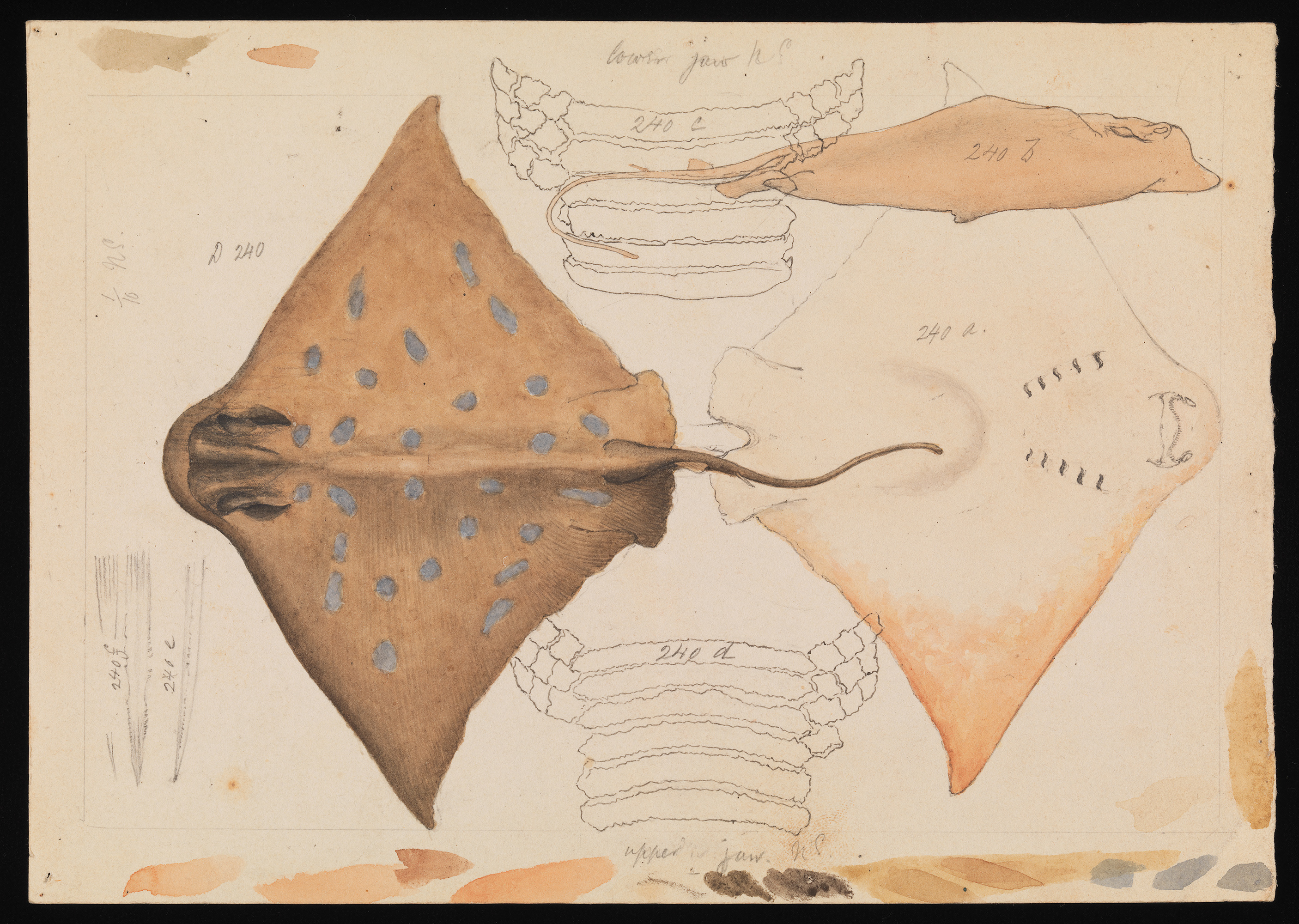
Plate 63. The Blue-spotted Eagle-Ray, Myliobatis australis (now known as the Southern Eagle Ray, Myliobatus australis) found in Queenscliff
Public Domain (Licensed as Public Domain Mark 1.0)
The only specimen I have seen of this species I obtained many years ago at Queenscliff, and presented to the National Museum, no other example having since occurred.
This handsome Eagle-ray has not been figured before.
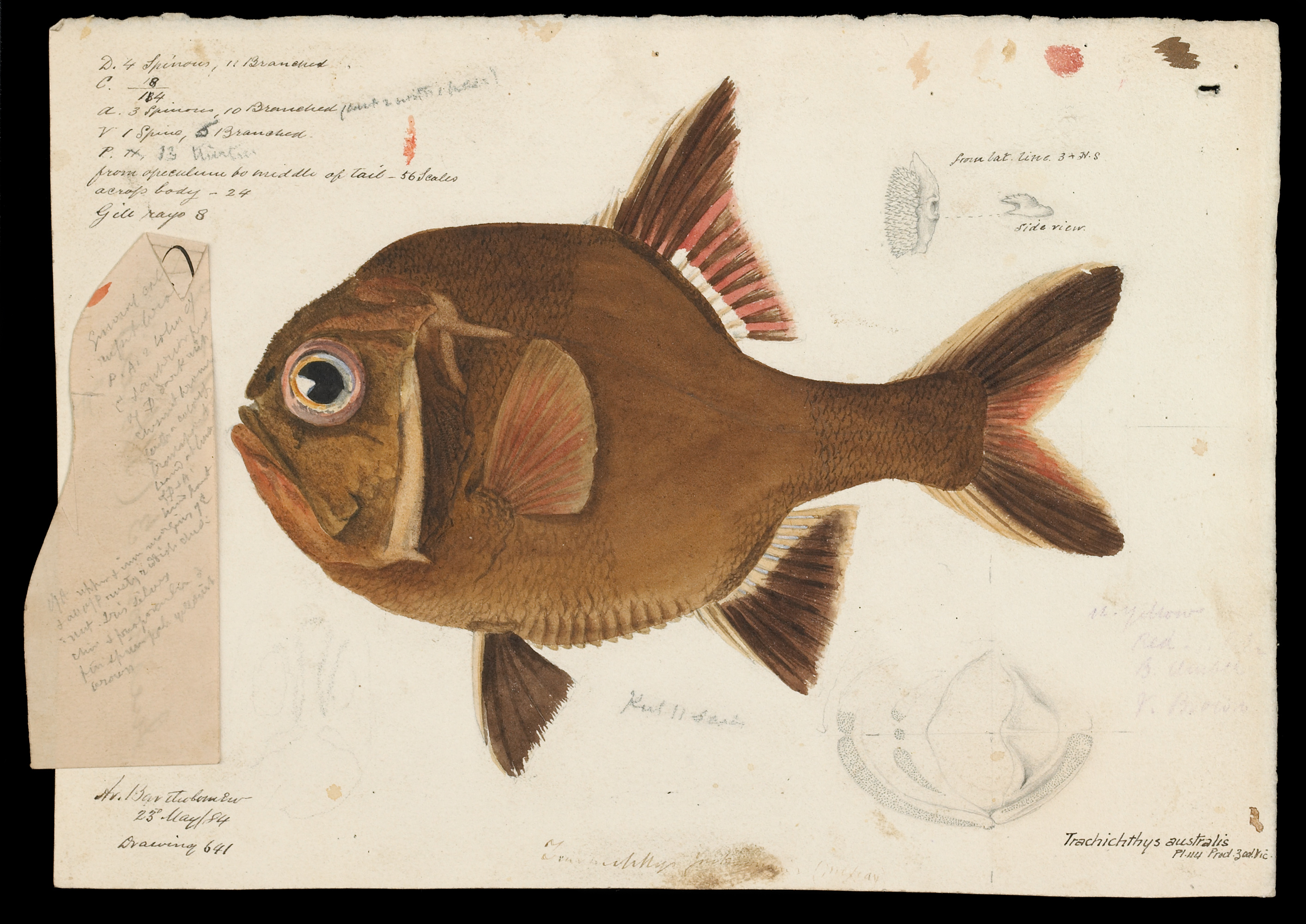
Plate 114. Australian Rough Fish, Trachichthys australis (now known as the Roughy, Trachichthys australis)
Public Domain (Licensed as Public Domain Mark 1.0)
The only specimen I have ever seen is that figured, which was presented to the National Museum by Mr. Jenkins, the fishmonger of Swanston Street, who has contributed many rarities to the collection. Described by Shaw from a New South Wales specimen collected by White nearly a century ago, no second specimen has been seen since until the present one and that described by Count Castlenau. Cuvier and Valenciennes, in their great "Histoire Naturelle des Poissons," have had to construct a description from Shaw's figure, no example existing in the Continental museums. The only other species of the genus, the T. elongata (Günth), is easily distinguished by its more elongate slender form, smooth spines, and other characters.
The specimen in our Museum was caught in Hobson's Bay. 23rd May, 1884. Not figured of natural colors before.
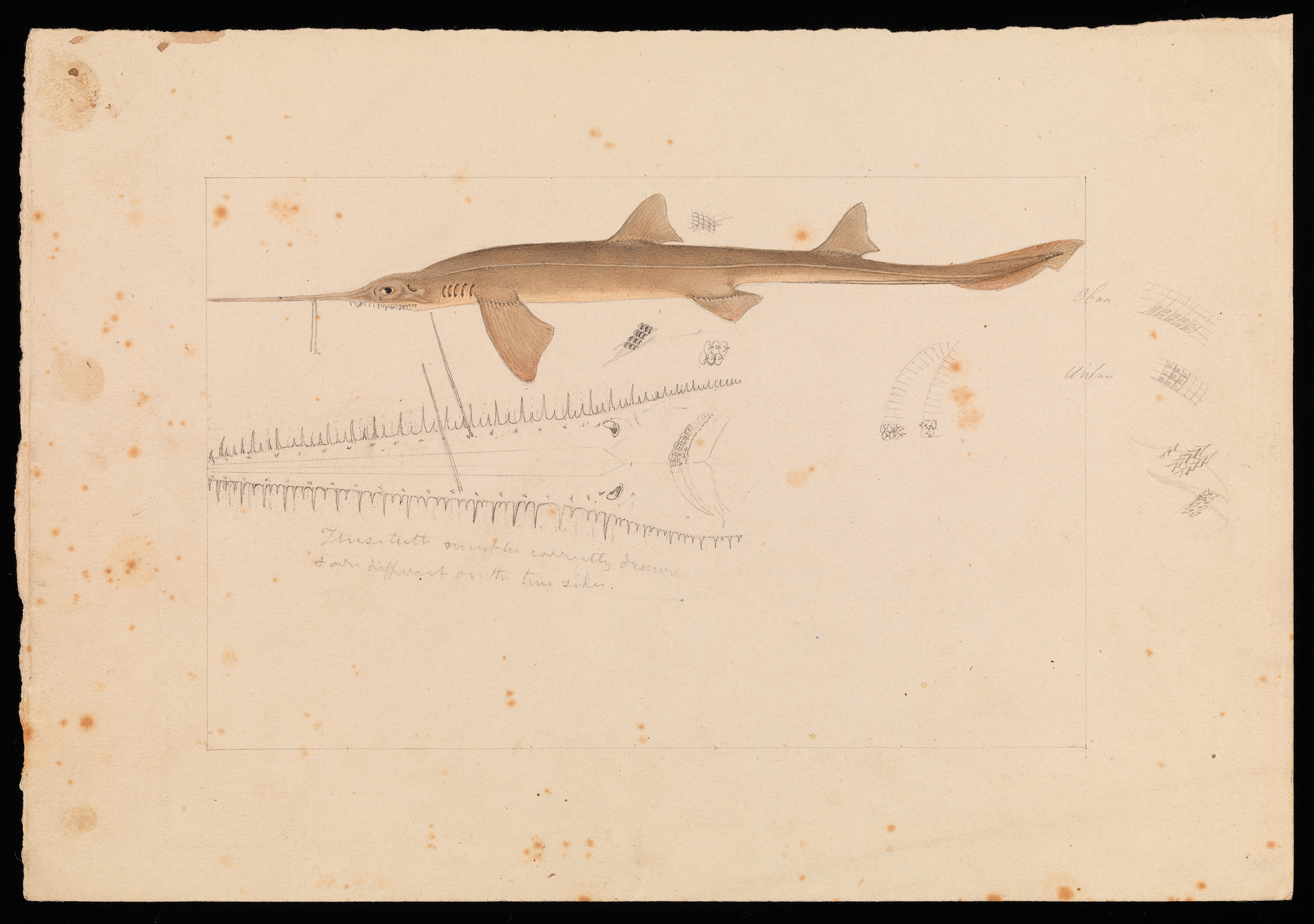
Plate 56, Figure 2. The Common Australian Saw-Fish, Pristiophorus nudipinnis (now known as the Southern Sawshark, Pristiophorus nudipinnis) found in Hobson's Bay
Public Domain (Licensed as Public Domain Mark 1.0)
The naked, or scaleless, portion of the fins, from which the specific name is derived, varies in different individuals, and is not, I think, a true character, as most of my specimens have the dorsal and the pectorals completely covered with scales, as in the other Sharks. There is a narrow ridge on each side of the ventral surface of the tail from half-way between ventral and second dorsal converging to anterior margin of lower lobe of caudal fin.
This Saw-fish is very common in Hobson's Bay, but it is now figured for the first time.
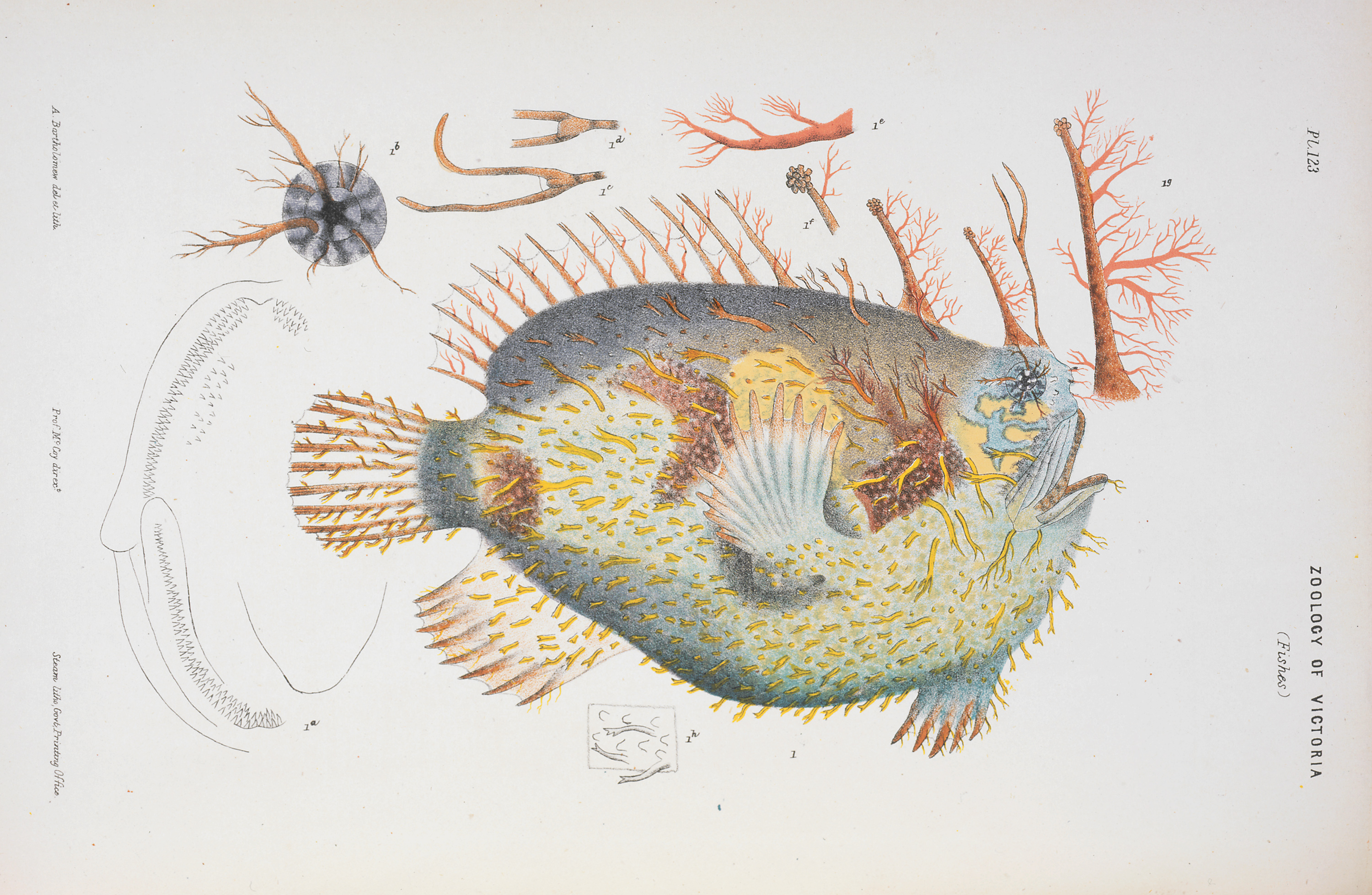
Plate 123. The Two-Pronged Toad-fish, Chironectes bifurcatus (now known as the Tasselled Anglerfish, Rhycherus filamentosus) found in Brighton
Source: Museums Victoria
Public Domain (Licensed as Public Domain Mark 1.0)
None of the other species described by Cuvier, the French Voyagers, Richardson, Count Castelnau, Dr. Bleeker, or Dr. Günther, resemble this species at all, and it is the only species of the genus I have as yet met with on our shores.
These beautiful and curious fish are found occasionally after strong south winds on the Brighton shore in summer in the shallow pools on the rocks. They are very soft and extensible, blowing themselves up like a balloon, as the Diodon does, when alarmed. The pedunculated pectoral and ventral fins look to the popular observer like fore feet or legs, and are used like them for moving amongst sea-weed, in which they crawl like toads; the very small gill aperture, opening on the arm-pit of the pectoral fins, keeping the gills moist for so long a time that they seem almost amphibious in the habit of moving about out of the water between the tides.
This species has not been figured before.
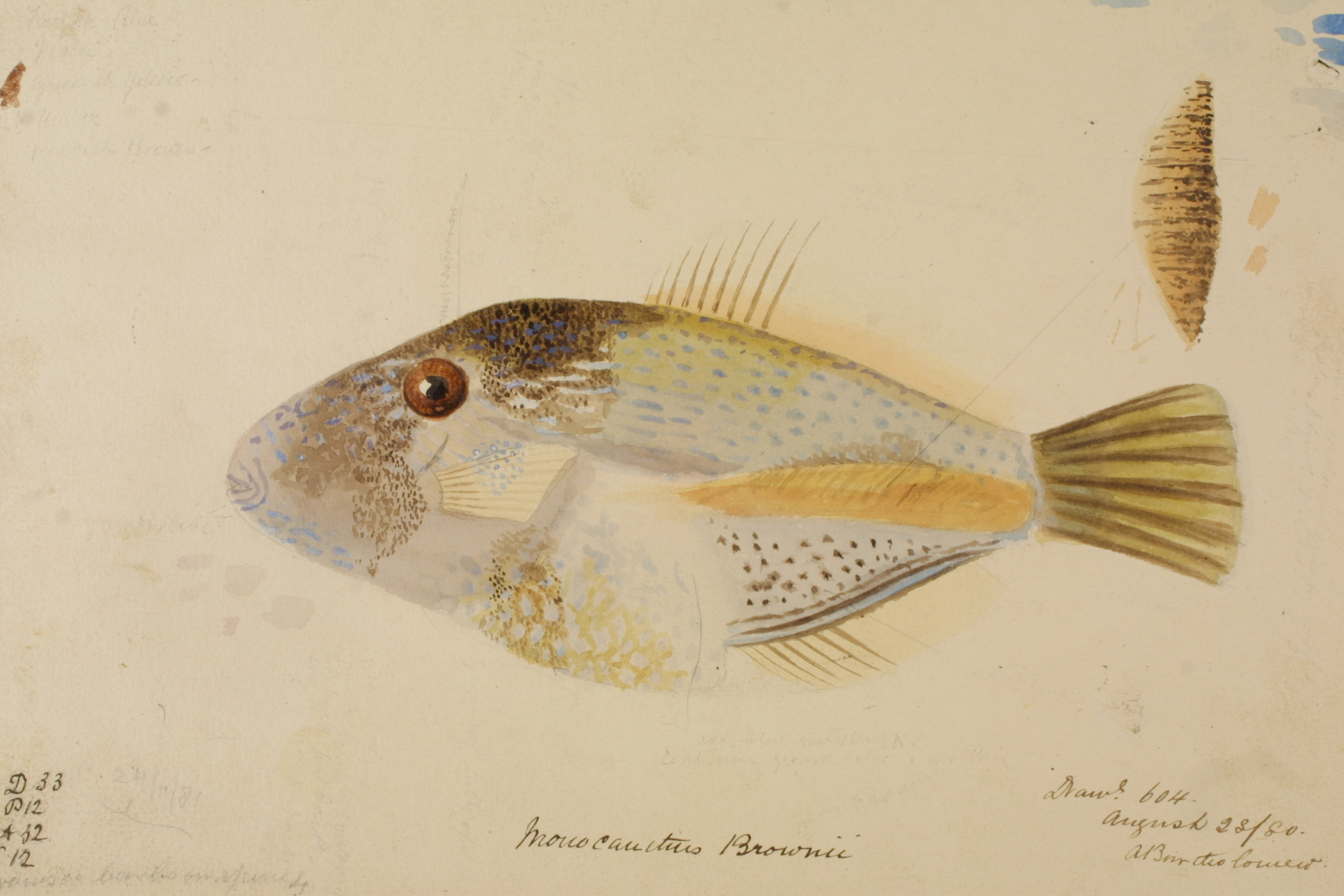
Plate 124. Brown's Tooth-brush Leather-jacket, Monacanthus browni (now known as the Toothbrush Leatherjacket (male), Acanthaluteres vittiger) found in Port Phillip Heads
Public Domain (Licensed as Public Domain Mark 1.0)
Those species of Monacanthus having a brush like cluster of slender, bristly, elongate spines on each side of hinder part of body and tail are called "Tooth-brush Leather -jackets," from these curious developments being about the size and shape of a course tooth-brush. These filaments are obviously a great prolongation of the minute spines of other parts of the body. This strange character is only fully developed in old males.
Not very uncommon in Bass's Straits. The example on our plate was obtained in blasting the rocks at the Heads.
This species has not been figured of the natural colors before. It is reputed poisonous, but many of my friends have praised it highly as a table fish, and it is certainly quite wholesome.
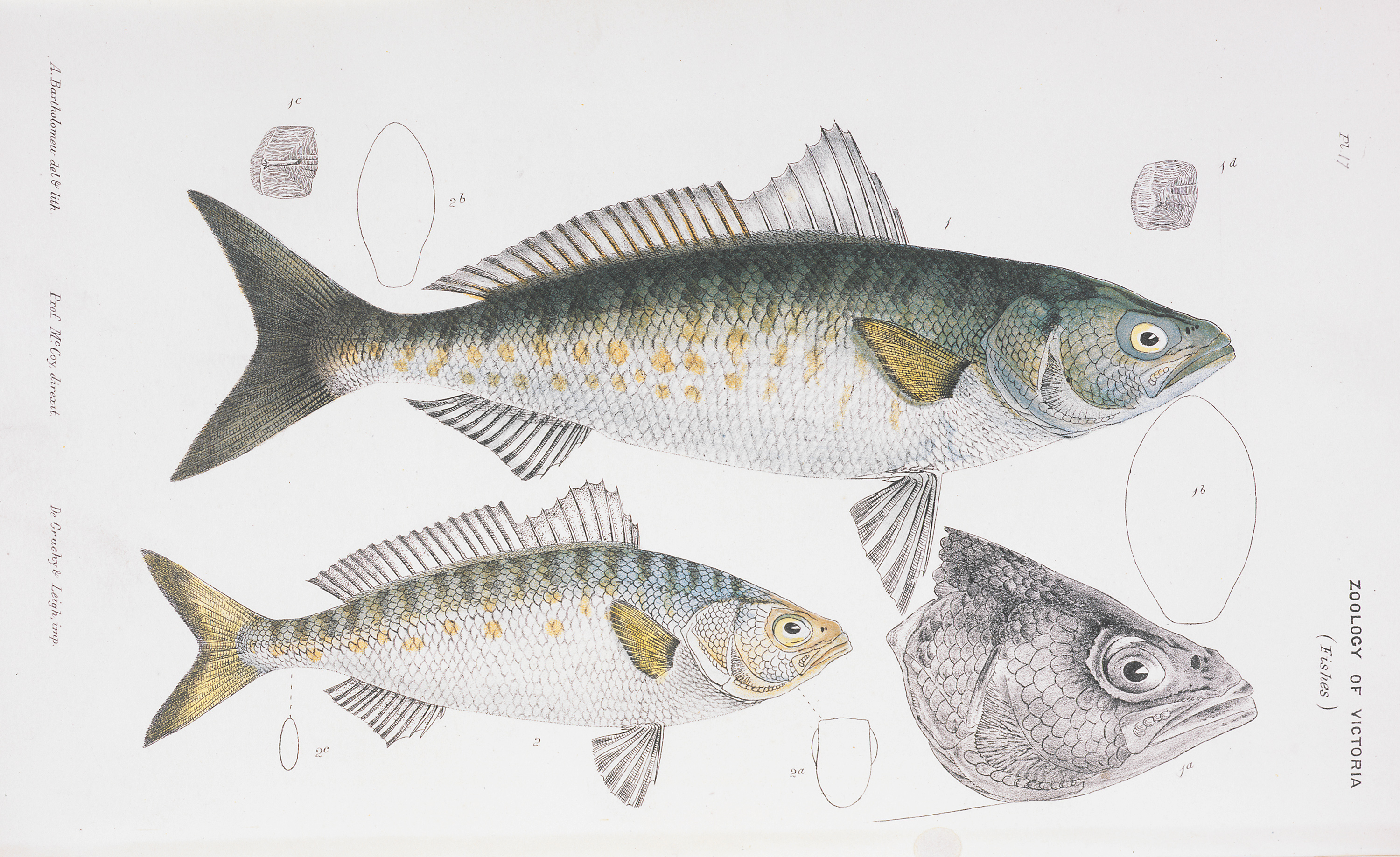
Plates 16-17. The Salmon Arripis, Arripis truttaceus (now known as the Western Australian Salmon, Arripis truttacea), obtained from Melbourne - fish market
Source: Museums Victoria
Public Domain (Licensed as Public Domain Mark 1.0)
The adult condition of the this fish, which is attained at about 2 feet in length, is improperly called "Salmon" by the colonists of the Victorian coasts, and is of a nearly uniform pale-olive color, without spots, paler on the lower half of the body. When about a foot in length it is popularly called "Salmon Trout" by the fisherman and in the markets, and then differs from the adult in its smaller size, proportionately larger eyes, dark cloudy spots on the back, and the conspicuous rows of large round brass-like spots on the sides. All these characters I have many years ago proved to be merely characteristics of the younger stages of growth.
Nearly all the cases of fish-poisoning in Victoria are referable to their species. Some persons are under the impression that the bad consequences are due to incipient decomposition; but I am certain that this is not always the case, as I have known several instances in which the effects were strongly marked after eating perfectly fresh examples, caught only an hour or so before cooking. It is curious that it is only at certain times and to certain people that this fish is more or less poisonous, while certainly good for food under other circumstances not yet understood. I have known three out of five people made seriously ill from eating at breakfast newly caught fish from one basket, and the two others felt no inconvenience whatever. The symptoms are, generally a few hours after eating, an extraordinary redness or flush of the skin, particularly of the face, often followed by an irruption, which soon passes away, with great derangement of the digestive organs, severe headache, vomiting, &c. Some cases of death have been reported, but generally, the symptoms pass away in a few hours or days.*
The flesh often has a dull pinkish tinge, which may be one of the reasons for the popular application of the names "salmon" and "salmon trout" to this fish, not representing the true salmon in any important respect.
One of the most abundant of the food-fishes of Victoria in all the warmer months of the year, disappearing in the cold weather. It is not usually seen at the best tables, but is sold in great quantities by hawkers around the suburbs of Melbourne. The younger ages are very conspicuous in the fish shops by their yellow pectorals.
* Dr. Youl, the City Coroner for many years, informs me that although he has seen many of these cases of fish-poisoning, the deaths reported were found by the jury to be due to other causes.
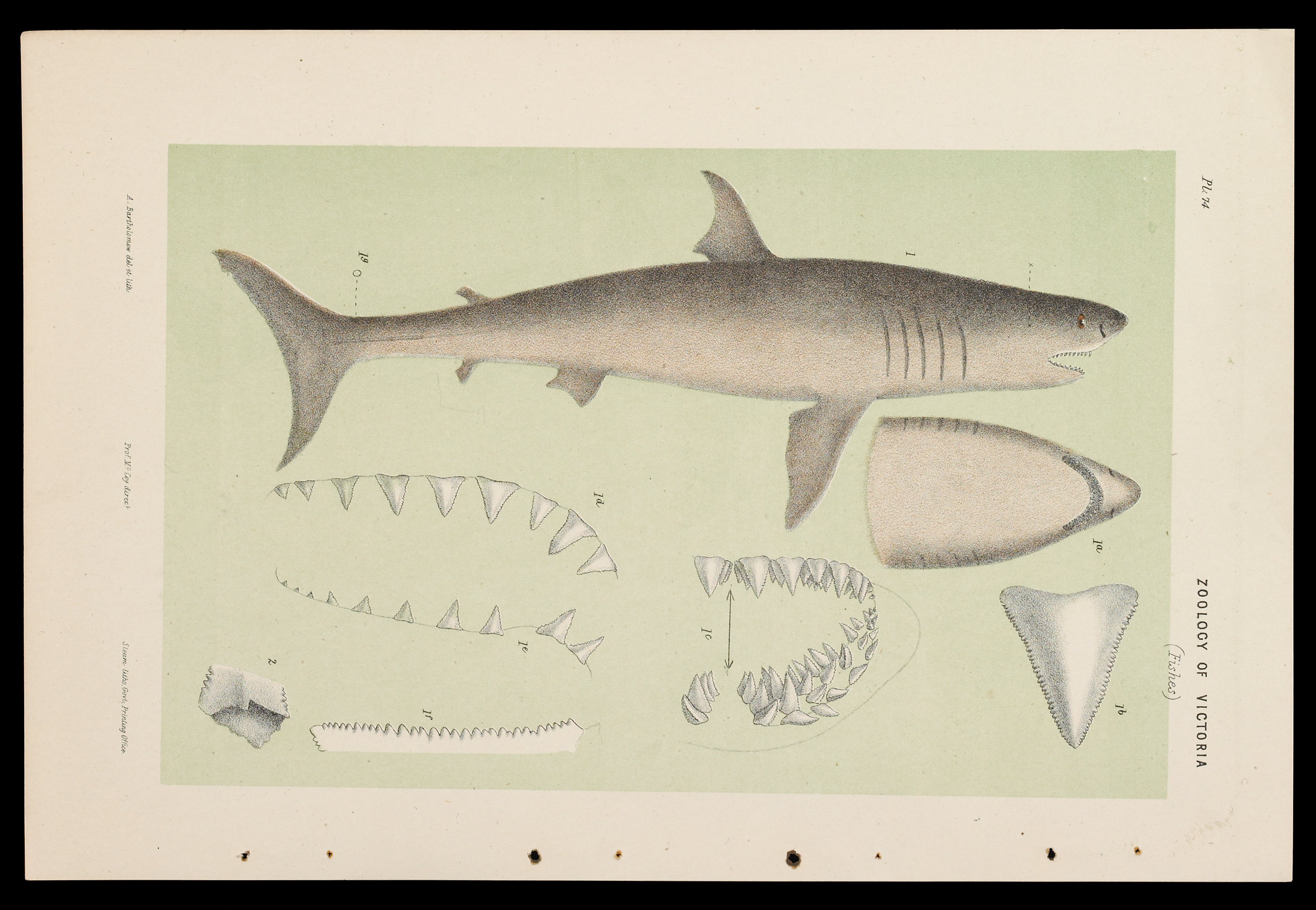
Plate 74. The White Shark, Carcharodon rondeletti (now known as the White Pointer, Carcharodon carcharias) found in Brighton Beach Baths
Public Domain (Licensed as Public Domain Mark 1.0)
This gigantic Shark is by far the largest and most formidable of those approaching our shores, one specimen in the Museum being thirteen feet three inches long, and another between fifteen and sixteen feet long, and some having been killed upwards of thirty feet long. Our two specimens were caught, one in July, 1873, and one in April, 1877, in Hobson's Bay, near Brighton. The larger had been observed for several days swimming round the ladies' baths, looking in though the picket fence in such a disagreeable manner that the station master had a strong hook and iron chain made so as to keep the rope out of reach of his teeth, and this, being baited with a large piece of pork, made to look as much like a piece of a lady as possible, was swallowed greedily; and then, with the aid of a crowd of helpers, the monster was got on shore. On opening the stomach, amongst a load of partially digested objects, a large Newfoundland dog was found, with his collar on, identifying him as one lost the day before, no doubt swallowed when enjoying a swim in the comparatively shallow water in which the Shark was repeatedly seen and at last caught.
Dr. Günter has suggested the name "Great Blue Shark" for the present species, but as its colour is not strikingly blue, but rather whitish, the old English name of "White Shark" had perhaps better be adhered to, although no doubt, as Duméril complains, more than one species seem to have been confounded by English writers, and sailors in many waters, under this name. The present fish, however, has the best claim to the name, and is probably also the Carcharias of the old Greek writers. There can be no doubt that our fish, here figured, is the same as the terrible "White Shark" sometimes found on the English coasts, and more common in the West Indies; probably the most dreaded by sailors of all Sharks from its great size, strength, and ferocity. The fearful armature of the mouth with rows of great triangular serrated teeth renders any wound fatal; and the size, even in our waters, is often so great that a man could be swallowed whole with ease, as Capt. King mentions in his Survey of Australia; Blumenbach, the famous anatomist, who was a perfectly trustworthy authority, mentions a whole horse being found in one. When fishermen are drawing their nets full of fish, this Shark will swim along, giving every now and then a half-turn and biting out a large mouthful of fishes and net, and swallowing them together. It was from representations by fishermen and their friends of the damage done to them and the destruction of fish, as well as danger to bathers when these fish and the great Bull Shark or Shovel-nosed Shark (Odontaspis taurus) appeared, that the Government was induced to place large sums on the Estimates for their destruction; paying by measurement for hundreds of the harmless blunt-toothed Smooth, Picked Dog-fish, and the other small Sharks, as the young of these monsters.