Echinoderms are a phylum of spiny-skinned marine invertebrates. They include sea stars, brittle stars, sea urchins, sea cucumbers and sea lilies. Animals such as the Ocellate Seastar are among the largest invertebrates on sub-tidal reefs, and the family includes some of the most recognisable and colourful fauna of the Victorian coastline.
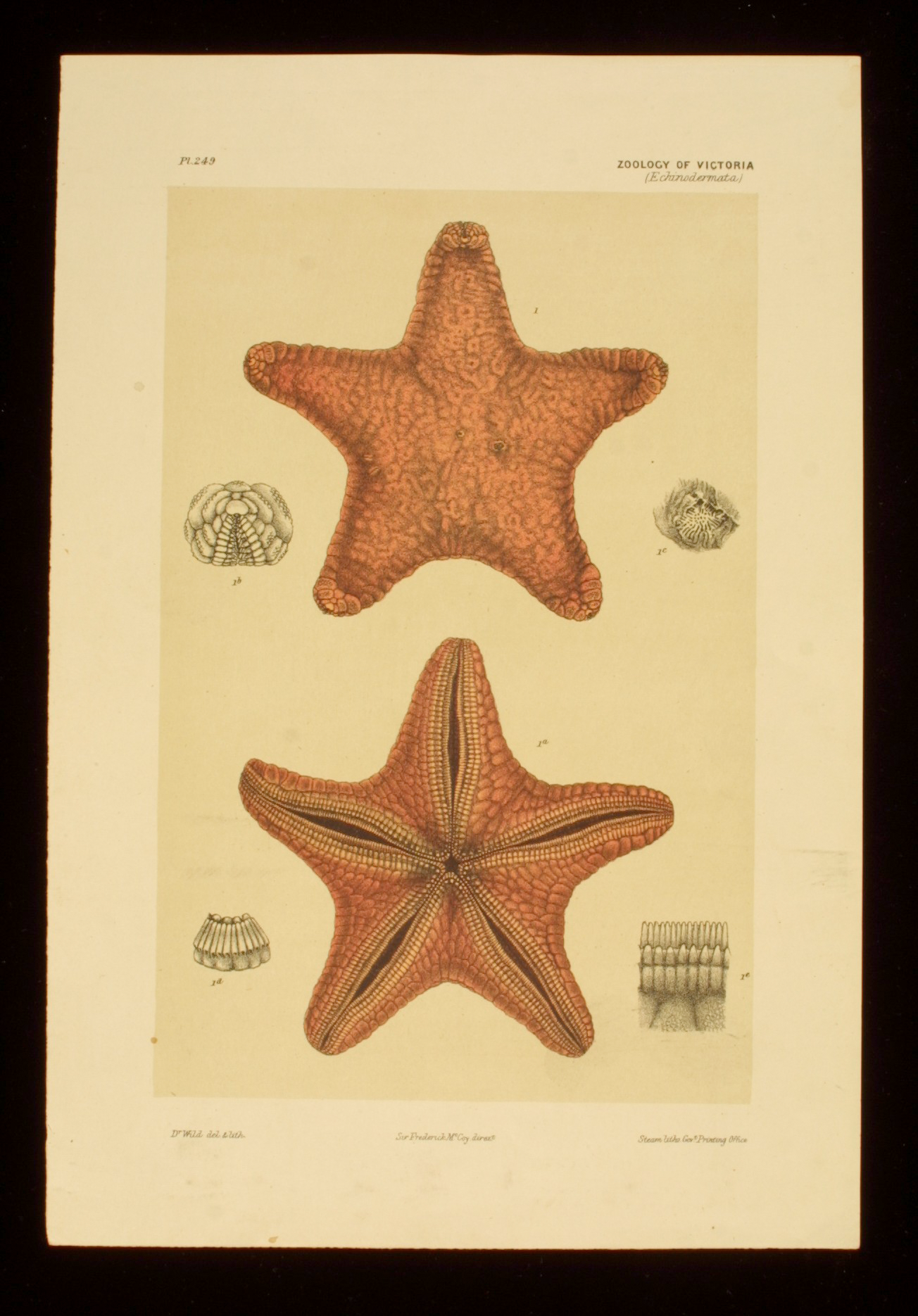
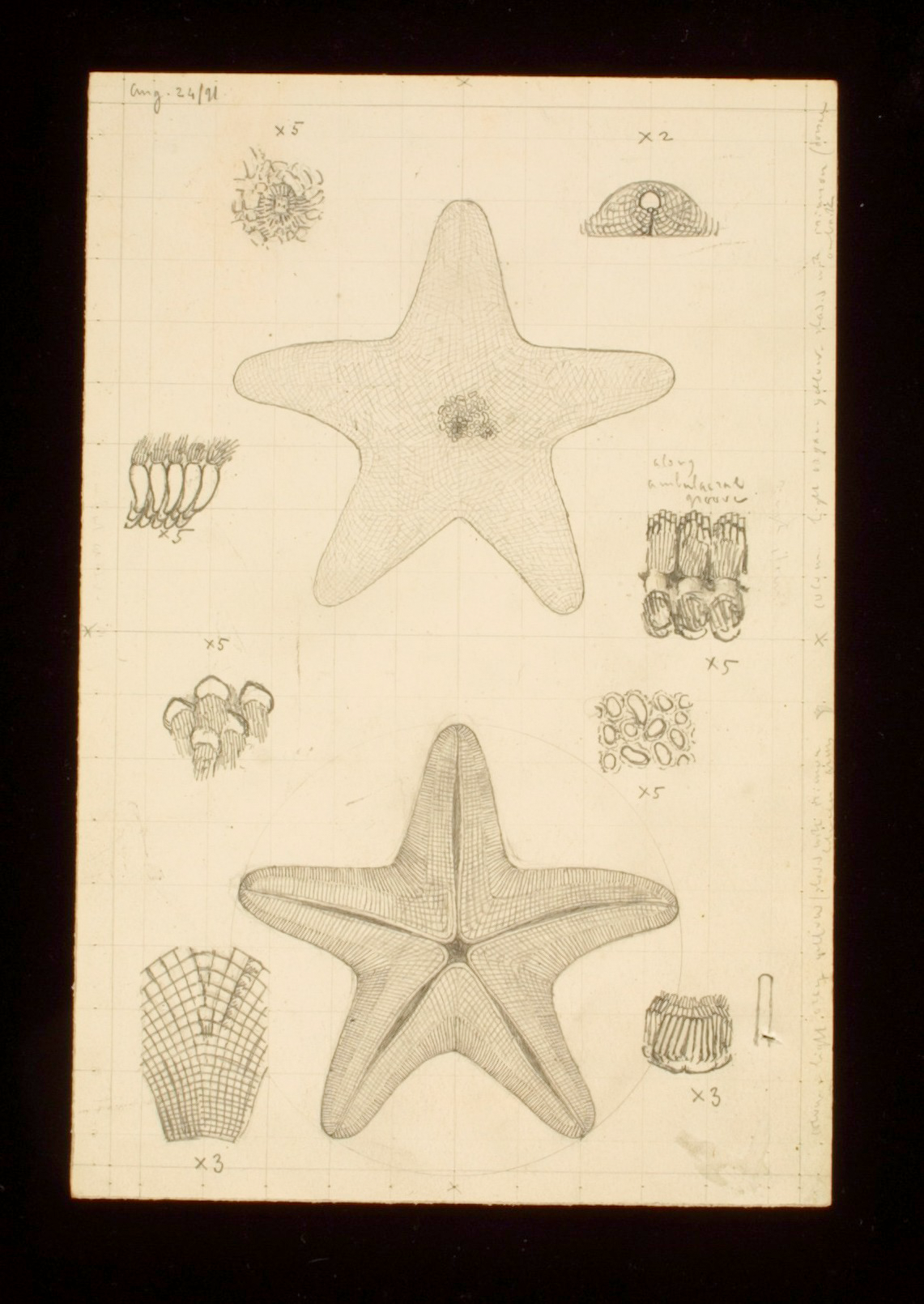
The body parts of echinoderms are based around pentameral (five part) symmetry and their three dimensional geometry makes them satisfying candidates for scientific illustration.
McCoy included four species of echinoderms in his Prodromus of the Zoology of Victoria: three species of sea star and a species of sea urchin. Unpublished plates reveal a further two species of sea urchins and another three sea stars. There are also a few sketches of echinoderms which do not appear to have been worked up into completed illustrations.
John James Wild, who was the official artist on the Challenger expedition which explored the ocean depths from 1872 to 1876, had a particular fascination with the radial symmetry of sea stars and sea urchins. His images of these animals are among the finest illustrations in the Prodromus.
Slate Pencil Urchin
Goniocidaris tubaria
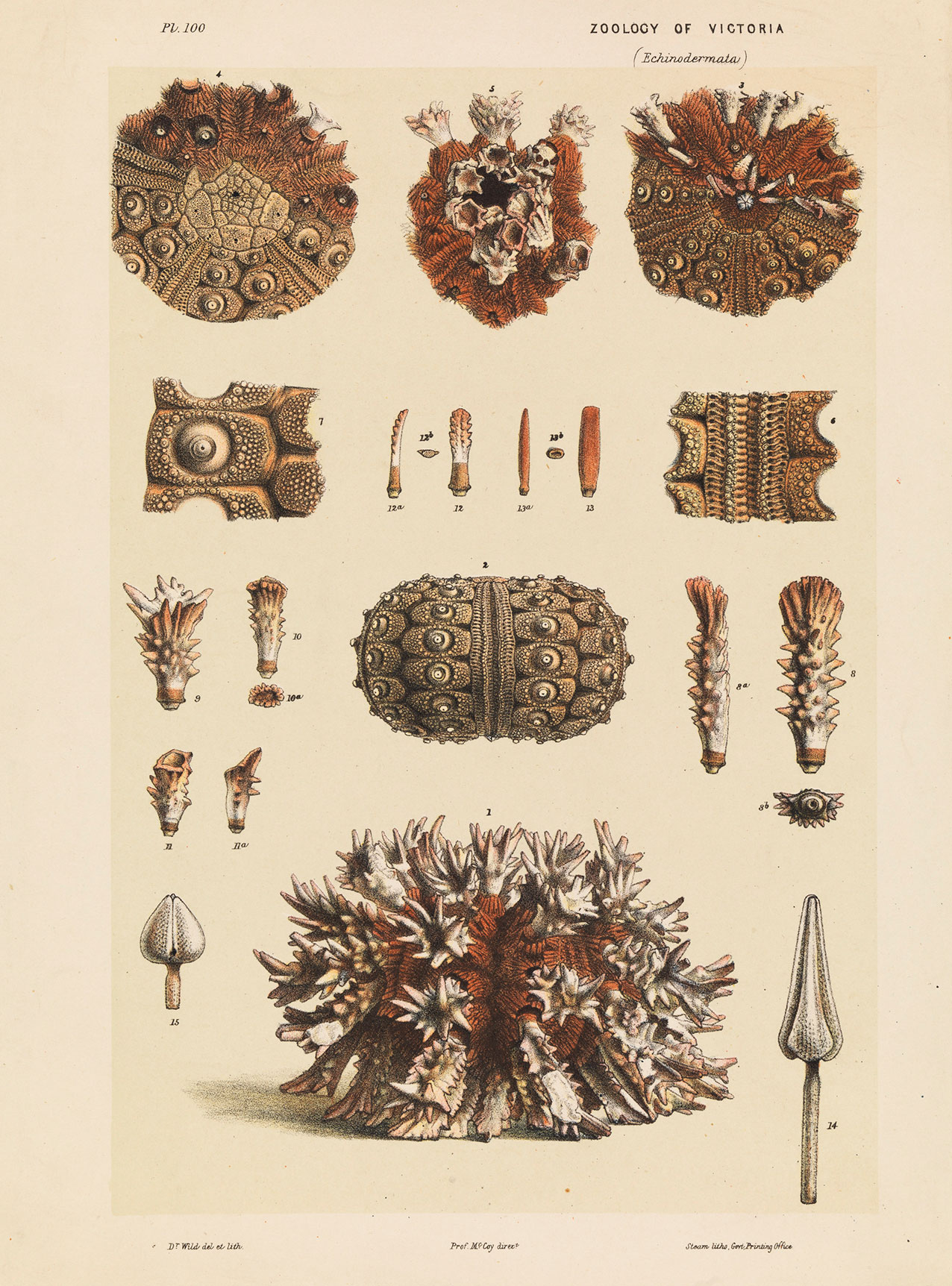
Plate 100. Goniocidaris tubaria found in Port Phillip Heads
The beautiful specimens of this fine sea-urchin figured on our plate were presented by Mr. Bracebridge Wilson, who dredged them near Port Phillip Heads.
Not uncommon in Port Phillip and Western Port Bays on sandy bottoms, at about 40 fathoms.
Common Sea Star, Small Sea Star & Greater Biscuit Star
Meridiastra calcar, Patiriella gunnii & Tosia magnifica
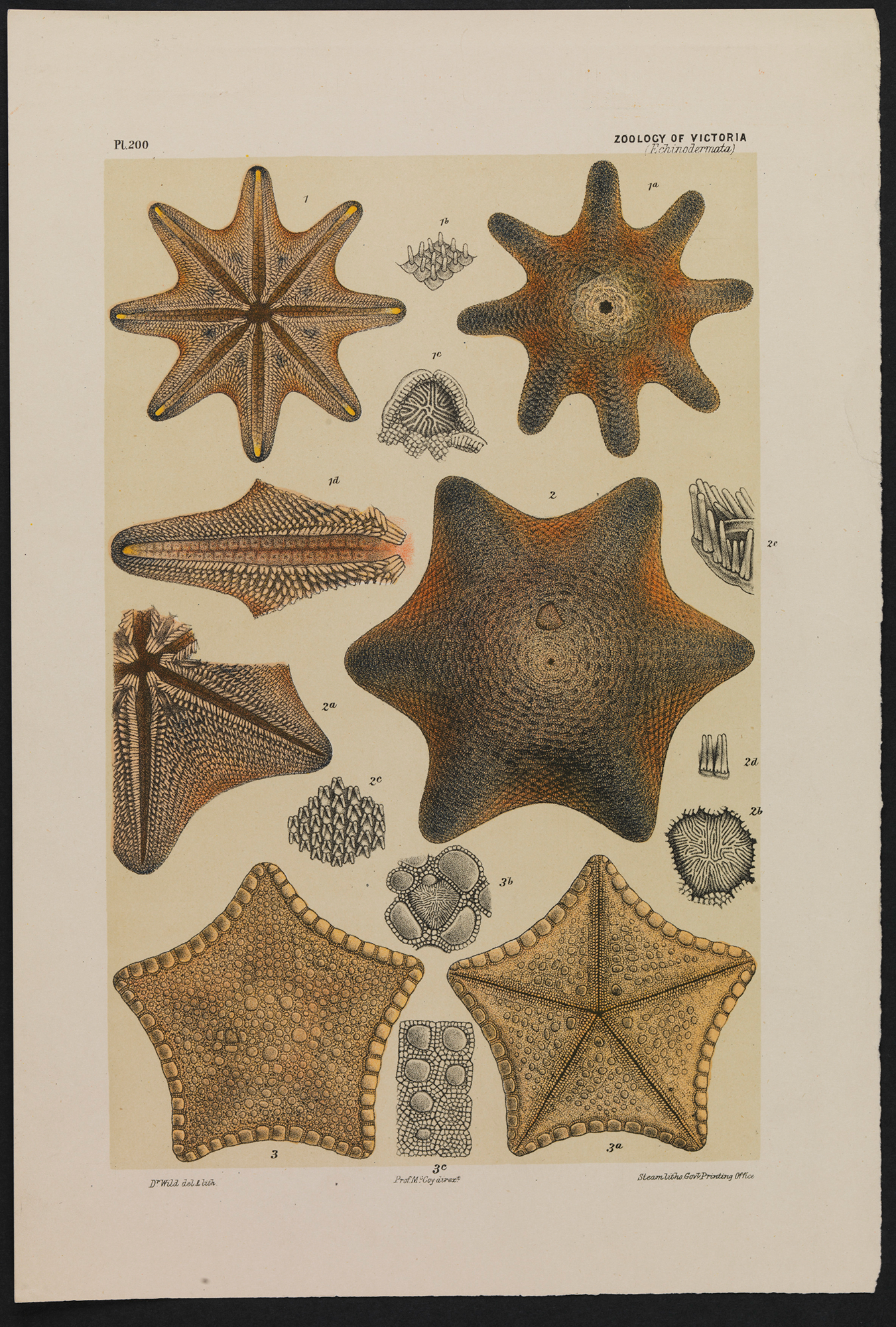
Plate 200, Figure 1. The Eight-rayed Cushion Starfish, Asterina calcar (now known as the Common Sea Star, Patiriella calcar), found at Brighton Beach
This is the commonest of all the Starfishes on the coast; adhering to stones below low-water mark. It is extremely variable in the extent and intensity of the purple on upper surface. The whitish central patch in the specimen figured is very unusual. It is easily distinguished from the almost equally common A. Gunni, by having eight longer and more parallel-sided rays, and by having a single spine on each of the interambulacral plates between the ambulacra below.
Some specimens are of the rare diameter from tip to tip, of three and a half inches; and one specimen has only seven rays. On some specimens some of the plates of the row of adambulacral plates bordering the ambulacra seem to have only one spine, instead of the usual two; this is however abnormal, and two spines to each base is nearly constant.
The specimen figured is from Brighton Beach.
Discover more echinoderms
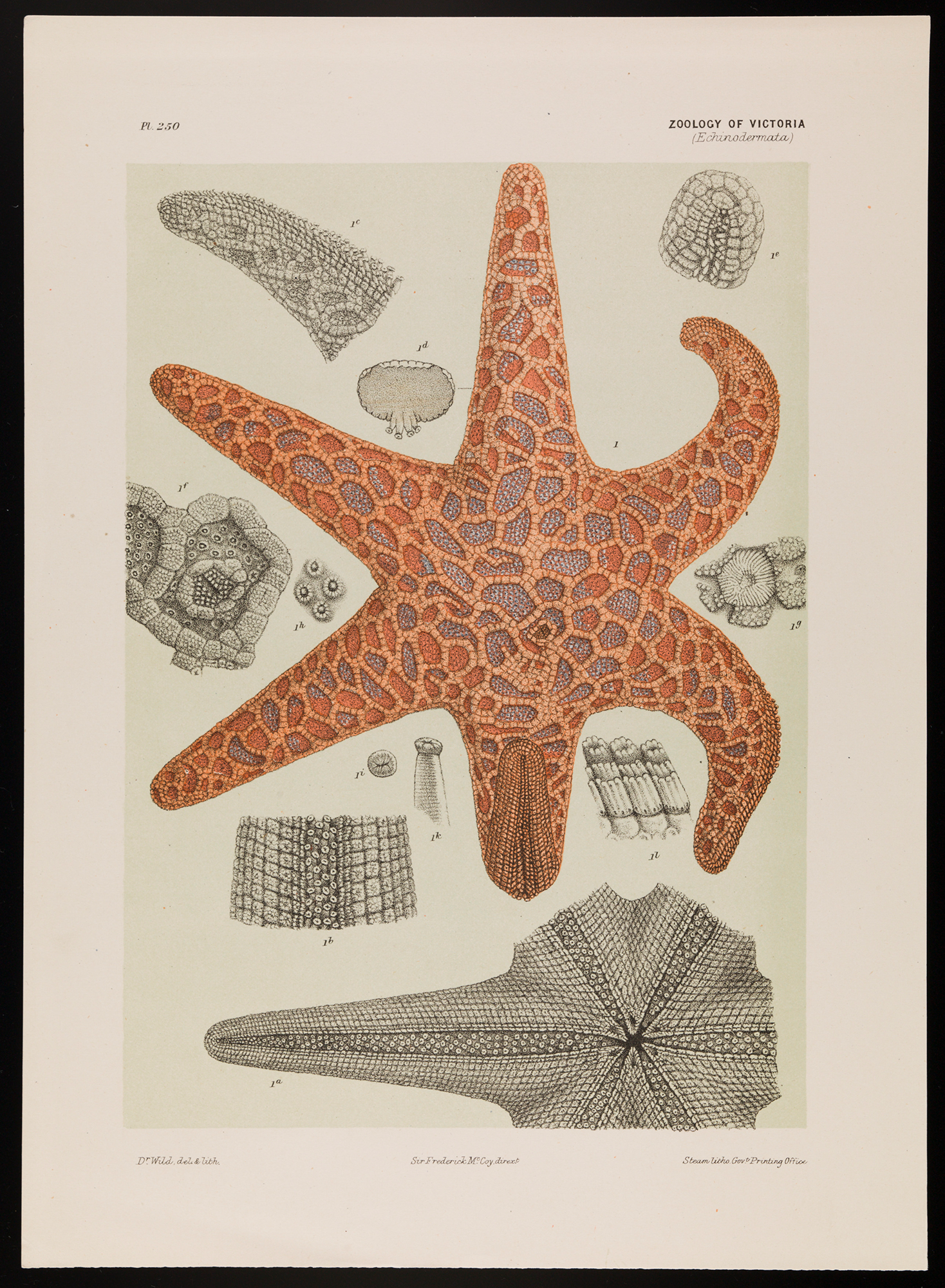
Full colour print of a Mosaic Seastar, Plectaster decanus, from Sorrento, Port Phillip, by Dr John James Wild. This work was commissioned by Frederick McCoy, the first Director of The National Museum of Victoria, for unpublished Plate 250 in The Prodromus of the Zoology of Victoria; Figures and descriptions of the living species of all classes of the Victoria indigenous animals. This plate forms part of the much larger Prodromus Collection. Many of the original illustrations and prints in the collection informed the production of The Prodromus, the first major publication of the National Museum of Victoria. Between 1878 and 1890, McCoy published his zoology 'Prodromus' as 20 parts in two volumes, with each part comprising 20 plates. Unfortunately, almost 90 plates in the collection remain unpublished, and hundreds of illustrations were either not completed or not printed.
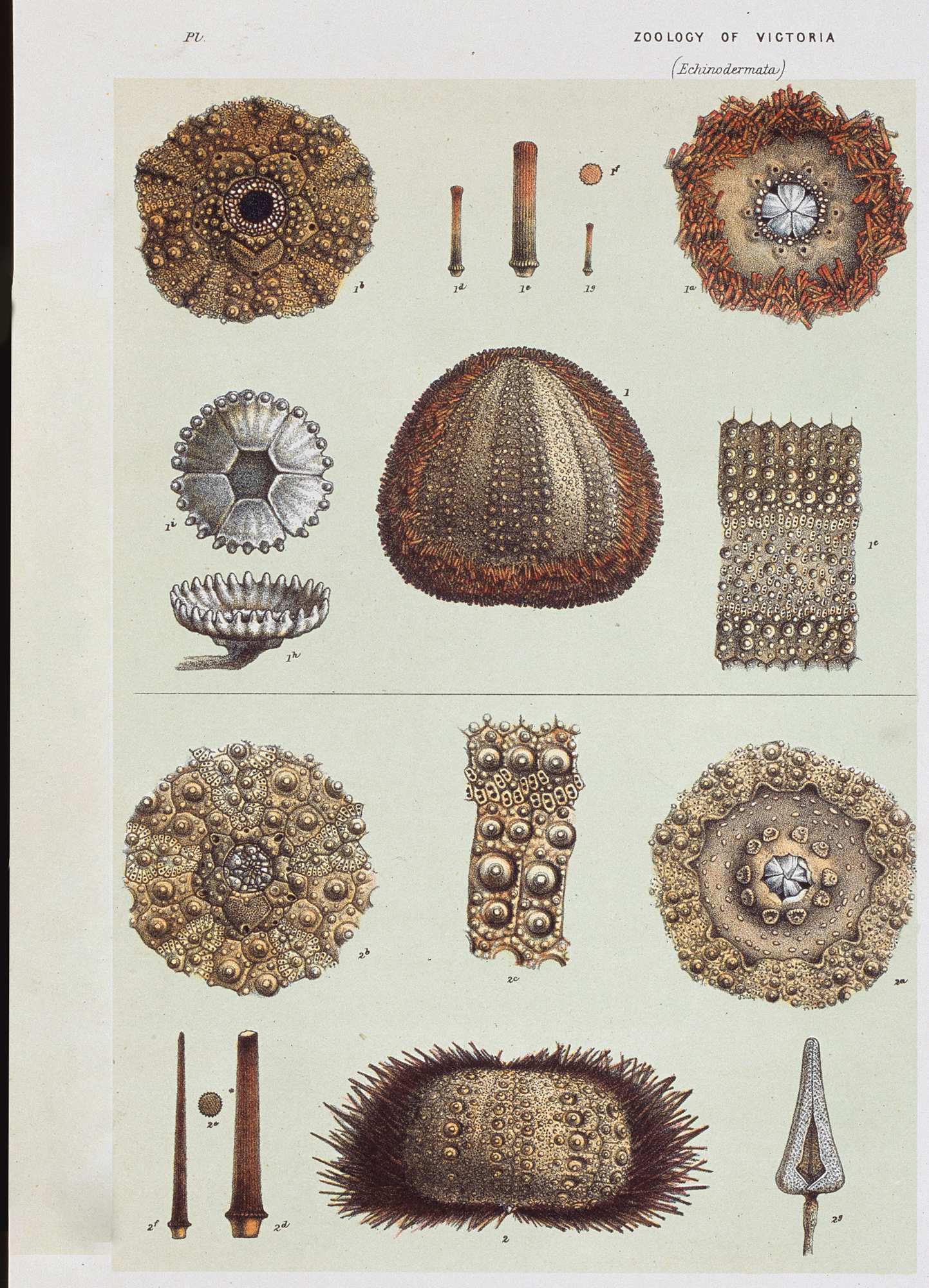
Colour print of a Red-spined Sea Urchin, Holopneustes porosissimus (upper), and the Sea Urchin, Heliocidaris erythrogramma (lower), by Dr. John J. Wild. This work was commissioned by Frederick McCoy, the first Director of The National Museum of Victoria, for unpublished Plate 209 in The Prodromus of the Zoology of Victoria; Figures and descriptions of the living species of all classes of the Victoria indigenous animals. This plate forms part of the much larger Prodromus Collection. Many of the original illustrations and prints in the collection informed the production of The Prodromus, the first major publication of the National Museum of Victoria. Between 1878 and 1890, McCoy published his zoology 'Prodromus' as 20 parts in two volumes, with each part comprising 20 plates. Unfortunately, almost 90 plates in the collection remain unpublished, and hundreds of illustrations were either not completed or not printed.
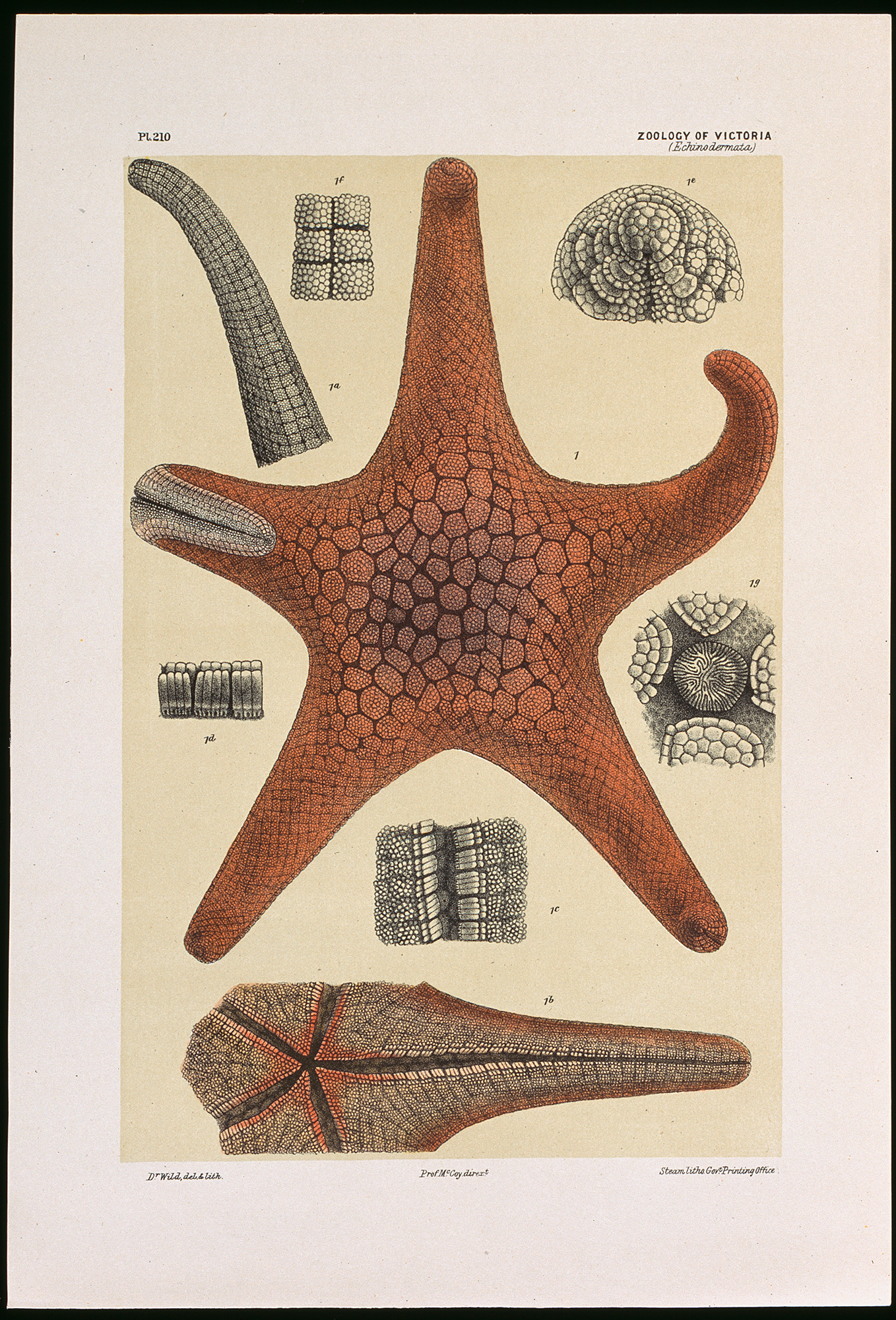
Colour print of the Ocellate Seastar, Nectria ocellata, by John James Wild. This work was commissioned by Frederick McCoy, the first Director of The National Museum of Victoria, for unpublished Plate 210 in The Prodromus of the Zoology of Victoria; Figures and descriptions of the living species of all classes of the Victoria indigenous animals. This transfer forms part of the much larger Prodromus Collection. Many of the original illustrations and prints in the collection informed the production of The Prodromus, the first major zoological publication of the National Museum of Victoria. Between 1878 and 1890, McCoy published his zoology 'Prodromus' as 20 parts in two volumes, with each part comprising 20 plates. Unfortunately, almost 90 plates in the collection remain unpublished, and hundreds of illustrations were either not completed or not printed.
Full colour proof of a Velvet Seastar, Petricia vernicina, from Sorrento, Port Phillip, Victoria, by Dr. John James Wild. This work was commissioned by Frederick McCoy, the first Director of The National Museum of Victoria, for unpublished Plate 249 in The Prodromus of the Zoology of Victoria; Figures and descriptions of the living species of all classes of the Victoria indigenous animals. This plate forms part of the much larger Prodromus Collection. Many of the original illustrations and prints in the collection informed the production of The Prodromus, the first major publication of the National Museum of Victoria. Between 1878 and 1890, McCoy published his zoology 'Prodromus' as 20 parts in two volumes, with each part comprising 20 plates. Unfortunately, almost 90 plates in the collection remain unpublished, and hundreds of illustrations were either not completed or not printed.