In 1856 McCoy presented his vision of the function, nature and scope of modern museums his paper Museums in Victoria.
It is only within the last few years that our countrymen are beginning to find out that, under proper direction, and as managed in modern times, museums become the most ready and effectual means of communicating the knowledge and practical experience of the experienced few to the many...
This paper was effectively a pre-emptive application for the position of Museum Director. Seeing himself as one of the 'experienced few', McCoy confidently stated that such a position required 'a man of established reputation and varied scientific knowledge'.
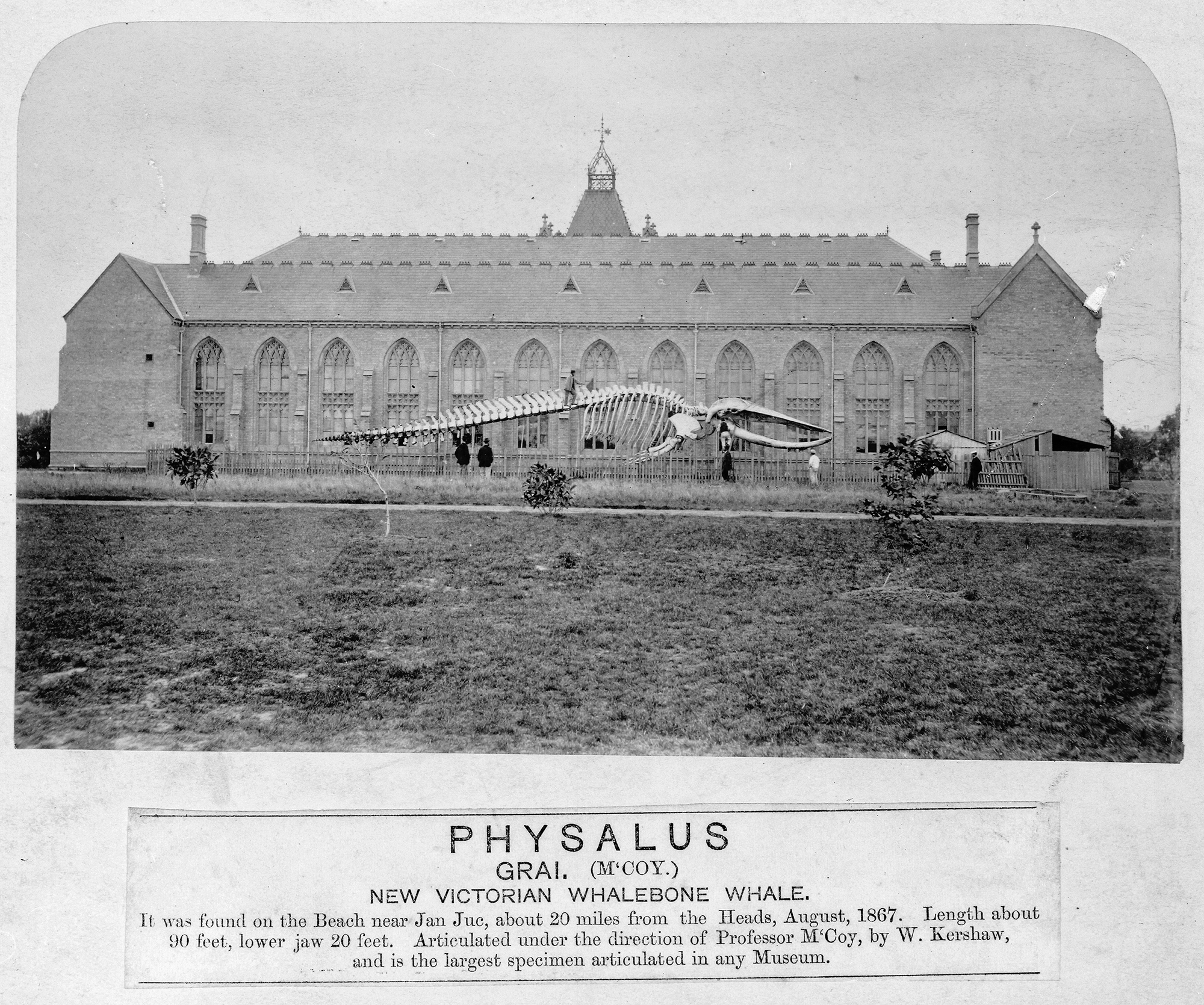
In July 1856 and with the tacit support of the Government McCoy seized the moment. Having the existing collections packed in their cramped conditions in the Assays office in Latrobe Street and hurriedly moved to a temporary location, under his care at the University.
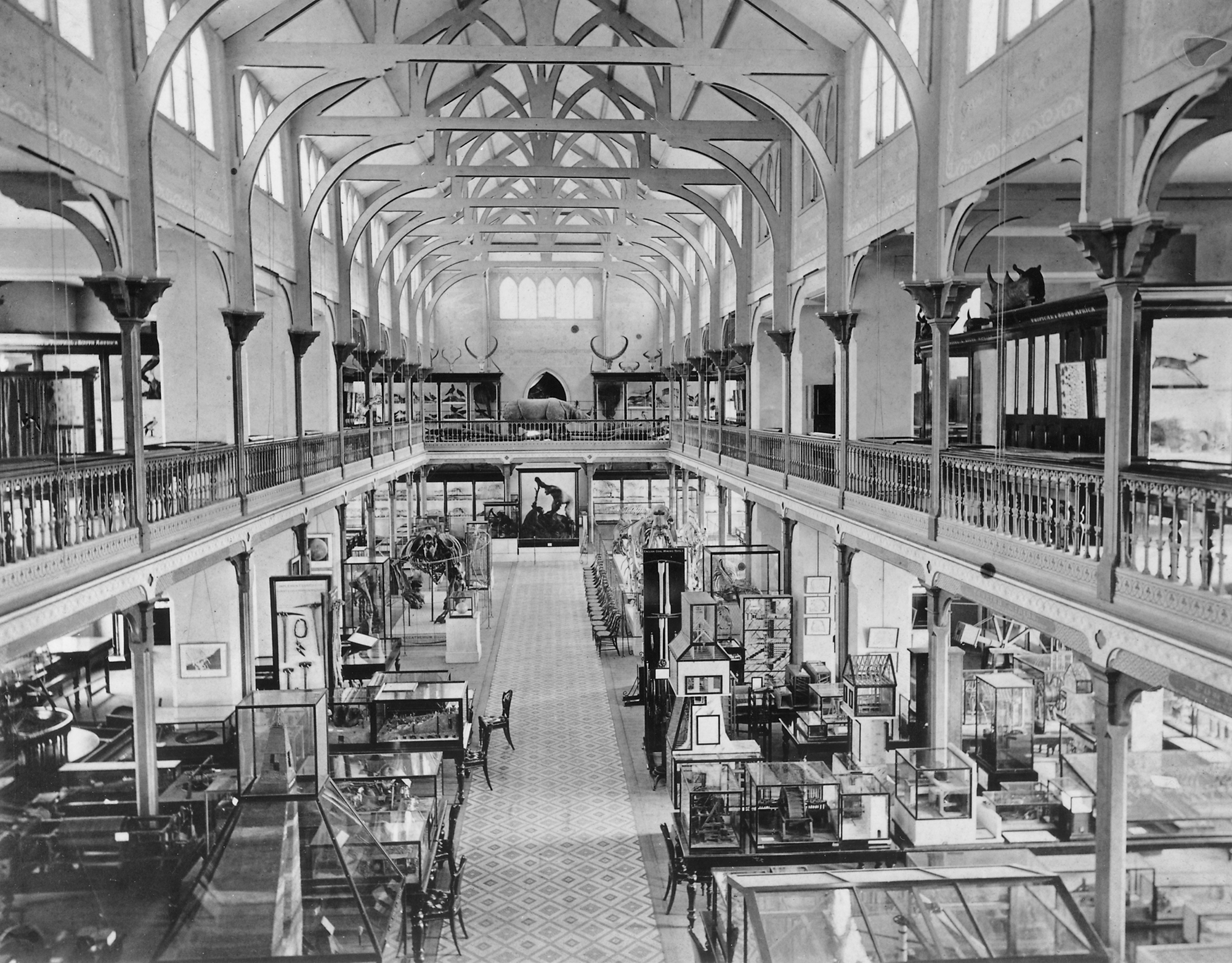
Over the next forty years McCoy created the finest biological collection in the Southern Hemisphere, 'growing a museum' that was comparable to many in Europe and the United States and one which surpassed that of any other British colony.
The legacy of his discerning purchases formed the backbone on which the current collection is based. The Lowland Gorillas, Asiatic One Horned Rhinoceros, Wallace's Red Bird of Paradise and Humming Birds were acquired by McCoy as spectacular 'representatives of generic types from all parts of the world,' remaining on display to this day.

McCoy's Museum
Contrary to the popular notion of old museums as 'cabinets of curiosity', Frederick McCoy's museum was set out as a teaching facility. His National Museum, together with institutions such as the State Library of Victoria, was established at least in part to enable 'self improvement' through education among the colonists.