This page provides links to databases, archives, records and resources to assist with your family history research project.
Where can I find passenger lists?
See our guide to finding passenger lists.
I’ve searched my ancestor’s name everywhere but they’re not in the search results. What should I do?
At first, keep your search as general as possible. Try different spellings, as they may be incorrect on the record, or may have been indexed incorrectly. You can also use an asterisk (*) as a wildcard to open up your search, for example instead of searching McLaughlin, try *Laughlin, mclaugh*, mcla*, etc. Sometimes full first names are not on passenger lists, so try using just a first initial or no first name at all.
I’ve found my ancestor’s immigration records. Where can I find other records of them in Australia?
- Cemetery records are usually held by cemetery trusts (there are several hundred cemetery trusts in Australia). If you don’t know where your ancestor is buried, we recommend searching the largest databases first (PROV and Greater Metropolitan Cemeteries Trust).
- Electoral rolls or voter lists can be searched on Ancestry.com. We recommend that you speak with your local library, as many provide their members with free access to Ancestry.com and other family history databases.
- Education records including state schools, student records, teachers, and buildings are held by PROV.
- Wills and probates can offer other names to connect you to other family members. Victorian will and probate documents are held at PROV.
- Records of births, deaths, and marriages are held by state departments. If you’re unsure of where your ancestor went after your last record of them you may have to search each state’s database (NSW and ACT, NT, QLD, SA, TAS, VIC, WA). Note that the date range of publication differs in each state.
I have found my ancestor’s records up until a certain time, but then they disappear. What should I try next?
Have you searched Trove? Australian newspapers up to 1955 are digitised and searchable on Trove. By searching your ancestor’s name, you might find personal notices or articles written about them. You can then use this information to cross-reference with other databases, like Births Deaths & Marriages or the NAA.
If you have a known residential address of your ancestor and they lived in Melbourne, you can find the address in the Sands & McDougall’s Melbourne and Suburban Directory for subsequent years. Digital copies of the Sands & McDougall in five year increments between 1860 and 1974 can be found in the State Library Victoria’s digitised library collections. For the wider Victorian region you might like to try PROV’s collection of rate records.
What other organisations might hold information about my ancestor?
Local historical societies can be a useful resource for family history research. Their collections are sometimes accessible only onsite, but you will likely be rewarded with a small museum about the area. People involved with local historical societies also have a wealth of knowledge, and are passionate about the history of their local area. Many historical societies use platforms like eHive and Victorian Collections to catalogue their collection. Catalogues from sites like these are often harvested by Trove - try a name or keyword general search on one of these sites.
Find and Connect can help with Forgotten Australians, former child migrants, and children in orphanages, children’s homes and other institutions.
Link-Up Victoria connects people of the Stolen Generation with their family members. AIATSIS also has resources for Aboriginal family history research.
If your ancestor passed through Bonegilla Migrant Centre, you can look up their Bonegilla ID card from the NAA.
Migration history
What were the main reasons that people migrated to Australia before World War I?
During the mid to late nineteenth century, passage to Victoria from the UK could be assisted by the Australian government. The settlers required skilled people, and the government would subsidise the voyages of those who would be employed upon arrival. This, and the discovery of gold, caused Victoria’s population to grow exponentially. Between colonisation and the First World War, more than one million people moved to Victoria from China, Germany, the United Kingdom and the United States of America. These migrants are now referred to as assisted immigrants or bounty immigrants. Assisted passenger lists are held by PROV and are viewable on Ancestry.com.
What were the main reasons that people migrated to Australia after World War II?
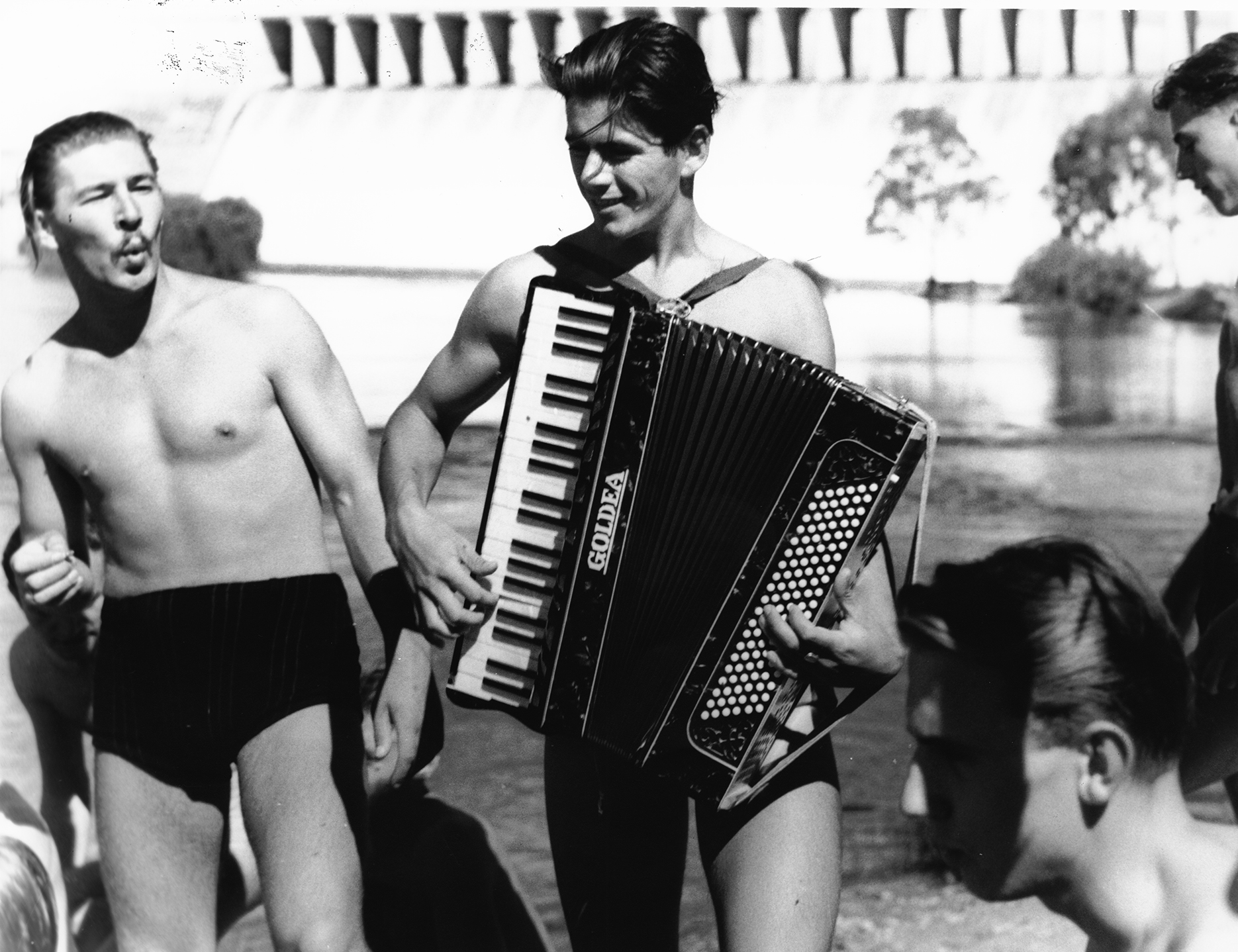
British immigration was still favoured, with the White Australia policy still in place and the introduction of programs like ‘Bring Out a Briton’. The largest number of immigrant groups were from Britain, Italy and Greece.
Ships
What were the migrant ships like?
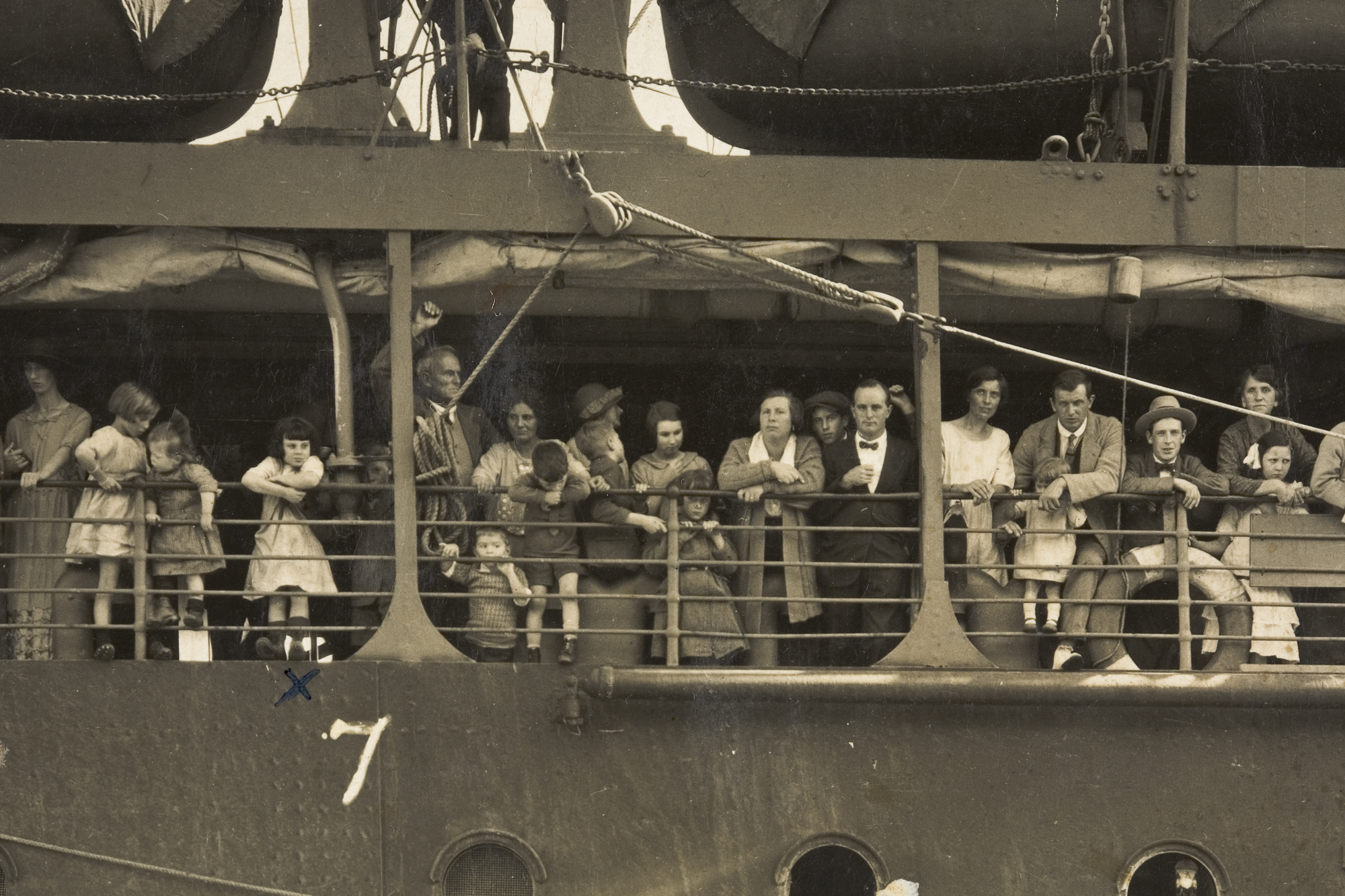
During and after WWI, thousands of displaced persons from Europe came to Australia in search of better lives. War ships were repurposed as migrant ships, and often carried more people than was comfortable. After WWII, migrant ships had better amenities, including entertainment, games, and swimming pools.
The Orient Line Steam Navigation Company (now P&O) was the largest migrant ship operator. Their ships included Orcades and Oronsay. The most active post World War II migrant ships were the Australis, Castel Felice, Fairsea, Johan Van Oldenbarnevelt, and Orcades.
What was the route that migrant ships took from Europe to Australia?
The route depended on the shipping line, and could be disrupted due to natural events (such as volcanic eruptions) and political instability (the closure of the Suez Canal almost doubled the distance between London and Mumbai by sea).
A ship leaving from London would often stop at Southampton, Le Havre, Lisbon, Gibraltar, Marseilles, Naples, Port Said, Aden, Bombay (now Mumbai), Colombo, Penang, Singapore, Fremantle, Adelaide, Melbourne and Sydney. Other common ports of departure from Europe included Amsterdam, Bremen, Piraeus, and Marseilles.
Where can I find an image of the ship on which my ancestor came to Australia?
20th century ships are very well documented, and it is relatively easy to find images and ephemera relating to these ships. The images in Peter Plowman’s books are very good.
19th century ships are a little harder to find. A search of the ship name in Trove can prove fruitful; if the specific ship cannot be found, there are countless artworks of Port Phillip Bay over time in Australian historical collections that are indicative of ships of that time.
Need assistance? Make a research and collection enquiry or email us directly with your question at [email protected].