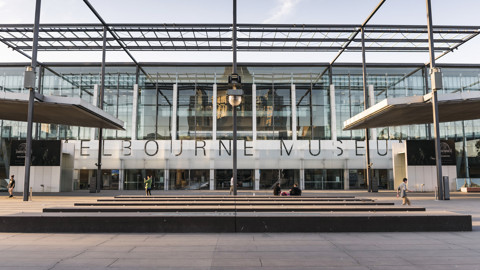
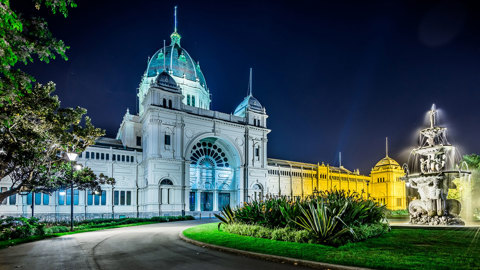
The cost of living: it’s a phrase we hear almost every day. But workers’ pay didn’t always factor in just how much it actually cost to live.
That innovation came from an Australian judge in 1907, in the landmark ruling known as the Harvester Judgement. It had ramifications around the world.
The road to the Harvester Judgement was long. In the 19th century, the colony of Victoria was dominated by jobs in manufacturing, construction, shearing and other forms of manual labour.
Victoria was already a world-leader in workers’ rights: it had adopted the eight-hour work day in 1856, a decade before America outlawed slavery, as a result of an effective union campaign.
Yet much more needed to be done to support fair pay and improve working conditions. During the 1890s significant industrial disputes brought breakthroughs for working people.
Before the century was out Victoria had administrative wages boards to set minimum rates of pay based on age, sex and occupation.
But these laws only targeted the worst offending industries for overworking and underpaying employees—like clothing and furniture manufacturers, and bakeries.
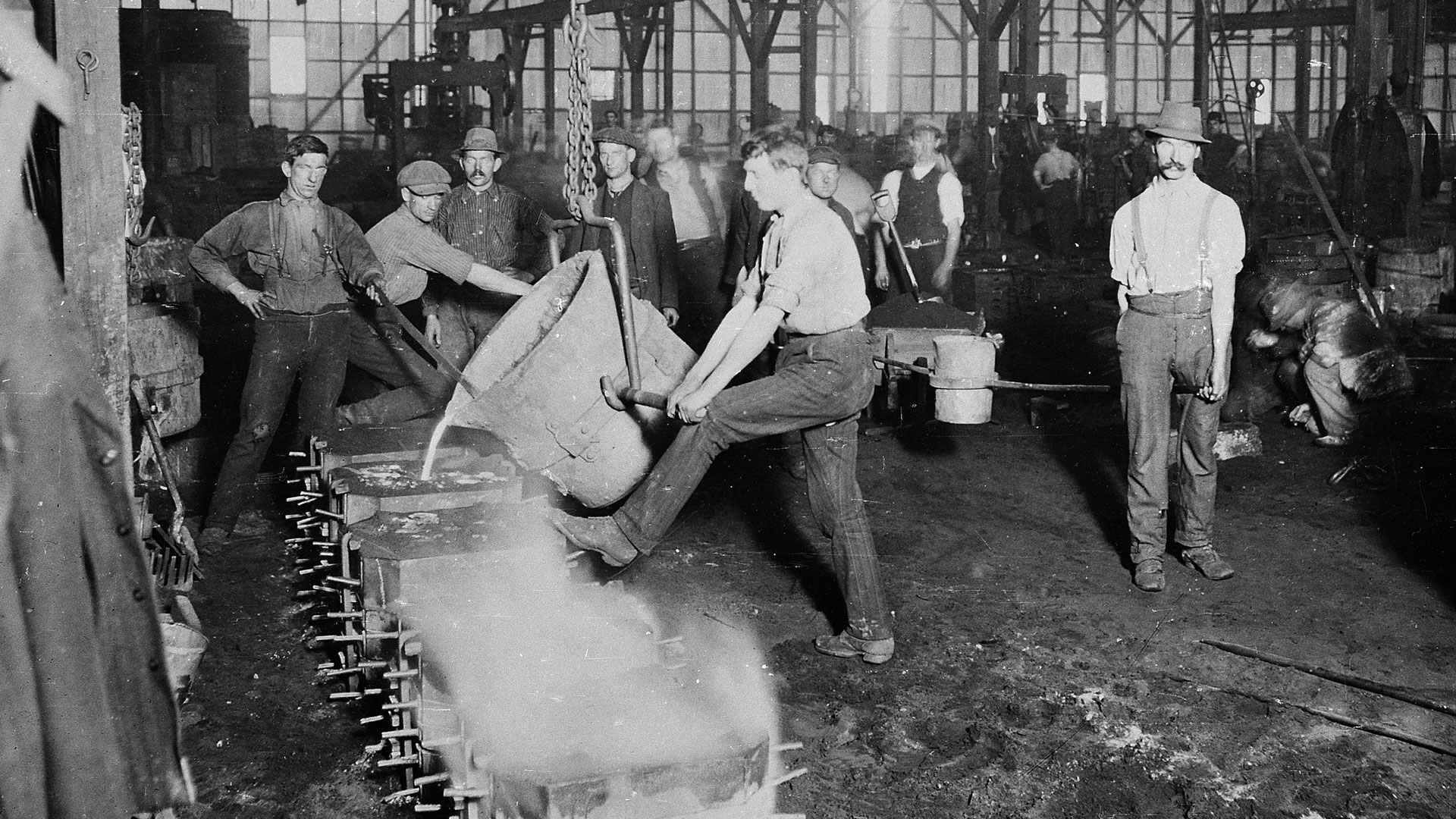
Companies that had remained exempt included the massive Sunshine Harvester Works in Melbourne, one of Australia’s largest agricultural implement-making factories. It was founded and run by entrepreneur Hugh Victor McKay.
McKay was only interested in doing things his way and believed that the state had no right to interfere with his business.
After the federation of Australia in 1901, the new federal government investigated expanding minimum wage laws into McKay’s industry. But McKay would have none of it.
We already pay very good wages, but the fact of being under restrictions and having the general plan of our work interfered with … will place us at a disadvantage when competing against the outside world … if the outside competition gets too warm, and we feel we are hampered under restrictions, we will simply go somewhere else. — Hugh Victor McKay to a 1903 Royal Commission
McKay’s business escaped these controls for several years—until McKay asked the government for help. Manufacturers like McKay were starting to face significant competition from North American manufacturers and wanted the government to protect them.
Prime Minister Alfred Deakin agreed, and in 1906 his government introduced the 1906 Customs Tariff Act. It put a £12 tariff on imported machines—a significant amount in those times.
But this protection didn’t come for free. The federal government also introduced the 1906 Excise Tariff Act that would charge a £6 excise tax on all machines unless local manufacturers paid ‘fair and reasonable’ wages to employees.
However, the Excise Tariff Act didn’t define a fair and reasonable wage. That duty fell to Justice Henry Bournes Higgins at the Court of Arbitration in Melbourne.
Justice Higgins chose the Sunshine Harvester Works as the test case for what constituted a fair and reasonable wage.
From the very first day it’s clear that Higgins is going to make a determination that’s different from all other determinations … he says profits has got nothing to do with it. What is at stake is, are you paying a fair and reasonable wage? And if it’s not a fair and reasonable wage essentially you don’t deserve to be in business. — Historian Charles Fahey
The Sunshine Harvester Works’ wages books revealed discrepancies in the way the company paid people, even for the same jobs.
McKay fought back, arguing that this was due to the increased use of automated machinery in production that reduced the skill required of workers like blacksmiths.
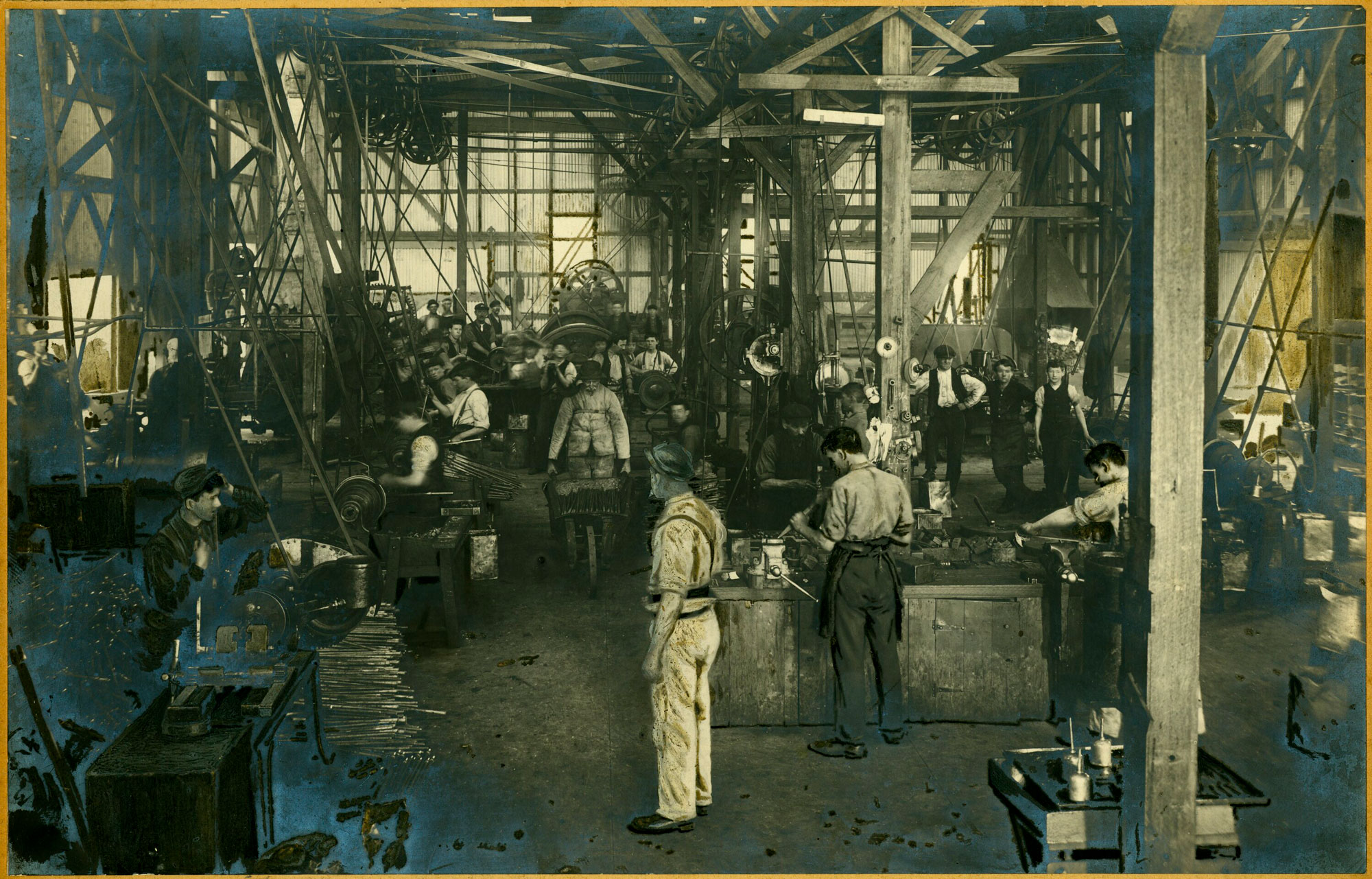
Another group of workers, called improvers (helpers), were clearly not receiving full wages, which particularly concerned Justice Higgins.
So he decided to take action, using the unconventional tactic of drawing on feminist literature.
Justice Higgins noted that he had been reading a journal article by Vida Goldstein, who was Australia’s highest profile women’s rights activist, who had presented a list of budgets for people living in Victoria. He wondered if the court could have similar information.
I must consider whether wages are fair or not ... there is no one can give better evidence as to how the shoe pinches, if it does pinch, than the workman’s wife. — Justice Henry Bournes Higgins
At a time when there were no women at all sitting in federal parliament, three women were called to give evidence to the court. Arguably the most important was Kate Russell.
I am a married woman living in Bay Street, Port Melbourne. My husband is secretary to the Agricultural Implement Makers' Union. Before that he was working in Kitchen's Candle Factory where he was earning 36 shillings a week. We had to do without lots of things ... I had to curtail my grocery expenses ... we had to eat less meat and bread ... I was always in debt. We never had enough to live upon. — Witness Kate Russell
Justice Higgins was greatly moved by her evidence. He knew that many people at the Sunshine Harvester Works were only receiving wages of 36 shillings per week.
He concluded that McKay wasn’t paying his workers fairly—so he should not be exempt from excises under the Excise Tariff Act.
Justice Higgins established what he considered was a wage that could keep a family of husband and wife and three children in what he calls ‘frugal comfort’.
This included the cost of things like food, housing, clothing and transport, and putting something aside for a rainy day.
He set the minimum wage for an unskilled labourer at seven shillings per day, which at six days per week amounted to 42 shillings per week (about $400 in today’s money).
He set a typical rate for a skilled worker at 60 shillings—whereas McKay was paying 48 shillings and less per week.
McKay was forced to pay the new wages but took drastic action.
He laid off a significant part of his workforce and made an application to the High Court that the judgement was ultra vires—that it went against the constitution.
The High Court sided with McKay because the federal government then had no power to determine wages and working conditions. But Justice Higgins wouldn’t let it go.
Higgins is a man not to be disposed of easily ... and he makes a whole series of judgments after 1907, where he uses the principles that he's articulated for setting wages. — Historian Charles Fahey
The Harvester Judgement both introduced the concept of a living wage and was one of the first examples of women playing a major part in political action in Australia. It set a benchmark.
Yet it left many people behind.
Because the decision did assume that women were dependents—economic dependents on men. And so women's considerations in terms of what they should be paid didn't come into it because the assumption was you had a man looking after you. — Sally McManus, Secretary of the ACTU
Paying women less than men had been the rule throughout industry, and the Harvester Judgment enshrines the male breadwinner as the major breadwinner. And I think that makes it harder in subsequent years, for equal wages to make their impact in Australia. — Historian Charles Fahey
So, the gender pay gap is essentially institutionalised by the case we revere as one of the greatest innovations in workers' rights. And women are still working to correct that today. — Senior Curator Rebecca Carland
Australia has changed a lot in the past century, but the need for a living wage remains fundamental to workers’ rights.
It is a very morally strong argument, that idea that full-time workers should be able to survive on one wage. — Sally McManus, Secretary of the ACTU