Can one person’s innovation really define a worldwide revolution? If you believe the legend of Hugh Victor McKay, then yes.
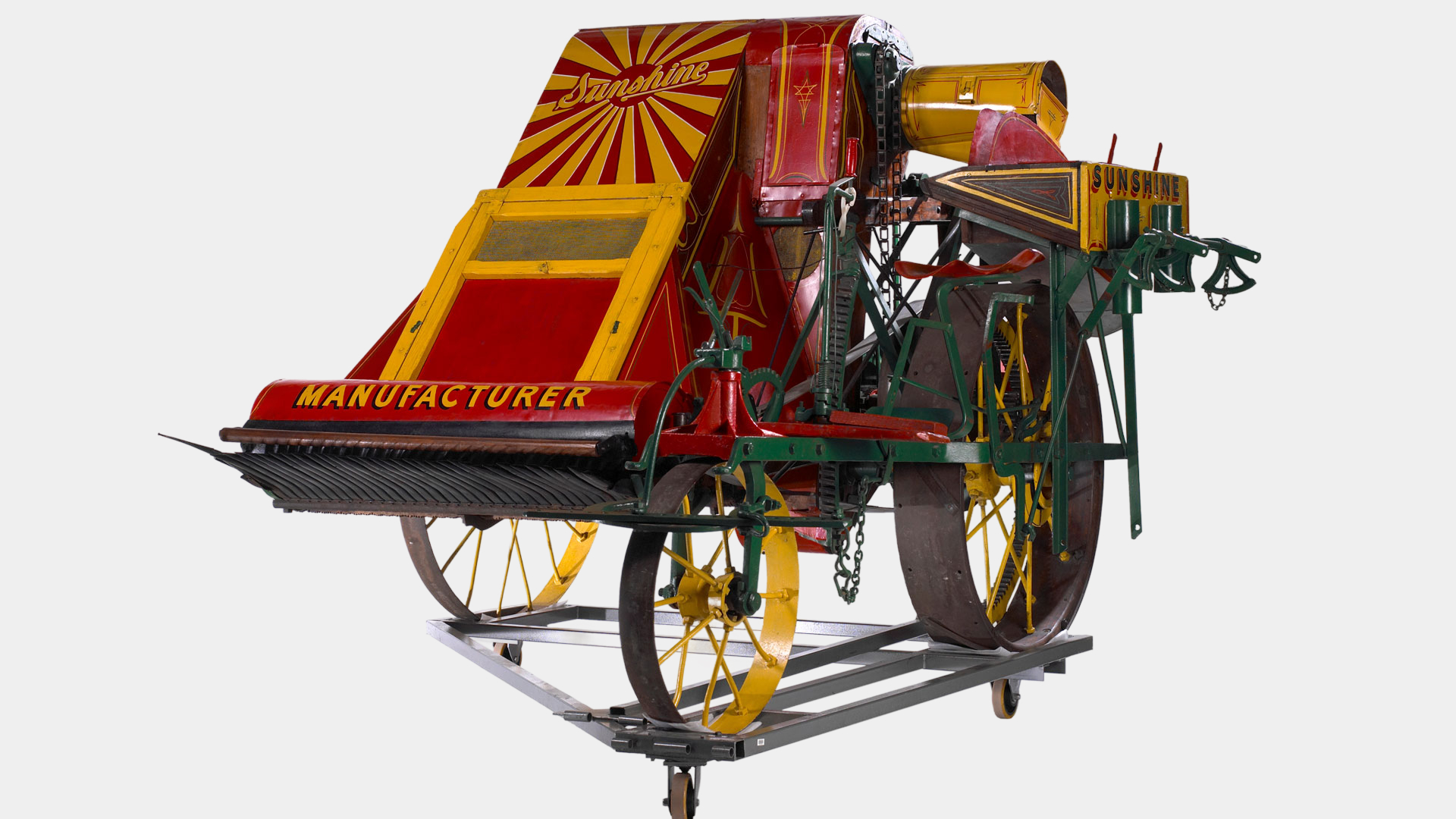
In Australia, a world revolution in agriculture had its beginnings in a farm smithy near Bendigo in 1884. An 18-year-old youth, Hugh Victor McKay, using the most primitive of tools fashioned the first combine harvester. — Massey Ferguson (Australia) Ltd, ‘MF A Global Corporation’ Film, about 1972
Yet stripping back that legend reveals an even more impressive tale of grit and determination from one of the biggest pioneering figures of the early 20th century.
He excelled in the race to mechanise the world’s food production.
By the time of his death in 1926, McKay’s Sunshine Harvester Works was immense, employing 3,000 workers—the largest agricultural enterprise in the southern hemisphere.
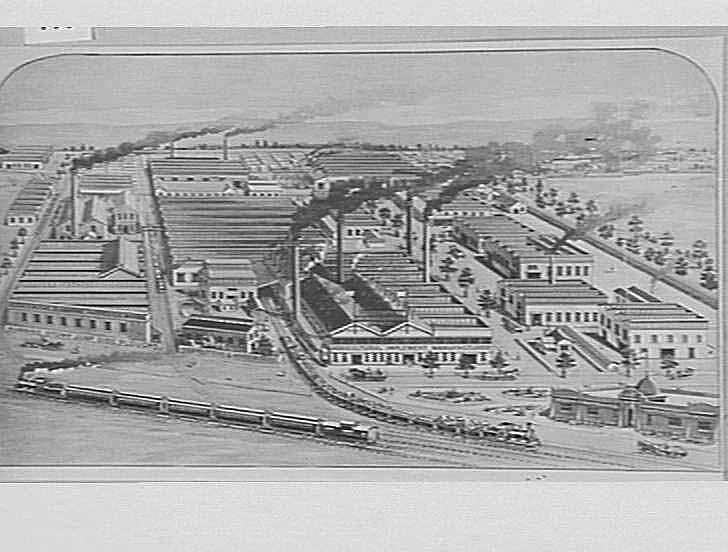
I’ve been one of the people to jettison the legend, but there’s something in the legend of this young man who takes all before him, who eventually emerges as the triumphant manufacturer of the harvester that becomes accepted as being the original harvester, even if it isn't … he's a divisive figure. But you can't deny the brilliance of the man. — Dr John Lack, Historian
When only a teenager in the early 1880s, he began to build his own harvester on the family farm.
At that time, most of Australia’s agricultural machinery was imported from Canada, America or Britain.
South Australians had already invented a stripper harvester, but no one had been able to combine the actions of harvesting the grain and separating it in one machine.
The legend tells us McKay was the first to do this, but someone else beat him to it.
James Morrow, a partner in an agricultural implement and machine making business in Melbourne, won a government sponsored competition in 1884.
But Morrow’s business made the decision to perfect their machine before releasing it to the public, and they took a year to do it.
The enterprising young HV McKay saw the opportunity to get the machine made and sold right away.
He became the first person to market what he called a ‘combine’—a combination of the harvester and separator.
McKay worked hard in those early years, travelling to agricultural shows in towns across the Wimmera and the Mallee.
He went to far more than any other of his competitors. He was everywhere, showing his machine and demonstrating it to farmers. — Dr John Lack, Historian
But this was no overnight success. He nearly went bankrupt around 1890.
McKay’s family stuck by him, and he was also supported by a small number of wealthy farmers in the Wimmera who bankrolled his next period of experimentation.
With this support McKay was able to set up his own factory in Ballarat, where he hit upon the iconic name ‘Sunshine’, inspired by an evangelical preacher who spoke of the sunshine harvest of God’s bounty.
He used the name to great effect in marketing his machines.
McKay’s pioneering approach to marketing was likely supported or even originated by his brother Nathaniel, a newspaper man.
His advertising was colourful and bright, and each advertisement included the sun logo, building brand familiarity.
Ultimately, though, it was the machines that had to work—and they did, building their own reputation.
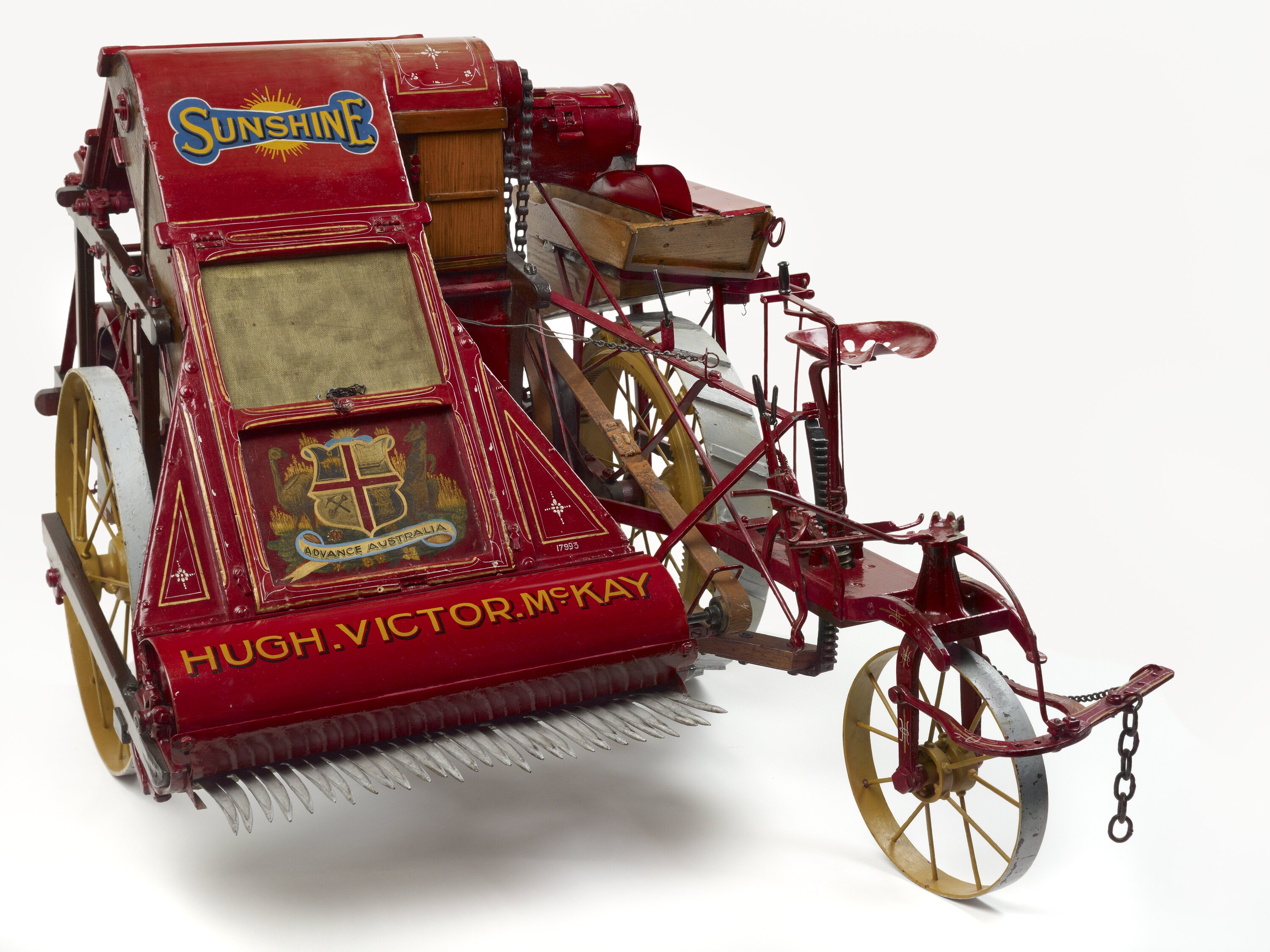
McKay’s innovations in machinery and marketing gradually positioned him as the biggest producer of agricultural machinery in Australia.
Until, in 1902, a severe drought hit. It reduced the crops that needed to be harvested and the ability of farmers to afford the machines.
HV McKay had the foresight to look elsewhere and look globally. And he sent his brother Sam down to Argentina to investigate the market there, taking with him 50 machines. — Snjez Cosic, Creative Producer and Curator
But in Australia McKay was also fending off more established international competition.
Large agricultural machine makers in North America, such as Massey Harris and International Harvester, had decades of experience before him.
And these bigger players started making copies of the Australian-designed combine harvesters to sell in Australia.
He knew that they would destroy him … so he had to he had to take them on and he had to persuade governments that if he didn't protect the Australian industry, then it would disappear. And he got his way. He got protection. — Dr John Lack, Historian
Protection came in the form of a tariff on imported machines, enabled by the 1906 Customs Tariff Act, but the Federal Government also introduced the 1906 Excise Tariff Act to tax all machines unless local manufacturers paid ‘fair and reasonable’ wages to employees.
This led to the Harvester Judgement case—the basis for the world’s first minimum wage laws. McKay did not meet this requirement, but appealed to the High Court on the basis that the federal government then had no power to determine wages and working conditions. He won.
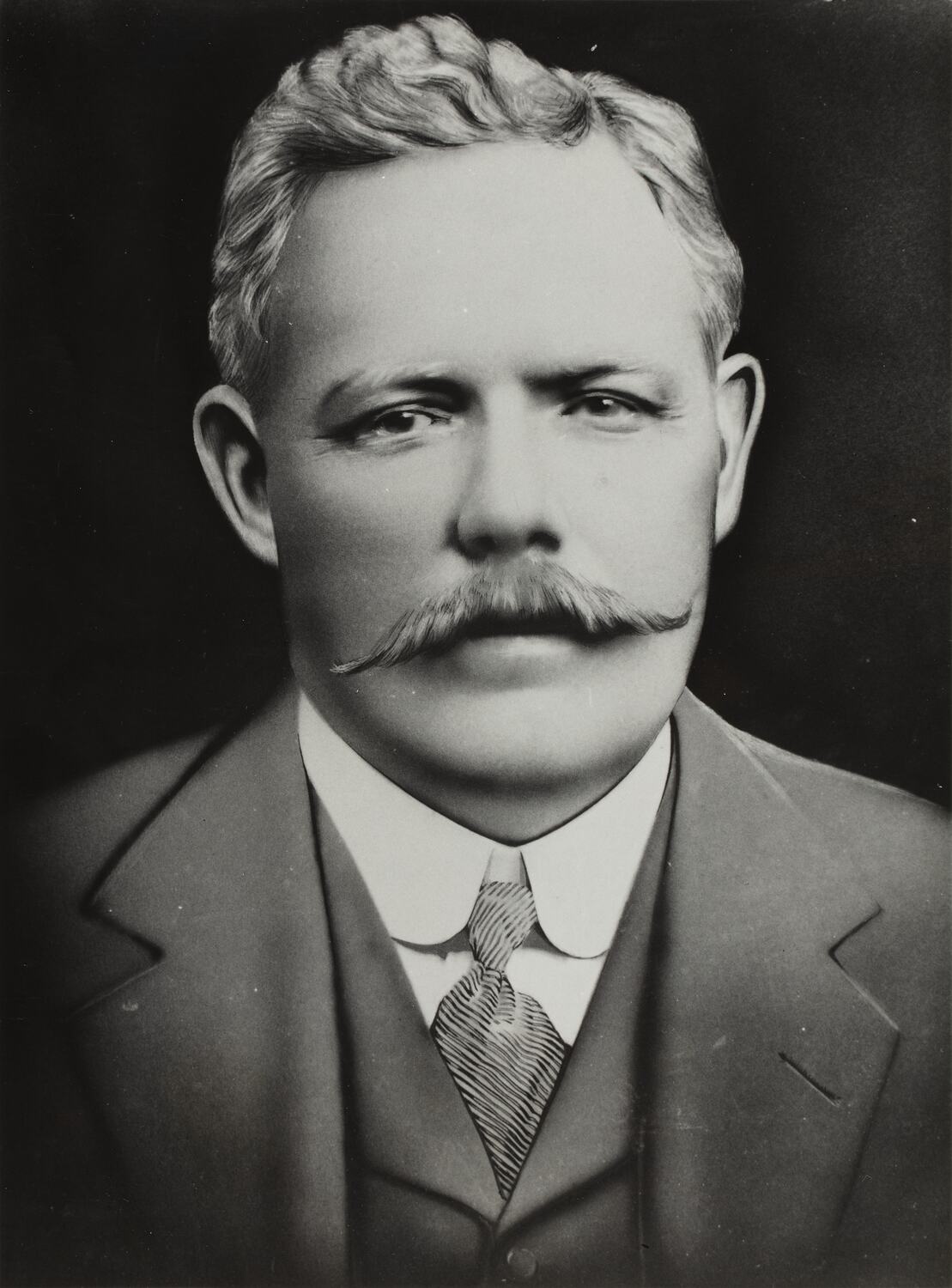
With protection from his biggest competitors, McKay ramped up his business. Having outgrown his Ballarat factory, McKay moved his manufacturing to Braybrook Junction.
Here his business scaled up rapidly. The site was close to the railway and had plenty of space to expand. Workers bought adjacent land and built houses, and McKay contributed to the local community as well, in the form of sporting clubs and recreational facilities.
These paternal acts effectively tied the workers to the company. And McKay became an early adopter of promoting staff internally.
A lot of people started out at junior levels, and then they made their way up into more senior positions thanks to the internal educational opportunities and training opportunities that were afforded to employees. They saw themselves in the story of H.V. McKay and the story of Sunshine Harvester Works. I don't know of too many other industrialists who had that same kind of vision. It's something that feels quite unique to Victoria, to Melbourne. — Snjez Cosic, Creative Producer and Curator
But when it came to outside controls on his business, McKay was unyielding. He fought against unions seeking higher wages, culminating in a lockout of workers in 1911.
McKay was also wary of the future, even while he continued to innovate. He worried about running out of innovations, and absorbed other businesses and products into his Sunshine enterprise and kept the doors open to more.
He had particular success with an inventor named Headlie Taylor.
With the advent of the Taylor header, a new era ... began. Instead of beating the grain from the stalk, the header cut the grain just below the head to get all the crop. Most importantly the Taylor header could comb all the straw from flattened crops and thresh out the grain with minimum loss. — Massey Ferguson (Australia) Ltd, ‘MF A Global Corporation’ Film, about 1972
His header harvester, rebranded as the ‘Sunlight’, saved the day when storms flattened crops across NSW in 1920, since it enabled them to still be harvested.
And Taylor’s developments didn’t stop there. In 1924, the first Sunshine-developed self-propelled auto header with traction and machine drives, operated by its own engine, was released.
It was a world first but, in an Australian agricultural landscape powered by horses, it was ahead of its time.
It was also the last innovation HV McKay oversaw at the Sunshine Harvester Works, before his death in 1926, aged just 60.
In 1930 the Sunshine Harvester Works merged with the Canadian firm Massey-Harris, one of McKay’s fiercest competitors, and was eventually taken over in 1955.
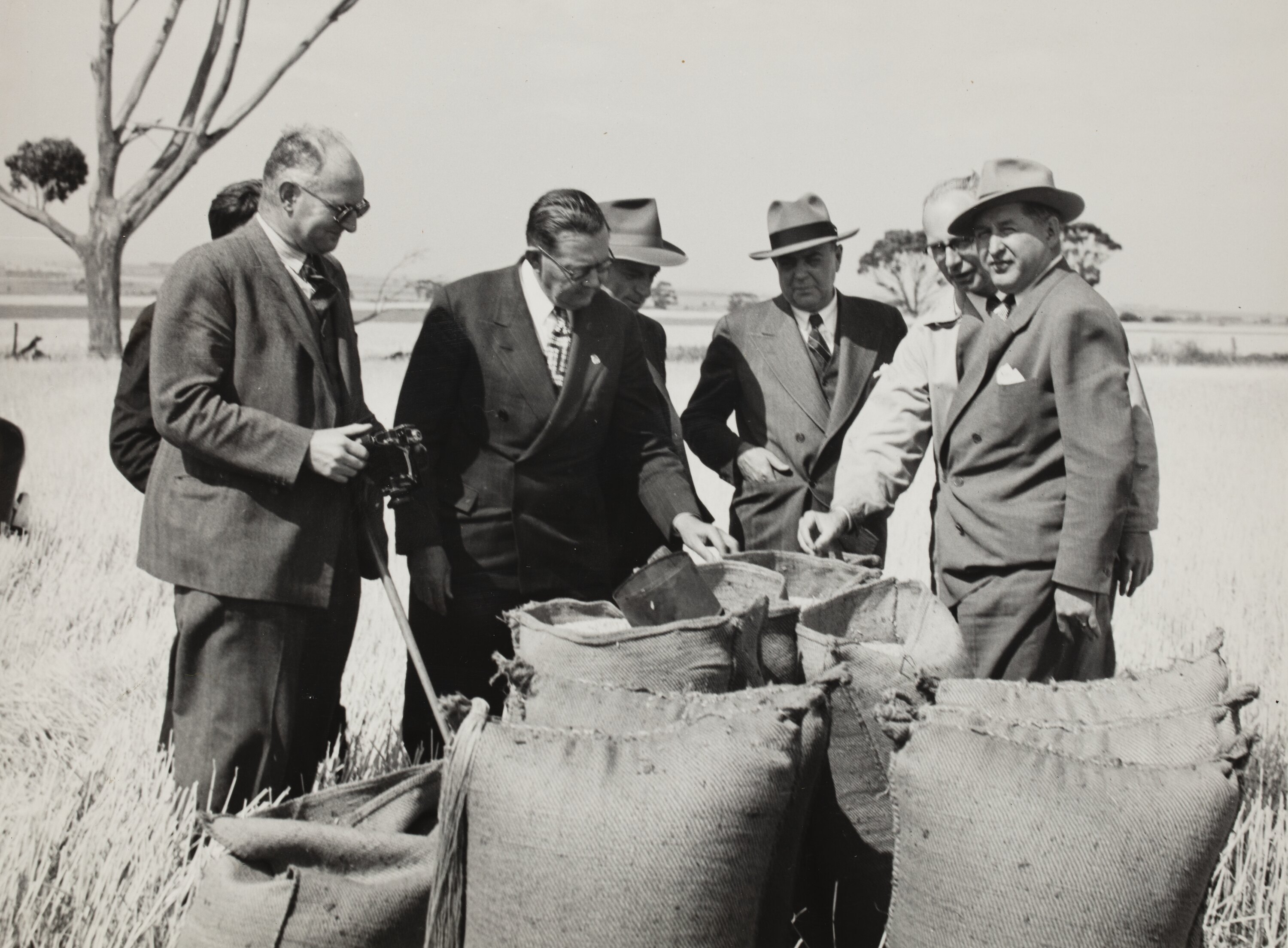
The factory in Sunshine shut down in 1986. Only remnants of the site remain, including the factory gates on Russell Street.
But what of that legend?
We talk about the world revolution in agriculture, the world revolution in harvesting. It's not HV McKay's revolution. It is not a revolution that's led by the combine harvester that he perfects in the 1890s. It's a story of leading figures like McKay ... but it’s also a story of Australian engineers who work for people like McKay. — Dr John Lack, Historian.
He was a remarkable man. It can't be denied, even if you're a sceptic, as I was about the legend. I think the legend, in fact, disguised his achievements … there was a great story there. And it was bigger than the legend. — Dr John Lack, Historian