This guide on marine barnacles aims to familiarise amateur naturalists, beachcombers and divers with barnacles.
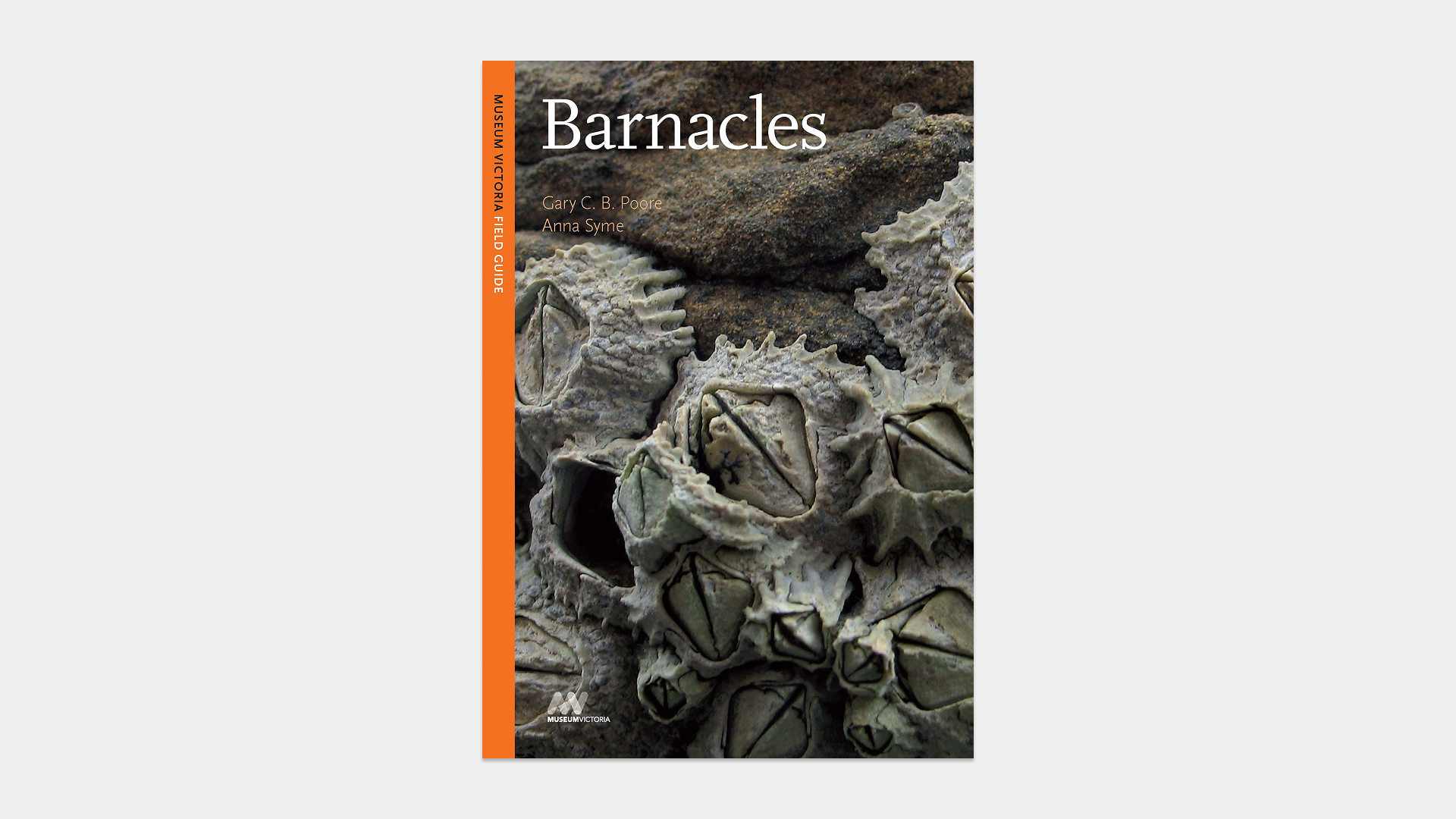
Also suitable for those with a general interest in barnacles: what they do, how they behave, their environment, ecology and diversity.
Barnacles are one of the most abundant and obvious animals found in the intertidal zone – that area covered by water at high tide and exposed at low tide. Others live in deeper water or attached to larger animals like whales. Goose barnacles may be found washed up on the shore attached to logs. Some more enigmatic relatives are parasites of other crustaceans.
In Museum Victoria Field Guide: Barnacles, species descriptions are accompanied by colour photographs, line drawings and illustrations for easy recognition. A key is provided for the identification of common barnacles and further references, glossary, scientific and common name indexes are also included.
- Details: Paperback, 80 pages
- Author: Gary C.B. Poore and Anna Syme
- Publication date: September 2009
- IBSN: 9780980381351
- RRP: $24.95