Te Maeva Nui
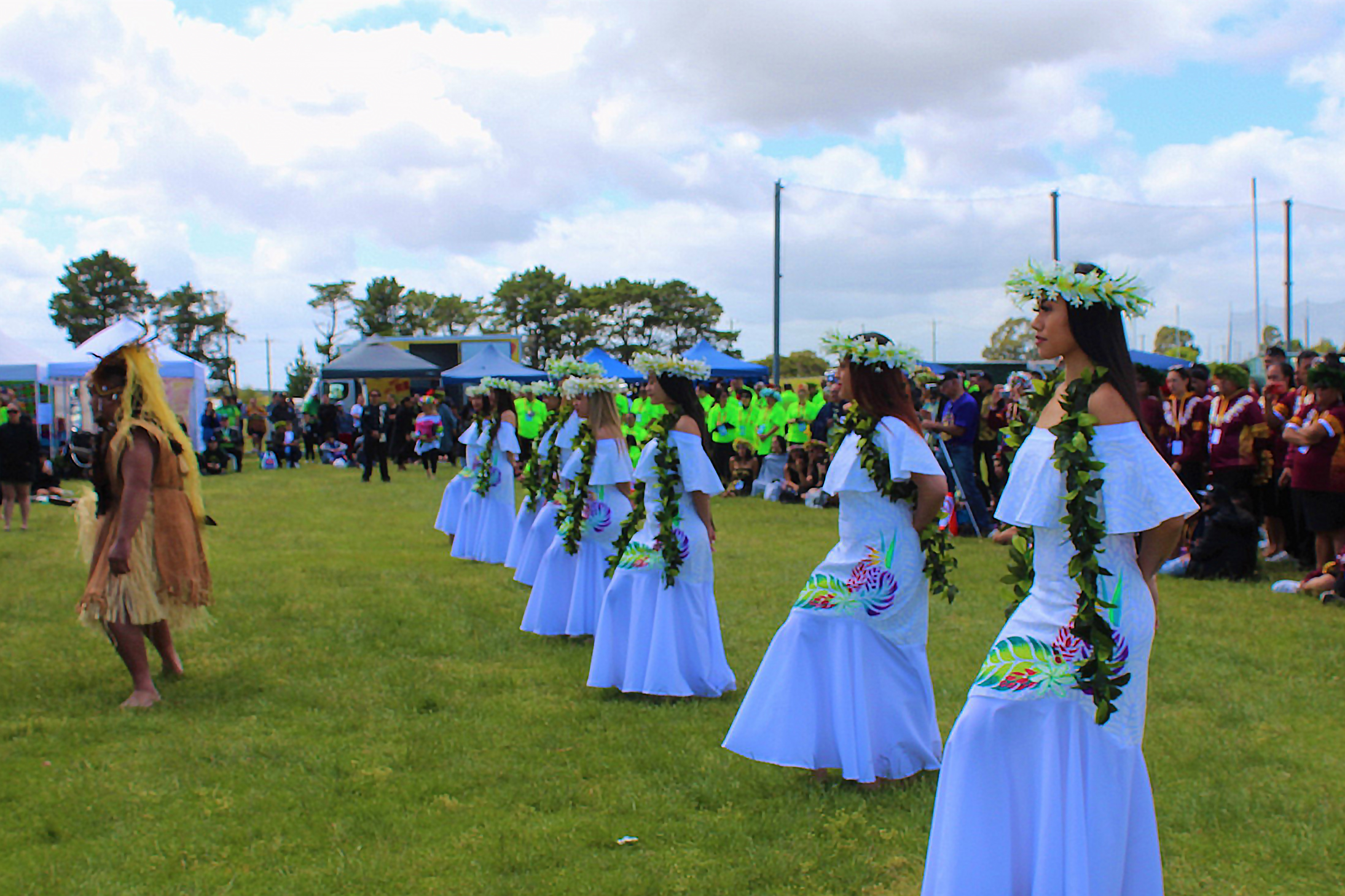
Pherina and James talk about Te Maeva Nui in Australia.
Pherina: Te Maeva Nui to me means celebrating our Cook Island art, songs and dancing, and our culture.
James: Te Maeva Nui in the Cook Island culture, its about celebration. It’s celebrating our Independence Day—that’s when Cook Islands became self-governing. It that happens every fourth of August every year. So, what the government did is, the way the celebration is done will be in our culture aspect. So, each island will bring their own culture and showcase to the world the uniqueness of our culture. That’s what Te Maeva Nui is: celebrating our Independence Day, but using our culture as part of that celebration.
Te Maeva Nui started here in Australia in 2008. Started by myself and Pherina. That was just Melbourne and then later on in the year Sydney tries to copy and Sydney started their own Te Maeva Nui. A couple of years later Queensland picked it up and Western Australia picked it up. So every state is running their own Maeva Nui, but was a dream of mine to bring all states together and run a national event.
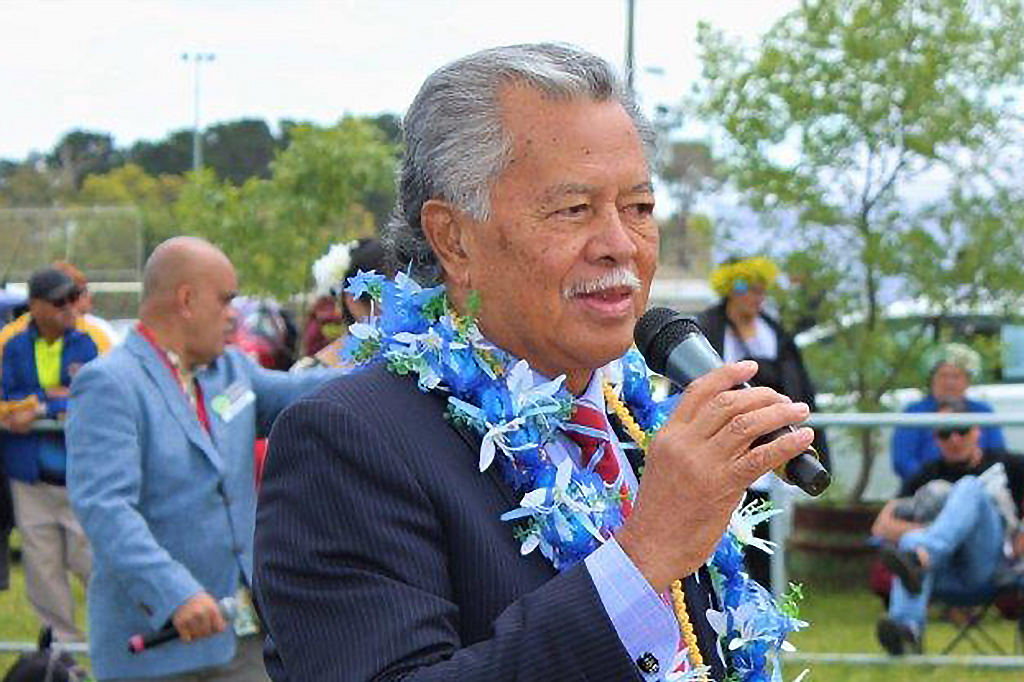
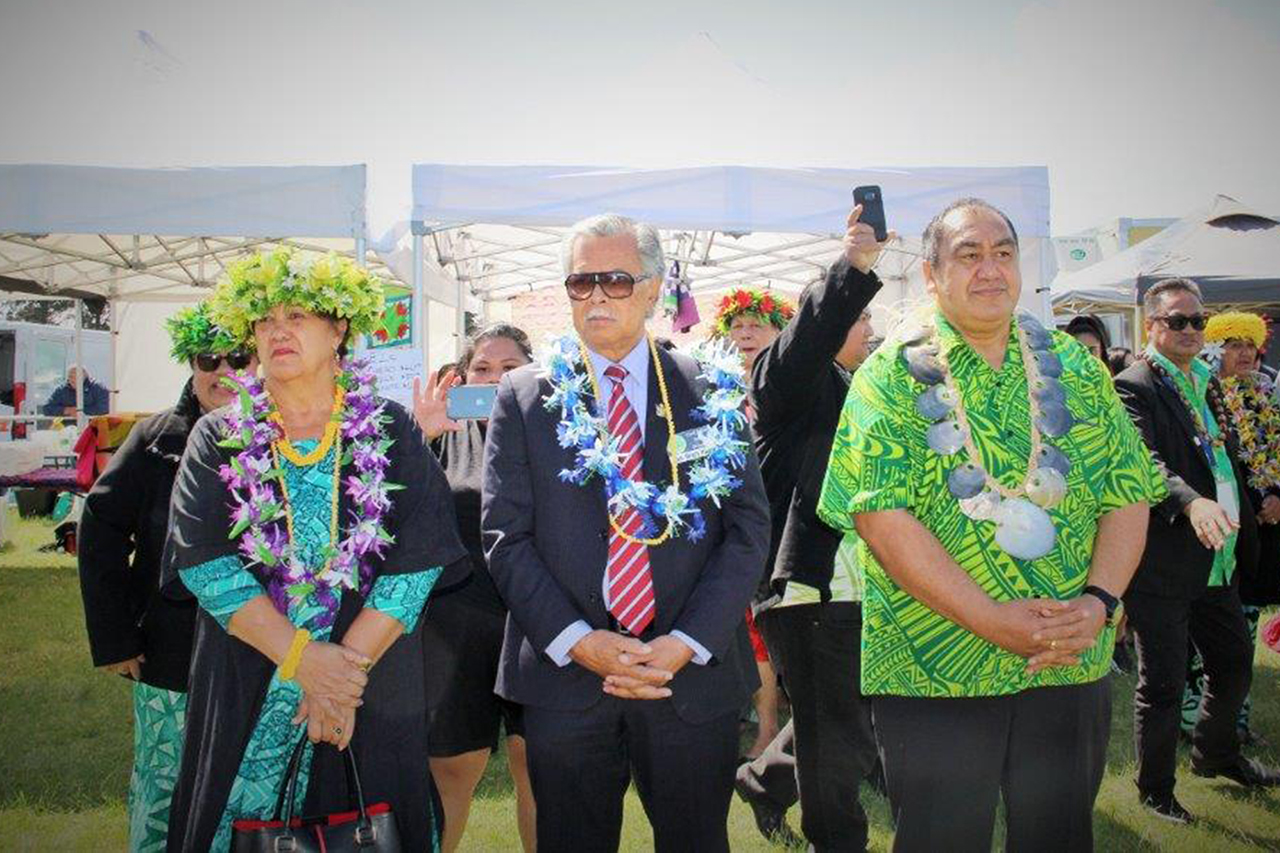
Image: Thomas Peyroux / Photo: Thomas Peyroux
Ura pa’u
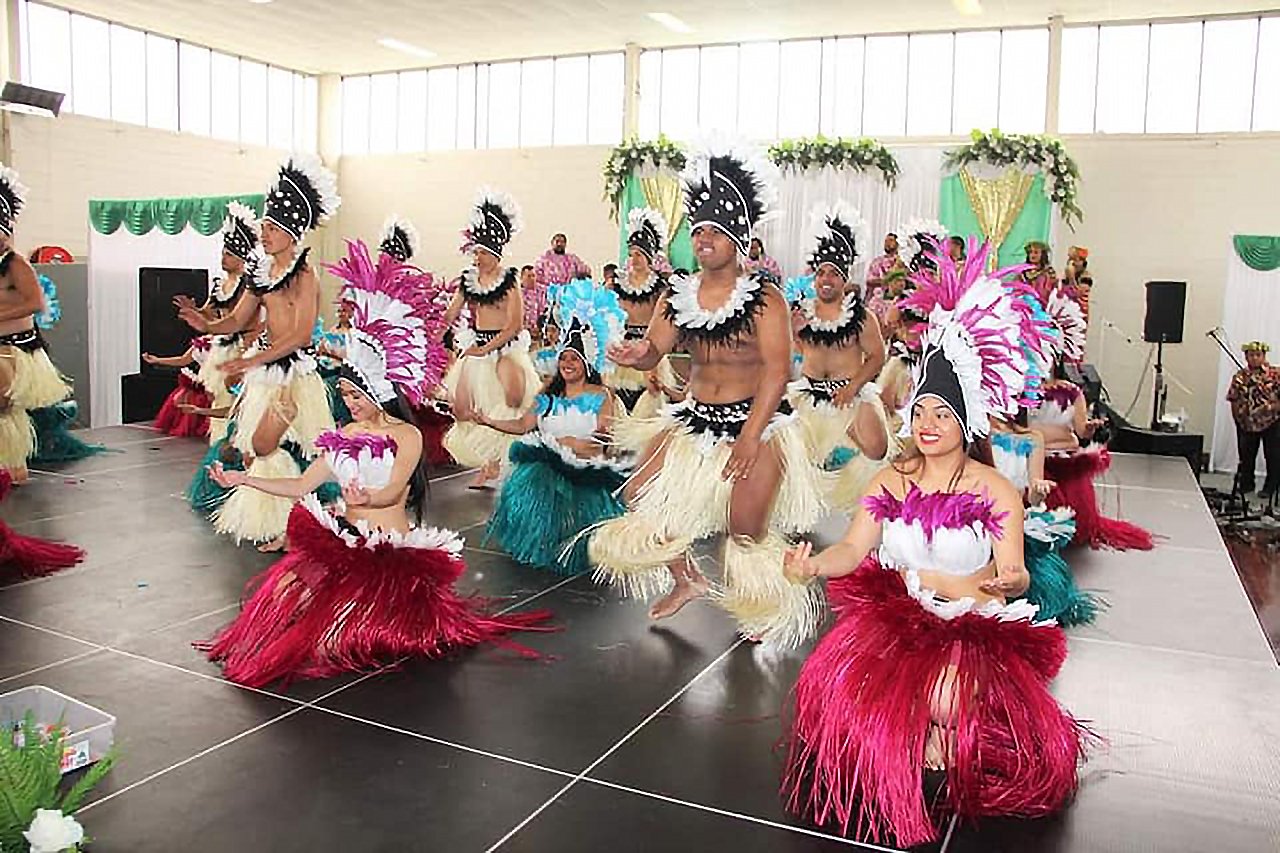
James and Pherina talk about the Ura Pa’u, or drum dance.
James: The drum dance, which is the ura pa’u, will always be the capture of the whole [event]. That’s where people will say that group is the best, that island is the best. It’s the drumming, and also the uniqueness each dancers, how they sway their hips, and the actions and all their techniques ... will always be the drum dance, which is the ura pa’u.
Pherina: Everyone looks forward to the ura pa’u and I would say that would be the hardest one to perform or to teach in the time practising for Te Maeva Nui but it’s always the popular one.
James: For the drummers itself will probably take a couple of months just putting in sections by sections in the beat. Because there is a fast beat and there is a slow beat. The fast beat must go with the slow beat and then connect the fast with the slow without any gap. I tell you, it’s not easy creating beats because you don’t want to create a beat that’s already been hit in other groups. You have to come up with some sort of any unique beat that hasn’t been heard.
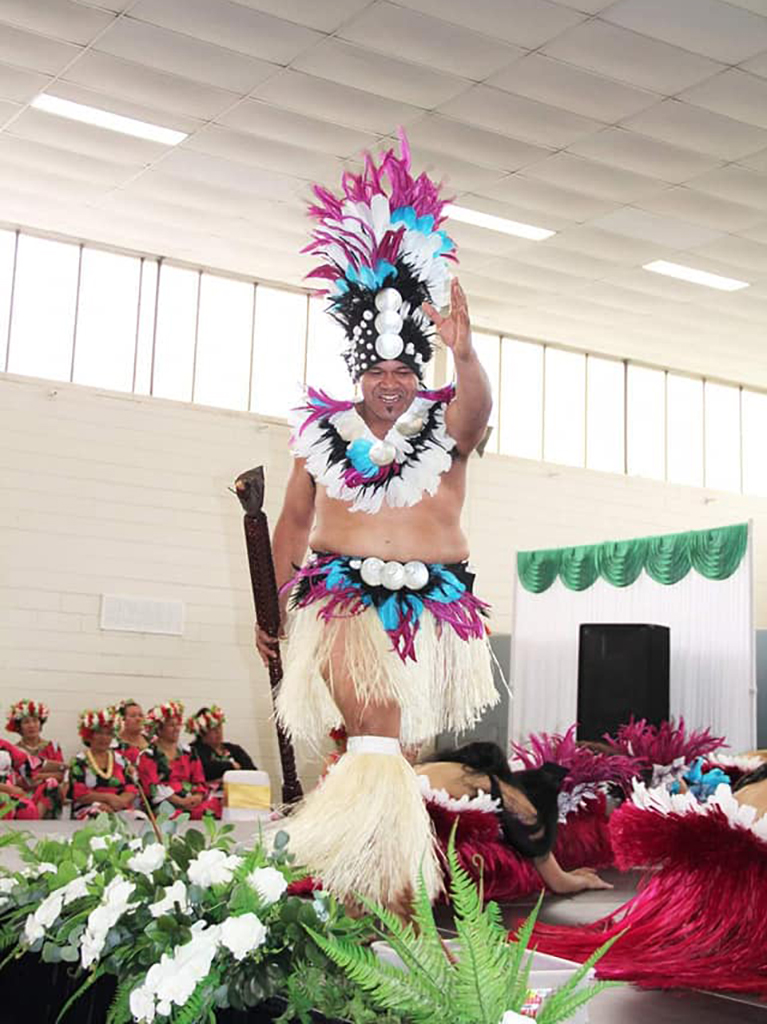
The costumes
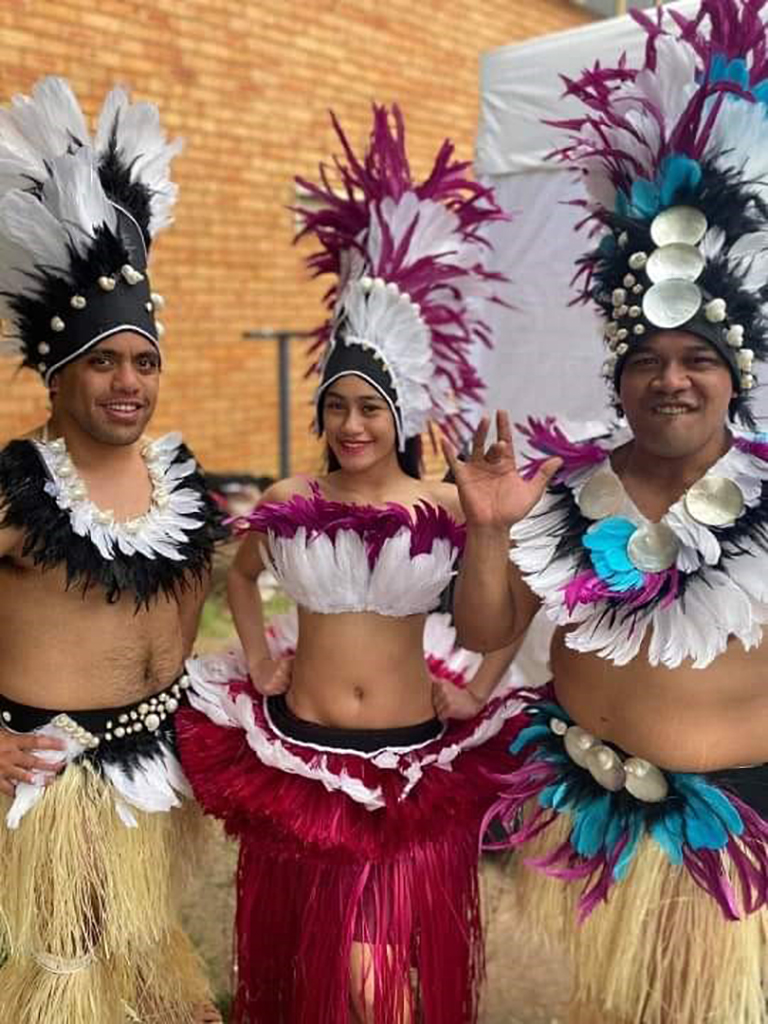
Kennedy and Pherina talk about the costumes.
Kennedy: I’m a dancer. I’ve been dancing since I was two. So I was brought up into the dancing part of the culture, not really the language part, and costume came with that as well. So I used to design my costume on paper, my mum would make it. But then I decided to learn and make it myself. I was just born into it I guess.
I tried to incorporate the theme of 2019 Te Maeva Nui Victoria’s theme, which was Te inangaro o toku matakeinanga | the essence, heritage and joy of my community and so I tried my best to incorporate those colours into that theme as best as I can. The pieces for female costumes was a headpiece, a bra piece, a hip piece as well as a skirt. The boys was a skirt, leg piece, headpiece and a neckpiece, as well as a belt.
Pherina: It’s a lot of work because you really have to come up with something really good that has to match the theme and to go with the dancing, with the movement, all that. So I would say at the end of all this, really, the turnout of the designs of all the costumes was really good, and especially the drum dance costume was the best.
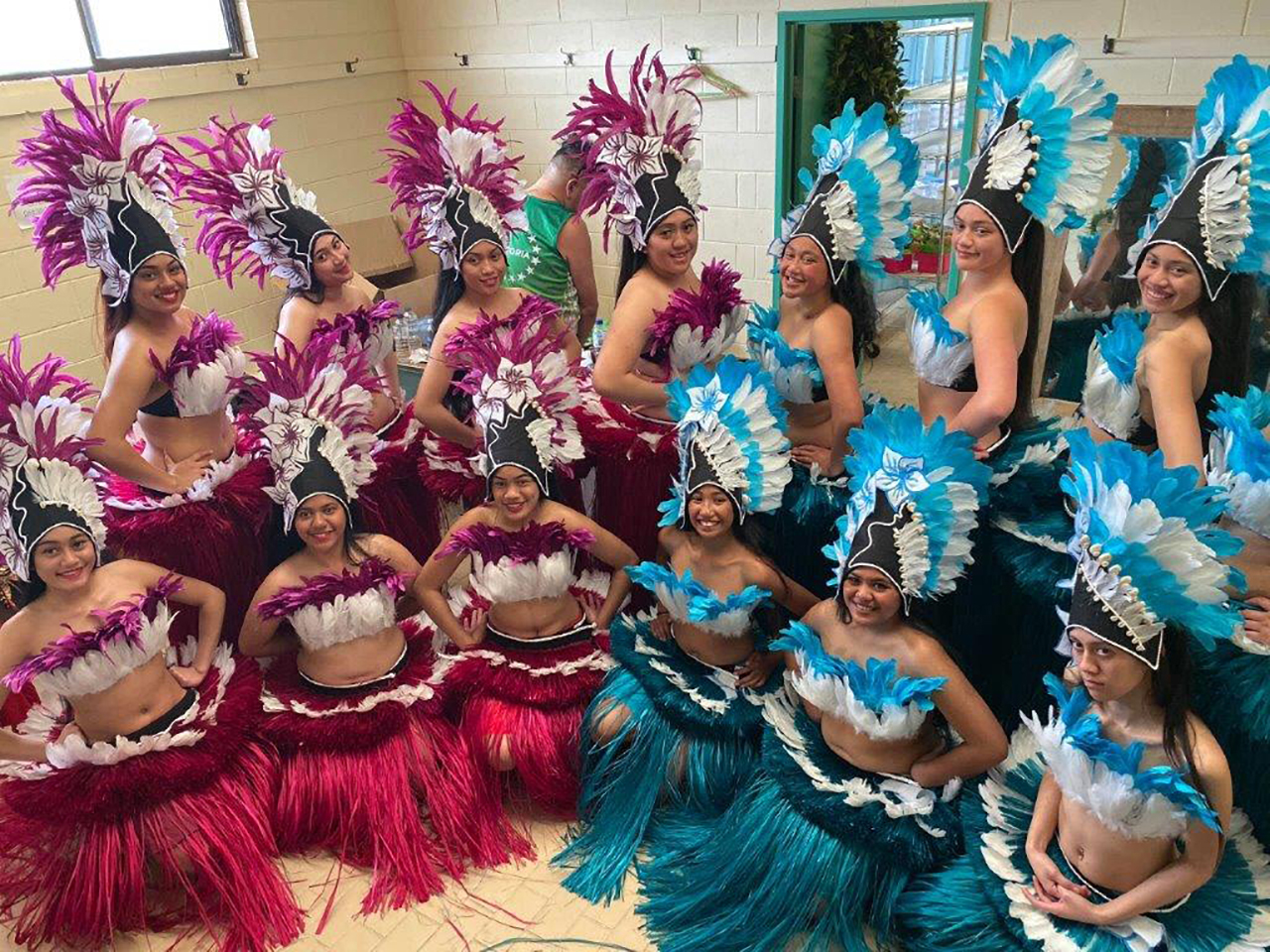
Front row: Aysha Mino, Skylah Pakari, Angel Kareroa, Temeio Kamana, Apii Pukenga Viliama Ukarangi
The Victorian team, Te Maeva Nui 2019, Melbourne
Image: Isa Isamaela / Photo: Isa Isamaela
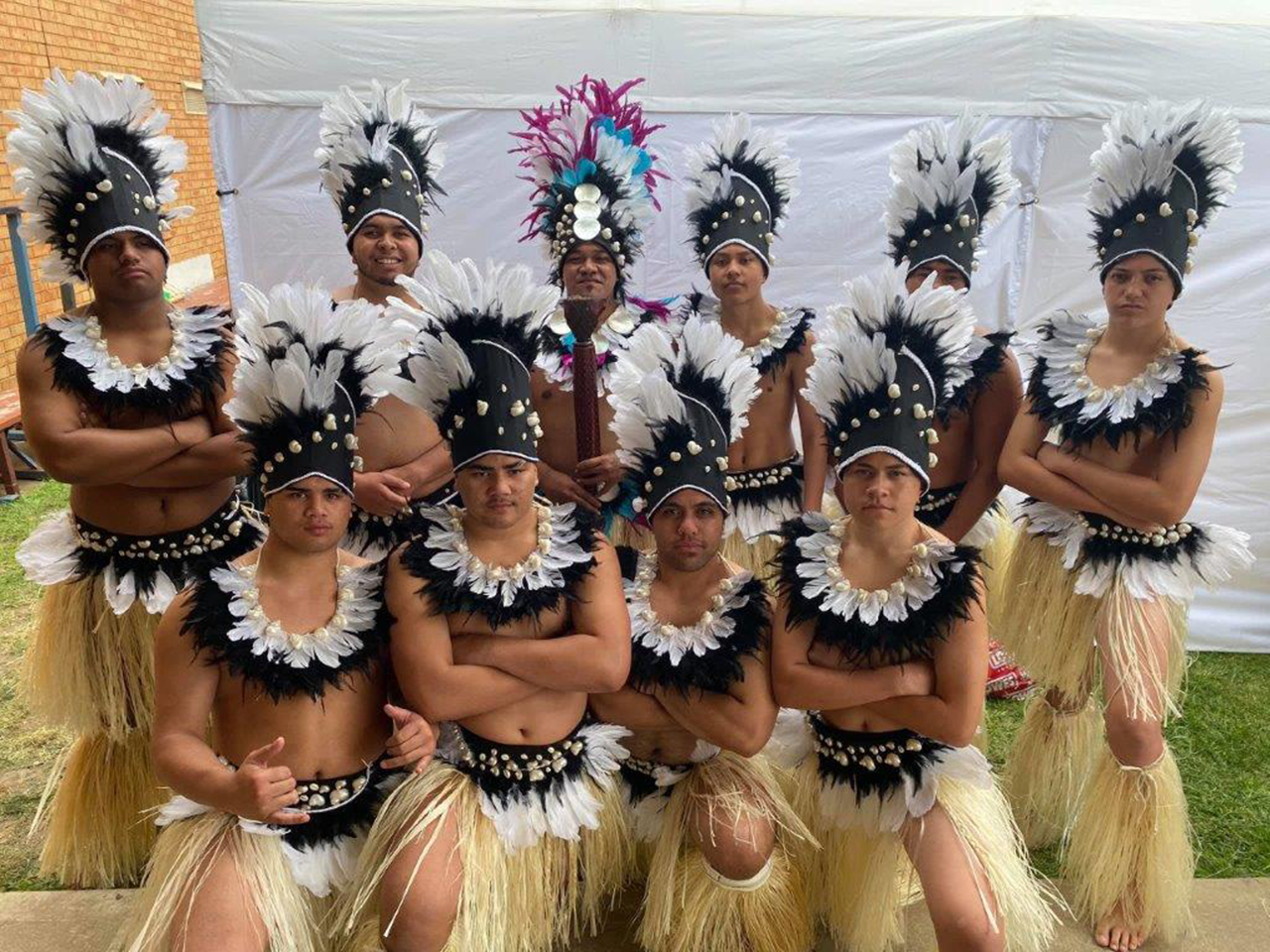
Front row: Jermain Pokia, Xavier, Pokia, Jordan, Joseph Ua
The Victorian team, Te Maeva Nui 2019, Melbourne
Image: Thomas Peyroux / Photo: Thomas Peyroux
Celebrating Kuki Airani Culture in Australia
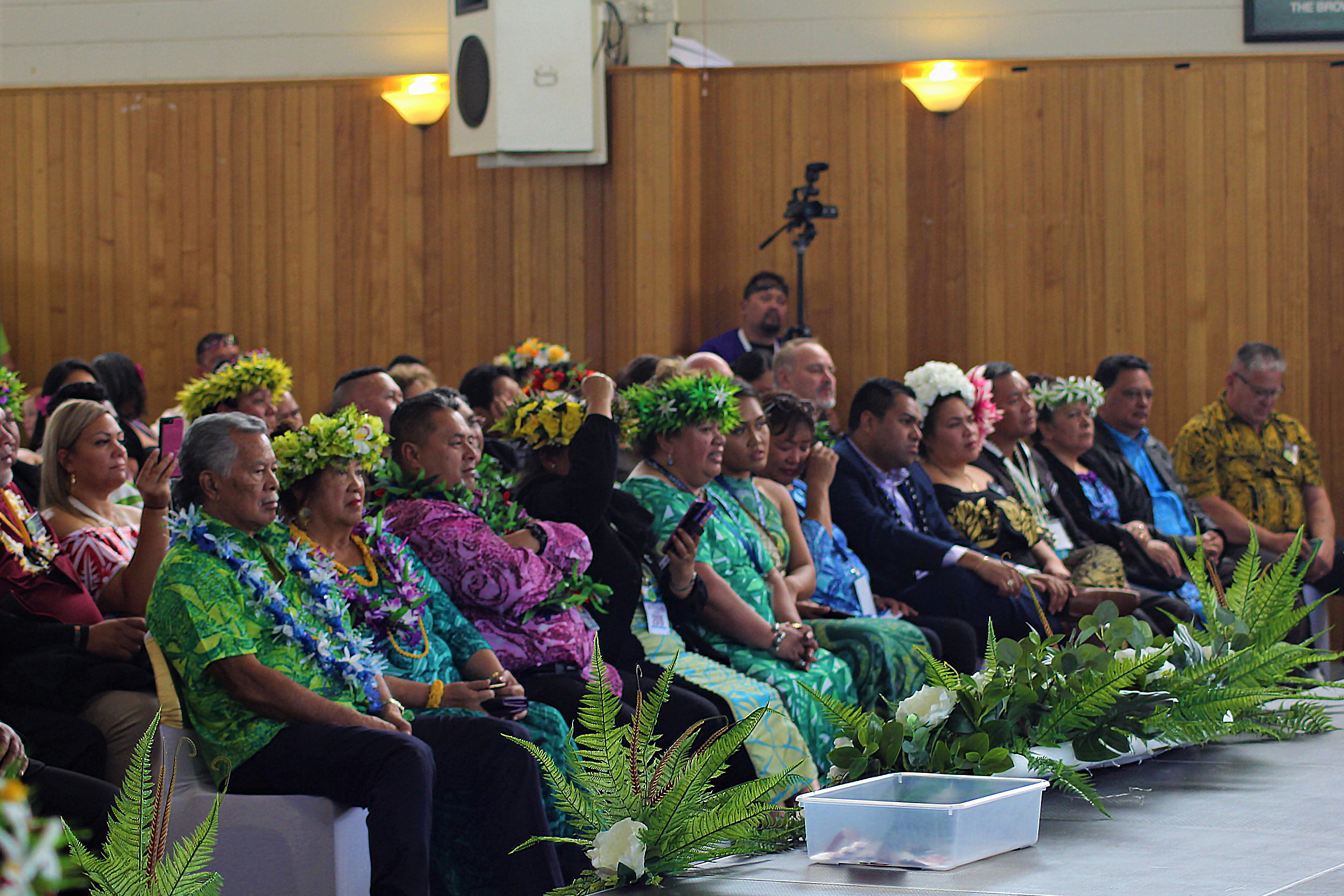
Pherina and James talk about celebrating the culture of Kuki Airani, the Cook Islands.
Pherina: I always believe, whatever you do, you gotta learn your culture. It's like my kids, when I teach them the culture, I teach them at a very young age and now as they grow older, every year they grow older, they learn a lot more and it just becomes them. The culture becomes them. And I see that’s happening now in Melbourne and it makes me proud that we have done something for the people to see, the parents to see, that they can, living away from the Cook Islands, from your home, that you can still continue to embrace our culture here. With our culture—I would say it is one of the best cultures. And our culture has got a long way to go.
James: I mean, our generations will soon fade away so we trying to pass on that knowledge, experience, history to the younger generations so they will carry on. But if we were in the Cook Islands, that’s a different story, but we are in Australia. We just want to maintain our culture and then also encourage them, make them understand that our culture is very unique, special and important because it is your identity and also your heritage.
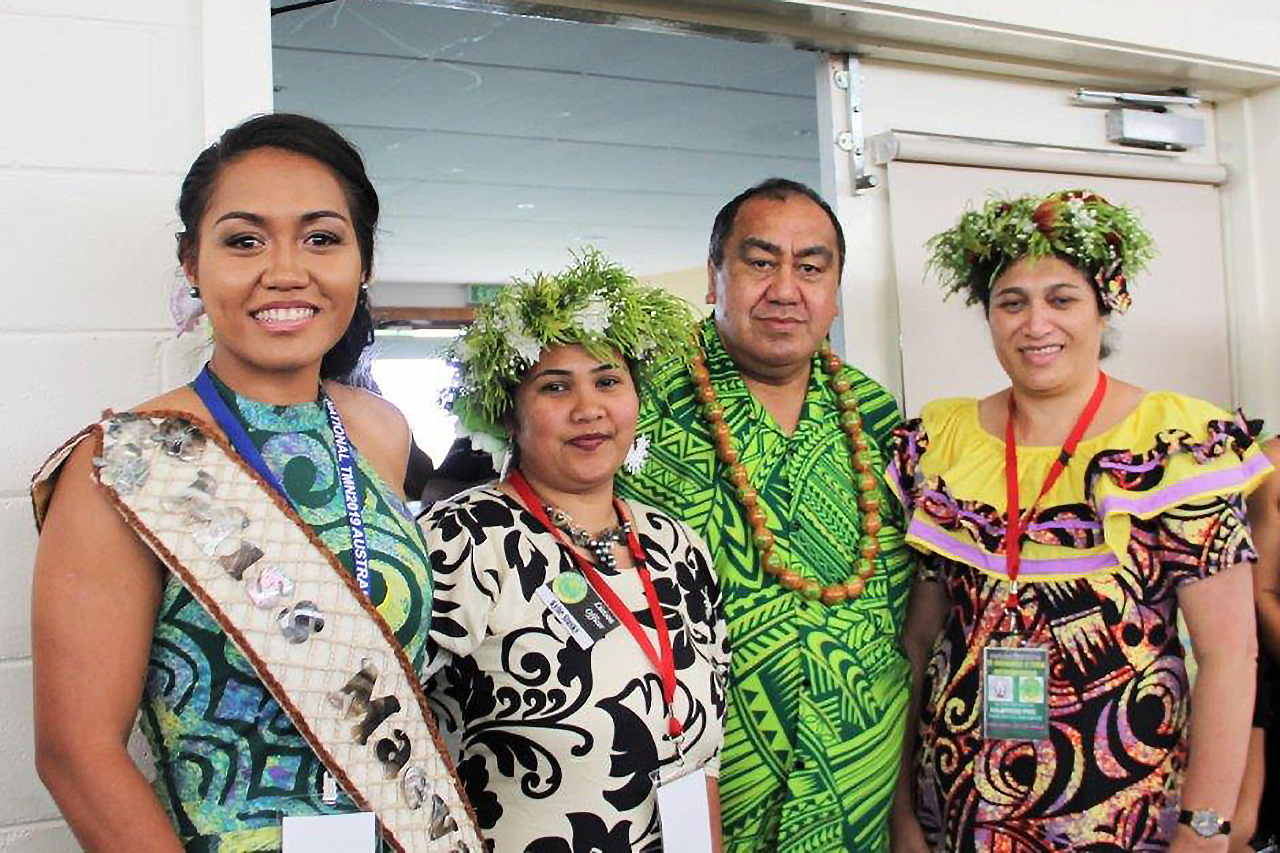
Image: Thomas Peyroux / Photo: Thomas Peyroux
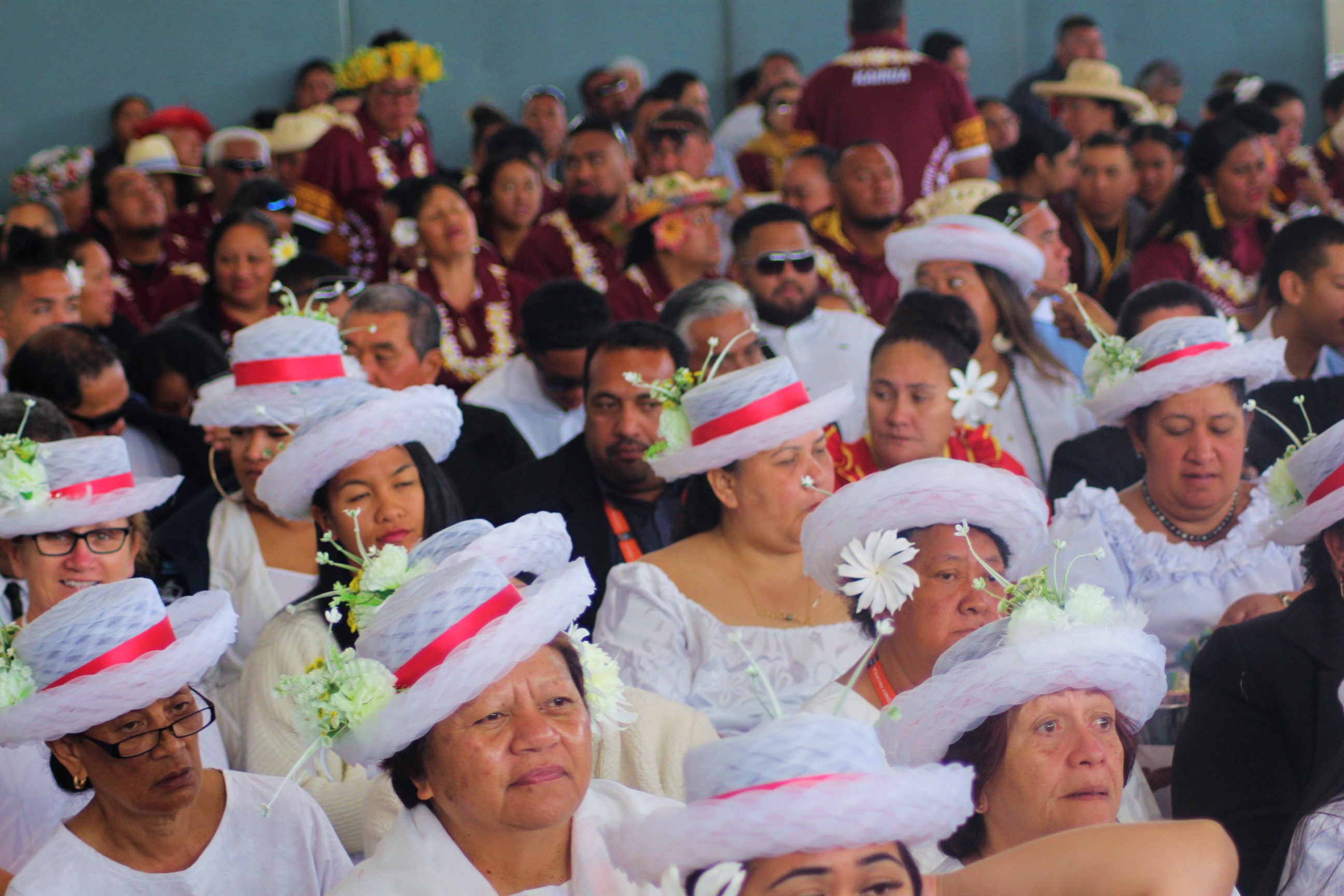
More stories
Explore more personal stories, sacred histories and treasures from Victorian Pacific communities.